
Is a Queen Bed Too Large for a Small Guest Room?
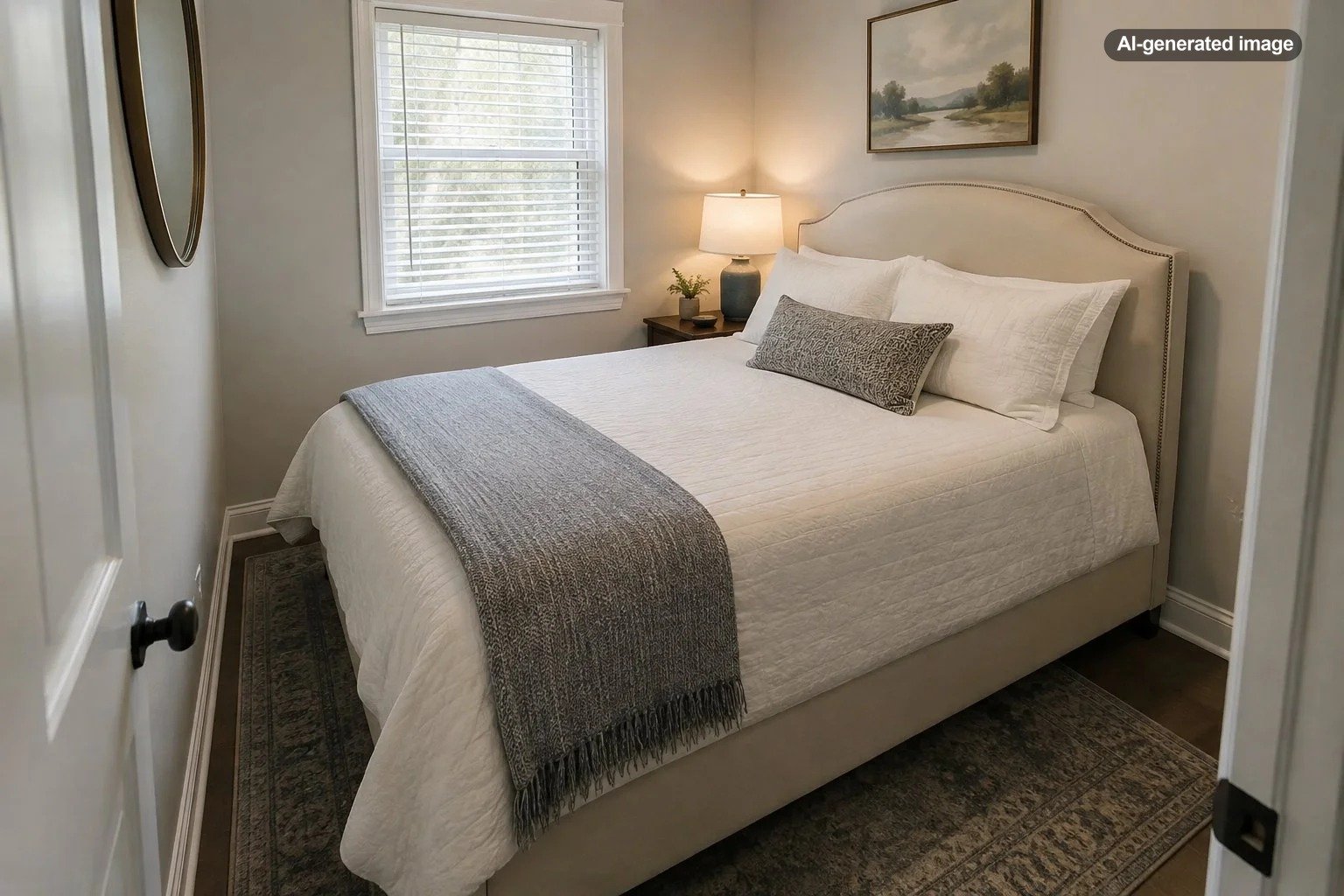
A queen bed is not automatically too large for a small guest room. The real question is whether the room still functions comfortably after the bed is in place. A standard queen mattress measures about 60 inches wide by 80 inches long, and the finished bed can occupy a little more space once you add a frame, headboard, or upholstered edges.
For many small guest rooms, a queen is worth the tighter layout because it comfortably accommodates two adults and gives solo guests plenty of room. In a particularly narrow room, however, a full bed can make the space easier to navigate and leave more room for luggage, a dresser, or a nightstand.
Start With the Actual Footprint of the Bed
A mattress measurement is only the beginning. A queen mattress is about 60 by 80 inches, but many bed frames extend beyond those dimensions. A thick upholstered headboard, projecting side rails, footboard, or platform surround can add several inches to the total footprint.
Before deciding that a queen fits, measure the specific frame you plan to use rather than outlining only the mattress dimensions. This matters especially in a room where a few inches determine whether a closet door opens properly or a guest can walk around the foot of the bed.
What to do
- Measure the room wall to wall, including baseboards if they project noticeably.
- Mark the locations of the entry door, closet doors, windows, radiators, vents, and permanent built-ins.
- Check the outside dimensions of the entire queen bed frame.
- Use painter’s tape to outline the proposed bed footprint on the floor.
- Walk through the taped layout as though you were carrying a suitcase or getting into bed at night.
Think About Clearance, Not Just Whether the Bed Technically Fits
A bed that physically fits between two walls can still be too large for the room. The useful test is whether people can move through the space naturally. Ideally, guests should not need to turn sideways every time they walk past the bed, and doors should not collide with furniture.
Small guest rooms do not need perfectly symmetrical clearances. If two generous walkways are impossible, it can be smarter to create one comfortable primary aisle and accept a tighter secondary side. This is especially workable when the room is used occasionally rather than every night.
When a Queen Bed Is Usually the Better Choice
A queen can be a sensible priority when the room regularly hosts couples, taller adults, or guests staying for several nights. Compared with a full mattress, a queen offers additional width and length, which can make a meaningful difference when two adults share the bed.
It is also easier to justify a queen when the room does not need to perform many other jobs. A dedicated guest bedroom with a bed, one or two compact bedside surfaces, and minimal storage can devote more floor area to sleeping than a room that doubles as an office, hobby room, or household storage space.
Before you decide
- Choose the queen if accommodating two adults comfortably is the main priority.
- Favor a simple frame with a compact footprint over thick rails or a bulky footboard.
- Confirm that the entry and closet remain usable.
- Leave an obvious place for a suitcase, even if it is a bench, luggage rack, or clear patch of floor.
- Keep secondary furniture proportional to the remaining space.
When a Full Bed Creates a Better Guest Room
A full mattress is roughly 54 inches wide and 75 inches long, so moving from a queen to a full recovers several inches in both directions. On paper, the difference can appear modest. In a tight bedroom, those inches may be exactly what allows a nightstand to fit, a closet door to swing freely, or a guest to walk around the bed without bumping furniture.
A full is particularly practical for a room that mostly hosts one person at a time. It can also make sense when you want the bedroom to serve another function between visits, such as a home office or reading room.
| Consideration | Queen | Full |
|---|---|---|
| Mattress size | About 60 x 80 inches | About 54 x 75 inches |
| Two adult guests | More comfortable for most couples | Possible, but noticeably tighter |
| Small-room flexibility | Requires more careful planning | Leaves more usable floor area |
| Taller guests | Extra length is helpful | Shorter sleeping surface |
| Multipurpose room | Can dominate the layout | Usually easier to work around |
Use Smaller Supporting Furniture Around a Queen
If the bed needs to be large, the rest of the furniture usually should not compete with it. A small guest room can feel surprisingly comfortable with a queen when the supporting pieces are visually light and appropriately scaled.
Instead of two substantial bedside chests, consider narrow nightstands, compact wall-mounted shelves, or a single bedside table. A wall-mounted reading light can reduce the need for a large lamp surface. If guests need clothing storage, a few accessible closet hangers may be more useful than squeezing in a deep dresser.
The same principle applies at the foot of the bed. A large upholstered bench may look appealing in a spacious bedroom but can turn a small guest room into an obstacle course. A folding luggage rack provides similar usefulness and can disappear when it is not needed.
In a small guest room, the bed can be generous as long as the furniture around it knows when to step aside.
Keep the Bed Visually Light
Physical dimensions matter most, but visual weight affects how spacious the room feels. A queen with a massive headboard, deep footboard, heavy canopy, and thick side rails can overwhelm a compact bedroom even when the walking clearances are technically acceptable.
Look for a restrained silhouette: a simple platform, slim upholstered headboard, open-leg frame, or another design that does not add unnecessary bulk. Keeping some floor visible beneath furniture can also make the room feel less crowded.
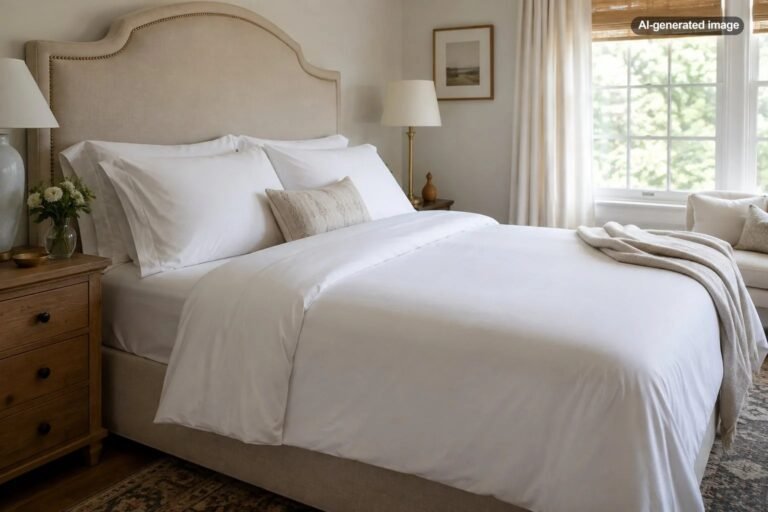
Bedding can reinforce that lighter effect. Avoid piling so many decorative pillows and layers onto the bed that the mattress appears to consume the entire room. A well-fitted duvet or coverlet, sleeping pillows, and a small number of decorative accents usually give a compact guest bedroom enough polish without visual congestion.
Do Not Sacrifice Basic Guest Function
The best guest room is not necessarily the one with the biggest possible mattress. Visitors also need somewhere to put a phone or glasses, reach an outlet when practical, open their luggage, move around safely, and access the room’s storage without furniture gymnastics.
Before committing to a queen, imagine the room with an actual guest in it. Where does a suitcase go? Can someone reach the closet without moving the bag? Is there a bedside surface? Can two people get out of bed without repeatedly climbing over one another? These questions reveal more than an empty-room floor plan.
Frequently Asked Questions
Can you put a queen bed against a wall?
Yes. In a very small guest room, placing one long side closer to or against a wall can free valuable circulation space elsewhere. The tradeoff is that the person sleeping on the wall side has less convenient access, so this arrangement is better for occasional use than for a primary bedroom shared every night.
Is a full bed big enough for a guest room?
For one adult, a full bed can be very practical. Two adults can share one, but the sleeping space is tighter than a queen. Consider how often couples visit and how long guests typically stay.
Should a small guest room have two nightstands?
Not necessarily. One useful nightstand is better than two pieces that make the room difficult to navigate. Narrow tables, floating shelves, or a small surface on only the more accessible side can work well.
What if the queen fits but makes the room look crowded?
First simplify the frame and surrounding furniture. Remove an unnecessary bench, bulky dresser, or oversized bedside table before downsizing the mattress. If the room still feels dominated by the bed and circulation remains awkward, a full is probably more proportional.
The Bottom Line
A queen bed can absolutely work in a small guest room, but fitting it should be a design decision rather than a geometry trick. Prioritize comfortable sleeping space when the room frequently hosts couples, then compensate with a slim bed frame, smaller supporting furniture, and an intentional circulation path.
If the queen blocks doors, consumes the luggage area, or leaves the room frustrating to navigate, choose a full instead. Giving up a few inches of mattress can make the entire guest room more welcoming and useful – and that balance matters more than squeezing in the largest bed the walls will tolerate.