
Should a Coffee Table Be Centered With the Sofa or the Room?
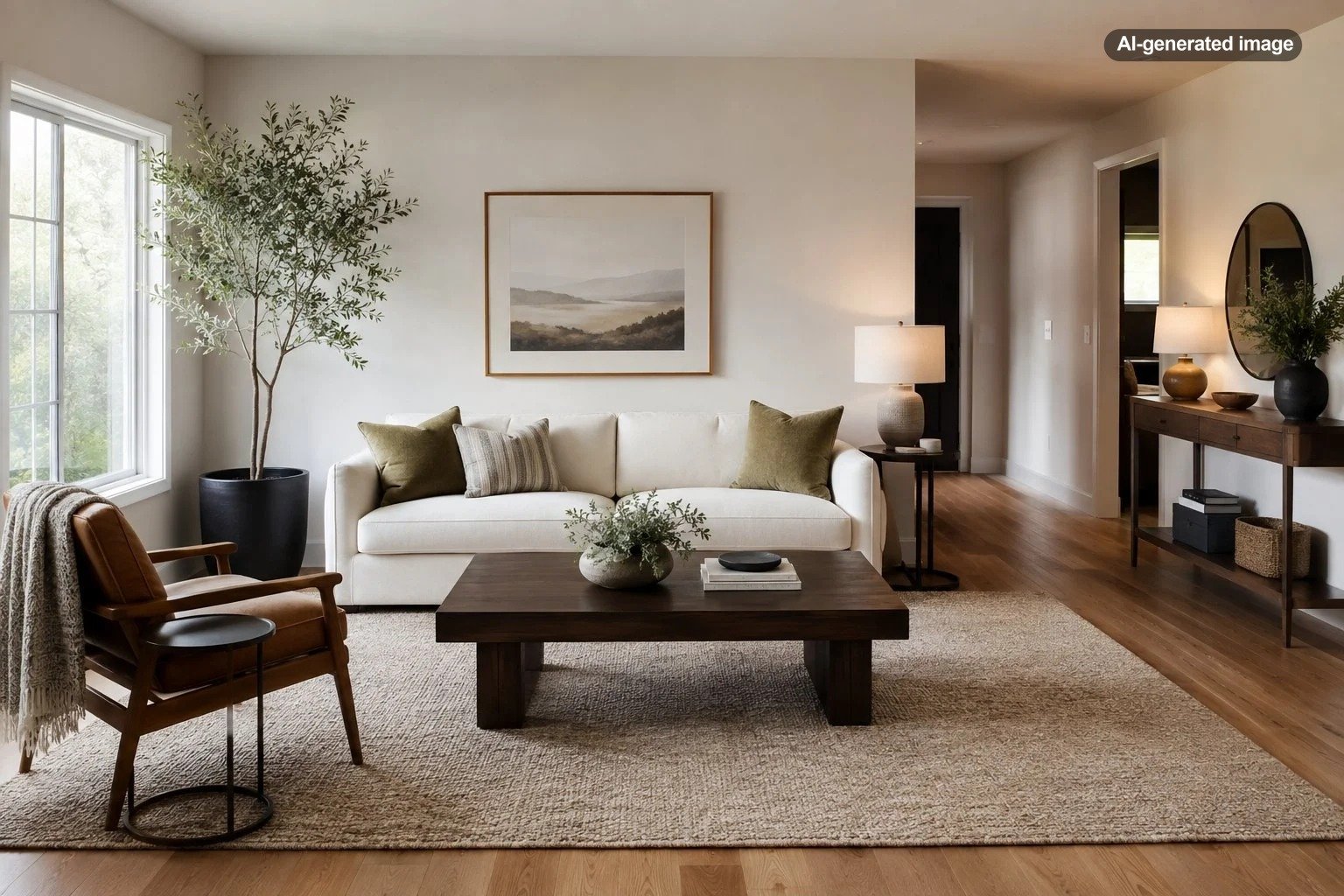
In most living rooms, a coffee table should be centered with the main seating arrangement, not automatically with the architectural center of the room. If the sofa is the dominant seat, that usually means centering the coffee table with the sofa or with the portion of the sofa that people actually use.
The room itself may be wider, asymmetrical, open to another space, interrupted by a fireplace, or arranged around more than one focal point. Trying to force the table into the exact middle of the room can leave it looking strangely disconnected from the furniture around it.
Why the sofa usually matters more than the room
A coffee table is functional furniture. Its job is to serve the people sitting around it, so its position should respond to the sofa, chairs, sectional, and walking paths rather than an imaginary line through the middle of the floor.
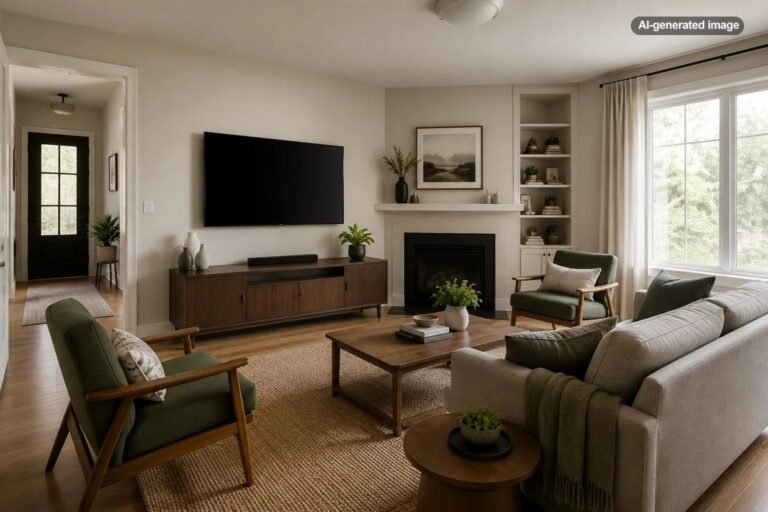
If a sofa sits several feet off-center because a doorway occupies one side of the room, placing the coffee table at the room’s midpoint may put it awkwardly in front of one sofa cushion and too far from the others. Visually, the table can look as though it belongs to the architecture instead of the conversation area.
Start by identifying the seating zone. Imagine a rectangle around the sofa and any chairs that participate in the same conversation group. The coffee table should feel balanced within that smaller zone, even if the entire zone is shifted to one side of the room.
A coffee table belongs to the seating arrangement before it belongs to the floor plan.
When centering with the sofa works best
Centering the table with the sofa is the simplest approach when the sofa is straight, visually dominant, and positioned opposite a television, fireplace, or another major focal point. In that layout, the sofa gives the room a clear axis.
Look at the sofa’s usable seating width rather than every inch of its outer dimensions. Large rolled arms, broad side panels, or an attached chaise can make the physical center of a sofa different from the visual center of the seating area.
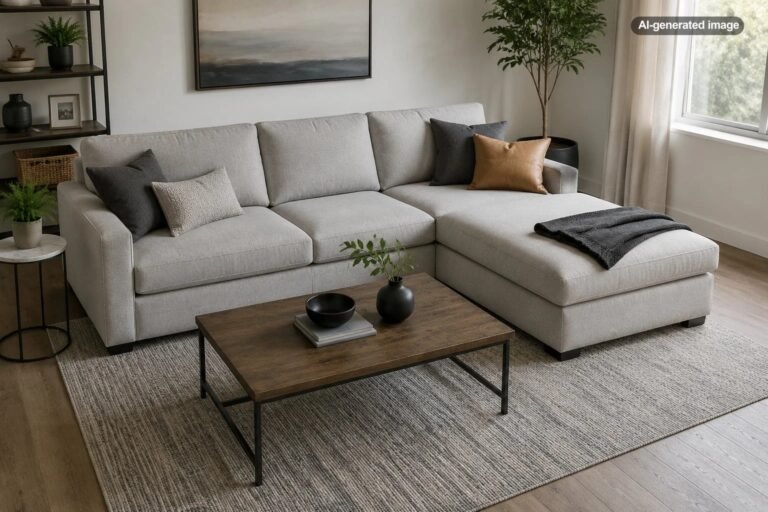
For example, a traditional three-seat sofa with matching arms generally gives you a straightforward midpoint. A sectional with a chaise on one side is less literal. The table may look better centered on the main seated portion rather than halfway between the sectional’s two furthest endpoints.
When the center of the room can make sense
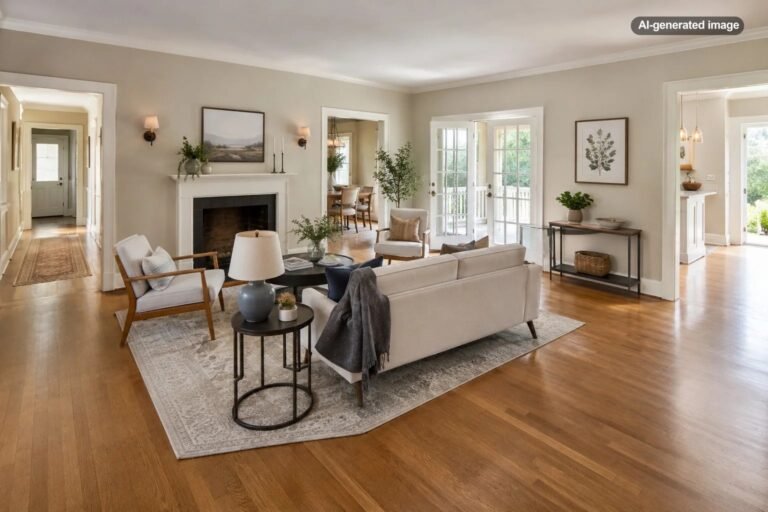
There are rooms where the architectural center and furniture center naturally agree. A formal living room with a sofa on one wall, two balanced chairs opposite it, and a centered rug may look strongest with the coffee table placed precisely in the middle of the grouping and, conveniently, close to the center of the room as well.
A centered room placement can also work when furniture floats away from the walls and creates a symmetrical island in a large room. In that case, the table is still responding to the furniture; the fact that it happens to occupy the room’s midpoint is a result of the overall layout.
Use spacing to judge placement, not just visual centerlines
Once you have a likely center point, check whether the coffee table is genuinely useful from the surrounding seats. A practical starting range is roughly 14 to 18 inches between the sofa and coffee table. That usually leaves enough room for legs and movement while keeping the surface within convenient reach.
The exact distance can vary with seat depth, table shape, household mobility, and the size of the room. A deep lounge sofa may tolerate slightly more space, while a compact apartment arrangement may feel better toward the tighter end of the range. Avoid pushing the table so far away that everyone has to lean dramatically forward to use it.
Also check the circulation route around the table. A beautifully centered table that blocks the natural path between a doorway and the sofa is not well placed. Moving it a few inches off an abstract centerline can make the room noticeably easier to live in.
Before you decide
- Identify which sofa or seating group the table is meant to serve.
- Check whether people can comfortably reach the table from the main seats.
- Leave usable walking space around the seating area.
- Compare the table’s position with the rug, fireplace, television, and nearby chairs.
- Judge the arrangement from the room entrance as well as from the sofa.
How the area rug changes the visual center
An area rug often creates a stronger visual boundary than the walls of the room. If the sofa, chairs, and coffee table all sit within one rug-defined zone, center the coffee table within that composition rather than trying to align it with the entire room.
This is especially important in open-concept spaces. A living area may occupy only one side of a much larger great room. Centering a coffee table with the combined living-and-dining footprint would make little sense. The rug helps establish a smaller visual room inside the larger architecture.
If your rug is noticeably off-center under the furniture, however, do not automatically use it as your guide. First decide whether the rug itself needs adjustment. One slightly misplaced element can make every other piece seem wrong.
Sectionals require a different kind of centering
With an L-shaped sectional, the most successful placement is often based on the open interior of the L rather than the geometric center of the entire piece. The coffee table should feel accessible from both legs of the sectional without drifting so far toward the chaise that the main sofa seats lose easy access.
Round and oval tables can be particularly forgiving in sectional layouts because they do not create a strong directional axis. Rectangular tables emphasize alignment more strongly, so an off-center position may be more noticeable.
In a very large sectional arrangement, one oversized table is not always the best solution. Two smaller tables, nesting pieces, or a coffee table paired with side tables may serve the seating more comfortably while preserving circulation.
What about asymmetrical rooms?
Asymmetrical living rooms are where the sofa-versus-room question matters most. Bay windows, angled fireplaces, offset doorways, built-ins, open kitchens, and irregular wall lengths can all shift the functional center away from the mathematical center.
In these rooms, prioritize three things in order: the seating group, comfortable circulation, and visual balance. Exact symmetry is optional. A layout can feel balanced even when no major piece sits on the precise centerline of the room.
Choosing the right coffee table can make placement easier
Proportion matters almost as much as centering. A table that is too small may appear misplaced even when its midpoint is perfectly aligned. A very large table can visually overpower the seating and crowd circulation.
Affiliate disclosure: CraneManor.com may earn a commission when you purchase through links on this page. This does not affect the price you pay. Learn more.
Before buying, consider the available floor area, sofa width, table shape, and the routes people use through the room. A substantial statement piece such as a designer coffee table can become a strong visual anchor, but it still needs enough surrounding space to look intentional rather than squeezed into the layout.
Wait: place the disclosure before the affiliate link
The most reliable method is to choose a table based on the seating arrangement and then fine-tune its position by eye. Move it a few inches in either direction and view the room from its primary entrances. Small adjustments often matter more than strict adherence to a measured centerline.
Common coffee table placement mistakes
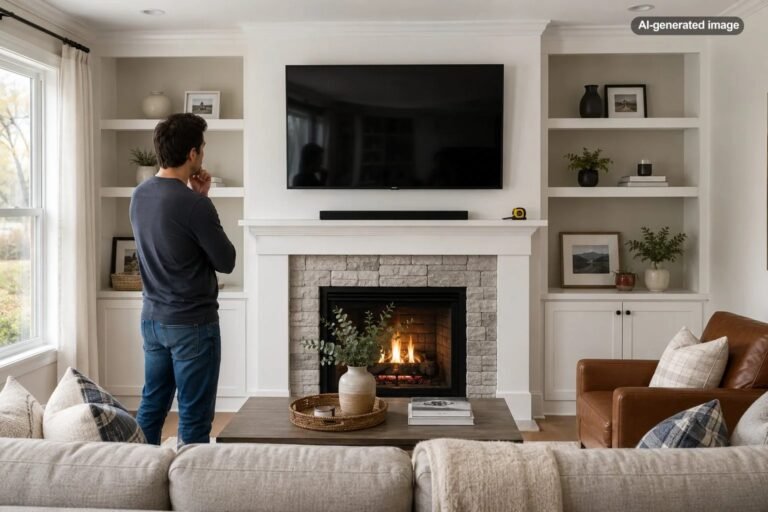
One common mistake is centering the coffee table on a television or fireplace while ignoring the sofa. The focal point may influence the furniture arrangement, but the coffee table still needs to serve the seats.
Another mistake is treating the outer dimensions of a sectional as though they form a conventional rectangle. This can pull the table toward a chaise or corner where it becomes inconvenient for the rest of the seating.
Finally, avoid adjusting the coffee table in isolation. If it consistently looks wrong, the issue may actually be the rug, sofa position, chair angle, or scale of the table itself.
Frequently asked questions
Should a coffee table line up with the middle sofa cushion?
Often, but not always. On a conventional three-seat sofa, the middle cushion can be a useful visual reference. On asymmetrical sofas and sectionals, center the table on the usable seating zone instead.
Does a coffee table have to be perfectly centered?
No. An offset of a few inches is usually unnoticeable if the table remains comfortable to reach and visually balanced. Functional placement is more important than mathematical precision.
Should the coffee table be centered on the area rug?
Usually the table should look balanced within the rug and seating arrangement, but the furniture group should guide the decision. If the rug itself is misaligned, fix that before using it as a reference point.
What if the sofa is not centered on the wall?
That is perfectly workable. Center the coffee table with the sofa or seating group rather than shifting it toward the wall’s midpoint. This is common in rooms with doors, windows, fireplaces, or circulation paths that require an offset furniture layout.
The simplest rule to remember
Think of the coffee table as part of a furniture composition, not as an object that belongs in the exact center of the floor. Start with the sofa and surrounding seats, confirm comfortable spacing and traffic flow, and then make small visual adjustments.
When the sofa happens to be centered in a symmetrical room, the table may be centered with both. When those two centers disagree, the seating arrangement almost always deserves priority.