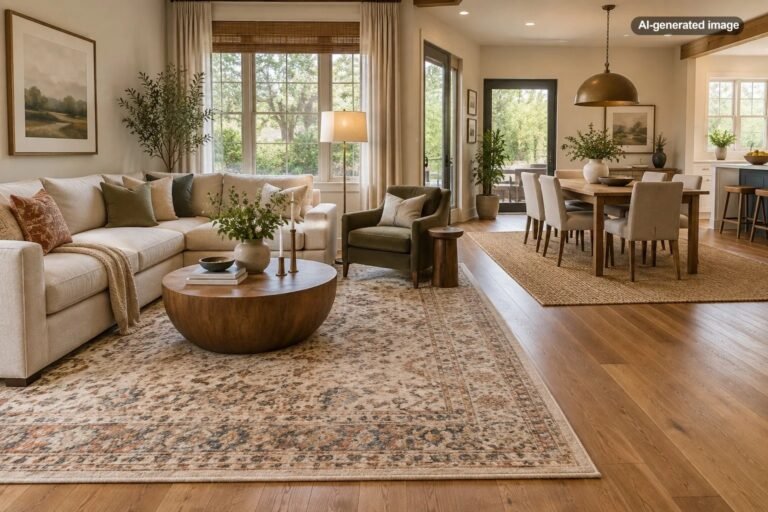

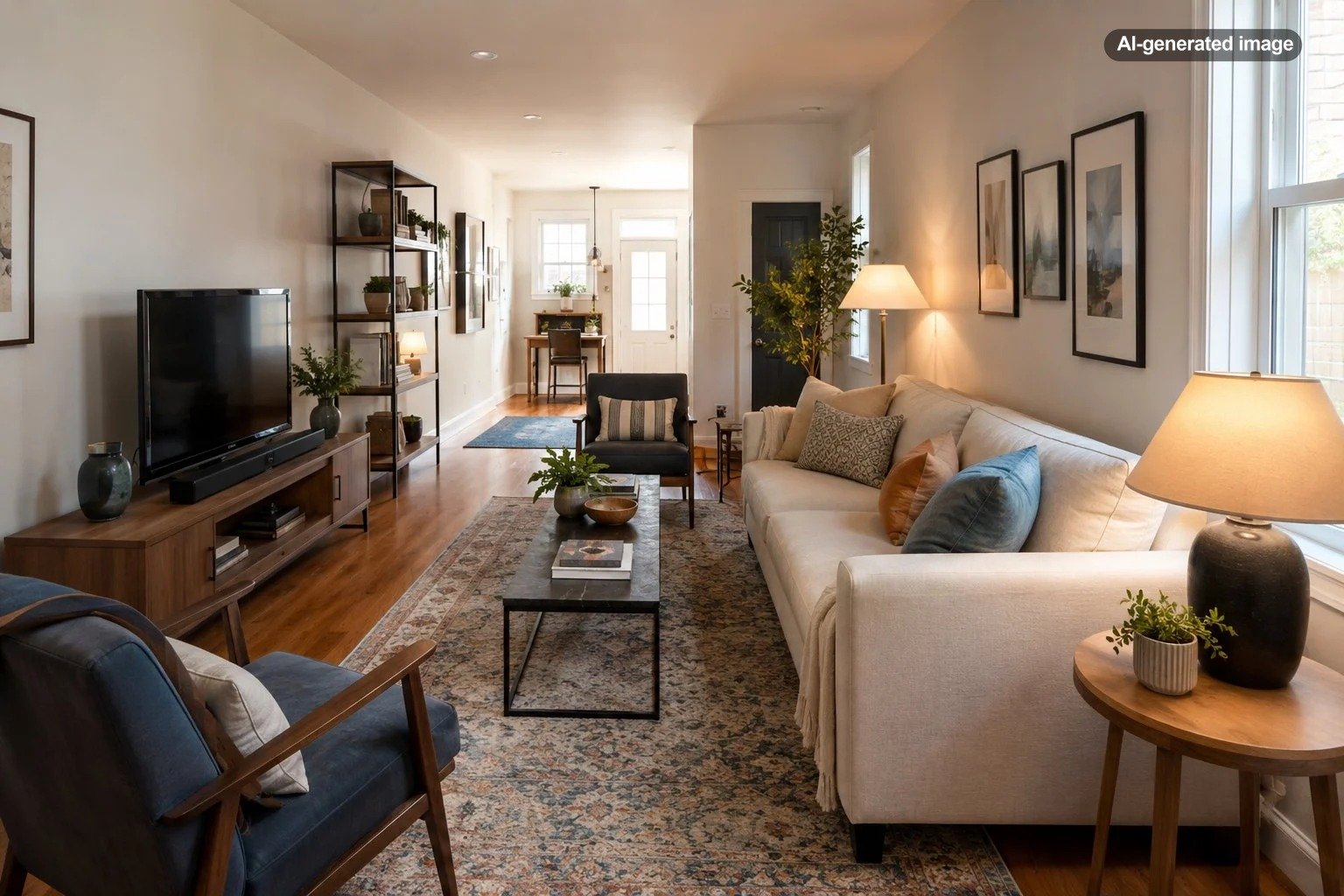
How Do You Arrange Furniture in a Long, Narrow Living Room?
A long, narrow living room works best when you stop treating it like one stretched-out rectangle and instead arrange it as a series of connected zones. Start by deciding what the room needs to do, anchor each function with appropriately scaled furniture, and preserve a clear walking path rather than pushing every piece against the walls.
The goal is not to make the room look wider at any cost. It is to create a layout that feels balanced, conversational, and easy to move through, even when the proportions are less than ideal.
Begin with the room’s real purpose
Before moving a sofa, decide what actually happens in the room. A living room used primarily for conversation needs a different arrangement from one centered on television viewing, reading, children’s activities, or a small work area.
In a particularly long room, two functions can often coexist comfortably. One end might hold the main seating area while the other becomes a reading corner, game table, desk zone, or pair of accent chairs. This is usually more successful than stretching one furniture grouping from end to end.
Before you decide
- Identify the room’s main activity.
- Note doors, windows, fireplaces, built-ins, and television locations.
- Choose the clearest route people naturally use to cross the room.
- Decide whether the room needs one main zone or two smaller ones.
Create a clear traffic lane
Traffic flow should shape the layout before decorative symmetry does. If people regularly cross the room to reach another doorway, the furniture should acknowledge that movement instead of forcing everyone to weave around coffee tables and chair corners.
Whenever possible, keep the main walking route along one side of the seating arrangement rather than sending it directly through the middle. In a room with several doors, this may mean shifting the entire conversation area slightly off center.
A practical test is simple: walk through the room as you normally would. If you have to turn sideways, step around furniture, or interrupt the seating area every time you pass through, the layout is asking too much of the available width.
Float furniture instead of lining the walls
Pushing every piece against the perimeter can make a narrow room feel even longer. When space allows, bring the sofa or chairs inward enough to create a defined seating group. Even a modest separation from the wall can make the arrangement feel intentional rather than improvised.
A sofa positioned along one long wall can work beautifully, but it does not mean every other seat must hug the opposite wall. Try angling or floating an accent chair toward the sofa so the furniture relates to the conversation rather than simply following the architecture.
The most successful narrow rooms arrange furniture around people first and walls second.
Break an extra-long room into zones
If the room is long enough to make one seating group feel lost, create separate areas with distinct purposes. The primary zone might include the sofa, coffee table, and television or fireplace. A secondary zone could hold two smaller chairs and a side table, a compact writing desk, or a reading chair with a floor lamp.
The two areas should feel related without looking identical. Repeating a material, wood tone, textile color, or metal finish can visually connect them while rugs and lighting help establish separate functions.
Choose furniture with the right depth and visual weight
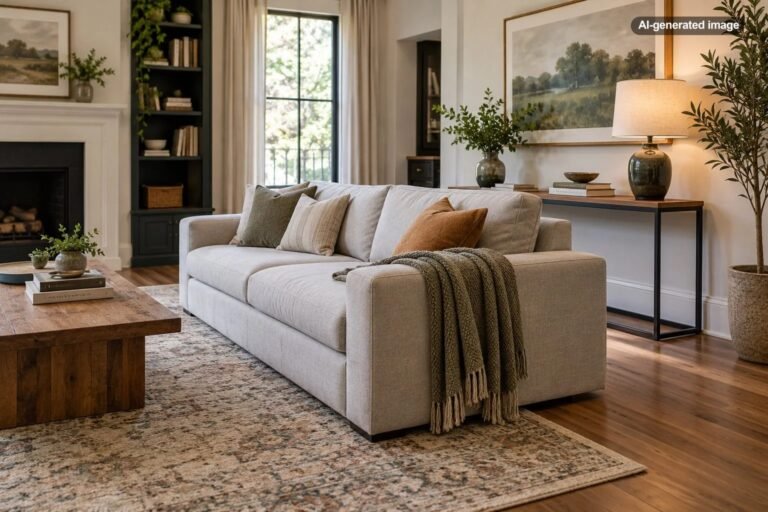
Furniture depth often matters more than overall length in a narrow room. An oversized sofa with deep seats can consume valuable floor area even if it technically fits between the walls. A more streamlined sofa may leave enough room for comfortable circulation, side tables, or an opposing chair.
Look at visual weight as well. Pieces raised on visible legs generally expose more floor and can make a compact layout feel lighter. Armless chairs, slender side tables, and oval or round occasional tables can also reduce the sense that the room is packed with hard edges.
This does not mean every piece needs to be petite. One substantial sofa can provide a strong anchor, especially when the remaining furniture is more restrained. The important distinction is between a room with one deliberate focal piece and a room filled with several competing large pieces.
Use rugs to define rather than stretch the room
An area rug can tell the eye where a seating zone begins and ends. In most layouts, the rug should relate to the furniture grouping rather than simply imitate the long shape of the room.
A rug that is too narrow may create a runway effect and emphasize the room’s length. A broader rug that connects the sofa and nearby chairs can make the seating area feel more grounded. In a two-zone room, separate rugs may work when each area has a genuine purpose, but they should coordinate enough to avoid making the room feel chopped into unrelated sections.
Place the television according to viewing, not symmetry
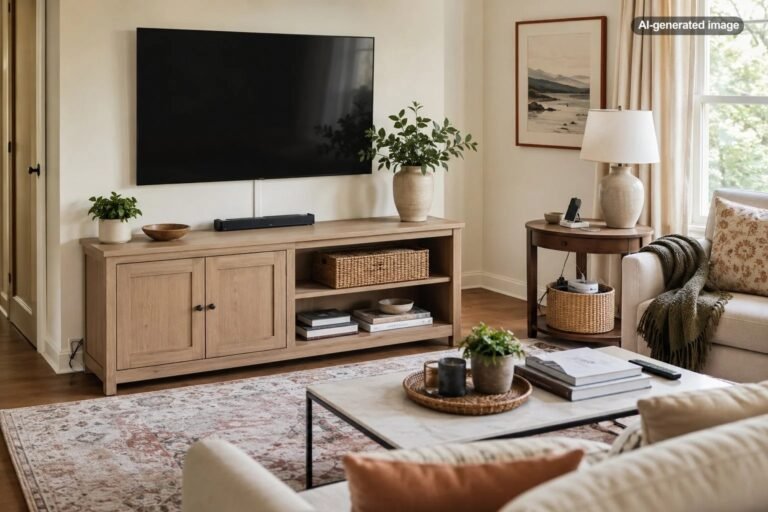
A television can complicate a narrow layout because the longest uninterrupted wall may not create the best viewing arrangement. Start with comfortable sightlines, then organize seating around them while preserving circulation.
If the television sits on a short end wall, the room may naturally support a lengthwise arrangement. If it is on a long wall, the sofa may sit opposite it with chairs completing the grouping at one or both ends. Avoid adding furniture solely to create perfect symmetry if doing so blocks doors or crowds the walkway.
Use lighting to support each zone
Lighting can reinforce the room’s organization without taking up much floor space. A floor lamp beside a reading chair signals a secondary activity, while table lamps near the main sofa make the primary seating area feel finished.
Rather than relying on one ceiling fixture to illuminate the entire length, layer light at several points through the room. This helps prevent the far end from feeling detached and makes separate furniture groupings feel equally intentional after dark.
Avoid these common long-room mistakes
The most frequent mistake is creating a corridor with furniture lined along both walls and a large empty strip down the center. Another is buying furniture based only on whether it physically fits, without considering depth, circulation, or how people will actually talk to one another.
Too many small pieces can be just as troublesome as oversized furniture. A collection of tiny tables, stools, chairs, and decorative stands may make the room feel busy without improving function. Fewer well-chosen pieces usually provide more visual calm.
Also resist the urge to fill every open corner. Negative space is useful. It gives the eye a place to rest and prevents an unusual room shape from feeling like a problem that must be concealed.
How to test your furniture plan before committing
What to do
- Measure the room and the major furniture pieces you already own.
- Mark doors, windows, outlets, built-ins, and the natural walking route.
- Choose the primary seating zone and place the largest piece first.
- Add only the chairs and tables needed to make that zone functional.
- Use painter’s tape to outline possible rug and furniture footprints.
- Walk every normal route through the room before adding decorative pieces.
- If significant empty length remains, assign it a separate function rather than stretching the first zone.
FAQ
Should a sofa go against the long wall in a narrow living room?
It often can, especially when that placement preserves the clearest walkway. However, the rest of the furniture does not need to remain against the walls. Floating chairs or tables toward the sofa can create a more comfortable conversation area.
How do you make a long living room feel less like a hallway?
Create defined furniture groupings across the length of the room rather than emphasizing one continuous path from end to end. Rugs, lighting, artwork groupings, and separate functions can help establish visual stopping points.
Can you have two seating areas in one living room?
Yes, when the room has enough length to support them without crowding circulation. Keep one area clearly primary and give the second a distinct purpose, such as reading, conversation, games, or quiet work.
What shape coffee table works well in a narrow room?
A narrower rectangular table can suit a traditional sofa arrangement, while oval or round tables may make circulation around corners easier. The best choice depends on the width of the seating zone and the surrounding walking paths.
What should you do first if the room still feels awkward?
Remove one or two nonessential pieces and reassess the layout. Long, narrow rooms often improve when the furniture arrangement becomes simpler, not when more furniture is added.