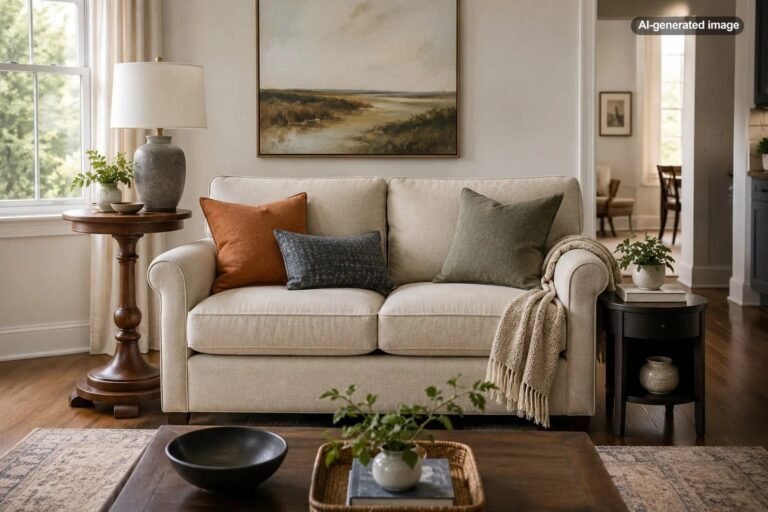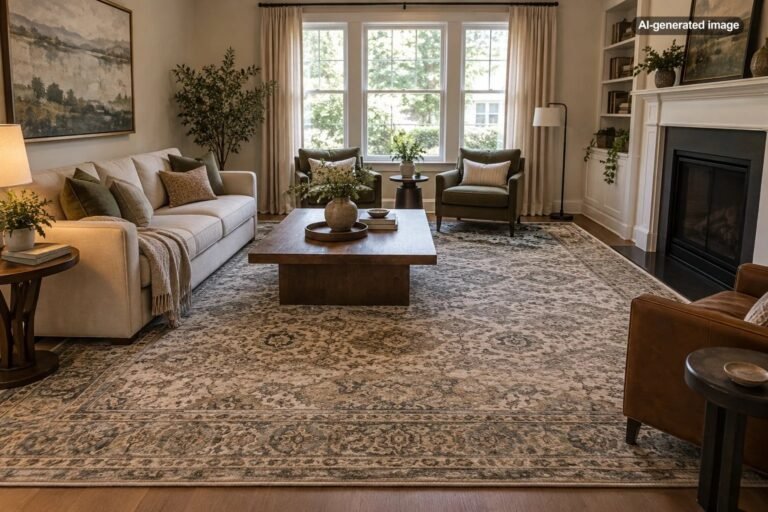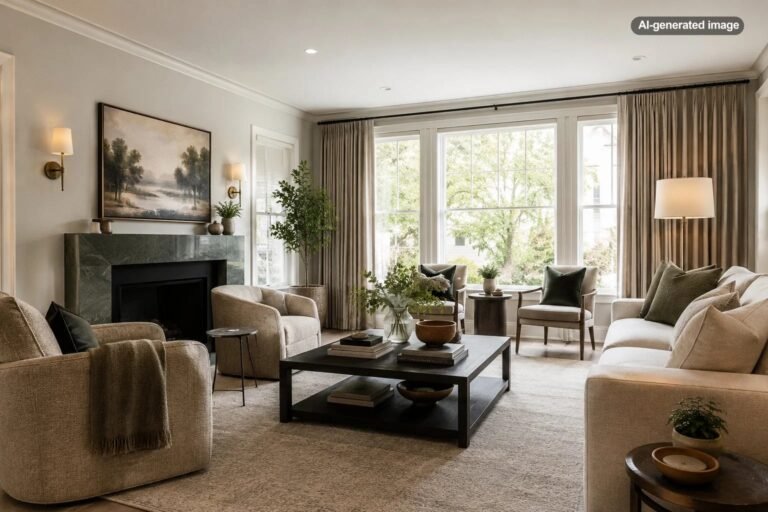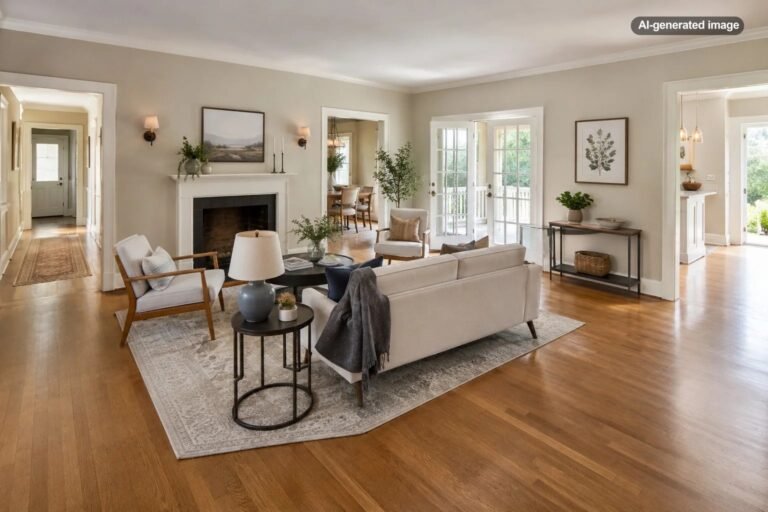

What Size Coffee Table Works With a Small Sofa?
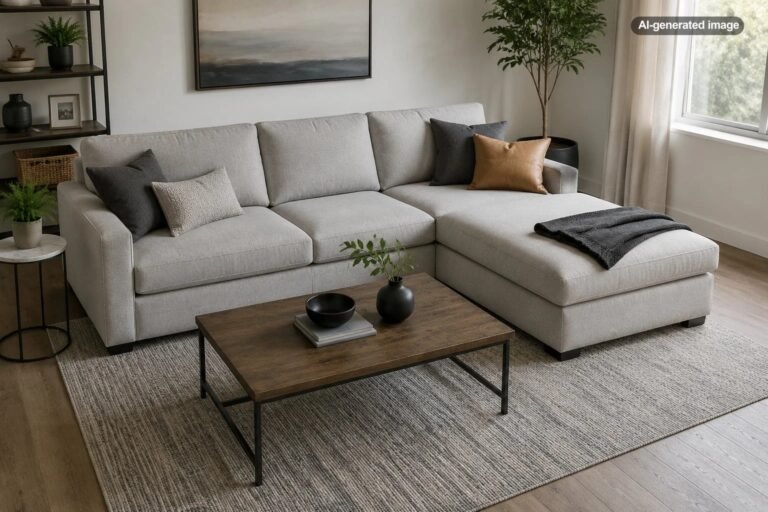
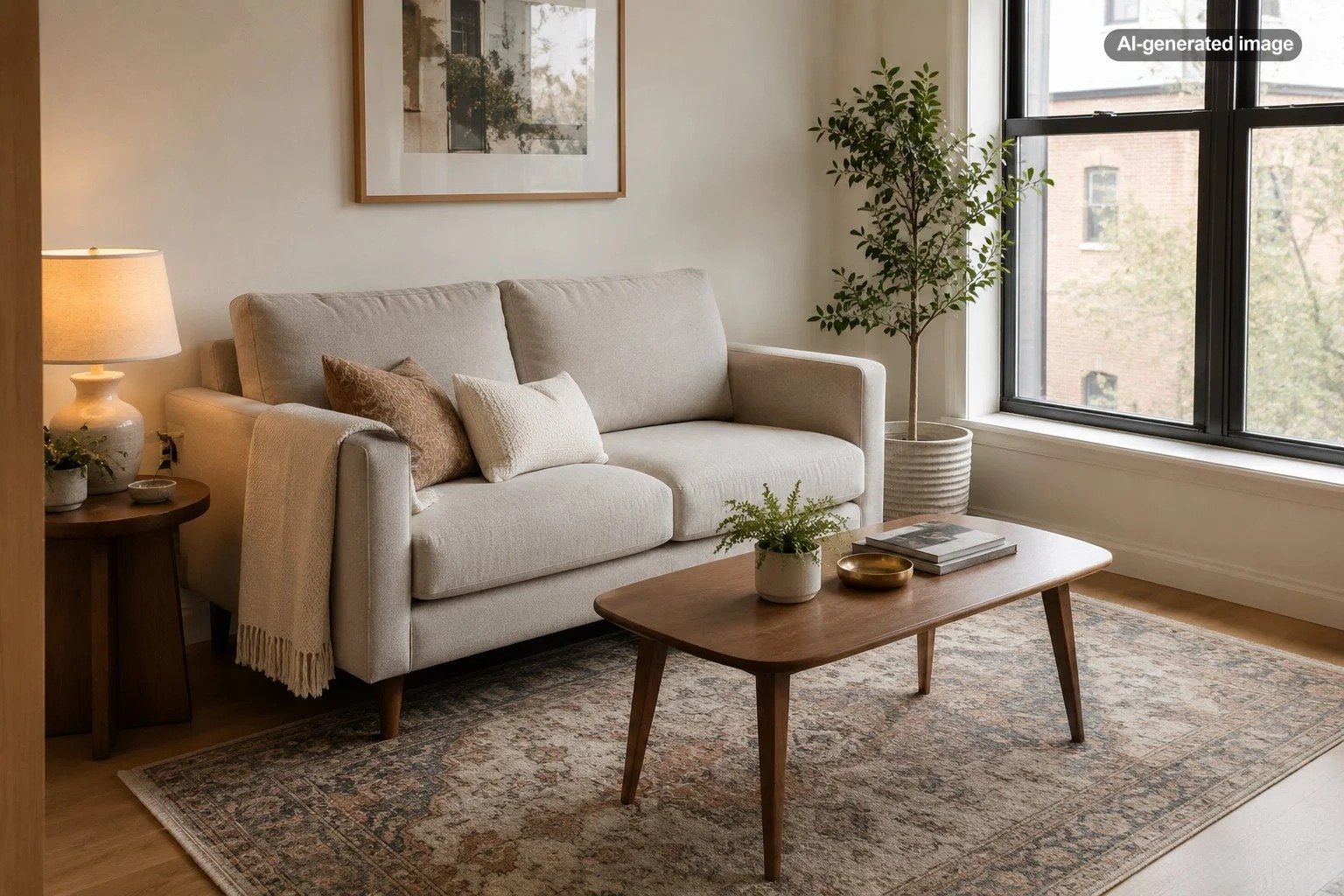
For a small sofa, a coffee table usually looks and functions best when it is roughly one-half to two-thirds the length of the sofa, close to the height of the seat, and positioned with enough space to walk comfortably around it. Those proportions create a useful surface without making a compact seating area feel crowded.
The exact dimensions matter less than the relationship between the table, sofa, and available floor space. A petite loveseat in a narrow apartment may need a very different table from a compact three-seat sofa in an open living room, even when the sofas are similar in width.
Start With the Sofa Length
The sofa is the simplest reference point for choosing coffee table length. A table that spans about half to two-thirds of the sofa generally feels substantial enough to belong with the seating without visually overwhelming it.
For example, if a small sofa measures about 60 inches wide, a coffee table somewhere around 30 to 40 inches long will usually feel balanced. A sofa closer to 72 inches wide can often support a table in the 36- to 48-inch range. These are useful starting points rather than rigid rules, because the surrounding room still has the final vote.
A very short table can appear disconnected from the sofa and may be awkward for people sitting at opposite ends. A table nearly as long as the sofa can have the opposite problem, creating a heavy block of furniture that makes a small seating arrangement feel tighter than it is.
The best coffee table is not simply small; it is proportionate to the sofa and generous enough to be useful.
Match the Height to How You Use the Room
Coffee table height affects both appearance and everyday comfort. In most living rooms, a tabletop near the sofa’s seat height or a little lower creates an easy visual relationship and keeps drinks, books, remotes, and other everyday items within comfortable reach.
A noticeably taller table can work in some rooms, particularly when it doubles as a work or dining surface, but it tends to look more substantial. In a small room, that extra visual height can make the center of the seating area feel busier. Very low tables create an airy, modern effect, although they may be less convenient if you frequently reach for items while seated.
Leave Enough Space Between the Sofa and Table
Spacing is often more important than table width in a small living room. A beautifully proportioned table can still be frustrating if you have to turn sideways every time you walk through the seating area.
About 14 to 18 inches between the front edge of the sofa and the coffee table is a practical starting range for many rooms. It is close enough for the table to be useful while providing room for knees and movement. If your living room is extremely compact, you may need to adjust that distance, but avoid squeezing the table against the sofa simply to make it fit.
Also consider the traffic path beyond the coffee table. If people regularly walk between the table and a TV console, doorway, chair, or hallway, that circulation route deserves more breathing room than a seldom-used edge of the room.
What to do
- Measure the sofa’s total width and seat height.
- Mark a coffee table footprint about one-half to two-thirds of the sofa’s length.
- Leave a comfortable gap between the sofa and the proposed table.
- Walk through the room as you normally would and check the main traffic paths.
- Reduce the table depth or change the shape if the layout feels cramped.
Choose the Right Depth for a Small Room
Small sofas do not always sit in small rooms, but when floor space is limited, coffee table depth deserves particular attention. A table can have the correct length and still feel oversized if it projects too far into the room.
Narrow rectangular tables are especially useful in shallow living rooms because they preserve the familiar sofa-to-table relationship without occupying as much floor area. An oval table can provide a similar advantage while softening the corners. Round tables work well when several circulation paths intersect near the seating area, although a large round table can consume more usable floor space than its softer shape suggests.
| Table shape | Works well when | Potential tradeoff |
|---|---|---|
| Rectangle | The sofa is straight and the room is narrow | Sharp corners can tighten traffic paths |
| Oval | You want the length of a rectangle with softer edges | Usable surface area may feel slightly reduced |
| Round | Traffic moves around several sides of the table | A wide diameter can take up more floor space than expected |
| Square | The seating arrangement is compact and roughly square | Can feel bulky in a long, narrow room |
Consider Visual Weight, Not Just Measurements
Two coffee tables with identical dimensions can feel completely different in a small room. A table with a thick solid base, dark finish, enclosed storage, and substantial top will usually look larger than an open-frame table with slender legs or a visually light surface.
This does not mean small rooms require delicate furniture. A substantial coffee table can provide useful storage and create a strong focal point. The important question is whether the visual weight is balanced elsewhere. A streamlined sofa with raised legs, for example, can often accommodate a somewhat heavier table without making the arrangement feel crowded.
If the sofa itself has a deep base, broad arms, or a skirt that reaches the floor, a lighter coffee table may create welcome contrast. If the sofa is visually spare, you have more freedom to choose a table with stronger presence.
Do Not Let Storage Make the Table Too Big
Storage is valuable in a small living room, but it can tempt you to choose a coffee table that is larger than the seating area can comfortably support. Drawers, shelves, lift tops, and hidden compartments are most useful when you can actually access them without moving other furniture.
If you need substantial storage, consider whether the coffee table should carry all of that responsibility. A smaller table paired with a side table, basket, wall-mounted shelf, or media console may preserve more flexibility than one oversized central piece.
Lift-top tables deserve an additional check: measure the furniture in both its closed and open positions. A mechanism that extends toward the sofa or raises into your sitting space needs adequate clearance to remain practical.
Common Coffee Table Sizing Mistakes
The most common mistake is buying by appearance alone. A table may look petite in a large showroom or product photograph and seem surprisingly large once placed beside a small sofa.
Another mistake is focusing exclusively on length while ignoring depth. In compact rooms, several extra inches of depth can have a larger effect on movement than several extra inches of length. It is also easy to overlook surrounding pieces such as accent chairs, ottomans, floor lamps, and media furniture when measuring the central seating area.
Finally, do not assume a very small table is automatically the safest choice. If it is too short, too low, or too far from the seating, it may become decorative rather than useful. The goal is efficient scale, not miniature furniture.
Before you decide
- Compare the table length with the sofa width.
- Check the tabletop height against the sofa seat.
- Measure the space between the sofa and table.
- Protect the room’s main walking paths.
- Consider how the table looks from every visible side.
- Test any drawers, shelves, or lift-top mechanisms for clearance.
- Measure doorways, stairs, elevators, and the delivery path before ordering a large or heavy piece.
FAQ
Can a coffee table be shorter than half the sofa?
Yes. A shorter table can work when floor space is extremely limited or when it is paired with side tables or another surface. Just make sure people can comfortably reach it from the main seating positions.
Is a round coffee table good with a small sofa?
It can be. Round tables are particularly useful when people need to move around several sides of the seating area or when you want to avoid prominent corners. Measure the diameter carefully because a generous round table can occupy more floor area than expected.
Should a coffee table be lower than the sofa?
A table at seat height or slightly lower generally creates a comfortable relationship with the sofa. Much lower tables can look elegant but may be less convenient for everyday use, while substantially taller tables tend to feel more visually dominant.
What if there is no room for a standard coffee table?
Consider a narrow table, nesting tables, a small round table, an ottoman with a tray, or movable side tables. In a very tight room, flexibility can be more valuable than having one permanent table in the center.
The Best Size Is the One That Preserves the Room
For most small sofas, starting with a coffee table about one-half to two-thirds the sofa’s length gives you a reliable sense of proportion. From there, refine the choice using seat height, table depth, walking space, and the shape of the room.
If two sizes seem equally attractive, choose the one that makes movement easier. A small living room feels better when furniture has enough presence to be useful without demanding every available inch of floor space.