Why Is My Front Door Hard to Close When It Rains?
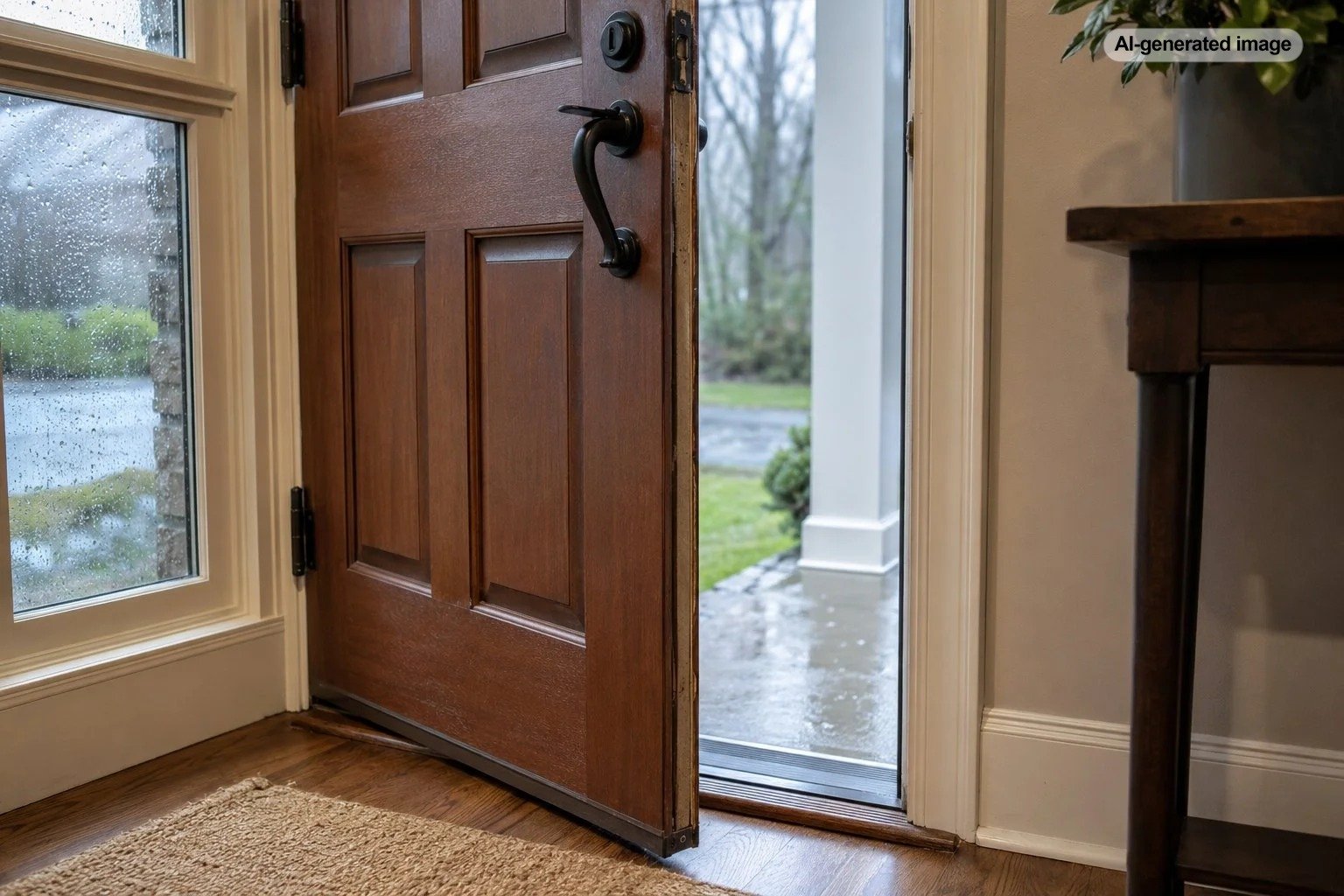
If your front door becomes hard to close when it rains, moisture is probably changing the fit somewhere within the door assembly. A wood door or jamb may swell, weatherstripping may become displaced, or water exposure may reveal a hinge or alignment problem that was already close to causing friction.
The timing is a useful clue. A door that operates normally during dry weather but sticks after rain usually has a moisture-related problem rather than a permanently undersized opening. The right fix depends on exactly where the door rubs and whether the moisture is coming from humid air, direct rain, or water entering around the frame.
Why rain changes the way a front door fits
Wood exchanges moisture with the surrounding air. As its moisture content rises, it expands, with considerably more movement across the grain than along it. An unfinished edge, worn finish, or exposed end grain can absorb moisture more readily than a properly sealed surface.
The door slab is not the only part that can move. Wood jambs, stops, brick molding, and adjacent trim can also take on moisture. Even a fiberglass or steel door may begin rubbing if it is installed in a wood frame that swells or shifts.
Rain can contribute in two ways. It can raise outdoor humidity, causing gradual movement, or it can strike the entry directly and enter through gaps, failed caulk, damaged finish, or inadequate overhead protection. A door that sticks after humid weather throughout the day suggests general moisture absorption. A door that binds soon after wind-driven rain hits one side deserves a closer inspection for direct water exposure.
Where the door rubs can reveal the cause
| Where it binds | Likely explanation | What to inspect |
|---|---|---|
| Top latch-side corner | Door sag or loose upper hinge | Hinge screws, hinge movement, and the gap above the door |
| Along the latch-side edge | Door or jamb swelling | Finish condition, exposed wood, and a narrow gap |
| Along the bottom | Swollen lower edge, raised threshold, or dragging sweep | Door bottom, sweep, threshold, and signs of standing water |
| Only near the latch | Strike plate alignment or compressed weatherstripping | Latch position, strike plate, seals, and loose hardware |
| Several areas at once | Broader frame movement or severe moisture exposure | Frame alignment, cracks, water stains, and soft wood |
Look at the reveal, meaning the narrow gap around the door, while the door is nearly closed. A gap that becomes noticeably tighter at one corner often points to alignment. A consistently tight edge is more suggestive of swelling. Shiny spots, scraped paint, compressed weatherstripping, and transferred marks can identify the exact contact point.
How to inspect a sticking door
What to do
- Open and close the door slowly. Watch the top, latch side, hinge side, and threshold to see where contact begins.
- Check the hinges. Look for loose screws, movement between the hinge and jamb, or a hinge leaf that is no longer sitting flat.
- Inspect the weatherstripping. Confirm that it is seated evenly and has not folded, shifted, or swollen away from the stop.
- Look for moisture clues. Check for peeling finish, darkened wood, soft areas, damp trim, failed caulk, or water collecting at the threshold.
- Compare wet and dry conditions. Note whether the problem disappears after several dry days. Photos of the gaps can make subtle changes easier to compare.
- Test the lock. With the door closed normally, confirm that the latch and deadbolt operate without requiring excessive pushing, lifting, or pulling.
Before changing the shape of the door, tighten visibly loose hinge screws with the appropriate hand tool. Stop if a screw spins without tightening, because the hole or framing behind it may need repair. Avoid overtightening screws to the point that the hinge bends or the jamb distorts.
Repairs that match the actual problem
Loose or sagging hinges
If the upper latch-side corner rubs, hinge movement may be contributing more than swelling. Securing loose hardware can restore the door’s position. Damaged screw holes, bent hinges, or a jamb that moves under light pressure call for a more deliberate repair than simply installing a larger screw without knowing what lies behind the trim.
Damaged or misplaced weatherstripping
Weatherstripping should seal the opening without preventing smooth operation. Replace material that is torn, permanently flattened, or pulling away. Select a profile intended for the door and frame, and check operation before fastening everything permanently. A thicker seal is not automatically better; too much compression can make the latch difficult to engage.
Moisture reaching exposed wood
Peeling paint or finish, open joints, and unsealed door edges can allow moisture into the assembly. The lasting repair is to address the water path, let affected materials dry, and restore a compatible exterior finish or sealant. The top and bottom edges of a wood door are easy to overlook, particularly if the door was trimmed during installation and the fresh edge was never resealed.
A localized high spot
If the door remains tight after it has dried and the hinges, seals, and frame are sound, a carpenter may be able to trim or plane the specific contact area. Any newly exposed wood should be refinished. Removing material from a wet door is risky because the door may shrink later and create a visible gap, air leak, or unreliable latch.
How to keep the problem from returning
Start outside. Check whether gutters, roof runoff, sprinklers, or wind-driven rain are repeatedly wetting the entry. An intact overhang, sound flashing, maintained exterior caulk joints, and a threshold that sheds water can reduce direct exposure. Do not seal over trapped moisture or block drainage paths intended by the door system.
Maintain painted or clear-finished wood before the coating begins peeling extensively. Pay attention to joints and edges as well as the broad faces of the door. Indoors, manage unusually high humidity, but remember that a dehumidifier cannot correct rainwater entering through a failed exterior detail.
Weatherstripping should also be inspected periodically. Visible daylight, loose seals, or drafts can indicate gaps, while a door that must be shoved firmly against the seal may have weatherstripping that is too thick or incorrectly positioned.
Frequently asked questions
Will a swollen door shrink again?
Often it will become easier to operate after conditions dry, especially when humidity caused modest seasonal movement. Repeated or severe swelling, however, may damage the finish or alter the fit. The moisture source still needs attention.
Should I sand the edge while the door is wet?
Usually not. Wait until the door has dried and rule out loose hinges, displaced weatherstripping, and water intrusion. If material must be removed, limit the work to a confirmed high spot and refinish the exposed surface.
Can paint cause a door to stick after rain?
Multiple paint layers can reduce the clearance around a door, leaving little room for ordinary moisture movement. Soft, peeling, or poorly cured coatings can also adhere to the stop. Even so, determine whether moisture is entering the wood before treating the issue as a paint problem alone.
Why does the deadbolt become difficult to turn?
Swelling or alignment changes can move the bolt slightly out of line with the strike opening. Do not rely on force. Check that the door closes fully and inspect its alignment; a lock that cannot engage normally should be corrected promptly so the entry remains secure.
When should I call a professional?
Call a qualified door installer or carpenter when the jamb is damaged, the frame moves, repairs require cutting the door, or the cause remains unclear. Consult an appropriate building professional if sticking accompanies significant cracking, recurring water entry, decay, or broader movement around the opening.