

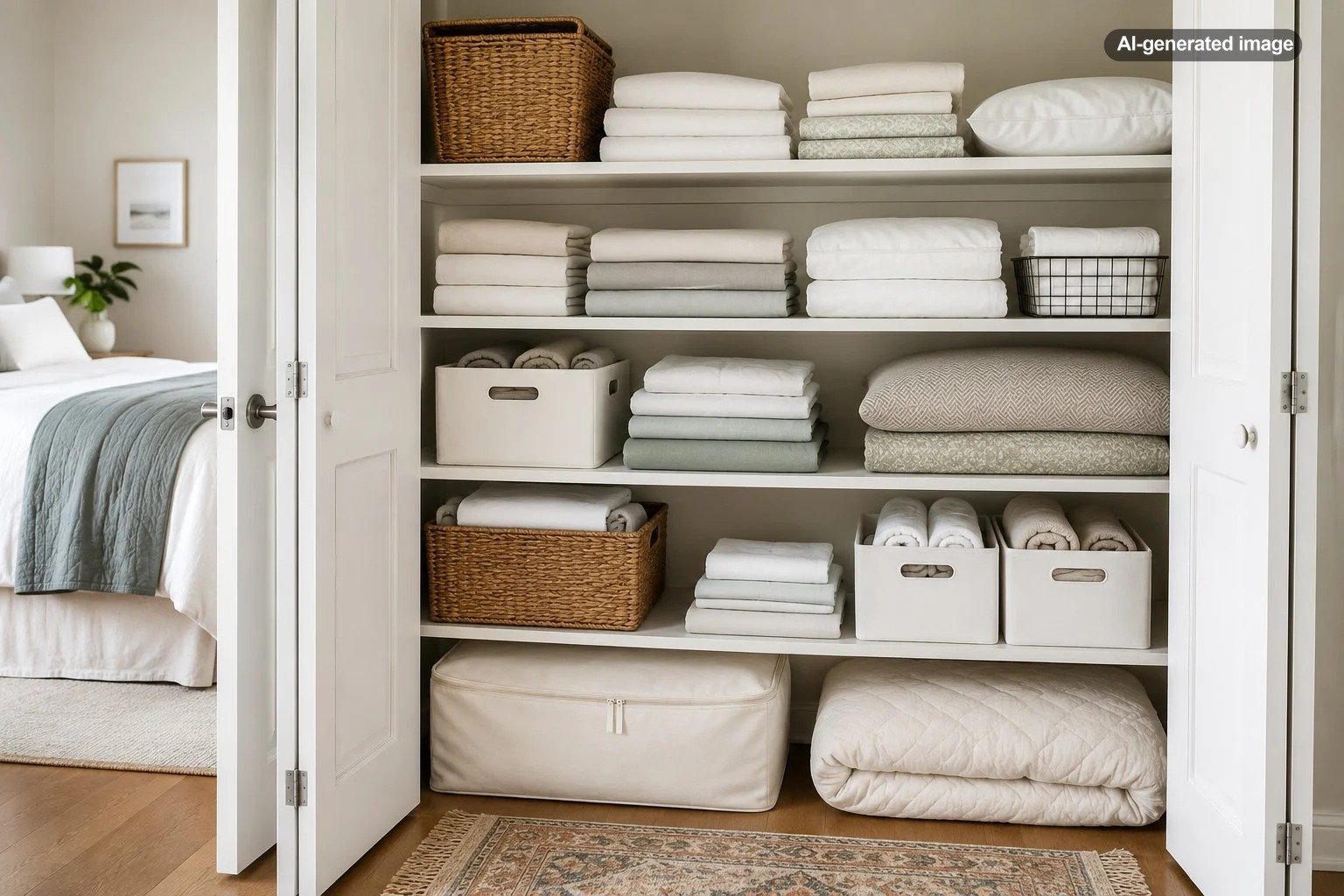
What Is the Best Way to Store Extra Bed Linens?
The best way to store extra bed linens is to wash and dry them completely, group each set by bed size, and place them in a cool, dry, dark location with enough airflow to prevent trapped moisture. A linen closet shelf is ideal, but breathable fabric bins, zippered cotton bags, under-bed containers, and bedroom storage furniture can all work when chosen carefully.
The goal is not merely to create prettier stacks. Good storage should protect the fabric, make the correct set easy to find, and prevent the familiar linen-closet avalanche caused by pulling one fitted sheet from the middle of an unstable pile.
Start with clean, completely dry linens
Do not store sheets, pillowcases, duvet covers, or blankets while they are even slightly damp. Moisture trapped between folded layers can create musty odors and may encourage mildew, especially in humid homes or enclosed storage areas.
Body oils, skin-care products, and unnoticed stains can also become harder to remove after months in storage. Launder linens according to their care labels, dry them thoroughly, and let bulky pieces cool before folding. A comforter that feels dry on the surface may still hold warmth or moisture inside its filling.
Avoid adding strongly scented dryer sheets, loose powders, or oils to long-term storage. Fragrance can become stale, transfer to fabric, or irritate sensitive sleepers. A clean textile stored in a clean space should not need perfume to seem fresh.
Keep complete sheet sets together
The simplest organizing method is to fold the fitted sheet, flat sheet, and remaining pillowcases, then place the bundle inside one pillowcase from the set. This creates a compact package and prevents individual pieces from becoming separated.
This method is particularly useful when a household owns several bed sizes. Label the shelf, bin, or bundle with clear terms such as twin, full, queen, king, guest room, or primary bedroom. Color coding can help, but labels are more reliable when two beds use similar-looking neutral sheets.
What to do
- Wash and fully dry every piece in the set.
- Fold the fitted sheet, flat sheet, and all but one pillowcase.
- Slide the folded pieces into the remaining pillowcase.
- Fold the open end underneath to create a tidy bundle.
- Place the set with its label or visible decorative edge facing outward.
If you prefer perfectly aligned stacks, shelf dividers can keep bundles upright and stop one category from spreading into another. They are especially helpful on wide shelves, where neatly folded linens tend to drift sideways over time.
Choose storage that suits how often the linens are used
Everyday and frequently rotated bedding should remain easy to reach. Open linen-closet shelves, ventilated baskets, fabric bins, or shallow drawers usually provide the best balance of access and protection.
Seasonal bedding and rarely used guest linens need more protection from dust, but they still benefit from airflow. Zippered cotton or canvas bags are useful for quilts, duvet covers, and spare sheet sets. Fabric-sided under-bed bags can be practical in apartments or bedrooms without a dedicated linen closet.
| Storage option | Best for | Main consideration |
|---|---|---|
| Open closet shelf | Frequently used sheet sets | Easy access, but stacks need dividers or consistent folding |
| Fabric bin | Sheets, pillowcases, and light blankets | Breathable and tidy, though labels may be needed |
| Zippered cotton bag | Seasonal or guest bedding | Protects from dust while allowing some airflow |
| Under-bed container | Small homes and overflow storage | Keep the area clean and inspect periodically for moisture |
| Vacuum storage bag | Temporary space saving | Compression may flatten lofty filling or create deep creases |
Plastic bins can be useful where dust, pests, or accidental splashes are a concern, but the bedding must be completely dry before the lid is closed. In humid conditions, periodically inspect the contents rather than assuming a sealed container will remain problem-free indefinitely.
Use a cool, dry, dark location
A bedroom closet, linen closet, wardrobe, or clean under-bed area is generally preferable to an unfinished attic, damp basement, hot garage, or storage space with large temperature swings. Heat, humidity, and sunlight can contribute to fading, yellowing, odors, and fabric deterioration.
Do not place bedding directly against a basement wall, on a garage floor, or beneath plumbing that has a history of leaks. Even when linens are inside containers, elevating them on a shelf provides an extra measure of protection from minor water intrusion and makes inspection easier.
In a humid home, leave a little breathing room around stacks and avoid packing shelves from wall to wall. Air cannot circulate when every sheet set has been compressed into a solid block. A slightly less full closet often keeps textiles in better condition and is much easier to use.
Fold bulky items without crushing them
Sheets and duvet covers tolerate compact folding reasonably well, but comforters, quilts, mattress pads, and pillows need more room. Fold large items along their natural seams when possible, and avoid forcing them beneath heavy stacks.
For long-term storage, changing the fold lines occasionally can reduce persistent creases. Delicate quilts or heirloom linens may benefit from loose folding with acid-free tissue placed at major folds, provided the material’s care requirements allow it.
Do not hang heavy quilts or blankets from ordinary clips for extended periods. Their weight can stretch fabric and distort edges. A sturdy padded hanger may suit some lightweight blankets, but shelves or breathable bags are usually safer for substantial pieces.
Organize by room, size, and season
A useful linen-storage system reflects how the household actually changes beds. Organizing solely by color may look attractive, but it can slow the process when several sets appear similar. Bed size should usually be the first category, followed by room, season, or fabric type.
- By bed size: Best for homes with twin, queen, and king beds.
- By room: Helpful when each bedroom has its own color palette or mattress depth.
- By season: Useful for separating flannel, lightweight cotton, and heavier layers.
- By use: Practical for distinguishing everyday bedding from guest or special-occasion linens.
Mattress depth deserves attention as well. Two queen sets may not be interchangeable if one fitted sheet is designed for a much deeper mattress. A small label noting deep pocket, guest room, or sleeper sofa can prevent an inconvenient discovery at bedtime.
The best linen-storage system is the one that makes the correct set obvious before you unfold it.
Avoid the most common linen-storage mistakes
Overfilling shelves is the most visible mistake, but it is not the only one. Storing damp textiles, mixing bed sizes, leaving sets unlabeled, and placing delicate bedding beneath heavy items can all create avoidable problems.
Another common issue is keeping more linens than the available storage can reasonably support. There is no universal number of sets every bed requires, but extras should have a clear purpose. Everyday rotation, guest use, seasonal fabric, and emergency backup are practical categories. Uncomfortable, damaged, or incorrect-size sheets do not become more useful by occupying the back of a closet.
Before you decide
- Is every item clean and fully dry?
- Can you identify the bed size without unfolding the set?
- Does the container protect against dust without trapping moisture?
- Is the location cool, dry, and away from direct sunlight?
- Are bulky or delicate items free from excessive compression?
- Can frequently used linens be reached without dismantling the shelf?
How often should stored linens be checked?
Frequently used sets naturally receive regular inspection. Seasonal or guest bedding should be checked when the seasons change or before an expected visit. Look for moisture, odors, discoloration, pests, damaged containers, or stains that were missed before storage.
Air out long-stored bedding before use, and launder it again when needed according to the care label. This small rotation also prevents one favorite set from being used continuously while other linens remain untouched for years.
Frequently asked questions
Should sheets be stored in plastic bags?
Disposable plastic bags are not ideal for long-term storage because they can trap residual moisture and tear easily. A clean fabric bag or ventilated bin is generally preferable. A rigid plastic container may be appropriate in a dry area when the linens are completely dry and need added protection from dust or pests.
Is it better to roll or fold bed linens?
Folding works well for most sheet sets and makes bed sizes easier to stack and identify. Rolling can reduce pronounced creases and may fit certain drawers or baskets better. Either method is effective when it keeps the fabric clean, dry, and easy to access.
Can extra linens be stored under the bed?
Yes. Use a low-profile container or breathable zippered bag, keep the floor clean, and check periodically for humidity or spills. Avoid under-bed storage if the area is prone to condensation, pests, or unnoticed water leaks.
How can stored sheets be kept smelling fresh?
Begin with thoroughly cleaned and dried sheets, clean the storage area, and allow reasonable airflow. Avoid using fragrance to disguise an existing musty odor. If bedding smells damp, remove it, inspect the storage location, and wash and dry the linens before returning them.