
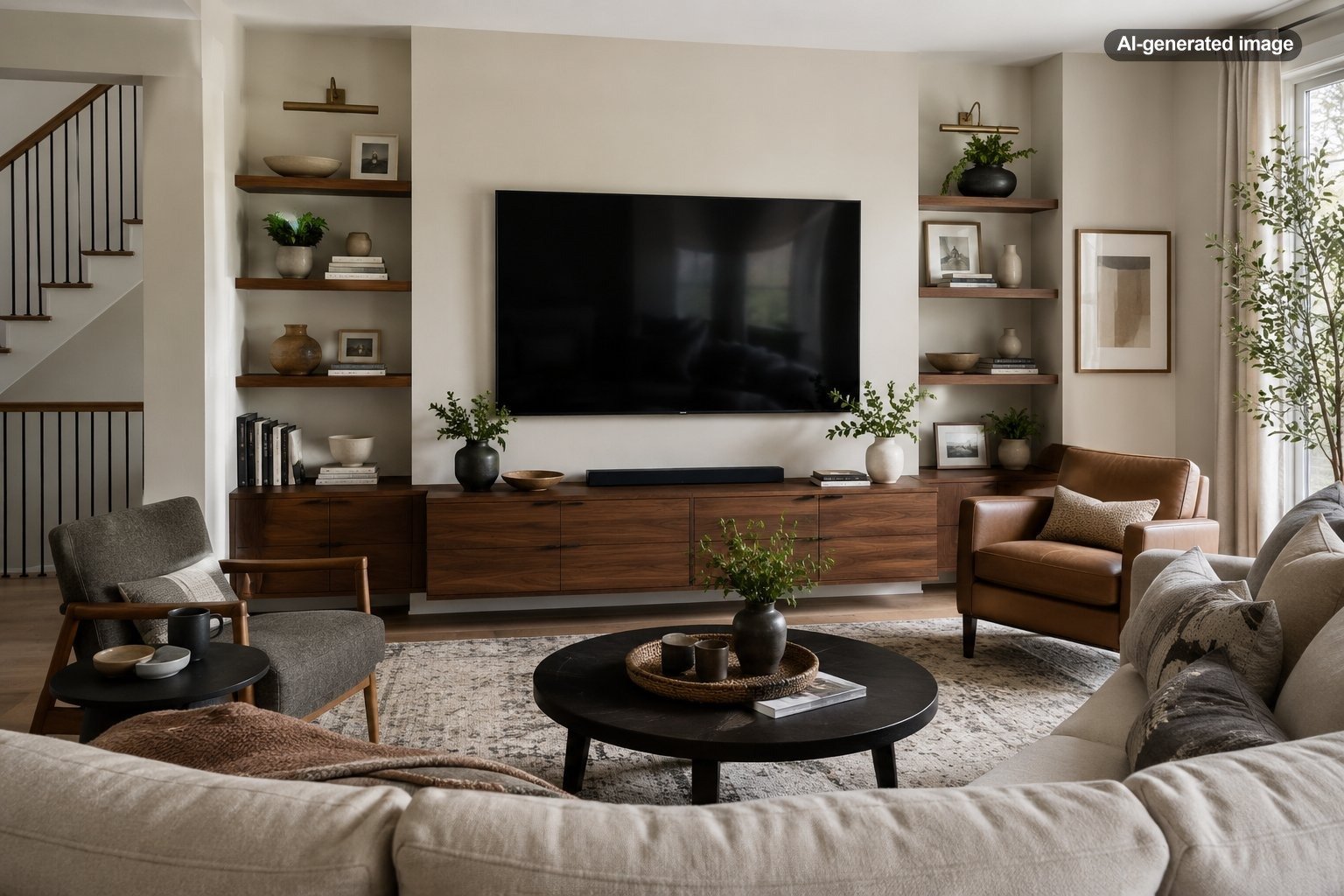
How to Decorate Around a Large Television Without Hiding It
A large television does not need to disappear behind cabinet doors, sliding artwork, or an elaborate disguise. The more practical goal is to make it feel like an intentional part of the room rather than a glossy black rectangle that arrived after every other design decision was made.
The best results come from balancing the television’s visual weight with furniture, artwork, lighting, and architectural details that are appropriately scaled. You are not pretending the screen is not there. You are giving it enough context that it no longer dominates the room when it is turned off.
Begin with proportion, not accessories
A common decorating mistake is trying to soften a large television with a collection of small objects. Tiny frames, narrow candlesticks, miniature plants, and scattered wall decor usually make the screen look even larger by comparison.
Instead, build the arrangement from the largest elements outward. The television, media console, nearby seating, rug, and any major wall treatment should feel related in scale. Decorative accessories come later.
As a practical starting point, choose a console that extends beyond both sides of the television. It does not need to span the entire wall, but it should create a broad visual base beneath the screen. A console that is narrower than the television often appears undersized, especially when viewed from across the room.
Decide whether the television should blend or contrast
There are two sound approaches to a television wall: reduce the contrast between the screen and its background, or frame that contrast confidently. Problems tend to arise when the room lands awkwardly between the two.
For a quieter, more integrated look
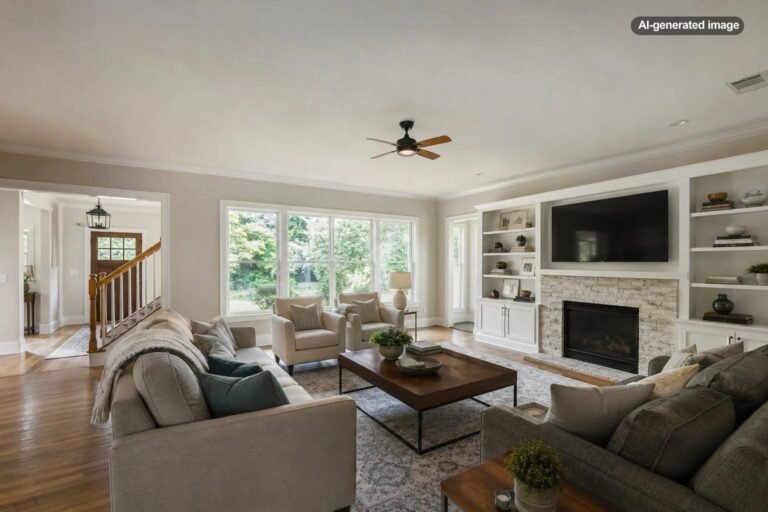
Use a deeper wall color, dark wood paneling, charcoal wallpaper, or another medium-to-dark finish behind the television. The black screen will remain visible, but the difference between the screen and wall will be less abrupt.
This approach works particularly well in rooms with rich colors, traditional millwork, moody libraries, contemporary interiors, and spaces primarily used in the evening. It can also make visible cords and mounting hardware less noticeable, although proper cable management is still important.
For a crisp, high-contrast look
A light wall can work beautifully when the television is treated as one strong geometric element within a clean composition. Pair it with a substantial console, limited accessories, and perhaps one or two large pieces of art nearby. Avoid surrounding the screen with dozens of small items in an attempt to break up the contrast.
High contrast is often the better choice in bright coastal rooms, minimal interiors, and spaces where dark paint would feel too heavy. The television will be noticeable, but the overall wall can still feel orderly and considered.
Use the media console as a visual foundation
The console should relate to both the television and the rest of the room. A low, streamlined piece supports a contemporary arrangement, while a substantial wood cabinet, credenza, or sideboard can bring warmth to a traditional or transitional space.
Closed storage is useful for remotes, game controllers, charging cables, instruction manuals, and the small collection of adapters that seems to reproduce when nobody is watching. Open shelving can look lighter, but it requires more disciplined styling and exposes electronics to dust.
Advantages of closed storage
- Keeps small electronics and accessories out of sight
- Creates a calmer appearance when the television is off
- Provides a stronger furniture presence beneath a large screen
Tradeoffs
- Electronics may need ventilation and remote-friendly doors
- A deep cabinet can feel bulky in a narrow room
- Wall-mounted components may require careful cable routing
Leave some open surface on top of the console. One broad tray, a low bowl, two stacked books, or a sculptural object may be enough. If the television sits close to the console, avoid tall decor that overlaps the bottom of the screen or competes with subtitles and on-screen information.
Add artwork without creating a visual traffic jam
Artwork can help a television feel connected to the room, but it should not be used as camouflage. The simplest solution is often to hang one substantial piece on each side of the screen, especially when the television is centered on a long wall.
The artwork does not need to match, though the pieces should share some visual relationship through color, framing, subject, or scale. Aligning the centers or outer edges can create order without making the arrangement feel rigid.
A gallery wall is also possible, but it requires restraint. Use a limited range of frame finishes and establish clear outer boundaries. Leave a consistent gap between the television and the nearest frames so the screen does not appear crowded. Larger frames generally work better than a cloud of postcard-sized art.
The goal is not to make the television invisible; it is to make the entire wall feel composed.
Balance the wall with lighting and vertical elements
A large screen and low console create a strongly horizontal arrangement. Introducing one or two vertical elements can keep the wall from feeling flat. Consider a floor lamp, tall plant, narrow bookcase, pair of sconces, or substantial ceramic vessel with branches.
Place these elements beside the media unit rather than directly in front of the screen. They should help frame the area without intruding into the viewing zone. In a symmetrical room, matching sconces or cabinets may look appropriate. In a more relaxed interior, a floor lamp on one side and a plant on the other can provide balance without perfect duplication.
Be mindful of reflections. Lamps with exposed bulbs, uncovered windows, and glossy artwork positioned opposite the screen can create glare. Adjustable shades, dimmable fixtures, and lined window treatments offer more control during daytime and evening viewing.
Repeat the television’s dark tone elsewhere
A black screen can feel isolated in a pale room when nothing else carries similar visual weight. Repeating small amounts of black, deep bronze, espresso, or charcoal elsewhere helps connect the television to the design.
This might include picture frames, lamp bases, chair legs, curtain rods, cabinet hardware, a patterned rug, or a dark accent table. The repetition does not need to be exact. A few distributed dark notes are enough to make the television feel less like the only dark object in the room.
Keep cords and equipment from becoming the focal point
Even a beautifully styled television wall can look unfinished when cords hang visibly beneath the screen. Plan cable management before arranging artwork and accessories. Depending on the wall, television location, and whether you rent or own, options may include a paintable surface-mounted cord cover, a cable-management sleeve, furniture with a concealed back panel, or professionally installed in-wall routing.
Do not run ordinary power cords through a wall unless the components and installation method are specifically intended for that use. When electrical work, new outlets, or in-wall power is involved, use an appropriate qualified professional.
Keep media boxes, sound equipment, and gaming systems ventilated according to their instructions. Hiding electronics inside a closed cabinet may improve the room visually, but equipment still needs adequate airflow and reliable access for controls.
Avoid the most common television-wall mistakes
- Mounting the screen too high: The arrangement may look dramatic while causing uncomfortable viewing. Base the height on seated sightlines, not on the height of artwork elsewhere in the room.
- Choosing a console that is too small: A narrow cabinet makes the television appear top-heavy and visually unstable.
- Using too many tiny decorations: Small accessories create clutter without balancing the scale of the screen.
- Crowding every edge: Artwork, shelving, and objects need negative space. A television wall should not feel packed from baseboard to ceiling.
- Ignoring glare: Test the screen at different times of day before finalizing lamps, mirrors, and reflective art.
- Decorating only the wall: The rug, coffee table, seating, and window treatments all influence how dominant the television feels.
Before you decide
- Confirm comfortable viewing height from the main seats
- Choose a console wider than the screen
- Decide whether the wall should blend with or contrast the television
- Use a few substantial decorative pieces instead of many small ones
- Check daytime reflections and evening lighting
- Plan safe cable routing and equipment ventilation
Let the room remain a room
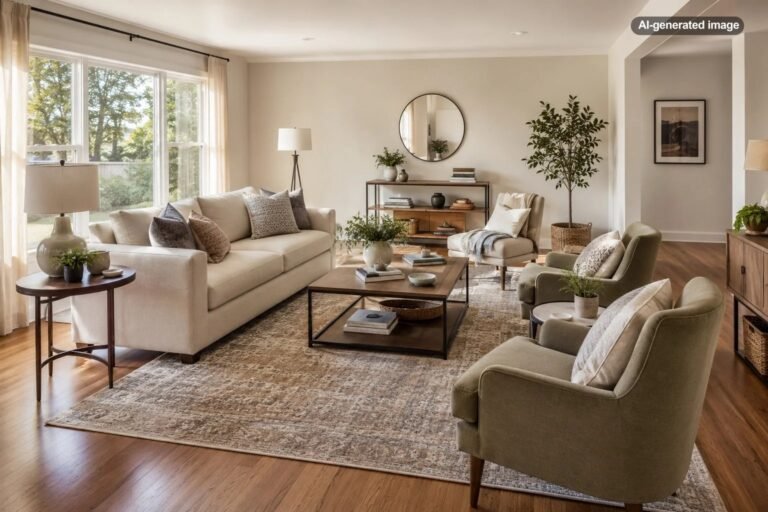
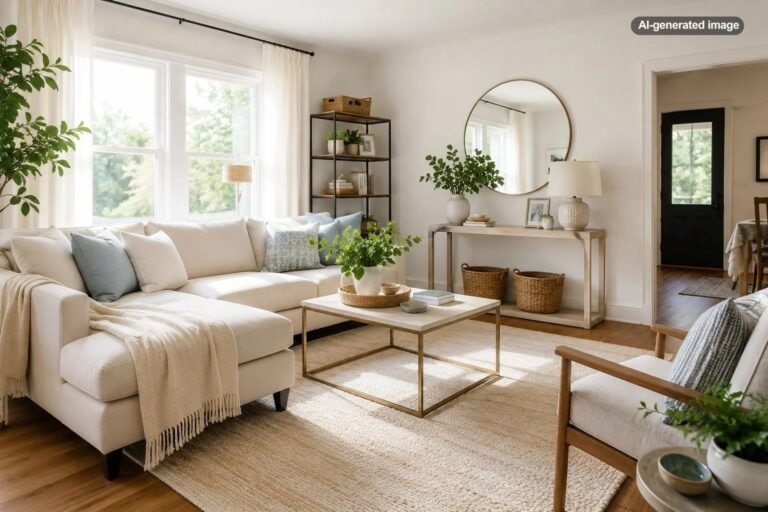
The most successful television arrangements do not turn the entire living space into a shrine to the screen. Arrange seating for conversation as well as viewing, keep books and personal objects in the room, and use textiles, plants, art, and lighting to create interest beyond the media wall.
A large television will always have presence. That is not a design failure. With the right scale, spacing, and supporting elements, it can sit comfortably within a polished room without being hidden, apologized for, or surrounded by an exhausting amount of decor.
Frequently asked questions
Should the wall behind a large television be dark?
It does not have to be, but a medium or dark wall reduces contrast and can make a black screen feel more integrated. A light wall works well when the surrounding composition is simple, balanced, and intentionally high contrast.
How much decor should go on a media console?
Usually less than expected. Try one low grouping on each side, or one asymmetrical arrangement balanced by open space. Keep objects from blocking the screen, speakers, or ventilation openings.
Can artwork be hung above the television?
Yes, provided there is enough wall height and the artwork does not make the television area feel stacked or crowded. One wide piece or a restrained row of frames generally looks calmer than several unrelated small pieces.
Is a gallery wall around a television outdated?
No. It can still look thoughtful when the frames are appropriately scaled, the spacing is consistent, and the collection has a clear visual boundary. The television should feel included in the composition rather than trapped inside it.