
Why Is My House Dusty Again One Day After Cleaning?
Your house can look dusty again one day after cleaning because cleaning removes the dust that has already settled, but it does not necessarily stop new particles from entering the room, circulating through the air, or falling from fabrics and furnishings. Outdoor soil, pollen, pet dander, skin flakes, cooking particles, textile fibers, and disturbed debris can begin settling on freshly wiped surfaces almost immediately.
A faint layer returning quickly is usually not evidence that your home is unusually dirty. It is more often a sign that dust is being produced or redistributed faster than your current routine can capture it. The useful question is not simply how often you clean, but where the particles are coming from and whether your cleaning method is trapping them or merely moving them around.
Cleaning can put settled dust back into the air
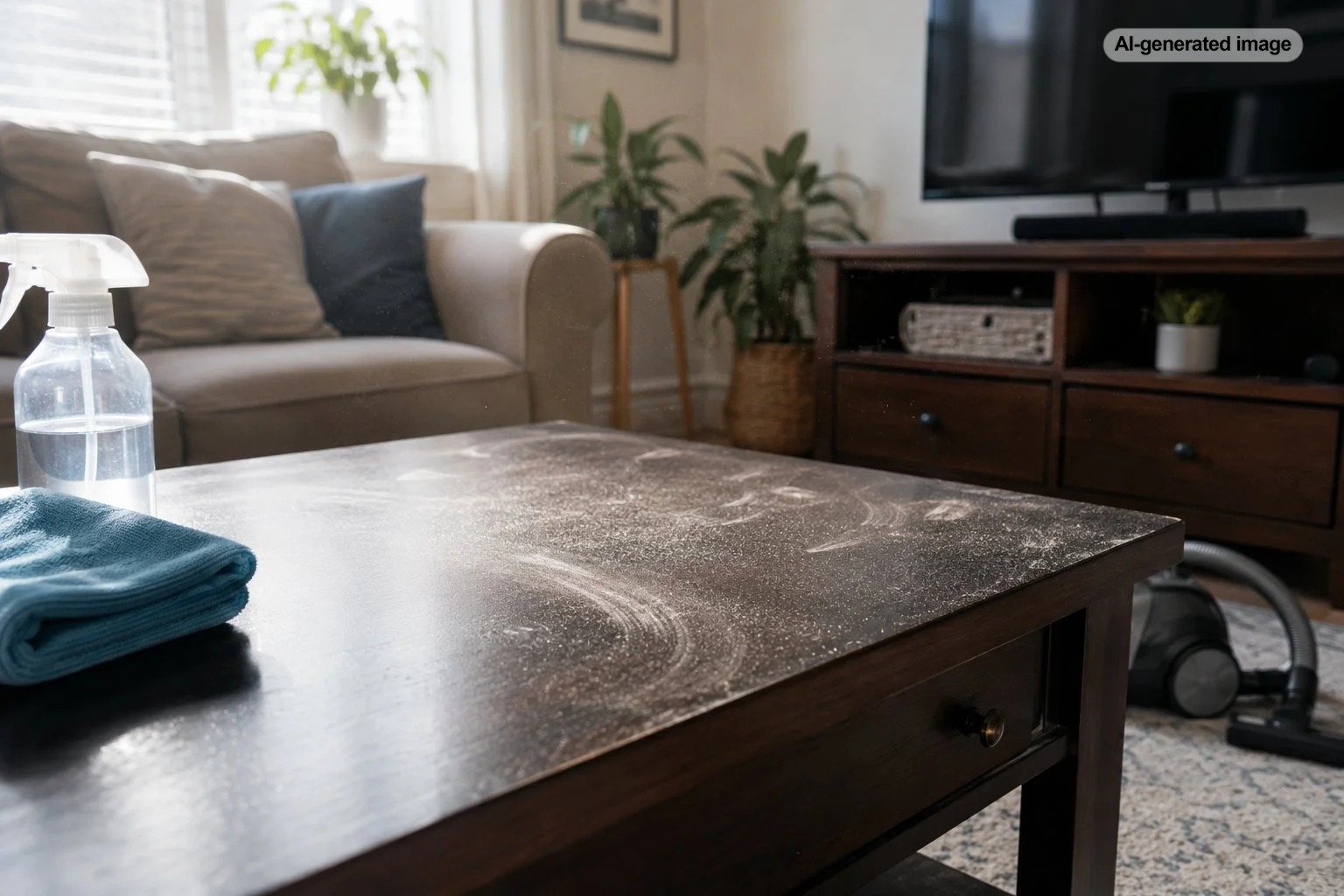
Dry feather dusters, fast sweeping, vigorous bed-making, and some vacuums can lift settled particles into the air. Those particles may remain suspended while the room looks clean, then settle onto shelves and dark furniture several hours later.
This is one reason dust can seem to reappear overnight. You may be seeing part of the same dust that was disturbed during cleaning rather than an entirely new day’s accumulation.
Use a lightly dampened microfiber cloth on suitable surfaces so particles cling to the cloth. Fold the cloth into sections and expose a clean area as each section becomes soiled. For delicate finishes, follow the furniture manufacturer’s care instructions and avoid leaving moisture on the surface.
The order of your cleaning routine matters
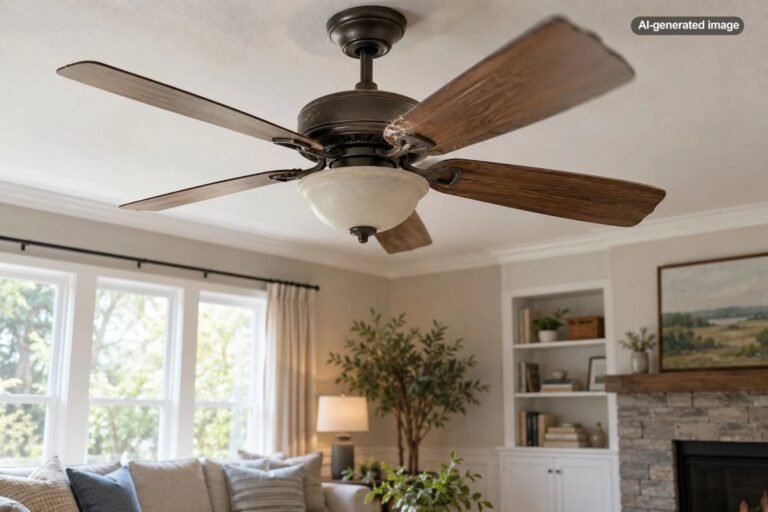
Cleaning from the floor upward creates extra work. Dust from ceiling fans, shades, shelves, lamps, and furniture will fall onto surfaces you have already cleaned.
What to do
- Turn off ceiling fans and let airborne dust settle briefly.
- Clean high surfaces, including fan blades, upper shelves, and the tops of door frames.
- Wipe furniture, lamps, window sills, and baseboards.
- Vacuum upholstery, rugs, and floors last.
- Empty the vacuum outside or remove the bag carefully so collected dust does not escape back into the room.
A vacuum with effective particle filtration can help prevent captured debris from being blown back into the room. Regardless of the vacuum type, maintain its filters, seals, brush roll, and collection bin according to the manufacturer’s directions.
Textiles continually release and collect particles
Bedding, upholstered furniture, rugs, curtains, throws, clothing, and towels are major dust reservoirs. They collect particles from the air and release fibers or previously trapped debris whenever they are shaken, folded, walked on, or used.
Bedrooms can become dusty especially quickly because they combine bedding, clothing, rugs, frequent movement, and long periods with the door closed. Laundering bedding regularly, reducing piles of unworn clothing, vacuuming beneath the bed, and cleaning fabric headboards can make a noticeable difference.
Outdoor particles may be entering faster than you realize
Dust does not originate only inside the house. Soil, pollen, road debris, and other outdoor particles enter through open doors and windows, gaps in the building envelope, shoes, pets, packages, and clothing.
Look for heavier accumulation near entryways, window sills, sliding doors, and rooms facing a busy road, construction area, dry yard, or frequently used patio. A washable entry mat outside, an absorbent mat inside, and a practical shoes-off routine can reduce tracked-in debris without turning the front door into a decontamination station.
Opening windows may improve ventilation when outdoor air is clean, but it can also admit pollen and fine particles. On windy days, during nearby construction, or when outdoor air quality is poor, closed windows and appropriate filtration may be the better choice.
Your HVAC filter may be dirty, poorly fitted, or unsuitable
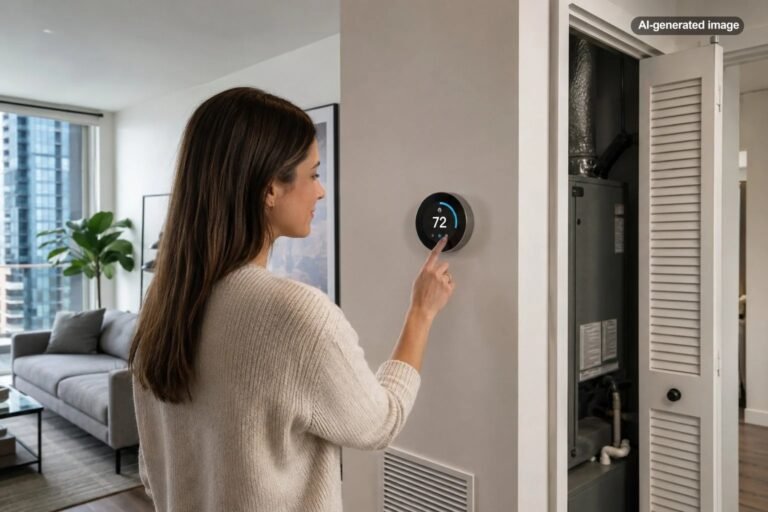
Central heating and cooling systems move air throughout the house, but their filters work only while the system is operating. A filter that is overdue for replacement, installed backward, bent, undersized, or surrounded by gaps may allow more particles to circulate.
Check that the filter matches the required dimensions and sits securely in its slot. Replace or clean it according to the equipment and filter manufacturers’ directions. Do not assume that the densest available filter is automatically the best choice. The U.S. Environmental Protection Agency advises using the highest-efficiency filter the system can accommodate, noting that compatibility with the fan and filter slot matters.
Black streaks or concentrated dust around a supply register do not automatically prove that the ducts need cleaning. They can result from airflow carrying particles across a nearby surface, leakage around the register, candle soot, or other local conditions. Widespread duct cleaning is not a routine cure for every dusty home.
Pets, people, and ordinary activities create indoor dust
Household dust is a mixture rather than one substance. It may include textile fibers, hair, skin flakes, pet dander, tracked soil, pollen, cooking residue, and particles from candles or fireplaces. Walking, playing, grooming pets, changing clothes, and rearranging bedding keep some of that material moving.
For homes with pets, wash pet bedding, vacuum favorite resting areas, groom animals appropriately, and clean beneath sofas or chairs where hair gathers. Concentrating on the pet’s regular paths and resting spots is usually more effective than repeatedly wiping every decorative object.
The fastest way to reduce visible dust is to control its busiest routes, not to polish every surface more often.
Clutter and open storage make dust more visible and harder to remove
Open shelves are not inherently a problem, but dozens of small objects create more edges and horizontal surfaces where particles settle. Cleaning around each item also makes it tempting to dust less thoroughly.
Use closed storage for objects that do not need to be displayed, leave breathing room between decorative pieces, and avoid storing clothing or linens uncovered for long periods. In a small home or rental, lidded containers and washable fabric boxes can simplify cleaning without requiring built-in cabinetry.
Humidity can change how dust behaves
Very dry indoor air can make some fine particles easier to stir up, while excessive moisture can encourage dust mites and biological growth. The EPA generally recommends maintaining indoor relative humidity between 30 and 50 percent when practical and keeping it below 60 percent.
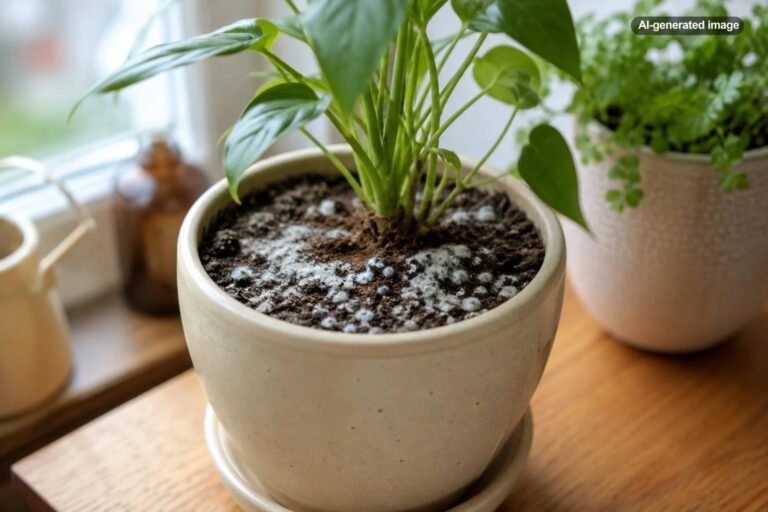
Use a basic humidity gauge rather than judging moisture by feel. If you use a humidifier, clean it exactly as directed. Some ultrasonic or cool-mist units can disperse minerals from tap water, which may appear as fine white dust on nearby furniture.
How to identify the main source in your home
Instead of deep-cleaning everything at once, treat the problem like a simple comparison. Thoroughly clean one room, change one variable, and observe it for several days.
Before you decide
- Notice whether dust is worst near windows, doors, vents, beds, rugs, or pet areas.
- Check whether the residue is gray and fibrous, gritty, oily, or powdery white.
- Confirm that the HVAC filter fits correctly and is not visibly overloaded.
- Clean one room with damp methods and vacuum last.
- Wash or vacuum its largest textiles.
- Keep its windows closed temporarily if outdoor dust or pollen is suspected.
- Compare the result with a room cleaned using your usual routine.
The pattern often reveals more than the total amount. Grit near an exterior door suggests tracked soil. White powder near a humidifier may indicate mineral residue. Fibers concentrated in a bedroom point toward bedding, clothing, or carpeting. Heavy dust beside a renovation area may persist until construction debris is contained and removed.
When rapidly returning dust deserves a closer look
Ordinary dust is expected, but a sudden or unusually heavy increase can justify further investigation. Consider what changed: remodeling, new flooring, damaged plaster, a new pet, seasonal pollen, nearby construction, an HVAC repair, a fireplace in use, or a new humidifier.
Professional evaluation may also be sensible when one room receives dramatically more debris from the vents, filters collapse or become dirty unusually quickly, or recent construction dust cannot be controlled. Begin with inspection and source identification rather than assuming that an expensive service will solve the problem.
A simpler routine for keeping dust under control
Once you identify the major sources, maintenance becomes more manageable. Wipe the most visible horizontal surfaces with a suitable damp cloth, vacuum high-traffic floors and upholstery regularly, wash bedding and pet textiles, maintain the HVAC filter, and clean entry mats before they become saturated with debris.
There is no realistic way to prevent every particle from settling. The practical goal is a home that stays comfortably clean between routine sessions, not a room that remains optically dust-free under direct sunlight. Sunbeams are excellent at revealing particles and terrible at respecting your sense of accomplishment.
Frequently asked questions
Why is dust more obvious on dark furniture?
Pale fibers and skin flakes contrast sharply with black, navy, espresso, and glossy finishes. The furniture may not be collecting more dust; it is simply displaying it more efficiently.
Should I dust or vacuum first?
Dust high surfaces first, then vacuum floors and upholstery. This allows the vacuum to collect particles that fall during the earlier steps.
Will an air purifier eliminate household dust?
A properly sized portable air cleaner can capture some airborne particles in the room where it operates, but it will not remove settled debris or replace source control and cleaning. Placement, filter maintenance, operating time, and room size all affect its usefulness.
Does a dusty house mean the air ducts need cleaning?
Not necessarily. Check routine cleaning methods, outdoor entry points, textiles, filter condition, register gaps, and local particle sources first. Duct cleaning may be appropriate in specific circumstances, but it is not a universal treatment for ordinary dust.