

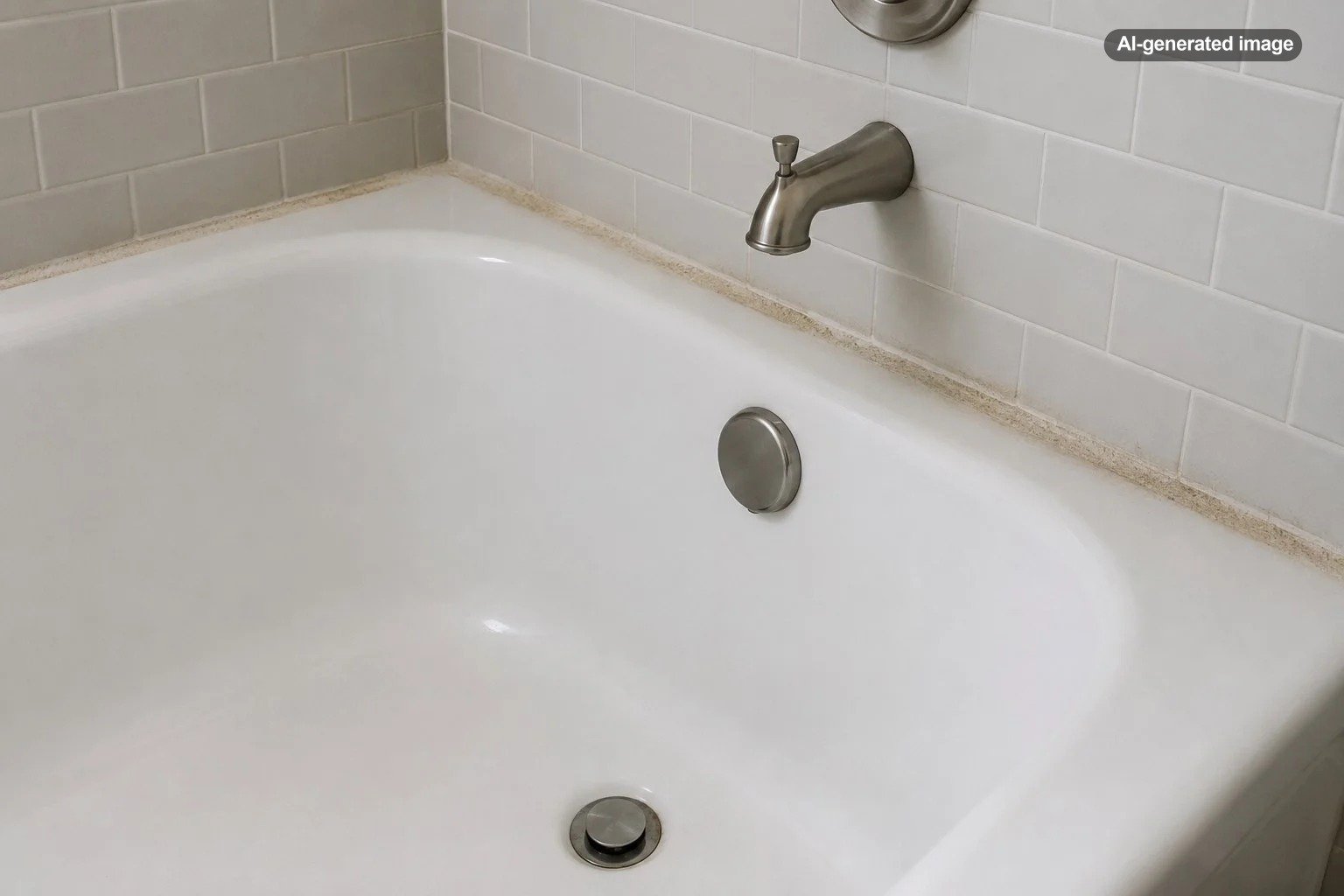
Why Is There a Ring Around My Bathtub After Every Bath?
A ring around the bathtub after every bath is usually a mixture of soap residue, body oils, bath products, and minerals left behind as the water drains. The line forms at the water level because floating residue collects there, then clings to the tub as the surface dries. It is common, generally cosmetic, and often easier to prevent than to remove once several layers have built up.
The exact color and texture can help narrow down what is contributing to it. A gray or dull white ring often points to soap scum and hard-water minerals. A greasy or slightly yellow film is more likely to contain body oils, moisturizers, or oily bath products. A brightly colored line may come from bath bombs, dyes, or botanical ingredients.
What Is Actually in a Bathtub Ring?
A bathtub ring is rarely one substance. It is usually a layered deposit created by several ordinary parts of bathing.
Soap and hard-water minerals
Hard water contains relatively high levels of dissolved calcium and magnesium. These minerals can react with traditional soap and form an insoluble residue commonly called soap scum. The residue may look white, gray, cloudy, or chalky, and it can adhere firmly to bathtub walls.
Soap scum is especially likely when bar soap is used in a home with hard water. More soap may be needed to create a satisfying lather, which also gives the bathwater more material to leave behind.
Body oils and skin-care products
Natural skin oils, lotions, body butters, sunscreen, makeup, hair conditioner, and similar products can float on bathwater. Oils do not mix evenly with water, so they tend to gather at the surface and along the sides of the tub.
When the water drains, those oils can act like a binder. They help soap particles, lint, skin cells, and minerals stick to the bathtub instead of rinsing cleanly down the drain.
Bath oils, bombs, salts, and bubbles
Bath additives can make the ring more noticeable. Oils leave a slick film, while bath bombs may contain pigments, fragrances, starches, salts, botanical material, and moisturizing ingredients. Bubble bath and highly concentrated body wash can also leave residue when more product is used than the water can easily disperse.
This does not necessarily mean the product is defective. It may simply be a poor match for the water hardness, tub finish, product quantity, or cleanup routine in that bathroom.
Why Does the Ring Appear at the Waterline?
The bathtub wall above the water stays relatively dry, while the area below the waterline remains submerged. At the boundary between them, floating oils and particles repeatedly contact the tub surface. As the bath drains, that boundary moves downward and leaves a thin trail of residue behind.
A smooth, clean tub may release much of this material during a quick rinse. A tub with an existing film, microscopic scratches, textured areas, or worn finish gives fresh residue more places to grip. That is why a faint ring can seem to return faster after it has been ignored for several baths.
The ring is not appearing from nowhere; it is the visible edge of everything the bathwater has collected.
How to Tell What Is Causing Your Bathtub Ring
You do not need laboratory testing to make a useful first assessment. Look at the residue before cleaning it and consider what was added to the bath.
| What the ring looks or feels like | Likely contributors | Useful first step |
|---|---|---|
| White, gray, or chalky | Soap scum and hard-water minerals | Use a tub-safe cleaner labeled for soap scum or mineral film |
| Greasy, slick, or yellowish | Body oils, lotion, conditioner, or bath oil | Use a mild grease-cutting cleaner approved for the tub material |
| Pink, blue, purple, or another product color | Bath bomb, dye, or botanical residue | Rinse promptly and follow the tub manufacturer’s cleaning guidance |
| Dark particles in a greasy line | Oil mixed with lint, hair-product residue, or surface debris | Remove loose material before wiping the surface |
| Rough deposits around several fixtures | Broader mineral buildup | Check faucets and nearby surfaces for similar deposits |
If the same chalky film appears on faucets, shower glass, sinks, or freshly washed glassware, hard water is a likely contributor. If the ring happens mainly after using a particular oil, bath bomb, or heavily moisturizing product, that product is probably playing a larger role.
How to Remove the Ring Without Damaging the Tub
The safest cleaning method depends on the bathtub material. Acrylic, fiberglass, enameled cast iron, porcelain enamel, solid-surface materials, and refinished tubs can have different care requirements. Check the manufacturer’s instructions before using acids, abrasive powders, stiff brushes, scouring pads, or strong solvents.
What to do
- Rinse away loose hair, grit, and product particles with warm water.
- Apply a mild cleaner that is approved for the specific bathtub surface.
- Allow the cleaner to sit only for the time stated on its label.
- Wipe with a soft, nonabrasive sponge or microfiber cloth.
- Rinse the tub thoroughly so cleaner and loosened residue do not dry back onto the surface.
- Dry the waterline with a soft cloth and inspect the area before repeating the process.
Avoid attacking a stubborn ring with increasing force. Aggressive scrubbing can dull a glossy surface or create fine scratches that collect residue more readily. Several gentle cleaning passes are often preferable to one abrasive attempt.
How to Prevent a Ring After Every Bath
The most effective prevention routine takes less effort than a weekly battle with hardened residue. Once the bath drains, use the shower spray or a container of clean water to rinse the waterline. Wipe it with a soft cloth while the tub is still wet.
You can also reduce how much residue enters the bath:
- Use only the amount of bubble bath, oil, or bath product recommended on the package.
- Try liquid body wash if traditional soap and hard water create persistent scum.
- Apply heavy lotions or body oils after bathing rather than immediately before entering the tub.
- Rinse colored bath products promptly, especially on light-colored or refinished surfaces.
- Clean the tub lightly and regularly instead of waiting for a thick film to develop.
If hard water is creating deposits throughout the home, the bathtub ring is only one clue. A homeowner may choose to have the water tested or discuss treatment options with a qualified water professional. A whole-home water softener is a larger household decision, not a necessary response to one dirty tub.
When the Mark May Not Be an Ordinary Bathtub Ring
A normal bathtub ring should respond to appropriate surface cleaning. A mark that remains perfectly unchanged may be staining, finish damage, a worn coating, or residue trapped in scratches rather than fresh bathwater film.
Look more closely when you notice rust-colored marks near metal fittings, black or green material around failed caulk, recurring moisture outside the tub, a soft wall or floor, or discoloration that seems to be spreading beneath a coating. Those conditions may require fixture repair, recaulking, refinishing advice, or evaluation for a leak rather than stronger cleaning.
Also consider the tub’s history. A refinished bathtub may require especially gentle products, and using an unapproved abrasive or chemical can shorten the life of the coating. When the material or finish is unknown, start conservatively and test any cleaner in an inconspicuous area.
Frequently Asked Questions
Why do I get a ring even when the bathtub looked clean beforehand?
A clean tub can still collect fresh soap, oils, minerals, and bath-product residue during one use. Warm water and a long soak may give those materials more time to gather at the waterline.
Does a bathtub ring mean my water is dirty?
Not usually. Hardness minerals, soap residue, and body oils can create visible deposits without indicating that the water is unsafe. Concerns about odor, unusual color directly from the faucet, sediment, or a sudden change in water quality should be evaluated separately.
Can bath bombs stain a bathtub?
Some products can leave temporary residue, particularly when they contain strong dyes, oils, glitter, or plant material. Prompt rinsing reduces the chance that pigments or oils will remain on the surface. Follow both the product directions and the bathtub manufacturer’s care instructions.
Why does the ring return immediately after I deep-clean the tub?
The combination of products and water may be recreating it during every bath. Try changing one variable at a time: use less bath product, skip bath oil, switch from bar soap, or wipe the waterline before it dries.
Is the ring easier to clean while the tub is warm?
Fresh residue is generally easier to remove before it dries and hardens. Rinse and wipe shortly after the bath, but use cleaning products only according to their labels and the tub manufacturer’s care guidance.
For most households, the practical answer is reassuringly ordinary: the ring is bath residue settling at the waterline. Identify whether the dominant problem is soap scum, oils, minerals, or colored products, clean it with a method suited to the tub finish, and make a quick rinse-and-wipe part of the routine. That small habit usually matters more than finding a harsher cleaner.