Why Does My Refrigerator Make a Popping Noise?
A refrigerator that makes an occasional popping noise is usually not breaking down. In many cases, the sound comes from interior panels expanding and contracting as temperatures change, the automatic defrost cycle, or the ice maker releasing ice.
The important clues are when the sound occurs, where it seems to come from, and whether the refrigerator is still cooling normally. A brief pop every so often is quite different from rapid clicking, repeated electrical snapping, or a loud bang followed by a loss of cooling.
Common reasons a refrigerator makes popping sounds
Interior materials are expanding and contracting
A refrigerator repeatedly moves between active cooling, resting, and defrosting. Those temperature changes can cause plastic liners, insulation, tubing, and other interior materials to expand or contract slightly. The movement may produce a pop, crack, or creak that sounds surprisingly loud in a quiet kitchen.
This explanation is especially likely when the refrigerator is new, has recently been plugged in, has just been loaded with groceries, or is recovering after the doors were left open. The cabinet and interior surfaces are adjusting as the appliance returns to its operating temperature.
The automatic defrost cycle is running
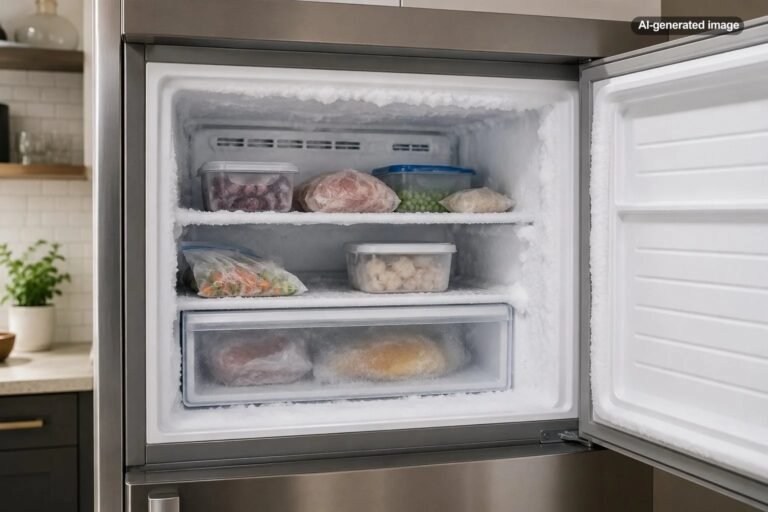
Most modern refrigerators periodically warm the evaporator area enough to remove frost. As temperatures shift during and after this cycle, internal surfaces can make popping, sizzling, dripping, or cracking sounds.
A noise tied to defrosting may happen at roughly similar times of day, although the exact schedule can change with door openings, room temperature, and how heavily the refrigerator is used. Hearing a pop followed by faint dripping or hissing does not automatically indicate a leak.
The ice maker is ejecting ice
An ice maker can produce several distinct sounds. The mechanism may click or creak as it releases cubes, and the cubes can make a sharp pop or bang when they fall into an empty storage bin. Water entering the ice maker may also create a brief hum, buzz, or thump.
To test this possibility, turn the ice maker off according to the appliance manual and listen over the next several hours. If the popping stops, the sound was probably connected to ice production rather than the refrigeration system.
A water line is moving
Refrigerators with a dispenser or ice maker may make a knocking or popping sound when the water valve opens and closes. A loosely secured supply line can tap against the wall, cabinet, or back of the appliance during a fill cycle.
Look behind the refrigerator only when it can be done without straining the water line, damaging the floor, or creating a tipping risk. The line should not be sharply kinked, pinched beneath the appliance, or stretched tight.
The refrigerator is shifting or vibrating
A cabinet that is not stable can amplify ordinary operational sounds. The refrigerator may rock slightly when a door closes, when the compressor starts, or when the ice maker fills. Bottles touching each other, a loose drain pan, or an item resting on top can turn a small vibration into a noticeable pop or rattle.
Check that the appliance stands firmly and does not wobble. Leveling procedures vary, so use the instructions for the specific model rather than making large adjustments by guesswork.
How to narrow down the source
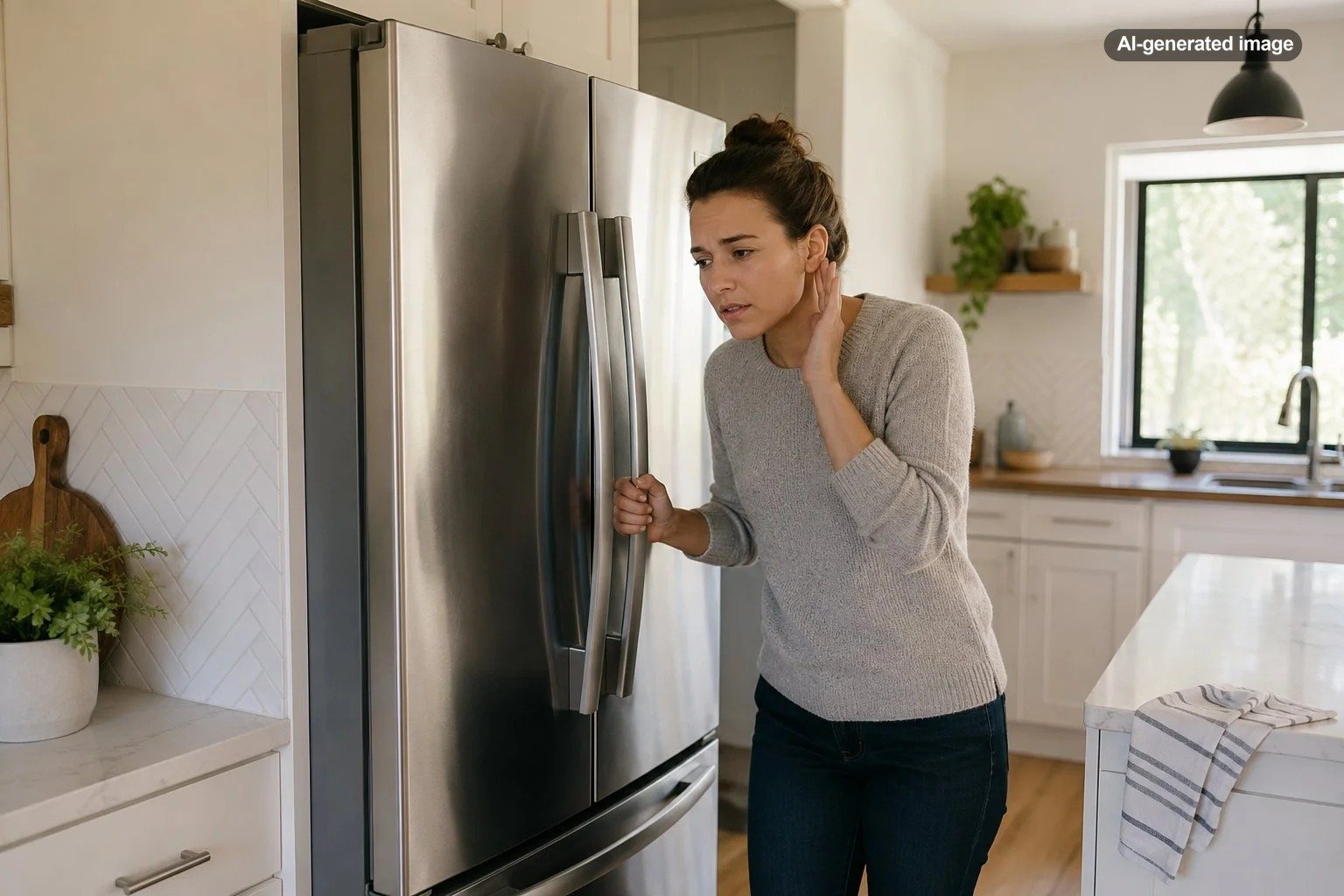
You do not need to dismantle the refrigerator to gather useful information. A simple listening routine can often separate normal operating noise from a symptom that deserves service.
What to do
- Confirm that food is staying cold. Use an appliance thermometer rather than relying only on how the air feels. The refrigerator should remain at 40 degrees F or below, and the freezer should be at 0 degrees F.
- Note the timing. Record whether the pop happens after a door closes, when the compressor starts or stops, during ice production, or several hours apart.
- Locate the general area. Listen for whether the sound comes from inside the fresh-food compartment, the freezer, the water line, or the lower rear of the appliance.
- Remove simple vibration sources. Separate touching bottles, clear objects from the top, and confirm that the refrigerator does not rock.
- Temporarily turn off the ice maker. Follow the manual and listen for a reasonable period to see whether the sound changes.
- Review the model’s manual. Manufacturers often describe normal sounds for the exact refrigerator design.
A phone recording can also be useful. Capture the noise from a safe distance and note what the appliance was doing at the time. Intermittent sounds have a habit of becoming perfectly polite when a technician arrives.
When a popping sound may indicate a problem
The sound deserves more attention when it is accompanied by a change in performance or an electrical warning sign. Do not assume every pop is harmless merely because refrigerators can make normal popping noises.
Arrange professional evaluation when you notice any of the following:
- The refrigerator is warmer than 40 degrees F or the freezer is not maintaining frozen food.
- The noise has changed from occasional popping to rapid or repeated clicking.
- A loud pop is followed by silence from the compressor and a loss of cooling.
- Water is collecting beneath or behind the refrigerator.
- The appliance trips a breaker or causes lights to flicker.
- The back, plug, cord, or outlet appears unusually hot or discolored.
- The refrigerator rocks, leans, or cannot be leveled securely.
Repeated clicking from the lower rear can be related to the compressor starting system, controls, or another component, but sound alone is not enough for a reliable diagnosis. Avoid removing electrical covers or testing energized parts unless you are qualified to perform that work.
The difference between a harmless pop and a repair clue is usually found in the pattern, not the volume of one isolated sound.
What not to do
Do not spray lubricant into vents, remove panels to chase the noise, or strike the cabinet in an attempt to stop it. Refrigerators contain electrical components, fans, refrigerant tubing, and sharp edges that are not appropriate for casual troubleshooting.
Avoid pulling the refrigerator forward by its doors or handles. If the appliance must be moved, protect the floor, keep it upright, and make sure the water connection and power cord have enough slack. Large built-in or counter-depth models may require professional assistance.
It is also unwise to dismiss a temperature problem because the refrigerator still sounds as though it is running. A fan or compressor can operate without the compartments reaching safe temperatures. An appliance thermometer provides a more dependable check.
Can you prevent refrigerator popping noises?
You cannot eliminate every normal expansion sound, nor should you need to. You can, however, reduce noises that are amplified by installation or household conditions.
- Keep the refrigerator stable and level according to its installation instructions.
- Leave the clearances required by the manufacturer around the cabinet.
- Prevent bottles, jars, and storage bins from pressing tightly against one another.
- Keep the ice bin seated correctly and avoid allowing ice to pile up around the mechanism.
- Inspect accessible water-line connections for kinks or contact with nearby surfaces.
- Clean accessible condenser areas only as directed in the model’s manual.
- Avoid overpacking the compartments, since cold air needs room to circulate.
After a new refrigerator is installed, give it time to settle into its normal operating pattern. Newer appliances may not sound like the model they replaced, and unfamiliar does not necessarily mean defective.
Frequently asked questions
Why does my refrigerator pop after I close the door?
Closing the door changes air pressure inside the cabinet and may coincide with a fan, damper, or cooling cycle. Interior panels can also flex slightly. Check that shelves and door bins are seated properly and that the refrigerator does not rock.
Why does my refrigerator make one loud pop at night?
A single occasional pop may come from thermal expansion, defrosting, or ice dropping into an empty bin. Nighttime quiet can make an ordinary appliance sound seem much more dramatic.
Is popping from the freezer normal?
It often is. The freezer experiences significant temperature changes during cooling and automatic defrosting, and an ice maker adds another possible source. Confirm that temperatures remain correct and that no other warning signs are present.
Should I unplug a refrigerator that is popping?
Not for an occasional isolated pop when the appliance is cooling normally. Unplug it when there are electrical warning signs such as smoke, sparking, burning odors, cord damage, or excessive heat, provided the plug can be reached safely.
When should I call an appliance technician?
Call when the noise is persistent or worsening, cooling performance changes, water appears, electrical symptoms occur, or the manual does not identify the sound as normal. Providing a recording and the model number can make the service visit more efficient.