
Why Is There Black Dust Around My Air Vents?
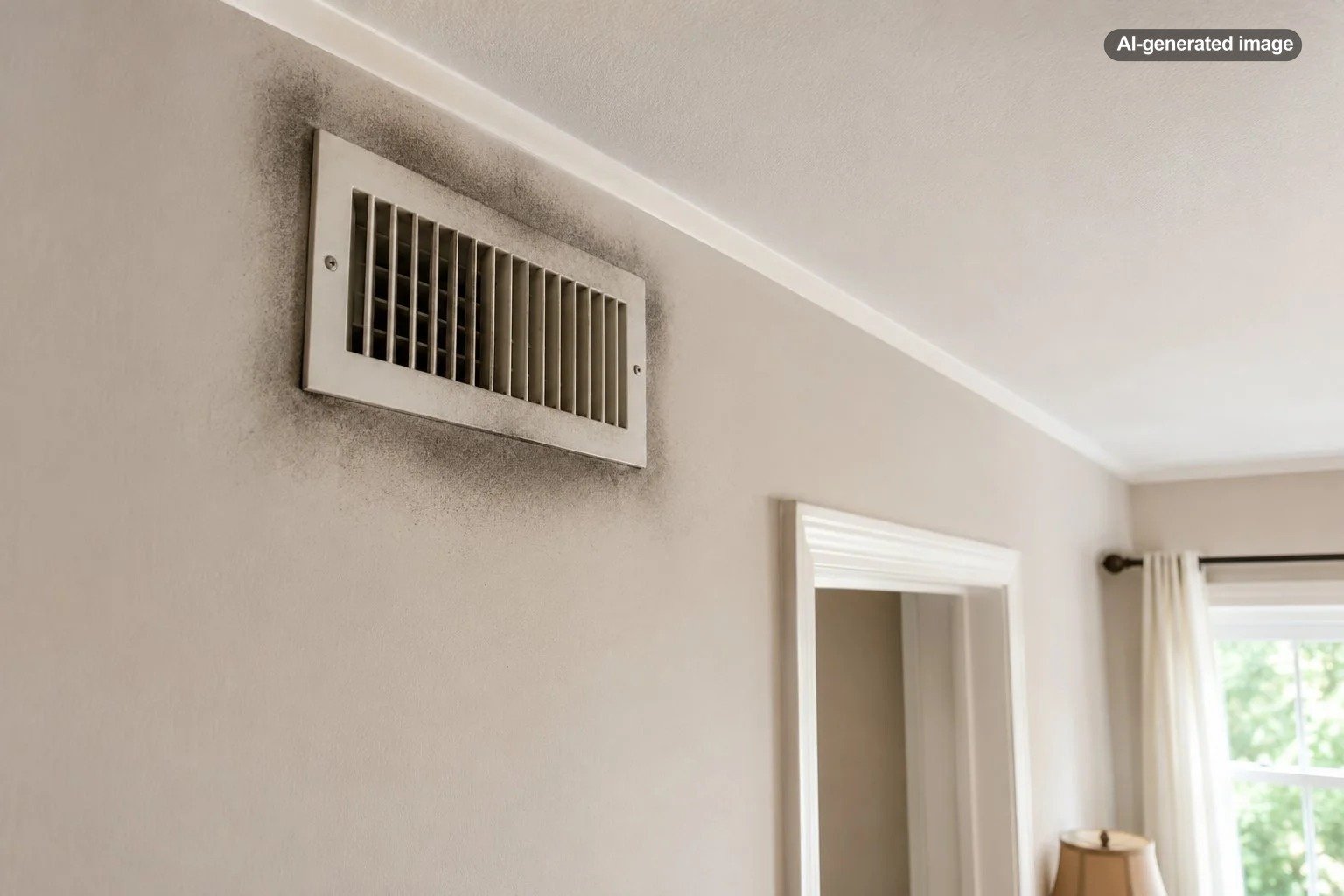
Black dust around an air vent is usually a mixture of ordinary household dust and very fine particles that collect where moving air meets the wall or ceiling. The dark ring does not automatically mean mold, nor does it prove that your ducts are filthy. Common causes include candle soot, cooking particles, fireplace smoke, tobacco smoke, a poorly fitted HVAC filter, air leaks around the register, and dust deposited by the airflow pattern.
The useful question is not simply, What color is it? It is whether the residue is dry or damp, limited to one vent or spread throughout the home, and whether it returns quickly after cleaning. Those clues can separate a cosmetic cleaning issue from a filtration, moisture, or equipment problem.
Why dust gathers around a vent
Supply registers create small air currents along the nearby wall or ceiling. Those currents can pull room air toward the edges of the grille and deposit airborne particles on the surface. The result is sometimes called filtration staining: the surface effectively acts like a crude filter as air passes across it.
This is why the darkest marks often trace the outline of the register rather than covering the entire ceiling. A small gap between the register boot and drywall can make the pattern more obvious. Air leaking through that gap may carry dust from an attic, wall cavity, basement, or crawlspace and leave a dark halo around the vent.
The most likely causes, from common to concerning
Household soot and fine particles
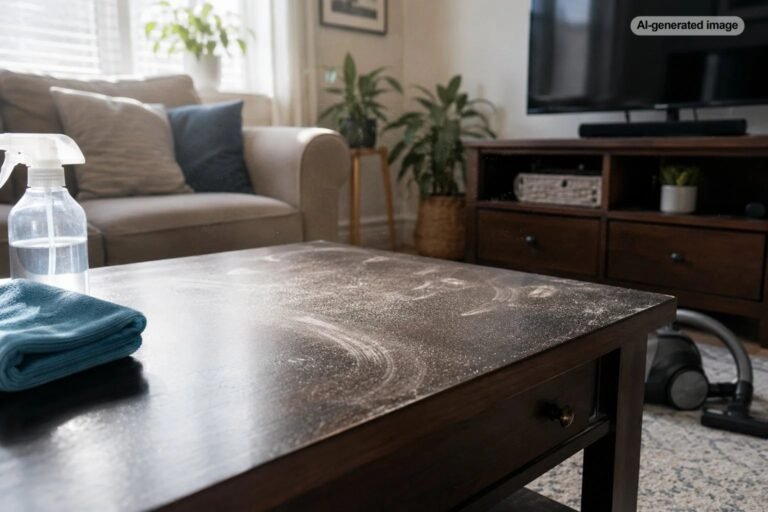
Candles, fireplaces, incense, smoking, frying, broiling, and other combustion or cooking activities create very small particles. The EPA identifies cooking, candles, fireplaces, unvented heaters, tobacco smoke, and outdoor air as indoor particulate sources. These particles can remain suspended and then collect on cooler walls, ceilings, and vent edges.
Candle soot is especially likely when the residue appears in several rooms, around vents, above radiators, near ceiling lines, or on light-colored furnishings. Long wicks, drafts, and fragranced candles that visibly smoke can increase soot production. A gas appliance that leaves soot, however, should be professionally evaluated rather than treated as a housekeeping nuisance.
A filter that is dirty, undersized, or bypassed
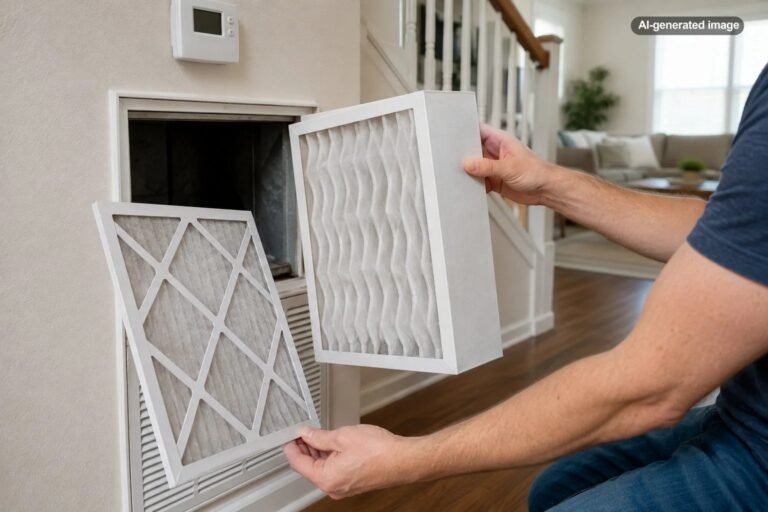
An HVAC filter works only when air actually passes through it. A filter that is clogged, installed backward, too small for the rack, missing, or surrounded by gaps can allow more particles into the system. The Department of Energy advises that filters should fit properly and be cleaned or replaced regularly; clogged filters can also restrict airflow and increase equipment strain.
Do not automatically install the highest-rated filter you can find. The correct filter type and efficiency depend on the equipment and filter cabinet. Use the size and filtration range recommended by the system or filter-cabinet manufacturer, and ask a qualified technician before making a major jump in resistance.
Air leakage around the register or ductwork
If one vent is much dirtier than the others, remove the register only if it can be done safely and inspect the visible perimeter. A gap between the metal boot and the finished wall or ceiling may be drawing dusty air from an unconditioned cavity. Loose connections, damaged duct material, or an unusually dirty return-air path can also contribute.
Visible gaps at the room-side opening can often be sealed as part of a proper repair, but hidden duct leakage is not well diagnosed by smearing household caulk or general-purpose tape wherever dust appears. An HVAC professional can inspect the boot, connections, accessible duct sections, airflow, and pressure relationships.
Renovation dust
Drywall sanding, floor refinishing, demolition, insulation work, and even aggressive cleaning can load the air with fine debris. If the HVAC system ran during a dusty project, particles may have settled on registers, entered returns, or clogged the filter. Replace or clean the filter as appropriate, clean the grilles, and monitor whether the staining stops after the project dust is removed.
Moisture and possible mold growth
Dark residue is not identifiable as mold by color alone. Mold needs moisture, so look for condensation, a plumbing or roof leak, a wet ceiling, a clogged condensate drain, damaged duct insulation, or a persistent musty odor. The EPA advises that suspected HVAC mold contamination should be evaluated carefully and that an HVAC system known or suspected to be contaminated should not be operated because it may spread material through the building.
If the material is fuzzy, slimy, damp, or growing beyond the vent edge, avoid dry brushing or blowing it into the room. Correcting the moisture source is essential; surface cleaning without moisture control is unlikely to solve the problem.
What to do
- Photograph the pattern. Record which vents are affected and whether the marks are on the grille, the surrounding surface, or visibly inside the opening.
- Check for moisture and odor. Look for condensation, staining, peeling paint, damp drywall, or a musty smell.
- Inspect the filter. Confirm that one is present, correctly oriented, reasonably clean, and fitted without obvious bypass gaps.
- Consider particle sources. Note recent candle use, cooking smoke, fireplace operation, smoking, construction, or outdoor pollution.
- Clean one test area. Turn the system off, vacuum the register with a soft brush attachment, and wipe the surrounding washable surface using the finish manufacturer’s cleaning guidance.
- Monitor the return. If a dark ring reappears within days or a few weeks, document it and arrange an HVAC inspection rather than repeatedly painting over it.
How to clean the vent without making matters worse
For dry dust on a metal register, switch off the system and use a vacuum with a soft brush attachment. A removable metal grille can often be washed with mild dish soap and water, then dried completely before reinstallation. Follow the manufacturer’s instructions for specialty finishes, painted wood registers, or smart vents.
Clean the adjacent wall or ceiling according to the paint or surface manufacturer’s directions. Test any cleaner in an inconspicuous area. Avoid saturating drywall, spraying liquid into the duct, or mixing cleaning chemicals. Do not use bleach as a routine response to an unidentified black mark.
Vacuum only what is readily accessible from the room. Pushing a household vacuum hose deep into ductwork can damage flexible ducts or internal liners and will not address a system-wide cause.
When duct cleaning is and is not the answer
Duct cleaning is not automatically required because a vent looks dusty. The EPA recommends considering it when ducts contain substantial visible mold growth on hard surfaces, are infested with vermin, are clogged with excessive dust and debris, or are actually releasing particles into the home. Even then, the underlying source must be corrected or contamination can return.
Before hiring a company, ask what evidence supports the recommendation, which system components will be cleaned, how delicate duct materials will be protected, and how moisture, filtration, or leakage problems will be corrected. Be cautious of anyone who identifies mold by sight alone, promises universal health benefits, or recommends cleaning without inspecting the air handler, filter fit, coils, drain pan, plenums, and accessible ducts.
How to reduce future black staining
- Check the HVAC filter regularly and replace or clean it according to the equipment and filter manufacturer’s instructions.
- Make sure the filter fits its rack and that air cannot easily pass around the edges.
- Use kitchen exhaust that vents outdoors while cooking when available.
- Trim candle wicks, keep flames away from drafts, and stop using candles that visibly smoke or leave soot.
- Keep supply registers and return grilles unobstructed.
- Contain renovation dust and avoid operating the HVAC system in an active dust-producing work area.
- Address condensation, leaks, and drain problems promptly.
- Include filter fit, blower cleanliness, coils, drain pan, and accessible duct connections in routine professional maintenance.
The speed and conditions of the residue’s return tell you more than its color.
Frequently asked questions
Is black dust around a vent always mold?
No. Soot, cooking particles, ordinary dust, and air leakage are common explanations. Mold becomes more plausible when moisture, dampness, fuzzy growth, or a musty odor is present, but color alone is not a reliable identification.
Why is only one vent turning black?
A single affected vent points toward a local condition such as a gap around the boot, a nearby candle or cooking source, condensation on that register, or dust entering from an adjacent cavity. Compare its airflow and surrounding conditions with other vents.
Can a dirty filter cause black marks?
It can contribute by allowing more particles to circulate or by restricting airflow, but it is not the only possible cause. Filter bypass around an ill-fitting filter may matter as much as the filter’s visible dirt.
Should I paint over the stain?
Clean and diagnose it first. Paint can hide the mark temporarily, but residue may bleed through or return if airflow, soot, leakage, or moisture remains unchanged.