
How to Make a Guest Bedroom Feel Like a Boutique Hotel
A guest bedroom feels like a boutique hotel when it is comfortable, composed, and quietly attentive to the person using it. The goal is not to copy a commercial hotel room or fill the space with decorative extras. It is to create a room where a guest can arrive, unpack, sleep well, and find what they need without having to ask.
Start with the bed, lighting, and practical amenities. Then add a few distinctive details that make the room feel considered rather than generic. Even a small spare room can achieve the effect when every visible choice has a purpose.
Begin With a Bed That Looks Inviting and Sleeps Well
The bed is the visual center of most guest rooms, but appearance should never come at the expense of comfort. A polished arrangement begins with clean, breathable sheets, a supportive mattress, and bedding appropriate for the season. The room should look finished without requiring guests to dismantle a mountain of decorative pillows before they can lie down.
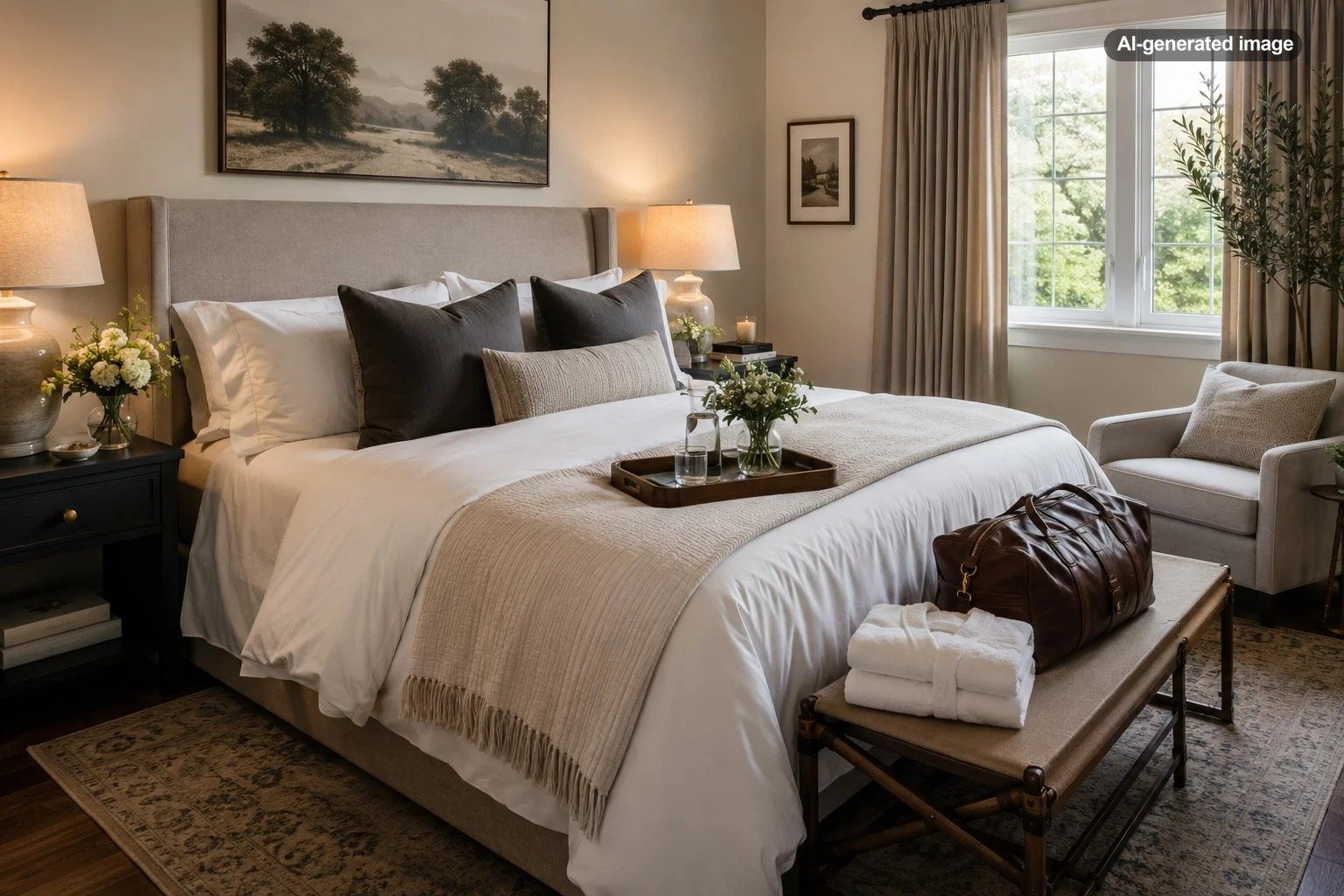
Use a simple layered formula: fitted and flat sheets, a light blanket or coverlet, and a duvet or quilt folded neatly across the bed. This gives guests options if they sleep warmer or colder than expected. In a warm climate, lighter layers are generally more useful than one heavy comforter.
Two sleeping pillows per person provide a hotel-like sense of generosity while allowing different positions and preferences. A pair of decorative shams or one lumbar pillow can add structure, but keep the total manageable. Freshness, proper support, and an orderly presentation matter more than an elaborate pillow arrangement.
Choose a Calm, Consistent Color Palette
Boutique hotel rooms often feel memorable because their colors are edited carefully. Choose one main neutral, one supporting shade, and a restrained accent. Warm white with olive, sand with muted blue, or soft gray with rust can all feel distinctive without overwhelming a guest.
Repeat colors deliberately across the room. The accent in a pillow might reappear in artwork, a throw, or a small ceramic tray. This repetition creates visual continuity and makes ordinary furnishings appear more intentional.
A guest room does not need to be pale, but intense colors are easier to live with when they are concentrated on one wall, the headboard, curtains, or a smaller piece of furniture. Consider how the room looks in both daylight and lamplight before committing to a paint color. Artificial light can make some neutrals appear much warmer or cooler than expected.
Layer the Lighting Instead of Relying on One Fixture
A single ceiling light may illuminate the room, but it rarely creates a welcoming atmosphere. Use at least two types of light: ambient lighting for the whole room and task lighting near the bed. A floor lamp or dresser lamp can add a third layer when the room is large enough.
Place a reading light within easy reach of each sleeping position whenever possible. In a compact room, wall-mounted sconces or pendants can free valuable space on the nightstand. Make sure switches are obvious and lamps are simple to operate; an unfamiliar room is not the place for a lighting puzzle.
Warm, comfortable light generally suits bedrooms better than harsh, blue-toned illumination. Consistent bulb color across the room also helps the space feel professionally composed. Add blackout curtains or a lined shade if exterior lighting or early sun could interrupt sleep, while preserving a lighter sheer layer for privacy during the day.
Give Guests a Proper Place for Their Belongings
A beautiful guest room quickly becomes awkward when there is nowhere to put a suitcase, hang a coat, or set down a watch. Clear at least one drawer, provide several empty hangers, and leave visible space in the closet. Avoid making guests work around household storage whenever possible.
A folding luggage rack is useful because it keeps a suitcase off the bed and floor. A sturdy bench can serve the same purpose while adding seating, although it requires more room. In a very small bedroom, a cleared section of a low dresser may be the most practical option.
Before guests arrive
- Clear a drawer or shelf for folded clothing.
- Provide several matching hangers and space between them.
- Leave a hook available for a robe, handbag, or jacket.
- Make room for a suitcase without blocking a walkway.
- Remove personal paperwork, overflow storage, and visible clutter.
Keep pathways around the bed open and easy to understand, especially when guests may arrive after dark. Furniture should not force anyone to squeeze past sharp corners or step around luggage to reach the door.
Make the Bedside Area Genuinely Useful
A bedside table should have enough open surface for a phone, glasses, water, and perhaps a book. Decorative objects are welcome, but they should not consume the entire tabletop. One lamp, a small tray, and a modest arrangement are usually enough.
Provide an accessible outlet or charging station without requiring guests to crawl behind furniture. If an extension cord is needed, route it neatly where it will not create a tripping hazard. A small card with the Wi-Fi network and password can prevent an unnecessary late-night search.
A covered carafe, reusable bottle, or clean drinking glass is a gracious addition. Tissues, a wastebasket, and a small clock are also useful, although guests who rely on phones may not need the latter. The best amenities solve predictable needs without making the room feel like a supply closet.
A polished guest room anticipates ordinary needs and handles them quietly.
Add Character Without Filling Every Surface
Boutique rooms have personality, but they are rarely crowded. Choose a few pieces that establish a point of view: framed artwork, an upholstered headboard, an interesting lamp, or a vintage side table. One memorable element has more impact than many unrelated accessories.
Artwork should relate to the scale of the wall and furniture below it. A small print floating above a wide bed can look unfinished, while an oversized piece may feel imposing in a tight room. A single substantial work, a balanced pair, or a compact gallery arrangement can all work when the grouping feels proportionate to the headboard or dresser.
Include natural texture through wood, linen, woven material, ceramic, or a small plant that can tolerate the room’s light. Avoid strongly scented candles, diffusers, and sprays because fragrance preferences and sensitivities vary. A freshly aired room and clean textiles create a better first impression than perfume.
Create a Small Hospitality Station
A hospitality station does not require a minibar. A tray on a dresser can hold water, glasses, a few packaged snacks, and a short welcome note. For frequent guests, consider adding a spare phone cable, lint roller, basic sewing kit, and individually packaged earplugs.
If the bedroom is far from the kitchen, an electric kettle or compact coffee setup may be convenient, but only when there is a safe, uncluttered surface and guests will understand how to use it. In many homes, a simple note explaining where to find coffee and breakfast is more practical than adding an appliance to the room.
Include a Mirror and a Comfortable Place to Sit
A full-length mirror helps guests dress without searching for another room. Position it where there is enough distance to use it comfortably, and avoid placing it where it creates an unsettling reflection from the bed. When wall space is limited, the inside of a closet door may be suitable.
A chair, bench, or compact stool gives guests a place to put on shoes or sit somewhere other than the bed. Choose furniture according to the room’s actual dimensions rather than forcing in a large accent chair for appearance alone. A narrow bench at the foot of the bed usually requires clear walking space beyond it, while a small chair in a corner may work better in a square room.
Finish With a Hotel-Style Arrival Check
Before guests arrive, experience the room as they will. Enter with a suitcase, turn on the lights, close the curtains, charge a phone, and lie on the bed. This simple test reveals inconvenient switches, blocked outlets, noisy fans, unstable furniture, or missing essentials that are easy to overlook during decorating.
What to do
- Launder the bedding and inspect pillows, protectors, and blankets.
- Dust lamps, the headboard, baseboards, and other easily missed surfaces.
- Confirm that window coverings close fully and operate smoothly.
- Test lights, outlets, the ceiling fan, and any room-darkening features.
- Set the room to a comfortable temperature and remove unnecessary items.
- Leave water, Wi-Fi information, and fresh towels where guests can find them.
The most convincing boutique-hotel feeling comes from editing rather than adding. Give each object a reason to remain, keep the room easy to navigate, and focus spending on the things guests directly experience: the mattress, pillows, sheets, lighting, privacy, and temperature.
Once those fundamentals are handled, a distinctive color palette, thoughtful artwork, and a few personal touches can make the room feel special. The result should be polished but not precious, comfortable but not cluttered, and welcoming enough that a guest immediately knows the room was prepared with care.
Frequently Asked Questions
What is the most important upgrade for a guest bedroom?
Start with sleep comfort. A supportive mattress, clean sheets, usable pillows, appropriate blankets, and effective window coverings will matter more to guests than decorative accessories.
How can I make a guest room feel luxurious on a budget?
Use a limited color palette, remove clutter, press or steam the bedding, match the lightbulb color, and provide practical amenities. A well-prepared room often feels more refined than one filled with expensive decor.
How many pillows should be on a guest bed?
Provide at least one comfortable sleeping pillow per guest, ideally with an additional option. Limit decorative pillows to one or two layers so guests do not have to relocate a large pile at bedtime.
What should I leave out for overnight guests?
Useful basics include water, clean towels, tissues, a wastebasket, accessible charging, Wi-Fi information, empty hangers, and a place for luggage. Add toiletries or snacks according to the length and nature of the visit.
Should a guest bedroom look neutral?
Not necessarily. Color and pattern can give the room personality, but the overall scheme should feel cohesive and restful. Stronger design choices work best when the bedding, lighting, and practical features remain simple and comfortable.