Do Dehumidifiers Improve Indoor Air Quality?
Yes, dehumidifiers can improve indoor air quality, particularly in homes where excess moisture contributes to mold growth, dust mites, musty odors, and uncomfortable conditions. By removing water vapor from the air, a dehumidifier helps create an indoor environment that is less favorable to certain moisture-related allergens and biological contaminants. The improvement, however, comes from controlling humidity rather than directly removing airborne pollutants.
That distinction matters. A dehumidifier cannot replace an air purifier, repair a leaking pipe, or remove existing mold from a wall. But when humidity is consistently too high, it can be an important part of making a home healthier, more comfortable, and easier to maintain.
How Dehumidifiers Affect Indoor Air Quality
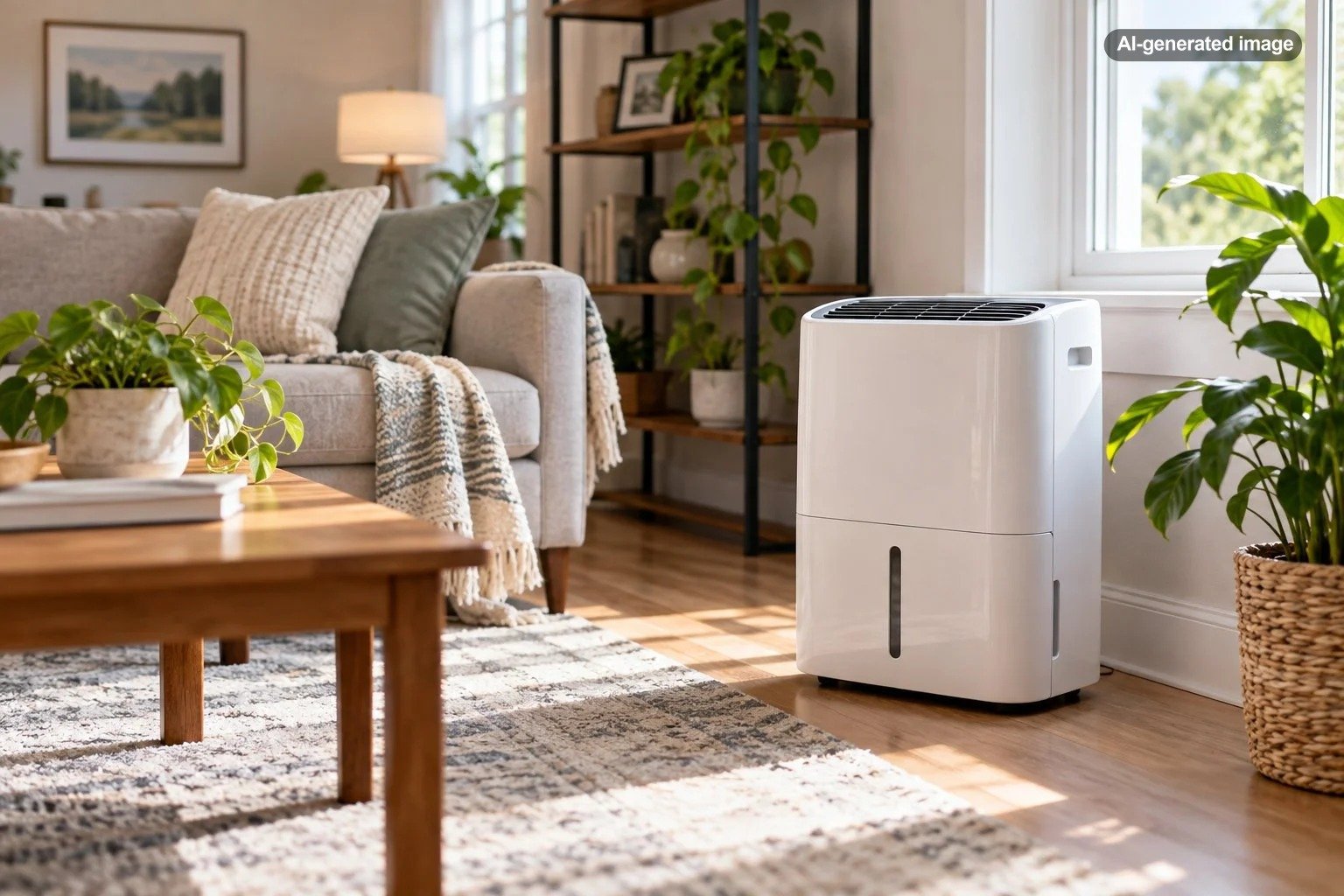
A dehumidifier draws humid room air into the appliance, removes some of its moisture, and returns drier air to the space. Common portable compressor models accomplish this by cooling air over coils so that water vapor condenses into liquid, which collects in a bucket or exits through a drainage connection.
As indoor relative humidity declines, several conditions associated with damp environments may become easier to control. The benefit is not that the machine purifies the air in the conventional sense. Instead, it addresses an environmental condition that can encourage unwanted biological growth.
Less Favorable Conditions for Mold
Mold needs moisture to grow. Humid indoor air can contribute to condensation on cold surfaces, damp furnishings, and persistent moisture in poorly ventilated spaces. Lowering humidity reduces one potential source of moisture and can make conditions less favorable for new mold growth.
However, a dehumidifier does not kill or remove established mold. Mold growing around a plumbing leak, inside water-damaged drywall, or beneath wet flooring requires attention to the underlying moisture source and appropriate cleanup. A dry-looking surface is not proof that hidden materials are dry.
Reduced Moisture That Supports Dust Mites
Dust mites are microscopic organisms that thrive in relatively humid environments. Their waste particles and body fragments can contribute to indoor allergens, particularly in bedding, carpeting, and upholstered furniture.
Keeping humidity in a reasonable range can make the environment less favorable to dust mites. It does not immediately eliminate existing allergens, however. Washing bedding, controlling dust, and maintaining appropriate filtration remain important complementary measures.
Better Control of Musty Conditions
A persistently damp basement, laundry room, or closed-off guest bedroom may develop a stale or musty smell. Removing excess humidity can help prevent moisture-related conditions that contribute to these odors.
Still, odor is not a reliable measurement of humidity or mold contamination. A musty smell that persists after the room has dried warrants a closer inspection for damp materials, concealed leaks, or existing growth.
What Is the Best Indoor Humidity Level?
For most homes, a practical target is approximately 30% to 50% relative humidity. This is the range recommended by the EPA for limiting moisture-related indoor air quality problems. ENERGY STAR also identifies this range as generally appropriate for buildings.
Relative humidity describes how much water vapor the air contains compared with the maximum it could hold at the same temperature. Because temperature affects that measurement, readings may change throughout the day even when the actual amount of water vapor changes relatively little.
| Relative humidity | What it may indicate | Practical response |
|---|---|---|
| Below 30% | Air may be excessively dry for comfort. | Avoid unnecessary dehumidification and investigate dryness. |
| 30% to 50% | Generally preferred indoor range. | Maintain conditions and monitor problem areas. |
| Above 50% to below 60% | Moisture may warrant closer attention, especially if persistent. | Check ventilation, condensation, and humidity trends. |
| 60% and above | Elevated moisture conditions that can encourage biological growth. | Identify moisture sources and consider dehumidification. |
These ranges are guidance rather than a substitute for evaluating actual moisture problems. During cold weather, a lower indoor humidity level may be necessary to prevent condensation on windows and other cold surfaces. Persistent condensation deserves attention even when a room’s humidity reading appears acceptable.
When Does a Dehumidifier Make the Biggest Difference?
Dehumidifiers are most useful where moisture is a recurring condition rather than a one-time inconvenience. The right approach depends on the room, the climate, and the source of the humidity.
Basements and Below-Grade Rooms
Basements commonly experience moisture problems because of ground moisture, cool surfaces, limited air circulation, and occasional water intrusion. Even finished basements may feel noticeably damper than the rooms upstairs.
A properly sized dehumidifier can help control airborne moisture in these spaces. However, water entering through a foundation or collecting beneath flooring must be addressed separately. The appliance should not become a substitute for drainage or waterproofing repairs.
Homes in Humid Climates
In warm, humid regions, including much of Florida and the Gulf Coast, outdoor moisture can place a substantial burden on indoor humidity control. Opening windows may make the problem worse when the outside air is more humid than the indoor air.
Air conditioning removes some moisture while cooling, but certain homes still experience elevated humidity. A portable dehumidifier may help in a particularly damp room, while persistent whole-home humidity problems may call for an HVAC evaluation.
Laundry Rooms and Poorly Ventilated Spaces
Indoor clothes drying, frequent washing, and inadequate exhaust ventilation can increase humidity. A dehumidifier may help with the remaining moisture, but properly venting a clothes dryer and correcting ventilation problems should take priority.
What Dehumidifiers Cannot Remove From the Air
Although humidity control can improve indoor environmental conditions, a conventional dehumidifier is not designed to remove all categories of airborne pollution.
- Fine dust and smoke: A dehumidifier does not replace appropriately selected particulate filtration.
- Pollen and pet dander: These allergens require cleaning and filtration strategies rather than humidity reduction alone.
- Volatile organic compounds: Vapors from paints, cleaning products, adhesives, and furnishings require source control and appropriate ventilation.
- Carbon monoxide: A dehumidifier cannot detect or remove this dangerous gas. Appropriate alarms and safe maintenance of fuel-burning equipment are essential.
- Existing mold: Previously contaminated surfaces and materials require suitable cleanup or removal after the moisture problem is corrected.
This is why indoor air quality is best approached as a combination of source control, ventilation, moisture management, and filtration rather than a problem solved by one appliance.
Dehumidifier vs. Air Purifier: Which Do You Need?
The answer depends on what is making your indoor environment uncomfortable or potentially unhealthy.
Choose a dehumidifier when excess moisture is the main concern. Elevated humidity, condensation, and persistently damp rooms point toward moisture management. The goal is to bring relative humidity into a suitable range.
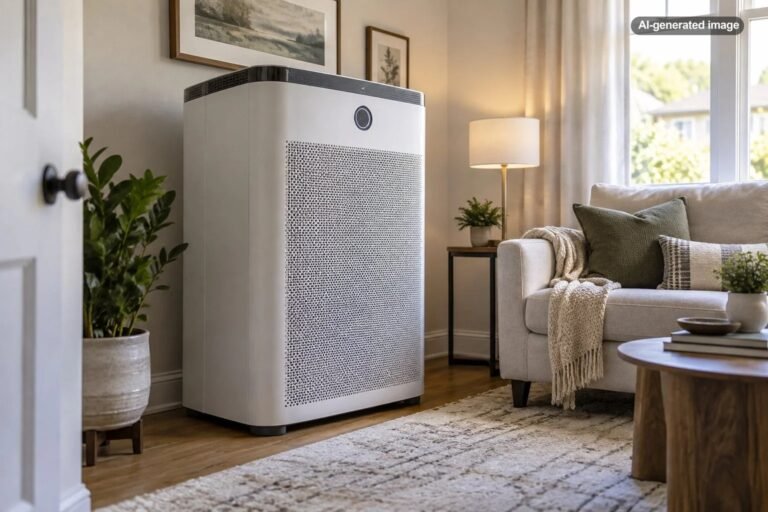
Consider an air purifier when airborne particles are the concern. An appropriately sized air cleaner with effective particle filtration may help reduce suspended dust, pollen, smoke particles, and some other airborne material. Filter design, airflow, placement, and maintenance affect performance.
Some homes benefit from both. For example, a humid bedroom with substantial dust accumulation may require humidity control alongside cleaning and particle filtration. Neither appliance corrects a leaking roof or replaces adequate ventilation.
How to Choose a Dehumidifier for Better Air Quality
Before purchasing an appliance, measure humidity with a hygrometer, also called a humidity monitor. Check readings at different times of day and in several rooms. A basement that regularly measures 65% may need different equipment from a bedroom that occasionally reaches 53% after a shower nearby.
Important buying considerations include:
- Moisture removal capacity: Capacity is commonly expressed in pints of water removed per day under standardized conditions. Match the unit to the area’s size and dampness, not square footage alone.
- Humidistat: An adjustable humidity control helps the appliance cycle according to the desired relative humidity.
- Drainage: A removable bucket suits occasional operation, while continuous drainage can reduce the need for frequent emptying when properly installed.
- Operating conditions: Check the manufacturer’s recommended temperature range, particularly for cool basements.
- Noise and placement: Consider where the appliance will operate and whether its sound and airflow will interfere with daily activities.
- Energy efficiency: Compare appropriately sized ENERGY STAR certified models where available, while accounting for expected operating hours.
Affiliate disclosure: CraneManor.com may earn a commission when you purchase through links on this page. This does not affect the price you pay. Learn more.
For a larger, humidity-prone basement or living area, a full-size portable model may be more practical than a compact tabletop appliance. One example is a Frigidaire 50-pint dehumidifier, which is listed with a removable collection bucket and continuous-drain option. Actual performance depends on room conditions, proper sizing, and installation, and continuous drainage requires a suitable route for the collected water.
Regardless of the model, a larger capacity is not automatically better for every room. A well-matched appliance with suitable controls and manageable maintenance is generally the more practical choice.
How to Use a Dehumidifier Effectively
Correct operation matters almost as much as selecting the appliance. A dehumidifier that is poorly positioned, neglected, or improperly drained may provide disappointing results.
What to do
- Measure first. Record the room’s relative humidity before deciding whether active dehumidification is necessary.
- Choose a reasonable target. Start around 45% to 50%, then adjust according to condensation, comfort, climate, and manufacturer guidance.
- Position the appliance correctly. Follow the manual’s clearance requirements so air can circulate freely around the unit.
- Manage collected water. Empty and clean the bucket as directed, or arrange approved continuous drainage without creating leaks or trip hazards.
- Maintain the equipment. Clean filters and other accessible components according to the manufacturer’s instructions.
- Check the results. Monitor humidity over several days and investigate any dampness that continues despite operation.
Keep doors and windows closed when outdoor air is humid enough to work against the appliance. In spaces with active air conditioning, consider whether the cooling system is already controlling moisture adequately before adding another electrically powered appliance.
Portable dehumidifiers also release some heat into the room. That can be noticeable in a small bedroom or during summer, and it is worth considering when balancing moisture control with comfort.
Common Mistakes That Limit the Benefits
The most common mistake is expecting a dehumidifier to solve a moisture problem without identifying why the room is wet. An appliance can remove water vapor, but it cannot stop rain entering through a roof, repair leaking plumbing, or dry water trapped inside inaccessible building materials.
Another mistake is setting the target unnecessarily low. Excessive drying can waste energy and create uncomfortable conditions without providing a meaningful additional benefit. The goal is controlled humidity, not the driest possible air.
Maintenance also matters. Collected water should not sit indefinitely in a dirty reservoir, and a blocked intake filter can interfere with airflow. Follow the equipment manual rather than assuming every model has the same maintenance schedule.
Frequently Asked Questions
Can a dehumidifier help with allergies?
It may help indirectly when excess humidity supports dust mites or mold growth. It will not remove all existing allergens or replace cleaning, filtration, and medical care for allergy-related symptoms.
Does a dehumidifier remove mold spores?
Conventional dehumidifiers are not designed to filter airborne mold spores. Their primary role is reducing moisture conditions that encourage mold growth. Existing contamination must be addressed separately.
Should you run a dehumidifier all day?
That depends on the humidity level, appliance controls, and moisture load. A unit with an adjustable humidistat can cycle automatically to maintain a target rather than operating continuously when additional drying is unnecessary.
Can a dehumidifier make indoor air too dry?
Yes. Using excessive capacity or an unnecessarily low setting can reduce relative humidity below a comfortable range. Monitor conditions rather than relying only on how the air feels.
Do you need a dehumidifier if you already have air conditioning?
Not necessarily. Air conditioners remove some moisture while cooling. If humidity remains consistently elevated despite normal cooling, investigate the home’s ventilation, moisture sources, and HVAC operation before deciding whether supplemental dehumidification is appropriate.
The Bottom Line
Dehumidifiers can meaningfully improve indoor air quality when excessive humidity is part of the problem. By helping keep moisture within a reasonable range, they can reduce conditions favorable to mold and dust mites, limit condensation, and make damp rooms more comfortable.
The best first step is simple: measure the humidity. If it remains high, identify moisture sources, correct leaks and ventilation problems, and select a properly sized dehumidifier when needed. Treat it as one part of a complete indoor air quality strategy rather than a universal solution.
Sources & Further Reading
- U.S. Environmental Protection Agency: Biological Contaminants and Indoor Air Quality – Guidance on indoor moisture, humidity targets, and biological contaminants.
- U.S. Environmental Protection Agency: What Can I Do to Improve Indoor Air Quality in My Home? – Overview of source control, ventilation, filtration, and moisture management.
- ENERGY STAR: Dehumidifiers – Guidance on capacity, relative humidity, humidistats, and water removal options.
- Centers for Disease Control and Prevention: Controlling Asthma – Guidance on reducing moisture-related asthma triggers.