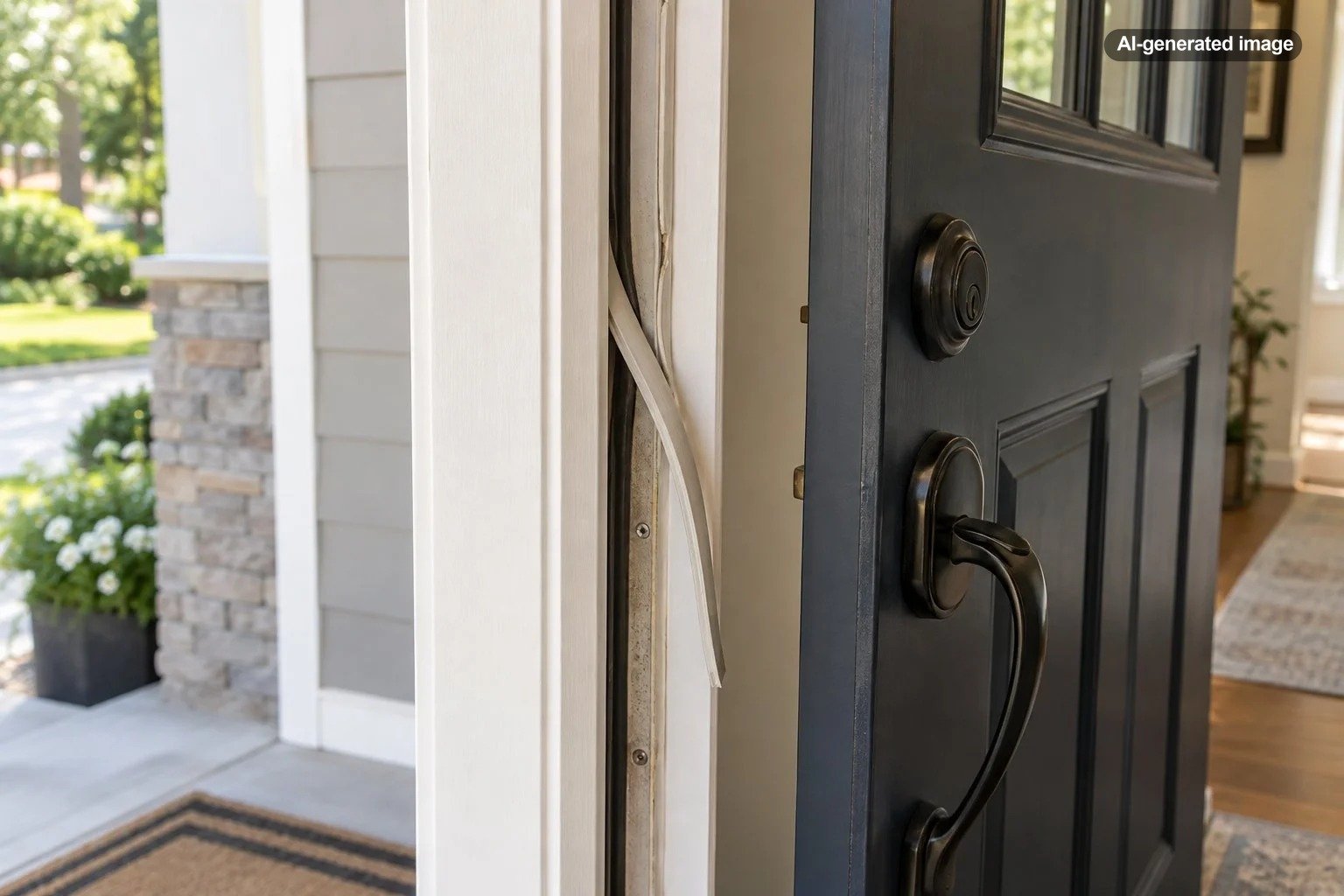
Why Does My Door Weatherstripping Keep Coming Loose?
Door weatherstripping usually keeps coming loose because the adhesive is failing, the strip does not fit its mounting channel, or the door is rubbing against it too aggressively. Dirt, moisture, worn materials, loose mounting hardware, and a misaligned door can all contribute. The most reliable fix depends on identifying why the seal is moving rather than repeatedly pressing it back into place.
If the weatherstripping falls off every few weeks, replacing it with another piece of the same material may not solve the problem. A strip that peels away from a painted frame needs a different repair than a compression seal that pops out of a narrow groove.
Why Door Weatherstripping Keeps Coming Loose
Weatherstripping creates a flexible seal between a moving door and its frame. It has to remain attached while tolerating repeated opening, closing, compression, and occasional contact with the door edge.
When one part of that arrangement stops working properly, the seal may peel, twist, stretch, bunch up, or fall out entirely.
1. The adhesive is no longer holding
Self-adhesive foam and rubber weatherstripping depend on a suitable surface for a reliable bond. Old adhesive residue, dust, grease, cleaning products, flaking paint, or moisture can interfere with adhesion.
A common mistake is pressing new adhesive weatherstripping directly over the residue left by the previous strip. The new adhesive may initially hold, but it is bonding to an unstable layer rather than the actual frame.
Temperature conditions during installation can also matter. Some adhesive products require a specific application temperature and curing period, so follow the manufacturer’s instructions instead of assuming every peel-and-stick strip installs the same way.
2. The replacement strip is the wrong size or shape
Many exterior doors use compression weatherstripping that fits into a narrow groove in the jamb. These seals are sometimes called kerf-in weatherstripping.
Although replacement seals can look similar, their retaining fins, bulb shapes, and dimensions are not necessarily interchangeable. A fin that is too narrow may slip out. One that is too thick may not seat correctly.
The compressible part also matters. A bulky seal can interfere with the door closing, while a thin seal may not contact the door consistently.
3. The door is rubbing or dragging against the seal
A properly installed seal should generally compress or make controlled contact as intended by its design. It should not be repeatedly scraped, folded, or pulled away by the moving door.
Loose hinges, changes in door alignment, a poorly adjusted strike plate, or a distorted frame can create uneven contact. The weatherstripping may then fail at the same location every time.
If the strip consistently separates near the upper latch-side corner, for example, check whether the door catches that section as it closes. If it comes loose along the hinge side, inspect for pinching and unusual friction.
4. The retaining groove or mounting hardware is damaged
Push-in weatherstripping depends on the condition of the groove holding it. A widened, broken, dirty, or damaged channel may no longer grip the retaining fin properly.
Mechanically attached weatherstripping can develop different problems. Loose screws, damaged mounting strips, or fasteners that no longer grip the frame can allow the assembly to shift.
In these situations, replacing only the flexible seal may leave the underlying attachment problem unchanged.
5. The weatherstripping is worn or has lost its shape
Weatherstripping does not remain flexible indefinitely. Frequent use, sunlight exposure, environmental conditions, and repeated compression can gradually change its condition.
Foam may flatten, rubber may become brittle, and flexible seals may tear or deform. Once a strip loses its intended shape, it can become easier for the door to catch or dislodge it.
A cracked or permanently flattened strip is usually a replacement candidate rather than something worth repeatedly reattaching.
First, Identify Which Type of Weatherstripping You Have
The attachment method determines which repair will work. Before purchasing replacement material, examine an undamaged section of the existing seal.
| Weatherstripping type | How to recognize it | Common reason it loosens |
|---|---|---|
| Adhesive-backed foam or rubber | Flexible strip stuck directly to the frame | Adhesive failure or surface contamination |
| Kerf-in compression seal | Flexible bulb with a fin inserted into a groove | Incorrect fin size or damaged groove |
| Screw-mounted weatherstripping | Metal or rigid carrier attached with screws | Loose fasteners or poor alignment |
| Door sweep | Seal attached along the bottom of the door | Floor friction, loose attachment, or incorrect height |
These categories are not interchangeable. An adhesive strip is not necessarily an appropriate substitute for a door designed to use a compression seal in a retaining groove.
How to Fix Weatherstripping That Keeps Coming Loose
For an otherwise sound door, the repair is often straightforward. The important step is to correct the attachment problem before installing new material.
A practical troubleshooting sequence
- Locate the failure. Note whether the strip is loose at one corner, along an entire side, or only near the bottom. Repeated failure in the same spot often points to a localized fit problem.
- Inspect the door with the seal in place. Open and close it slowly. Look for rubbing, bunching, stretching, uneven compression, or difficulty engaging the latch.
- Check the mounting surface. Examine adhesive residue, deteriorating paint, damaged grooves, and loose fasteners.
- Identify the original profile. Compare the existing seal with the door manufacturer’s replacement information when available.
- Correct the underlying problem. Clean and prepare adhesive surfaces, repair appropriate mounting hardware, or have door alignment corrected where necessary.
- Install the replacement as directed. Follow the product’s instructions for placement, fastening, temperature, and surface preparation.
- Test normal operation. The door should close, latch, and lock properly without excessive force or repeated seal displacement.
If adhesive weatherstripping keeps peeling off
Remove the failed strip and adhesive residue using methods compatible with the door-frame finish. Avoid aggressive scraping or solvents that could damage paint, vinyl, or another surface.
Clean the mounting area according to the weatherstripping manufacturer’s directions and allow it to dry completely. Inspect for flaking paint or dampness before installing new material.
Choose an adhesive-backed product intended for the surface and operating conditions. Apply it in the recommended temperature range without stretching the strip during installation. Press it into place as directed and observe any specified waiting period before using the door.
If the surface remains unsuitable for adhesive attachment, consider a compatible mechanically fastened system rather than continually adding stronger glue.
If a push-in door seal keeps popping out
Inspect the retaining fin and channel. The fin should fit securely without needing improvised packing material to keep it in place.
Remove dirt or debris from the groove and check for broken sections. Compare the replacement profile with the original, including the retaining fin and compressible bulb.
Install the seal according to the door or weatherstripping manufacturer’s instructions. Avoid pulling it tight while fitting it into the channel, which may contribute to shifting or gaps.
If the groove is physically damaged, the appropriate repair may involve replacing or repairing a frame component instead of repeatedly fitting another gasket.
If screw-mounted weatherstripping is moving
Check whether the carrier is securely fastened and whether the screws still grip the underlying material. A loose mounting strip may move even when the seal itself is in good condition.
Where appropriate, correct loose fasteners using the hardware and installation method specified for the assembly. Damaged screw holes, deteriorated framing, or significant alignment problems may require a more involved repair.
Do not move mounting hardware into an arbitrary position simply to make the seal tighter. The door must still operate correctly.
Could the Door Itself Be Causing the Problem?
Yes. Repeated weatherstripping failure is sometimes a symptom of door misalignment rather than defective sealing material.
The U.S. Department of Energy’s exterior-door weatherstripping guidance recommends addressing problems such as loose hinges and strike-plate adjustments before fitting new weatherstripping. That order matters because the seal is intended to accommodate normal door movement, not compensate for substantial mechanical problems.
Signs the door may need adjustment
- The door rubs the frame or threshold when opening or closing.
- The gap around the door appears noticeably uneven.
- You must lift, push, or slam the door to engage the latch.
- The seal gets crushed in one area but barely contacts the door elsewhere.
- New weatherstripping repeatedly fails at exactly the same location.
- The door has visibly loose hinges or damaged mounting points.
Minor loose hardware may be simple to address when the correct repair is clear. More substantial sagging, frame distortion, or threshold movement warrants evaluation by a qualified door installer or repair professional.
What If the Weatherstripping Only Comes Loose at the Corners?
Corners are vulnerable because separate lengths of weatherstripping meet there, and the material may experience a different amount of compression than along the straight sections.
If the upper corner repeatedly lifts, inspect whether the horizontal and vertical pieces meet properly. A poorly fitted joint can catch on the door or leave material unsupported.
For kerf-in seals, check whether the retaining fin remains engaged all the way to the end of the groove. For adhesive strips, examine whether the corner surface is clean, stable, and suitable for the adhesive.
Do not automatically overlap thick weatherstripping at corners. Excess material can create a lump that interferes with closing. Follow the specific product’s instructions for corner joints and trimming.
Should You Use Glue to Keep Door Weatherstripping in Place?
Not necessarily. Adding glue may appear to be the easiest repair, but it can make later replacement more difficult without resolving the actual cause.
Some weatherstripping systems are designed for adhesives, while others depend on a retaining fin or mechanical fastener. Applying an unrelated construction adhesive to a push-in seal may prevent normal replacement, damage the groove, or interfere with the intended fit.
For self-adhesive products, proper surface preparation and material compatibility are generally more useful than applying additional glue over a failing adhesive layer.
If a product’s manufacturer specifically requires or permits an additional adhesive or sealant, use only the recommended type and installation method.
How to Tell Whether the Replacement Weatherstripping Is Too Thick
Thicker weatherstripping is not automatically better. The material must match the gap and compress in the way its design requires.
After installation, close the door slowly and observe the latch. If the door now requires noticeably greater force, the seal may be too thick, incorrectly positioned, or exposed to an existing alignment problem.
Conversely, a strip that makes little or no contact when the door is closed may be too thin or poorly located.
The ideal result is consistent sealing with normal door operation. It should not be necessary to slam the door or force the deadbolt to engage.
How to Stop Door Weatherstripping From Coming Loose Again
Prevention starts with protecting the attachment and minimizing unnecessary friction.
Habits that help seals last
- Inspect weatherstripping occasionally for lifting edges, tears, flattening, and gaps.
- Keep door frames and mounting channels free of accumulated dirt.
- Address doors that scrape, sag, or become difficult to latch.
- Use replacement profiles compatible with the original door assembly.
- Follow installation instructions rather than stretching or forcing the material into place.
- Check that thresholds and door sweeps do not create excessive friction.
- Investigate recurring moisture around the door before installing adhesive-backed material.
On frequently used entrances, inspect the seal whenever you notice drafts, unusual resistance, or material hanging away from the frame. Doors exposed to strong sunlight, driving rain, or frequent temperature changes may deserve closer attention.
In rental properties and condominiums, consult the property manager or applicable maintenance rules before modifying shared or exterior door assemblies, especially when the door has specialized security or fire-protection requirements.
When Should You Replace the Weatherstripping Instead of Reattaching It?
Reattaching a strip can be reasonable when the material remains flexible and undamaged, its mounting system is sound, and the reason it slipped can be corrected.
Replacement is generally the better option when the strip has torn, permanently flattened, hardened, stretched out of shape, or lost its adhesive backing. A retaining fin that no longer fits securely also deserves attention.
If an otherwise appropriate replacement keeps failing after proper installation, investigate the door alignment and mounting structure. Repeated failure is useful diagnostic information, not simply a reason to buy another identical strip.
Frequently Asked Questions
Why does my front door weatherstripping fall off when I open the door?
The door may be dragging against the seal and pulling it from its mounting surface or groove. Watch where the material catches during a slow opening cycle. Check for door misalignment, the wrong seal profile, or an insecure attachment.
Can cold weather make adhesive weatherstripping peel off?
Temperature can affect some adhesive materials and installation conditions. Applying a product outside its specified temperature range may prevent it from bonding properly. Check the manufacturer’s directions and avoid assuming a strip designed for one environment will perform equally well in another.
Can I push loose weatherstripping back into the groove?
Yes, if the material is undamaged and its retaining fin still fits securely. If it immediately pops out again, inspect the fin size, groove condition, and door contact rather than repeatedly forcing it into place.
Why is my door weatherstripping loose only at the bottom?
The lower part of the door may encounter threshold friction, debris, moisture, or uneven alignment. Determine whether the loose material is part of the vertical jamb seal or a separate door sweep. The appropriate repair depends on that distinction.
Is it normal for new weatherstripping to make a door harder to close?
A new compression seal may feel different from a worn, flattened one, but the door should still close, latch, and lock without excessive force. Significant resistance is a reason to check the seal’s dimensions, placement, and door alignment.
The Bottom Line
When door weatherstripping keeps coming loose, the problem is usually an insecure attachment, an incompatible replacement profile, worn material, or excessive contact caused by the door’s fit.
Identify the attachment type, inspect where the failure occurs, and correct the underlying condition before replacing the seal. A properly fitted weatherstrip should stay in place through ordinary use while allowing the door to open, close, and lock normally.
The goal is not simply to make the strip stick harder. It is to make the door and the seal work together.
Sources & Further Reading
- U.S. Department of Energy: Job Aid 11-1 – Install Weatherstripping on an Exterior Door
- U.S. Department of Energy: Weatherization Single-Family and Manufactured Home Job Aids
- U.S. Department of Energy: Repairing Windows & Doors – How-To’s for the Handy Homeowner
- U.S. Department of Energy: Insulation and Air-Sealing Essentials