Why Does My Air Conditioner Run Constantly but the House Still Feels Humid?
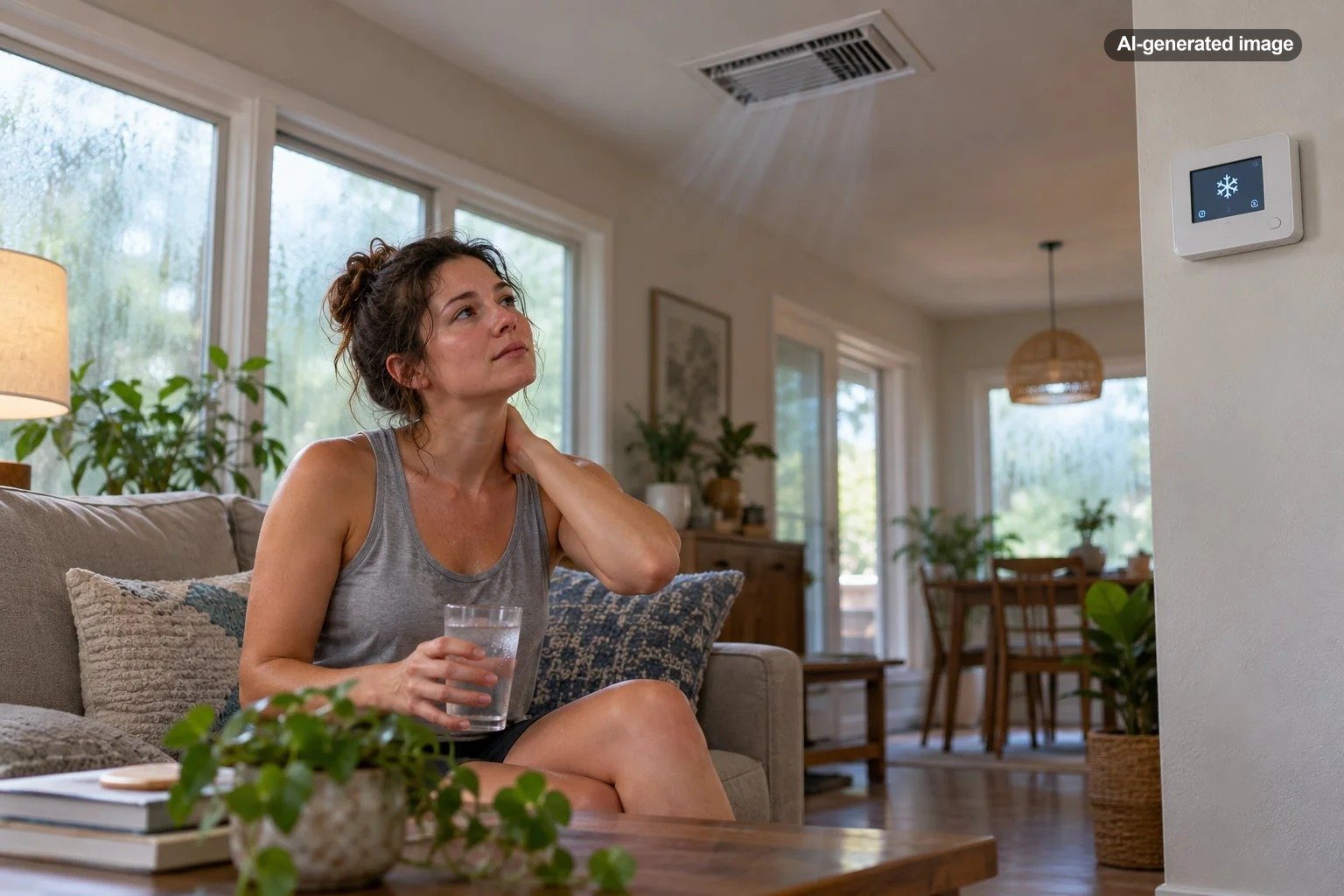
An air conditioner can run for long stretches and still leave a house feeling humid because cooling the air and removing enough moisture from it are related, but not identical, jobs. If indoor temperature is reasonable while the rooms still feel clammy, the system may be moving plenty of cool air without providing enough effective dehumidification. If the temperature is also too high, the problem can point more strongly toward insufficient cooling capacity, restricted airflow, excessive heat or moisture entering the house, or a system fault.
The useful first step is to separate temperature performance from humidity performance. A house that reaches the thermostat setting but remains damp presents a different troubleshooting puzzle from one in which the AC runs continuously and never reaches the set temperature.
Start by measuring the humidity instead of judging by feel
Humidity can make a properly cooled room feel sticky or uncomfortable, but sensation alone is an imprecise diagnostic tool. The U.S. Environmental Protection Agency recommends keeping indoor relative humidity between 30 and 50 percent when practical and notes that excess indoor moisture can contribute to mold problems.
A simple humidity reading gives you something concrete to compare with the thermostat. Check more than one room if the discomfort is uneven. A bedroom, lower level, kitchen-adjacent space, or room with limited airflow can behave differently from the hallway where the thermostat is installed.
Affiliate disclosure: CraneManor.com may earn a commission when you purchase through links on this page. This does not affect the price you pay. Learn more.
If you do not already have a way to measure relative humidity, a digital hygrometer can help you track room temperature and humidity instead of relying on whether the air merely feels damp.
Why long AC operation does not automatically mean good dehumidification
Air conditioners remove moisture when humid air passes over the cold evaporator coil and water vapor condenses. That condensate then has to drain away properly. Longer cooling cycles can ordinarily provide useful moisture removal, which is why the combination of continuous operation and stubbornly high humidity deserves attention rather than being dismissed as normal summer behavior.
One important distinction is equipment sizing. The U.S. Department of Energy notes that oversized air-conditioning equipment can contribute to higher indoor humidity because cooling equipment may not operate in a way that provides effective moisture removal. ENERGY STAR similarly warns that an oversized room air conditioner can cool a space before it has adequate time to remove humidity. Although whole-house systems require professional load calculations rather than room-AC sizing rules, the underlying lesson is useful: more cooling capacity is not automatically better moisture control.
A cool house and a dry-feeling house are not always the same thing.
Check the simple airflow problems first
Before assuming the system needs a major repair, look for basic conditions that can interfere with normal operation. A heavily loaded filter can restrict airflow. Closed or obstructed supply registers can create uneven comfort. Furniture, rugs, curtains, or storage placed over returns can also interfere with circulation.
What to do
- Look at the thermostat and note whether the indoor temperature is actually reaching the set point.
- Measure relative humidity in the uncomfortable area.
- Inspect the HVAC filter and replace or clean it according to the system and filter manufacturer’s instructions if needed.
- Make sure supply registers and return-air grilles are open and unobstructed unless your HVAC professional has instructed otherwise.
- Check for open windows, frequently opened exterior doors, or other obvious paths for humid outdoor air.
- Notice whether the problem becomes worse after showers, cooking, clothes drying, or other moisture-producing activities.
- Look for visible water around the indoor equipment or condensate components without opening service panels or attempting refrigerant, electrical, or internal HVAC repairs.
Household moisture can overwhelm otherwise reasonable comfort
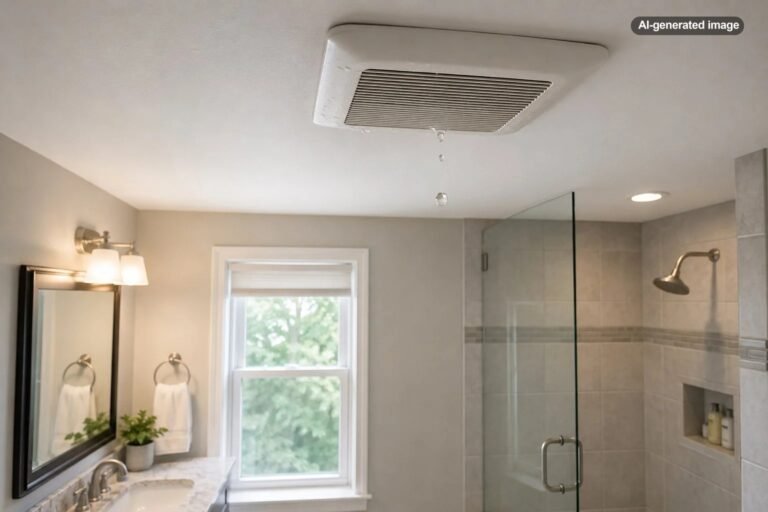
The AC is not the only thing determining indoor humidity. Showering, cooking, air-drying laundry, plumbing leaks, damp basements or crawl spaces, and humid outdoor air entering the building can all add moisture. Bathroom and kitchen exhaust ventilation can be especially important during moisture-producing activities.
This is particularly noticeable in humid climates, where opening doors and windows can exchange conditioned indoor air for outdoor air carrying a substantial moisture load. A home can also develop localized humidity problems when moisture is entering through a leak or a persistently damp area, even if the HVAC system itself is operating.
If the humidity problem appeared suddenly, think about what else changed. Recent water intrusion, a plumbing problem, construction work, a new ventilation pattern, unusually humid weather, or changes in how the house is occupied can all alter the moisture load.
Condensate drainage matters
Water removed from the air has to leave the HVAC system through its condensate system. The EPA specifically recommends keeping air-conditioning drip pans clean and drain lines unobstructed and flowing properly as part of moisture control.
A homeowner can look for obvious exterior signs such as water where it should not be, but internal drain cleaning, equipment disassembly, electrical work, and diagnosis around inaccessible HVAC components should be left to someone qualified for the system. Water accumulating around air-handling equipment is not a condition to ignore, particularly if it is approaching electrical components or damaging nearby finishes.
The system may be running constantly because it cannot satisfy the cooling load
If the house is both warmer and more humid than intended, the AC may simply be struggling to keep up. A dirty filter is one possible contributor, but persistent inability to reach the thermostat setting can have many causes, including equipment problems, airflow deficiencies, duct losses, building-envelope issues, or a cooling system that is not appropriately matched to the home’s actual load.
Do not assume low refrigerant based on symptoms alone. Similar comfort complaints can arise from very different causes, and refrigerant circuits require appropriate training and equipment to diagnose and service. A qualified HVAC professional can evaluate temperatures, airflow, electrical operation, condensate management, equipment condition, and other system variables rather than guessing from one symptom.
Could the air conditioner be oversized?
Oversizing is worth discussing when a home cools rapidly yet repeatedly feels humid, but it should not be diagnosed from humidity alone. Proper equipment selection considers the building, insulation, windows, orientation, air leakage, local climate, duct system, and other loads. Replacing equipment based only on floor area or assuming that a larger unit will solve a comfort problem can create new problems.
When replacement is already being considered, ask the contractor how the proposed system size was determined. A professional load calculation provides much better information than simply matching the capacity of the existing unit, especially if the home has been renovated, insulated, expanded, or otherwise changed.
When a separate dehumidifier may help
In some homes, cooling demand and moisture-removal demand do not line up neatly. This can happen during mild but very humid weather, when the house does not need much sensible cooling even though indoor moisture remains uncomfortable. A dehumidifier may be useful in an appropriate application, but it should not become a bandage for an unresolved leak, drainage problem, ventilation issue, or malfunctioning HVAC system.
If humidity is consistently high throughout the home, an HVAC professional can help determine whether the better response is correcting the cooling system, addressing air leakage or ventilation, controlling a moisture source, changing system controls, or considering dedicated dehumidification. The right answer depends on why the moisture is there.
What to tell an HVAC technician
A little observation can make a service visit more productive. Record the thermostat setting, actual indoor temperature, humidity readings, approximate outdoor conditions, when the problem is worst, and whether all rooms are affected. Mention any recent filter changes, renovations, water leaks, duct work, thermostat changes, or unusual equipment behavior.
Before you decide
- Confirm whether temperature, humidity, or both are outside your comfort target.
- Compare humidity readings in several rooms.
- Check straightforward airflow and moisture-source issues.
- Do not assume that constant operation automatically means the AC is undersized.
- Do not assume that a larger replacement system will solve humidity.
- Use professional diagnosis for refrigerant, electrical, internal airflow, sizing, and equipment-performance questions.
Frequently asked questions
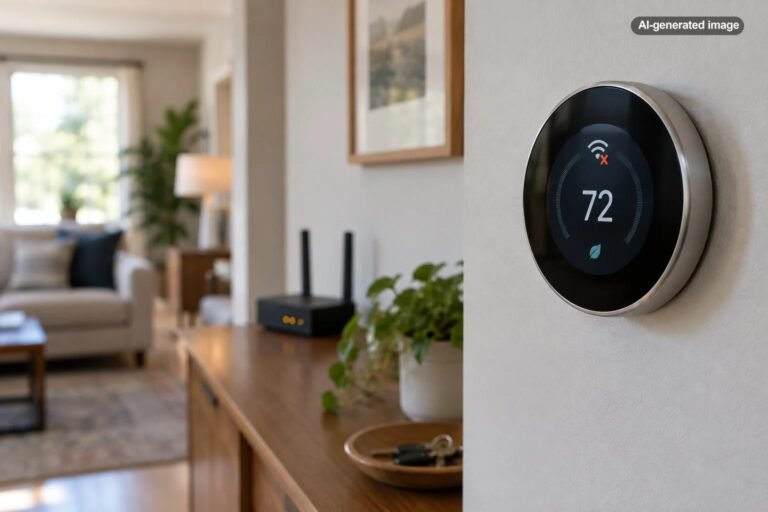
Why is my house humid even when the thermostat says 72 degrees?
The thermostat primarily tells you about temperature unless it also measures humidity. Air can be cool while still containing enough moisture to feel clammy. Measure relative humidity separately before deciding whether the sensation is truly a humidity problem.
Does running the AC longer always remove more humidity?
Not necessarily. Normal cooling operation can remove moisture, but actual dehumidification depends on system design, airflow, coil conditions, controls, drainage, operating conditions, and the amount of moisture entering the house. Continuous operation paired with poor comfort is a reason to investigate rather than simply lowering the thermostat further.
Should I lower the thermostat to get rid of humidity?
Lowering the set point may increase cooling operation, but it is not a reliable cure for an underlying moisture or equipment problem and can make the house unnecessarily cold. Measure the humidity and address the source of the problem instead.
Can a dirty air filter cause this?
A neglected filter can restrict airflow and interfere with HVAC performance, so it is a sensible early check. However, replacing a dirty filter does not rule out other causes if the system continues running constantly or humidity stays high.
When should I call an HVAC professional?
Professional evaluation makes sense when the system cannot reach the thermostat setting, humidity remains persistently high after basic checks, water is appearing around equipment, ice is visible, breakers trip, unusual odors or noises develop, or the problem returned after previous repairs. These symptoms require diagnosis rather than guesswork.