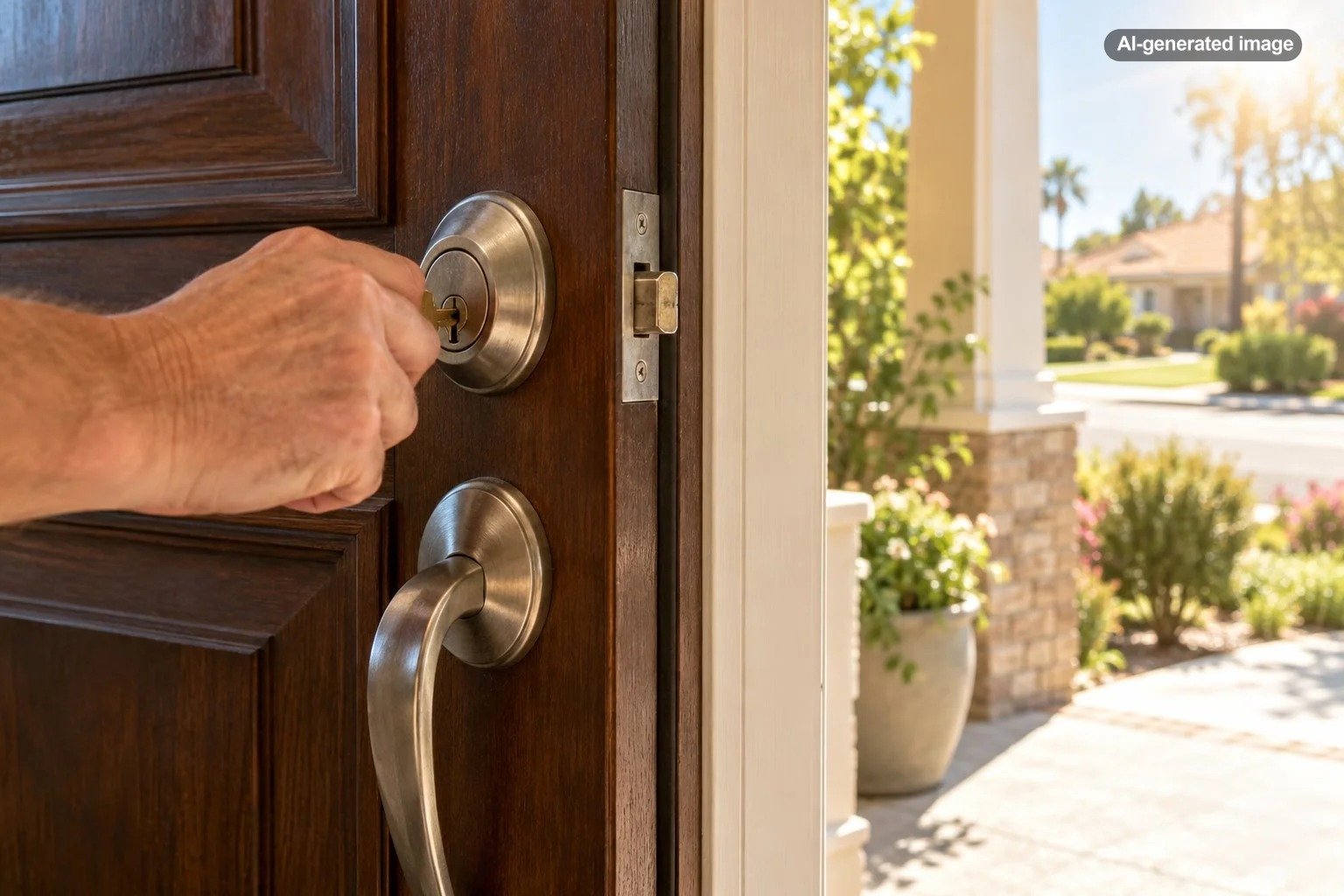
Why Does My Front Door Lock Stick in Hot Weather?
If your front door lock becomes noticeably harder to turn during hot weather, the lock itself may not be the real problem. Summer heat often arrives with higher humidity, and wooden doors, jambs, weatherstripping, hinges, and frames can shift just enough to change how the latch or deadbolt lines up with the strike plate. A tiny alignment change can turn a normally smooth lock into one that suddenly needs a push, pull, or shoulder nudge.
The most useful clue is whether the lock operates normally when the door is open. If the key or thumb turn moves smoothly with the door open but binds when the door is closed, alignment is much more likely than an internal lock failure.
Why hot weather can make a front door lock stick
Wood naturally responds to changes in moisture. During humid periods, a wooden door or jamb can absorb moisture and expand slightly. Even a small amount of swelling may reduce the clearance around an exterior door enough to change where the latch or deadbolt meets its strike plate.
Temperature changes can also affect the overall fit of an exterior door assembly. The important point is that a lock operates as part of a system: door, frame, hinges, weatherstripping, latch, deadbolt, and strike plates all need to remain aligned. The cylinder can be perfectly functional while the bolt is rubbing against metal or wood every time you lock the door.
| What you notice | Likely area to check |
|---|---|
| Lock turns easily with door open | Door and strike alignment |
| You must push the door inward to lock it | Weatherstripping or horizontal alignment |
| You must lift the handle or door | Hinges, sagging, or strike height |
| Door rubs the jamb in summer | Seasonal swelling or frame fit |
| Lock remains stiff with door open | Lock or key mechanism may need attention |
Start by testing the lock with the door open
Open the door and operate the deadbolt or latch several times. It should extend and retract without scraping, hesitation, or unusual resistance. If the mechanism feels smooth in this position, resist the temptation to spray something into the lock or replace the hardware immediately.
Next, close the door gently and try the lock without pushing or pulling on the handle. If it now becomes difficult, try applying very light pressure in different directions. A lock that suddenly works when you push the door inward, pull it toward you, or lift slightly on the handle is giving you a useful diagnostic clue: the bolt and strike opening are not lining up naturally.
What to do
- Operate the lock several times with the door open.
- Close the door without forcing it and test the lock again.
- Notice whether pushing, pulling, or lifting the door changes the resistance.
- Look for fresh scrape marks around the latch, deadbolt, or strike plate.
- Check whether the gaps around the door appear noticeably uneven.
Check the hinges before moving the strike plate
Loose hinge screws are an easy problem to overlook. A door can sag only slightly and still move the latch or deadbolt enough to create resistance at the strike. Examine the screws attaching each hinge to both the door and the jamb and tighten any that are obviously loose.
Pay particular attention to the upper hinge if the door appears to droop toward the latch side. Also look at the spacing around the perimeter of the closed door. A noticeably wider gap near one corner and tighter gap near another can indicate that the door is no longer sitting squarely in the opening.
If screws spin without tightening, the screw hole may be damaged and require repair rather than simply more tightening. Avoid repeatedly driving a loose screw deeper without understanding what it is fastening into.
Look for evidence that the bolt is hitting the strike
The strike plate is the metal plate attached to the jamb where the latch or deadbolt enters. When alignment changes, the edge of the bolt may begin contacting the edge of that opening. Fresh polished spots, scratches, chipped paint, or metal rub marks can reveal exactly where interference is occurring.
This is especially useful when the problem appears only during certain seasons. If the lock works beautifully in cooler, drier weather but starts scraping every humid summer, seasonal movement is a stronger possibility than a suddenly defective cylinder.
Do not immediately plane or sand a swollen door
If the door itself is rubbing the jamb, removing material may eventually be appropriate, but it should not be the first response to a seasonal problem. Taking off too much wood while the door is swollen can leave an excessive gap when the door contracts later.
First determine whether loose hinges, shifted hardware, thick weatherstripping, or an easily corrected alignment issue is responsible. If the door has exposed or poorly sealed edges, moisture may also be contributing to repeated seasonal movement. Any refinishing work should be appropriate for the door material and finish.
A door that has remained badly distorted through multiple seasons deserves a closer look rather than endless trimming. The issue may involve the slab, jamb, installation, or movement elsewhere in the opening.
Weatherstripping can create resistance too
Exterior doors need weatherstripping, but compressed, displaced, newly replaced, or overly thick material can make the door sit differently against the stops. If you have to push firmly on the door before the deadbolt will turn, inspect the weatherstripping around the latch side and top of the frame.
Look for sections that are folded, detached, bunched up, or substantially thicker than surrounding material. The goal is not to remove useful weather protection simply to make the lock easier to operate. Instead, determine whether the material is installed correctly and whether the door can close fully without excessive force.
A stubborn summer lock is often an alignment problem wearing a lock-shaped disguise.
What if the lock sticks even when the door is open?
That changes the diagnosis. If the deadbolt, latch, key cylinder, or thumb turn remains difficult to operate with the door open, door-to-frame alignment cannot explain all of the resistance.
Check whether the key is bent, badly worn, or damaged. If you have another correctly cut key, comparing how each operates can be informative. Also inspect the lock for loose hardware or visible damage. Follow the lock manufacturer’s maintenance instructions before applying any lubricant because products appropriate for one mechanism or finish may not be appropriate for another.
If the mechanism binds consistently, feels damaged, or no longer locks reliably, having the hardware evaluated by a qualified locksmith is more sensible than forcing it until something breaks.
Should you move the strike plate?
Sometimes, but only after you understand why the alignment changed. Moving a strike plate can solve a genuine fit problem, yet it can also conceal a loose hinge or seasonal movement that should be addressed first.
If the door is square, the hinges are secure, the weatherstripping is sitting properly, and the bolt consistently contacts the same edge of the strike opening, a modest hardware adjustment may be appropriate. The bolt should be able to extend without requiring you to push, pull, or lift the door every time.
Entry-door hardware also contributes to security, so avoid casually enlarging holes or removing material in ways that weaken the jamb or leave the bolt poorly supported. When the required adjustment seems substantial, professional help is the better next step.
How to reduce the chance of the problem returning
Seasonal movement cannot always be eliminated, particularly with wood exterior doors, but routine attention can keep a minor fit change from becoming an aggravating lock problem.
Before you decide
- Keep hinge and lock hardware securely fastened.
- Watch for changes in the gaps around the door from season to season.
- Replace damaged weatherstripping with material suited to the door.
- Maintain exposed wood surfaces according to the door manufacturer’s guidance.
- Investigate recurring rubbing instead of repeatedly forcing the lock.
- Have persistent or significant alignment problems evaluated before making major alterations.
Frequently asked questions
Why does my deadbolt work in winter but stick in summer?
Seasonal humidity can change the dimensions and alignment of wooden doors and frames. If the bolt moves freely with the door open but rubs when the door is closed, seasonal alignment is a strong possibility.
Does a sticking lock mean I need a new lock?
Not necessarily. If the mechanism works smoothly while the door is open, replacing the lock may leave the underlying alignment problem unchanged. Check the door, hinges, strike, and weatherstripping first.
Why do I have to push my front door to turn the deadbolt?
The deadbolt may be contacting the strike opening until pressure moves the door into alignment. Weatherstripping, seasonal swelling, hinge movement, or strike positioning can all contribute.
Can I keep forcing a sticky deadbolt?
It is better to find the cause. Repeatedly forcing a key or thumb turn can put unnecessary stress on the hardware and may eventually leave you with a lock that is harder to operate or a key that becomes damaged.
When should I call a locksmith or door professional?
Get help when the lock binds even with the door open, the key or cylinder appears damaged, the door has shifted substantially, the deadbolt will not fully engage, or correcting the alignment would require significant modification to the door or frame.