
Why Does My Bedroom Smell Musty in the Morning?
A bedroom that smells musty only in the morning usually has a moisture or airflow problem rather than a mysterious nighttime odor source. Overnight, the room stays closed for hours while people breathe, bedding holds warmth and perspiration, and cool surfaces can collect condensation. By morning, those conditions may make damp carpet, dusty upholstery, stale bedding, or hidden mold easier to smell.
Start with the simple possibilities, but do not try to cover the odor with fragrance. A musty smell is useful information. The goal is to identify what is staying damp and why it is not drying properly.
Why the smell is strongest after sleeping
A closed bedroom changes gradually overnight. Each sleeper adds moisture to the air through breathing and perspiration. A tightly closed door, shut windows, heavy curtains, and limited air movement can keep that moisture concentrated in one room.
Temperature matters as well. When warm, humid indoor air meets a cool window, exterior wall, metal vent, or poorly insulated surface, moisture may condense. The surface does not need to look soaked to create a damp environment behind curtains, under a windowsill, or along the back of a headboard.
The morning timing can therefore be a helpful clue. A smell that fades after the door and curtains are opened often suggests overnight humidity and limited ventilation. A smell that remains concentrated beside one wall, closet, or window is more suggestive of a localized moisture source.
The most likely causes, from simple to serious
Damp bedding and the mattress surface
Sheets, pillows, protectors, comforters, and the top of a mattress absorb moisture during sleep. A thick comforter folded over an unmade bed can trap that moisture instead of allowing it to evaporate. Foam mattress toppers and tightly fitted waterproof protectors may also dry slowly.
Pull the bedding back for a few minutes after waking. Wash sheets and pillowcases regularly according to their care labels, and make sure every layer is fully dry before remaking the bed. Inspect the underside of the mattress and the platform or slats, especially when the mattress sits close to the floor or rests on a solid base with little ventilation.
Carpet, rugs, and upholstered furniture
Soft furnishings hold dust, skin oils, pet dander, spilled drinks, cleaning residue, and humidity. A rug over a cool slab or a carpet near an exterior wall can smell musty even when the surface feels dry. Check beneath rugs and around the perimeter of carpet, including behind nightstands and under the bed.
If carpet was recently shampooed, it may not have dried completely. Repeated wet cleaning without sufficient extraction and airflow can make the problem worse rather than better.
A closed or crowded closet
Closets often have weak airflow, especially when they are packed tightly. Shoes, laundry hampers, damp towels, luggage, cardboard boxes, and clothes pushed against an exterior wall can create a small pocket of stale, humid air.
Empty the lower section, inspect corners and baseboards, and leave a little space between stored items and the wall. Wash or remove anything that already carries the odor. Cardboard and unfinished wood are particularly good at absorbing a musty smell.
Window condensation
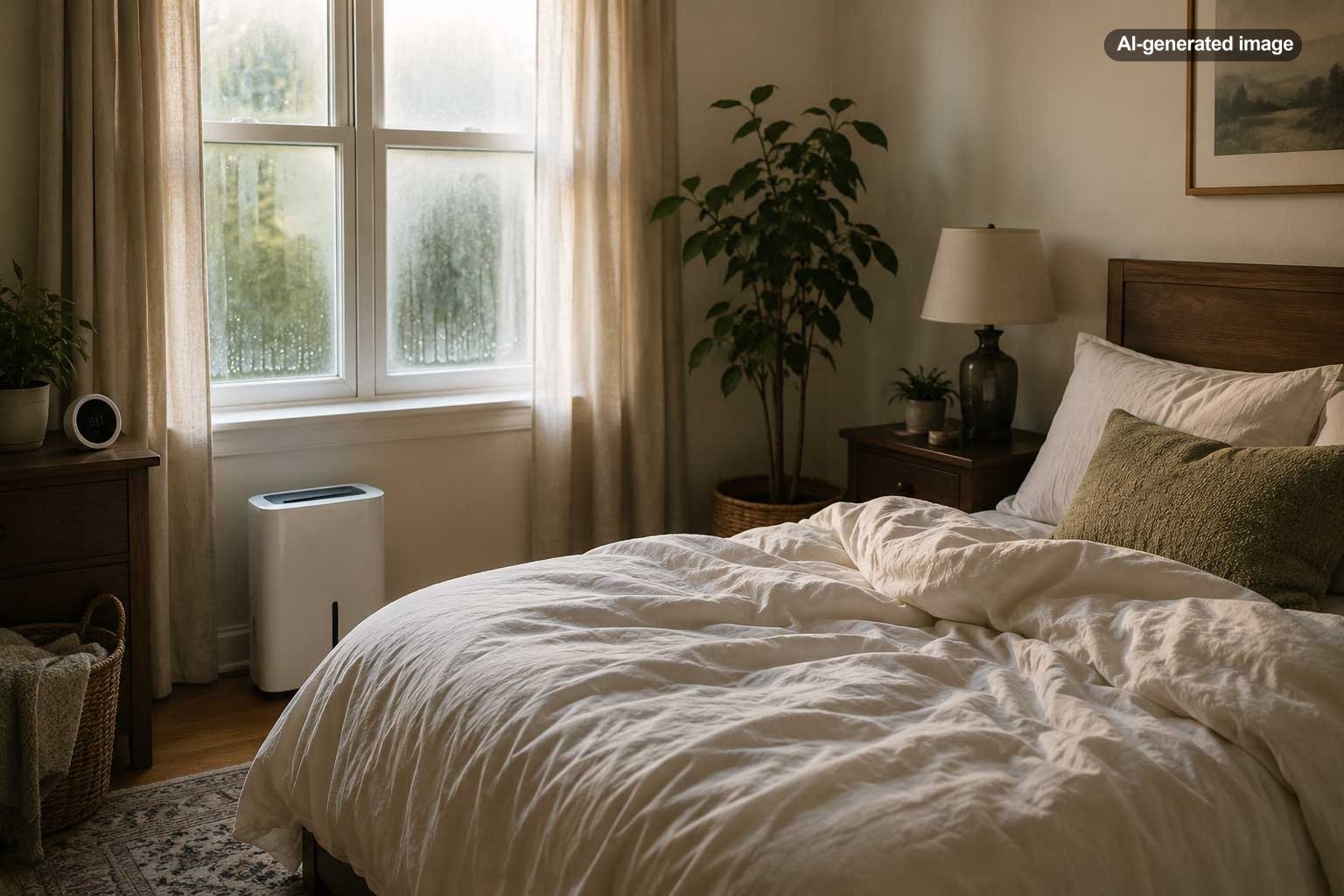
Look at the glass and frame immediately after waking, before the room warms up. Water droplets, damp tracks, peeling paint, swollen trim, or dark spotting around the sill indicate that moisture is collecting there. Heavy curtains can hide the problem by reducing warm-air circulation across the glass.
The U.S. Environmental Protection Agency notes that condensation on windows and other cold surfaces can signal excess indoor humidity. Reducing humidity, improving ventilation, and addressing unusually cold surfaces can help prevent recurring moisture.
A plumbing, roof, wall, or air-conditioning leak
Bedrooms may share a wall with a bathroom, sit beneath a roof valley, or contain air-conditioning ducts and drain lines. A slow leak can damp drywall, insulation, flooring, or framing without producing an obvious puddle.
Look for stains, bubbling paint, soft drywall, lifted flooring, rusty fasteners, damaged baseboards, or a smell that is notably stronger after rain or when the air conditioner runs. Do not assume that repainting or adding caulk will solve an unexplained damp patch.
Hidden mold growth
Mold can smell musty, but odor alone does not reveal the species, the extent of growth, or the exact location. It may develop behind furniture placed tightly against a cool exterior wall, beneath flooring, behind wallpaper, around a leaking window, inside a closet, or within water-damaged drywall.
The Centers for Disease Control and Prevention advises that visible or musty-smelling mold should be addressed by removing the mold and correcting the moisture problem. Testing the air is not automatically the most useful first step; a careful visual and odor-based inspection may be more helpful for locating dampness.
What to do tomorrow morning
- Notice where the odor is strongest before opening the door or windows.
- Check a small digital humidity meter and note whether the room is more humid than the rest of the home.
- Inspect the window glass, sill, exterior walls, ceiling corners, vents, and baseboards for dampness or staining.
- Strip back the bedding and smell the pillows, protector, mattress surface, mattress underside, and bed base separately.
- Move furniture a few inches from exterior walls and inspect behind it with a flashlight.
- Check beneath rugs, inside the closet, and around any wall shared with a bathroom.
- Repeat the check after rain and while the heating or cooling system is operating.
How to tell whether humidity is the main problem
A small humidity meter can help turn a vague smell into a measurable pattern. ENERGY STAR describes approximately 30 to 50 percent relative humidity as a generally appropriate indoor range, while the EPA recommends keeping indoor humidity below levels that encourage mold growth. Conditions vary by climate and season, so the useful clue is whether the bedroom repeatedly runs high, especially overnight.
If humidity rises mainly while the door is closed, try leaving the door ajar, keeping the HVAC supply and return paths unobstructed, and allowing bedding to air before making the bed. A dehumidifier may help in persistently humid homes, but it should not be used to disguise a leak. Empty and clean it according to the manufacturer’s instructions, and make sure any continuous drain arrangement cannot overflow.
Cleaning the room without hiding the cause
Once obvious moisture sources have been addressed, clean from the least porous items to the most absorbent. Launder bedding, vacuum the mattress and upholstered pieces with suitable attachments, clean hard surfaces, and wash curtains if their care labels permit. Dry everything completely before returning it to the room.
Avoid saturating carpet, mattresses, drywall, or upholstered furniture with homemade sprays. Porous materials can retain moisture below the surface, and some cleaners may discolor fabrics or damage finishes. Fragrance sprays, bowls of baking soda, and scented candles may change the odor temporarily, but they do not resolve dampness.
For a small amount of visible growth on a hard, washable surface, follow current EPA or CDC cleanup guidance and use appropriate protective measures. Extensive growth, contaminated porous materials, recurring water damage, or uncertainty about the source calls for professional evaluation.
Ways to prevent the smell from returning
- Allow the bed to air briefly each morning instead of immediately trapping warmth beneath heavy covers.
- Keep the HVAC registers open and unobstructed unless a qualified professional has advised otherwise.
- Leave clearance behind large furniture on cool exterior walls.
- Dry wet towels, workout clothes, and bathing suits outside the bedroom.
- Use bathroom exhaust ventilation during and after showers when the bedroom adjoins a bathroom.
- Clean window condensation promptly and investigate why it keeps returning.
- Repair water intrusion and dry damp materials quickly rather than waiting for the odor to disappear.
- Avoid storing cardboard boxes directly on closet floors or against exterior walls.
- Check the mattress underside, bed base, closet corners, and window trim during seasonal deep cleaning.
A fresh-smelling bedroom depends less on added fragrance than on giving moisture nowhere to linger.
Frequently asked questions
Can sleeping with the door closed cause a musty smell?
It can contribute. A closed door reduces air exchange, and overnight breathing and perspiration add moisture. However, a persistent or sharply localized smell should still be investigated for damp materials or a leak.
Should I replace the mattress?
Not automatically. First determine whether the odor comes from the sheets, protector, topper, mattress surface, mattress underside, or bed base. Replacement may be appropriate when the mattress has sustained water damage, contains visible growth that cannot be safely removed, or continues to smell after the surrounding moisture problem has been corrected.
Will an air purifier remove a musty smell?
An air purifier may reduce some airborne particles, depending on its filtration, but it cannot dry wet materials or repair a leak. Moisture control and source removal come first.
Why does the bedroom smell worse after rain?
Rain-related changes can point to water entering around the roof, windows, siding, foundation, or wall penetrations. They may also reflect higher outdoor humidity entering the room. Repeated rain-related odor deserves a careful building-envelope inspection.
Do I need a mold test?
Not in every case. When visible growth or a musty odor clearly accompanies moisture, the practical priorities are finding the damp area, correcting the water source, and cleaning or removing affected material. Professional assessment may be useful when the source is hidden, the affected area appears extensive, or health and building conditions make cleanup more complex.
Sources & further reading
- U.S. Environmental Protection Agency: A Brief Guide to Mold, Moisture and Your Home
- U.S. Environmental Protection Agency: Main Ways to Control Moisture in Your Home
- Centers for Disease Control and Prevention: About Mold
- CDC/NIOSH: Mold Testing and Remediation
- ENERGY STAR: Dehumidifiers and Indoor Relative Humidity