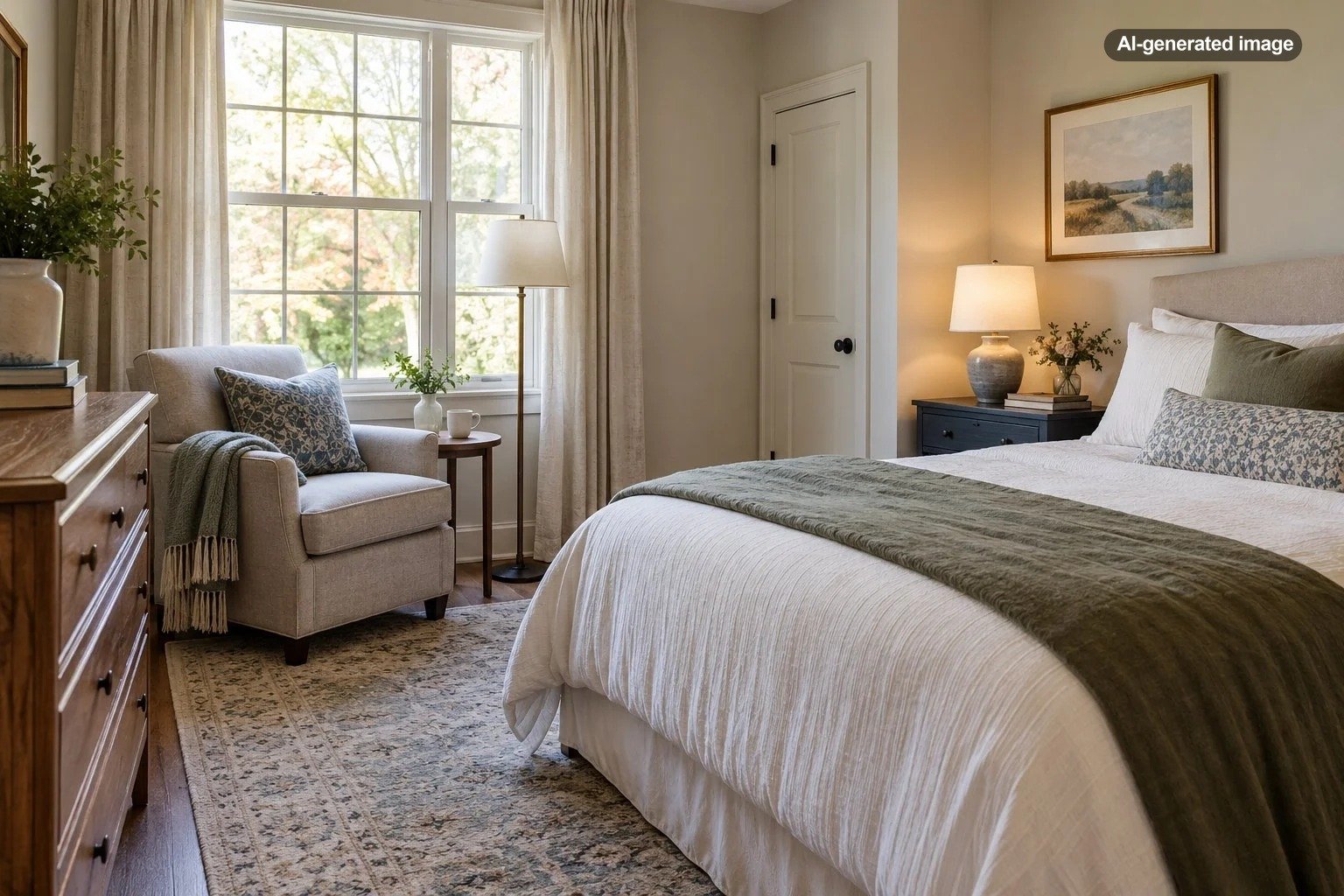
Should a Guest Room Have a Chair?
Yes, a guest room should usually have a chair if the room has enough space for one without making circulation awkward. A chair gives overnight visitors somewhere to sit while putting on shoes, reading, checking a phone, or simply taking a break without climbing back onto the bed. But in a compact room, clear floor space and easy access to the bed matter more than adding another piece of furniture.
The best guest rooms are not the ones with the most furniture. They are the ones where each piece earns its footprint. A chair can be remarkably useful, but it should support the way the room works rather than fill an empty corner simply because the corner exists.
Why a chair can make a guest room more comfortable
A bed is designed primarily for sleeping. Asking it to serve as the room’s only seat can make even a nicely furnished guest room feel less flexible. A separate chair gives visitors a place to settle in without disturbing freshly made bedding and gives them another posture besides standing or sitting on the edge of the mattress.
That matters particularly during stays longer than a single night. A guest may want to read, answer a few emails, organize the following day’s plans, or simply sit while another person uses the bed. The chair does not need to create a full lounge area. Even one modest seat can make the room function more like a temporary private living space rather than a bed surrounded by furniture.
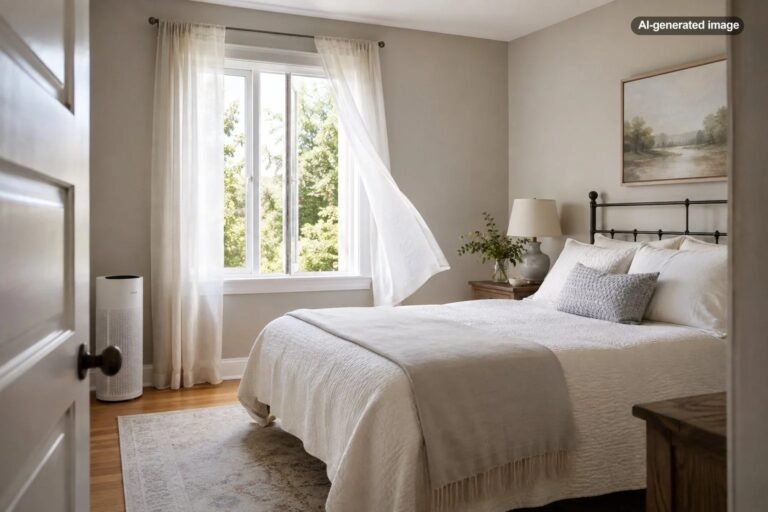
A chair can also improve the visual balance of a bedroom. An unused corner near a window may feel finished with a compact upholstered chair, while a larger bedroom can accommodate a more substantial reading chair without looking sparse.
When a guest room is better without one
The strongest reason to skip a chair is simple: the room is too tight. Furniture that forces guests to turn sideways around the bed, blocks a closet door, interferes with drawers, or creates an obstacle between the bed and the doorway is not improving hospitality.
As a useful planning reference, bedrooms generally feel easier to navigate when there is roughly 30 inches of clear space around accessible sides of the bed, with more space feeling noticeably more comfortable. You do not need to treat that as an absolute rule in every older home or compact apartment, but it is a helpful reality check. If placing a chair consumes the only comfortable walking path, the chair is probably the wrong priority.
Choose the chair by function, not by the empty corner
Before shopping or moving a spare chair into the room, decide what the seat is supposed to accomplish. A chair intended mainly for putting on shoes can be compact and relatively upright. A reading chair benefits from a deeper seat, supportive back, nearby light, and perhaps a small surface for a book or glass of water.
If the guest room doubles as a home office, the desk chair may already provide all the seating the room needs. In that case, adding a decorative armchair can make the room feel crowded without giving guests a genuinely new function.
| Room situation | Seating that often works | Main consideration |
|---|---|---|
| Small guest room | Armless chair or stool | Preserve walking space |
| Medium bedroom | Compact upholstered chair | Balance comfort with scale |
| Large guest room | Lounge or reading chair | Create a useful seating zone |
| Guest room and office | Desk chair | Avoid duplicate furniture |
| Frequent short stays | Bench or simple chair | Prioritize dressing and luggage needs |
Scale matters more than style
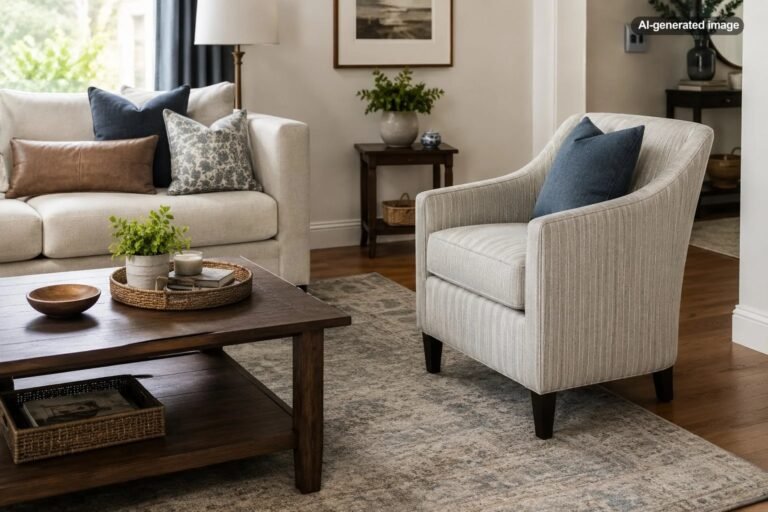
A chair can be beautiful and still be wrong for the room. Oversized arms, a deep reclined back, or a broad swivel base can consume far more usable floor area than the seat itself suggests. Measure the chair’s full footprint rather than judging by seat width alone.
Also consider how someone will approach and use it. A chair tucked tightly between a wall and nightstand may look fine in a photograph but feel inconvenient in real life. Guests should not have to move another piece of furniture before they can sit down.
Visually, smaller guest rooms often benefit from chairs with relatively open profiles: visible legs, modest arms, or no arms at all. Larger rooms can handle more upholstery and visual weight. The goal is proportion, not a particular decorating style.
Where should the chair go?
A corner near a window is a natural choice because it can create a pleasant reading spot without competing with the bed. Another option is a corner diagonally opposite the bed, especially when that location leaves the room’s main walking routes open.
Avoid placing a chair where it blocks curtains, closet doors, dresser drawers, heating or cooling vents, or the natural swing of the bedroom door. Also check what happens when luggage enters the room. A layout that works perfectly while empty may become irritating once a suitcase is open on the floor.
If the room is shared by two guests, think about whether one chair is actually useful enough to justify its footprint. You do not necessarily need two matching chairs. The second person may be perfectly comfortable using the bed, a bench, or a desk chair while the other uses the dedicated seat.
A chair is not always the best seating choice
Sometimes another piece performs the same job more efficiently. A bench at the foot of the bed can provide a place to sit while also giving guests somewhere to set a handbag or folded clothing. A small stool takes up less visual space and can sometimes tuck under a console or desk when it is not needed.
An upholstered bench can be particularly practical in a room where visitors frequently need somewhere to sit while dressing. In contrast, a proper chair is usually better for reading or spending more than a few minutes seated because it provides back support.
A luggage rack is another alternative when the apparent need for a chair is really a need for somewhere to put a suitcase. If every guest immediately covers the chair with luggage, that is a clue that the room may benefit more from dedicated luggage space than additional seating.
Make the chair feel intentionally connected to the room
The chair does not need to match the bed or nightstands. In fact, a slightly different material or silhouette can make the room feel collected rather than purchased as a set. What matters is some visual relationship through color, texture, proportion, or style.
A patterned chair can enliven neutral bedding, while a simple linen-look or solid upholstered chair can calm a room with stronger wallpaper or textiles. Wood chairs can work beautifully in traditional, coastal, farmhouse, and pared-back rooms, particularly when softened with a comfortable seat cushion.
Try not to bury the chair under decorative pillows and throws. One comfortable seat that a guest can actually use is more welcoming than a meticulously styled chair that first requires clearing a pile of accessories.
Before you decide
- Check that the chair does not interfere with the door, closet, drawers, or bed access.
- Measure the full chair footprint, including arms and any angled back.
- Decide whether guests need a reading seat, dressing seat, desk chair, or luggage surface.
- Consider where a suitcase will go once the room is occupied.
- Choose a scale that leaves the room feeling open rather than fully furnished.
- Make sure the chair can be used immediately without moving decorative objects.
What matters more than having a chair?
If space or budget forces a choice, prioritize the fundamentals first: a comfortable bed setup, accessible lighting, a usable surface near the bed, window coverings appropriate for sleep, somewhere to place luggage, and enough open space to move around safely and comfortably.
A guest room does not become welcoming because it contains a prescribed checklist of furniture. A thoughtfully edited small room can be more pleasant than a large room crowded with pieces that serve little purpose.
The chair belongs when it adds genuine comfort. If it compromises circulation, storage, or the sense of calm that makes a bedroom pleasant, leave the corner open. Empty space can be functional too.
Frequently asked questions
Does every guest bedroom need seating?
No. Dedicated seating is useful but not essential. In a small bedroom, comfortable circulation and practical luggage space are usually more important.
What type of chair is best for a small guest room?
A compact armless chair, dining-style upholstered chair, or small occasional chair can provide seating without the footprint of a large armchair. Choose according to the available floor space and how long guests are likely to sit there.
Is a bench better than a chair?
It depends on the job. A bench is excellent for dressing, temporarily setting down belongings, and seating more than one person. A chair with a supportive back is generally more comfortable for reading or relaxing.
Can the desk chair count as guest room seating?
Absolutely. In a multipurpose guest room, using one well-chosen chair for both the desk and general seating can prevent unnecessary furniture from crowding the space.
Should a guest room chair match the bedroom furniture?
No. It should feel compatible with the room, but it does not have to match. Coordinating color, material, scale, or overall design character is usually enough to make the seating feel intentional.