What Should You Store Indoors Before a Hurricane?
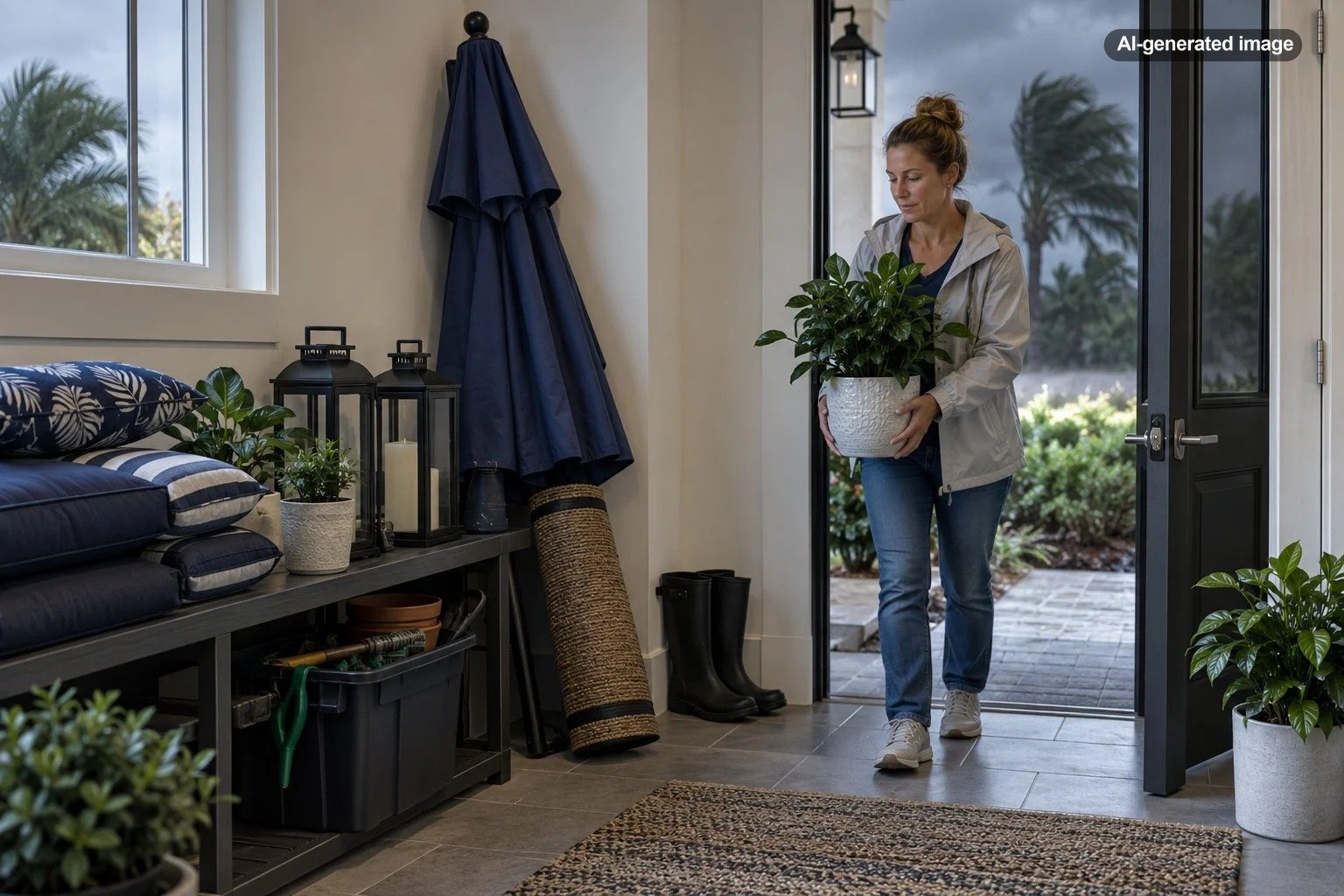
Before a hurricane, bring loose outdoor items indoors whenever they can be moved safely. Patio chairs, small tables, umbrellas, cushions, bicycles, toys, gardening tools, lightweight planters, trash cans, decorations, and similar objects can become wind-blown debris. The goal is not simply to protect your belongings. It is to keep ordinary household objects from becoming hazards once winds increase.
That does not mean everything belongs in the house or garage. Propane cylinders, gasoline, and some other fuel-related items require different handling, while objects too large or unsafe to move indoors should be secured according to appropriate guidance. Hurricane preparation is partly a storage project and partly a careful process of deciding what should be moved, secured, or left alone.
Start With Anything That Could Become Wind-Blown Debris
Federal hurricane guidance specifically recommends bringing loose, lightweight objects such as patio furniture, garbage cans, and bicycles inside. The reason is straightforward: hurricane winds can pick up unsecured objects and send them into windows, siding, vehicles, neighboring property, or people.
Walk around the property and look at it differently than you would on an ordinary day. Instead of asking whether something feels heavy in your hand, ask whether it is loose, exposed, and capable of moving in extreme wind. A resin chair, empty planter, garden ornament, watering can, folding table, or child’s outdoor toy may seem harmless until severe weather arrives.
Bring inside when practical
- Patio and balcony chairs
- Small outdoor tables and stools
- Loose seat and back cushions
- Patio umbrellas and removable shade accessories
- Bicycles, scooters, and children’s outdoor toys
- Trash, recycling, and lightweight storage containers
- Garden tools, watering cans, hoses, and portable accessories
- Lanterns, decorative signs, pots, and other movable decor
- Portable sports equipment
- Loose pool and patio accessories
Patio Furniture Deserves More Attention Than Its Weight Suggests
Outdoor furniture is one of the most obvious categories to address, but homeowners sometimes assume a substantial-looking chair or table is too heavy to move. Wind exposure, shape, and construction matter as much as apparent weight. A broad tabletop, lightweight aluminum frame, or stackable chair can catch wind in ways that are difficult to predict.
If furniture is manageable to move, place it inside a garage, shed, or other enclosed location that is suitable for ordinary household storage. Do this before weather deteriorates. Moving bulky furniture across a wet patio while winds are already increasing creates an unnecessary risk.
Remove cushions even if the furniture itself will remain outdoors. Cushions are especially easy for wind to lift, and storing them inside also protects them from prolonged rain and wind-driven water.
Take Down Umbrellas, Shade Accessories, and Hanging Decor
Patio umbrellas should not simply be folded and left in their stands when a hurricane threatens. Remove the umbrella from the base when practical and store it in an enclosed location. The same principle applies to removable canopies, lightweight shade panels, small freestanding screens, and portable outdoor privacy features.
Also look above eye level. Hanging baskets, wind chimes, porch signs, decorative lanterns, lightweight wall ornaments, and suspended planters are easy to overlook because they are part of the everyday background of the house.
If an item can be removed without climbing unsafely or improvising dangerous access, bring it inside. Hurricane preparation is not the time to balance on an unstable chair or ladder as weather conditions worsen.
Move Small Planters and Garden Accessories
Small and medium movable planters can become troublesome debris, particularly when they are empty, made from lightweight materials, or positioned on exposed balconies and patios. Bring manageable containers indoors or place them in an appropriate enclosed storage area.
Do not injure yourself trying to move extremely heavy ceramic pots, large trees in containers, or built-in landscape features. If something is too heavy to move safely, treat it as an item that may need appropriate securing rather than attempting a last-minute lift.
Gather garden tools at the same time. Pruners, shovels, rakes, small trellises, plant supports, watering cans, portable hose reels, and bags or containers left around the yard should not remain scattered outside.
Clear Balconies, Porches, and Upper-Level Outdoor Spaces
Balconies deserve particular attention because objects have fewer surrounding barriers and may fall or blow to areas below. Remove loose chairs, stools, tables, planters, rugs, toys, watering equipment, and decorative accessories when it is safe to do so.
Apartment and condo residents should also follow building management and local emergency instructions. Rules governing storm shutters, balcony preparation, common areas, evacuation, and where belongings may be stored can vary by property.
Do Not Forget Trash Cans, Recycling Bins, and Small Storage Containers
Trash and recycling containers are specifically the sort of loose outdoor objects that should be brought into a secure location when practical. Empty containers are particularly vulnerable because their large surfaces can catch wind while their weight is relatively low.
Do not assume placing a few heavy objects inside a trash can makes it hurricane-proof. If the container can be stored safely in an enclosed area, moving it removes the uncertainty altogether.
The same principle applies to deck boxes and portable storage bins. A box may look substantial but still contain mostly lightweight cushions or toys. If it cannot be moved, consider whether the manufacturer’s instructions provide an approved method of securing it. Avoid inventing makeshift anchoring methods that could damage the container or fail under load.
Bring Bicycles, Toys, and Recreation Gear Inside
Bicycles are explicitly mentioned in FEMA hurricane preparation guidance. Scooters, skateboards, wagons, portable basketball equipment, sports balls, pool toys, beach gear, and children’s play equipment should also be evaluated before the storm.
This is an area where doing the work early pays off. Small objects tend to multiply across a yard, pool deck, and garage entrance. Collecting them the day before conditions deteriorate is much easier than making repeated trips outside as rain begins.
What to do
- Walk the entire property, including side yards, balconies, porches, patios, pool areas, and driveway edges.
- Move loose lightweight objects into an appropriate enclosed area.
- Remove cushions, umbrellas, hanging decor, and portable accessories from larger furniture.
- Identify objects that cannot be moved safely and determine whether they require proper securing.
- Make a final sweep before conditions worsen, checking for small items that were missed.
Grills and Propane Cylinders Need Different Treatment
A hurricane warning can create an understandable instinct to move everything into the garage. Fuel-related equipment is where that simple rule stops working.
FEMA hurricane guidance distinguishes loose objects that can be brought inside from objects that would be unsafe to bring indoors, giving gas grills and propane tanks as examples of items to anchor instead. U.S. Consumer Product Safety Commission guidance also states that LP gas containers should not be used or stored indoors and should be kept upright.
Follow the manufacturer’s instructions for your particular equipment and applicable local emergency guidance. Do not move a propane cylinder into a house, attached garage, or other enclosed area merely because a hurricane is approaching. Gasoline and other flammable liquids also require appropriate storage and should never be casually relocated into living spaces.
What About Large Furniture That Cannot Go Indoors?
Some outdoor kitchens, grills, large tables, permanent play equipment, heavy planters, and other objects are impractical or unsafe to move. Those items call for a different plan.
FEMA advises anchoring objects that would be unsafe to bring inside. How that should be done depends on the object, its construction, the attachment points provided by its manufacturer, the surrounding structure, and local conditions. A rope tied around a heavy object is not automatically a reliable hurricane anchoring system.
For permanent or expensive installations, consult the manufacturer’s instructions or an appropriately qualified professional well before a storm threatens. Last-minute improvisation is a poor substitute for a system designed in advance.
Where Should Indoor Storm Storage Go?
Once you decide what is coming inside, avoid turning the preparation itself into another household problem. Keep stored items away from emergency exits, electrical panels, vehicle pathways, stairs, and areas your household may need to access quickly.
Stack chairs carefully rather than creating unstable piles. Keep sharp gardening tools where children and pets cannot reach them. Allow wet cushions, rugs, and fabric items to dry when conditions permit so they are not left bundled while damp for an extended period.
If you use a garage for temporary storm storage, preserve enough clear floor area to move through it safely. You may be bringing in more than you expect, so it helps to clear routine clutter before hurricane season rather than trying to reorganize the garage during a watch or warning.
A Simple Rule for Deciding What Comes Inside
When you are unsure about an ordinary nonhazardous outdoor object, consider three questions: Is it loose? Could strong wind move or break it? Can you relocate it safely before conditions deteriorate? If the answers point toward risk and the item is appropriate for indoor storage, bringing it inside is usually the simpler choice.
The important exception is anything involving fuels, compressed gas, hazardous chemicals, or equipment whose manufacturer specifies particular storage conditions. Those items should be handled according to their safety instructions rather than grouped with cushions and patio chairs.
Good hurricane preparation makes the exterior of a home deliberately boring: fewer loose objects means fewer things for the wind to move.
FAQ
Should patio furniture always be brought inside before a hurricane?
If patio furniture is loose and can be moved safely, bringing it into an appropriate enclosed location is consistent with FEMA guidance for reducing wind-blown debris. Large objects that cannot be moved safely may need proper securing instead.
Should I bring my trash cans into the garage?
Loose garbage cans are among the items FEMA specifically identifies for indoor storage before hurricane winds. If your garage is an appropriate storage location and the cans can be moved without blocking exits or creating another hazard, moving them inside can keep them from becoming airborne.
Can I leave patio cushions outside if they are tied down?
Bringing removable cushions inside is the more straightforward approach when practical. It removes lightweight objects from the wind and also protects them from prolonged exposure to wind-driven rain.
Can a propane tank be stored in the garage during a hurricane?
No. CPSC guidance says LP gas containers should not be used or stored indoors. FEMA hurricane guidance likewise treats propane tanks as objects that can be unsafe to bring inside. Follow the cylinder and equipment manufacturer’s storage instructions and local safety guidance.
When should I start bringing outdoor items inside?
Do the work before hazardous winds and heavy rain arrive. If a storm is approaching, follow official forecasts, watches and warnings, evacuation instructions, and local emergency-management guidance rather than waiting for visible conditions to become severe.