
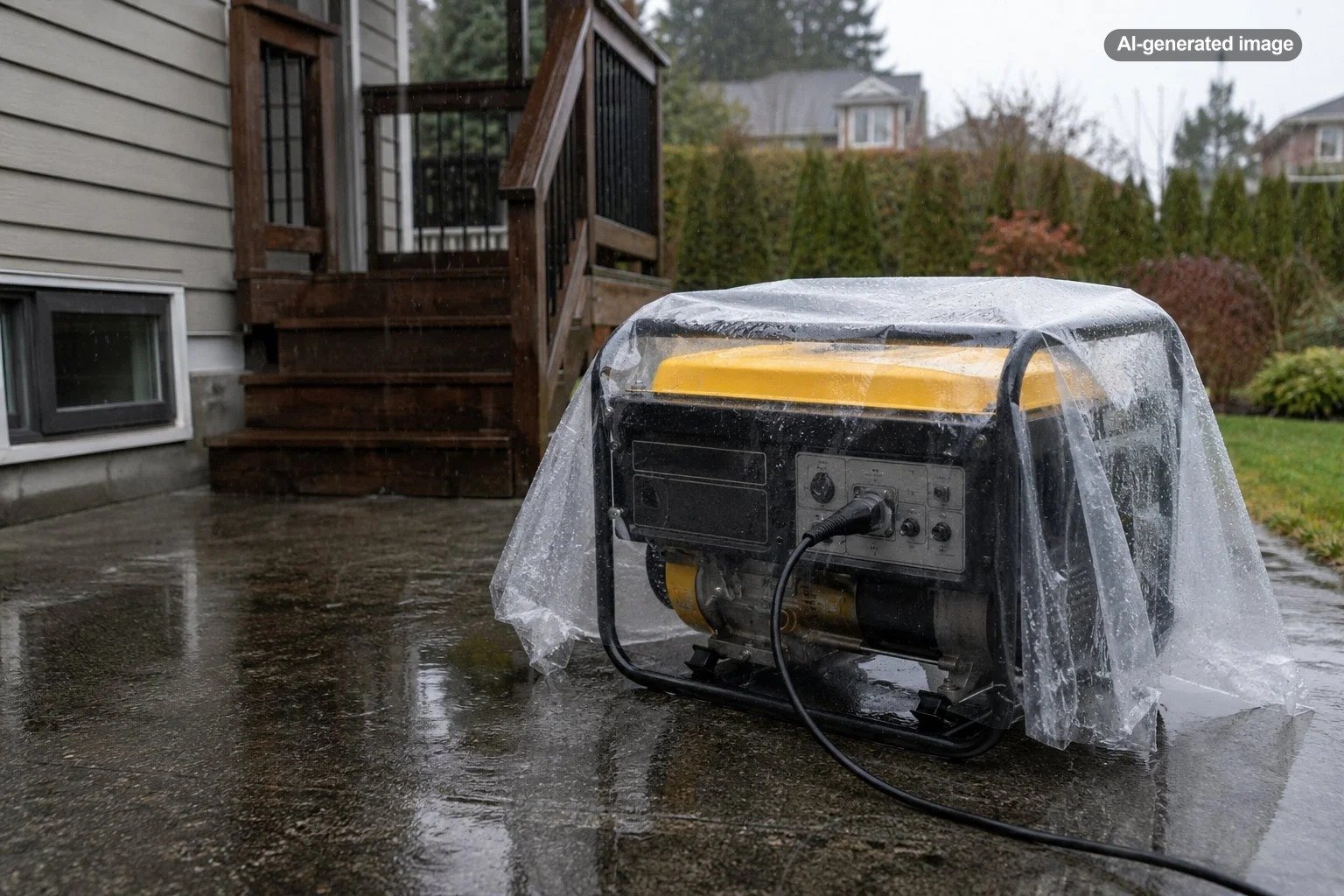
Can You Run a Portable Generator in the Rain?
The safest answer is generally no: you should not run an ordinary portable generator exposed directly to rain or standing water. Water around electrical equipment creates a serious shock and electrocution hazard. If backup power is essential during wet weather, the generator must remain outdoors while being protected from moisture in a way permitted by its manufacturer.
That distinction matters. Moving a generator into a garage, shed, carport, porch, or other enclosed or partly enclosed location to keep it dry can create an even more dangerous problem: carbon monoxide from the engine exhaust. Safe generator use during a storm therefore requires solving two problems at once: keeping the electrical equipment dry and keeping exhaust far away from people and buildings.
Why Rain and Portable Generators Are a Dangerous Combination
A portable generator produces substantial electrical power in a machine intended to operate outdoors. Rain, puddles, wet hands, soaked extension cords, and water reaching receptacles can create paths for electrical current where none should exist.
The U.S. Occupational Safety and Health Administration advises keeping generators dry and not using them in rain or wet conditions. OSHA also notes that electrical equipment used in wet or damp locations must be approved for those conditions. Ground-fault circuit interrupters, or GFCIs, can provide important protection in appropriate applications, but they do not make an otherwise unsuitable wet setup automatically safe.
The Consumer Product Safety Commission similarly warns about shock and electrocution when portable generators are operated in wet conditions. Current CPSC guidance directs users to follow the manufacturer’s instructions for inclement weather because those instructions may call for an appropriate generator tent or may tell the owner to wait until the rain passes.
A Generator Shelter Is Not the Same as Moving It Indoors
When a generator manufacturer permits operation during wet weather, protection generally needs to function more like an open canopy than an enclosed box. The goal is to keep precipitation away from the generator while maintaining substantial open-air ventilation around the engine and exhaust.
CPSC safety guidance describes operating a generator under an open, canopy-like structure on a dry surface where water cannot reach, puddle, or drain underneath it. The specific enclosure, clearance, ventilation, and weather-protection requirements can vary by generator, so the owner’s manual should control rather than a generic DIY shelter design.
Keep the Generator Far From the House
Carbon monoxide is the other major reason generator placement deserves careful attention. Portable generators burn fuel, and their exhaust contains carbon monoxide, an odorless and colorless gas that can become deadly before occupants realize anything is wrong.
In its May 2026 hurricane-season guidance, the CPSC advises operating portable generators outdoors only and at least 20 feet from homes and buildings, with the exhaust directed away from windows, doors, vents, and other openings. The agency specifically warns against using portable generators inside homes, garages, basements, crawlspaces, sheds, and other enclosed areas, even when doors or windows are open.
That 20-foot guidance can be especially important during a storm because homeowners naturally look for whatever covered location is closest. Unfortunately, a dry spot beside the house may solve the weather problem while placing the exhaust far too close to an opening.
A safe generator location has to manage both hazards at the same time: electricity must stay dry, and engine exhaust must stay away from people and buildings.
What to Do If You Need Backup Power While It Is Raining
If an outage occurs during heavy rain, resist the temptation to start the generator first and figure out protection afterward. Check the manufacturer’s instructions before operation. If those instructions say not to operate the unit in wet weather, wait until conditions are suitable.
What to do
- Read the generator’s wet-weather instructions. Follow the specific restrictions and shelter guidance supplied for your model.
- Choose a genuinely outdoor location. Follow current safety guidance on separation from buildings and direct the exhaust away from doors, windows, vents, and neighboring structures.
- Keep the generator and its electrical connections dry. Do not allow water to collect underneath the unit or around cords and receptacles.
- Use appropriate outdoor-rated cords. CPSC guidance recommends heavy-duty extension cords designed for outdoor use, properly rated for the connected electrical load.
- Keep yourself dry. Do not handle the generator’s electrical components with wet hands or while standing in water.
- Keep carbon monoxide alarms working. Maintain operational CO alarms inside the home according to their instructions.
What About a Generator Tent or Canopy?
A purpose-designed generator shelter can be useful when it is compatible with the generator and the manufacturer’s instructions. The important word is compatible. A shelter needs to protect the equipment from rain without trapping dangerous exhaust or interfering with necessary cooling airflow.
Current CPSC guidance notes that some manufacturers may permit an NFPA-rated noncombustible generator tent for inclement weather, while other instructions may advise waiting until rain or snow has passed. This is one reason a tarp, plastic storage enclosure, homemade plywood box, or ordinary pop-up arrangement should not automatically be treated as equivalent to a shelter designed for generator operation.
Extension Cords Matter in Wet Weather, Too
Keeping the generator itself dry is only part of the electrical-safety picture. Extension cords can be exposed to wet grass, puddles, vehicle traffic, sharp edges, and overloaded connections during an outage.
CPSC recommends heavy-duty extension cords specifically designed for outdoor use and rated above the total wattage of the appliances connected to them. Cords should have all required conductors and an intact grounding pin. OSHA additionally advises the use of GFCIs in appropriate wet or damp environments and emphasizes that electrical equipment still needs to be suitable for those conditions.
A damaged cord, questionable adapter, wet connection, or electrical component that has been submerged should not simply be dried with a towel and put back into service. Wet or damaged electrical equipment may require evaluation before it is used again.
Do Not Backfeed Your Home Through a Wall Outlet
A portable generator should never be connected to a home’s wiring by plugging it into an ordinary household receptacle. This practice, commonly called backfeeding, can energize wiring unexpectedly and create electrocution and fire hazards, including risks to utility personnel working to restore power.
If you want a generator to supply selected household circuits rather than individual appliances through extension cords, use a properly designed connection method installed and configured according to applicable electrical requirements and the equipment manufacturer’s instructions. That is work to discuss with a qualified electrician rather than improvising during an outage.
Prepare for Rain Before the Storm Arrives
The easiest time to make generator decisions is while the weather is calm. Confirm where the generator will sit, whether that location satisfies current separation guidance, where exhaust will point, how cords will reach the loads you intend to power, and what manufacturer-approved weather protection is available.
Also test smoke and carbon monoxide alarms, review the generator manual, inspect cords, and make sure anyone who might operate the generator understands that garages and other enclosed spaces are prohibited. A generator stored for emergencies is much more useful when the operating plan has already been worked out.
Frequently Asked Questions
Can a portable generator get a little wet?
You should avoid exposing a portable generator and its electrical components to rain or other wet conditions unless the manufacturer specifically permits operation using an appropriate protective setup. Do not assume light rain is harmless simply because the engine continues running.
Can I run a generator under my covered porch?
That is not an appropriate way to solve the rain problem. Current CPSC guidance says portable generators should be outdoors at least 20 feet from homes and buildings, with exhaust directed away from openings. A porch is typically too close to the occupied structure.
Can I run a generator in the garage with the door open?
No. CPSC warns never to operate a portable generator in a garage or other enclosed space, even if doors or windows are open. Carbon monoxide can accumulate rapidly.
Should I wait until the rain stops?
If your generator’s instructions do not provide a permitted wet-weather operating method, waiting is the appropriate choice. Older CPSC guidance also explicitly advises waiting for rain to pass rather than exposing consumer generators directly to wet conditions.
Is a tarp enough to protect a generator?
Do not assume it is. A covering can create additional concerns involving airflow, heat, exhaust, fire, stability, and access to electrical connections. Use only a wet-weather arrangement consistent with the generator manufacturer’s instructions.