
How to Make a Guest Room Feel Thoughtful Without Overdecorating
A thoughtful guest room does not need more decor. It needs fewer moments of friction. A comfortable bed, a clear place to put a suitcase, an easy-to-find outlet, a little empty storage, and lighting that makes sense after dark will usually make a stronger impression than another tray of decorative objects.
The most welcoming rooms feel edited rather than staged. Give guests what they need, leave enough open space for their belongings, and add only a few details that make the room feel intentionally finished.
Begin with what a guest actually needs
It is easy to style a spare bedroom from the doorway: attractive pillows, layered blankets, framed art, perhaps a decorative bowl on the dresser. The better test is to imagine arriving with an overnight bag at 9 p.m. Where does the suitcase go? Where can a phone charge? Is there room for a glass of water? Can clothing be hung without relocating half the closet?
Those questions reveal the difference between a room that photographs well and one that functions well. Before adding anything decorative, clear unnecessary objects from the nightstand, dresser, chair, and luggage area. Guests bring their own things, and empty space is part of the hospitality.
Before you decorate
- Leave at least one clear bedside surface.
- Make a convenient outlet or charging location easy to find.
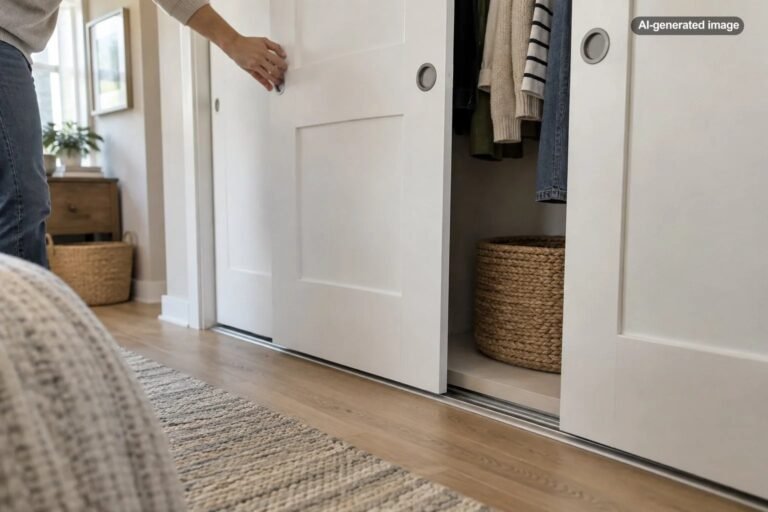
- Provide several empty hangers if closet space is available.
- Clear a drawer, shelf, or basket for personal items.
- Give luggage a destination other than the bed.
- Check that lamps and room controls are straightforward to use.
Make the bed look inviting, not untouchable
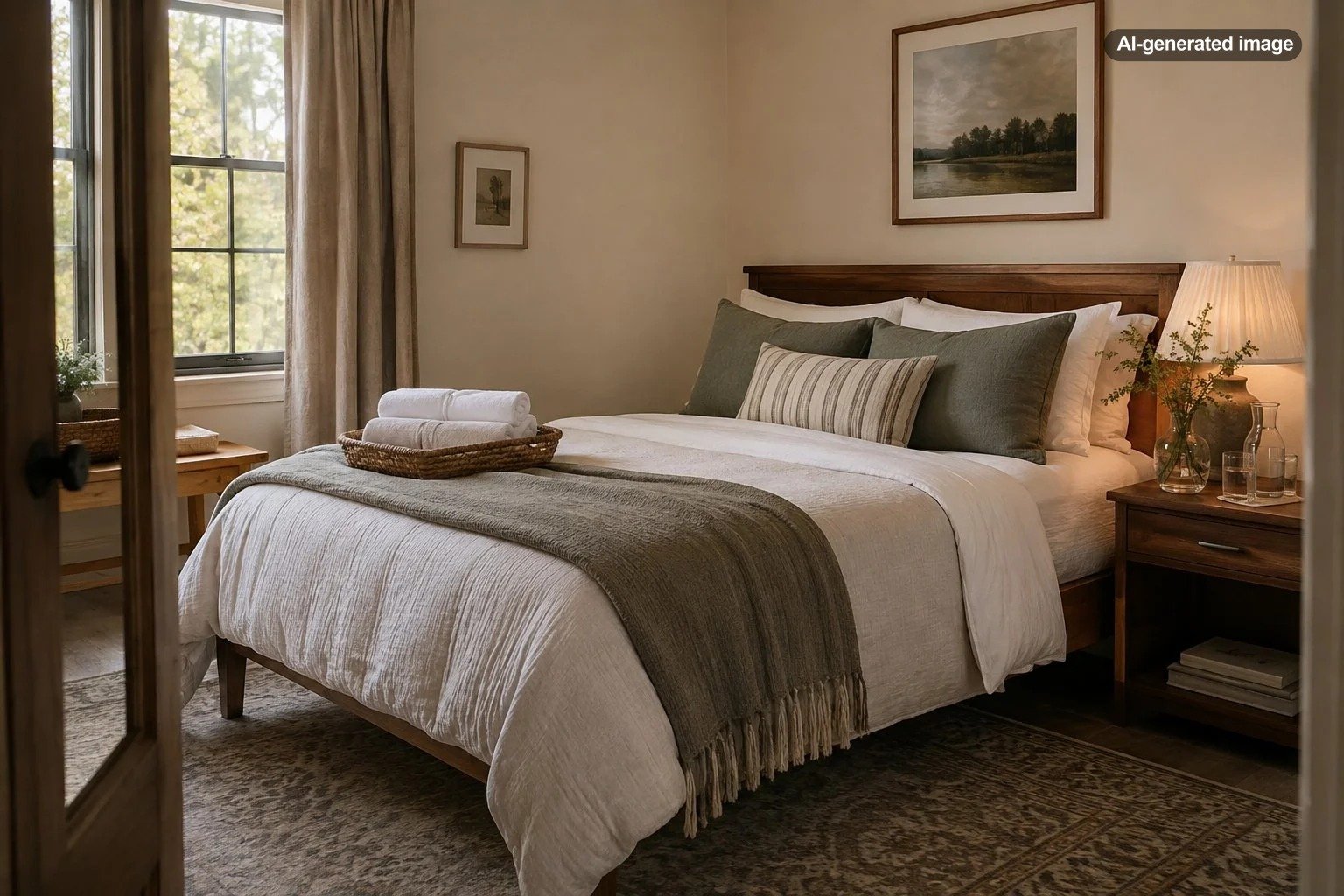
The bed is usually the visual center of a guest room, so it deserves attention, but excessive layering can work against the room. Guests should not have to dismantle a mountain of cushions before they can sleep. A simple combination of sleeping pillows, clean sheets, a duvet or comforter, and perhaps one decorative lumbar pillow or folded throw is plenty for most rooms.
A restrained bedding palette also reduces visual noise. White, oatmeal, soft gray, muted blue, warm beige, and other quiet tones can create a calm base while allowing artwork, wood furniture, or a small accent textile to provide personality. Texture can do more work than pattern: a lightly textured duvet, cotton quilt, woven throw, or upholstered headboard adds depth without making the room feel busy.
Affiliate disclosure: CraneManor.com may earn a commission when you purchase through links on this page. This does not affect the price you pay. Learn more.
If an existing duvet insert is still in good condition, changing the cover can be a relatively simple way to refresh the bed. For example, a neutral duvet cover with matching shams can give the room a more cohesive appearance without requiring an entirely new bedding setup. Confirm the size and care instructions before ordering, and remember that the duvet insert itself is not included with this set.
Offer pillow options without crowding the bed
Pillow preference is highly personal, which makes variety more useful than sheer quantity. If practical, offer two sleeping pillows with slightly different feels or keep an additional pillow available in a closet. Avoid promising that any one pillow will suit every back, side, or stomach sleeper; comfort varies considerably from person to person.
Replacing flattened guest pillows can also make the room feel better cared for even when everything else stays the same. A simple option such as a two-pack of standard/queen pillows can refresh the bed without adding decorative clutter. Follow the manufacturer’s expansion and laundering directions, and treat pillow choice as a comfort preference rather than a one-size-fits-all solution.
Give luggage somewhere obvious to land
A dedicated luggage spot is one of the least glamorous and most useful guest-room details. A folding luggage rack works particularly well because it gives a suitcase a practical height while using little space when stored. A sturdy bench can serve the same purpose in a larger room, while a cleared section of a low dresser or a protected shelf may be enough in a compact space.
Try not to rely on the bed or an upholstered chair as the default suitcase location. Those surfaces are useful for sleeping and sitting, and forcing them to perform another job makes the room less convenient. If floor space is limited, look for a folding option that can be put away between visits.
Keep the nightstand useful
A guest-room nightstand should have more empty surface than decoration. A lamp, perhaps a small dish for jewelry, and room for a phone and water glass are usually sufficient. A large vase, stack of styling books, scented candle, decorative sculpture, and framed photograph may look polished together, but they leave the guest negotiating for a few square inches of usable space.
Lighting deserves particular attention. A bedside lamp that can be switched on and off from bed is more useful than relying exclusively on an overhead fixture. If the room has unfamiliar smart switches or controls, simplicity matters more than novelty. Guests should not need instructions merely to turn out the lights.
In a guest room, empty space is not unfinished space; it is room for someone else to arrive.
Add personality in a few deliberate places
Restraint does not mean making the room anonymous. One piece of artwork, an attractive lamp, a small vase, a patterned throw, or a distinctive bedside table can establish character without filling every surface. The goal is to choose a few elements that relate to one another rather than scattering small decorative objects around the room.
A useful approach is to repeat one or two colors or materials. If the artwork contains muted green, for example, a green stripe in a throw may be enough to connect the room. If the furniture includes warm wood, a woven basket or natural-fiber shade can reinforce that warmth. Repetition creates cohesion; quantity does not.
Use hospitality details that do not become clutter
Small conveniences can make a room feel considered, but they should solve real needs. A carafe or water bottle, a spare charging cable, tissues, a wastebasket, and a card with the Wi-Fi information can all be helpful. Choose the details that fit your household instead of trying to reproduce a hotel amenity list.
Be cautious with strongly scented candles, diffusers, or room sprays. Fragrance preference varies, and what feels welcoming to one guest may be distracting to another. A clean room with freshly laundered bedding is a safer foundation than trying to create a signature scent.
Likewise, avoid filling the closet with decorative storage boxes while leaving nowhere to hang a jacket. A handful of empty hangers and a clear shelf have more practical value than styled storage that cannot actually be used.
Know when the room is finished
The easiest way to judge a guest room is to remove something rather than add something. Stand at the doorway and look for crowded horizontal surfaces, decorative pillows with nowhere to go at night, furniture that blocks circulation, or baskets and benches that exist mostly to hold more decor.
Then walk through the room as a visitor would. Put down a bag. Plug in a phone. Sit on the bed and turn off the lamp. Open the closet. Set a glass on the nightstand. If those actions are easy, the room is doing its job.
The final layer should be personal but light: perhaps a favorite piece of art, a good book or two, or a throw that relates to the rest of the home. Thoughtfulness is most visible when a guest can settle in without rearranging the room first.
Frequently asked questions
How many decorative pillows should a guest bed have?
There is no fixed number, but fewer is generally easier for guests. One decorative pillow or a small pair is usually enough to add color or texture without creating a nightly storage problem.
What should I put on a guest-room nightstand?
A lamp and plenty of open surface are the priorities. Depending on the room, a small dish, tissues, water, or charging access can be useful additions, but avoid covering the entire table.
What if the guest room is very small?
Favor furniture that performs a clear function and keep floor space open. Wall-mounted lighting, a compact nightstand, under-bed storage, and a folding luggage rack can preserve usefulness without making the room feel packed.
Does a guest room need a theme?
No. A consistent palette, repeated materials, and one or two distinctive pieces can create a cohesive room without a literal theme. This approach is also easier to update over time.
Sources & further reading
- Bedsure: Prewashed Cotton-Like Microfiber Duvet Cover – manufacturer product information reviewed for bedding construction and available options.
- Beckham Hotel Collection – official brand information reviewed for the pillow collection and available sizing.