
Why Does My Sofa Smell Musty After Humid Weather?
If your sofa smells musty after a stretch of humid weather, the most likely explanation is moisture lingering in or around its upholstery, cushions, padding, dust, or nearby surfaces. That does not automatically mean the sofa has a serious mold problem. Humid indoor air can make fabrics and other porous materials absorb moisture, while reduced evaporation lets ordinary stale odors become much more noticeable.
The useful first step is not to cover the smell with fragrance. It is to determine whether the sofa is simply holding excess humidity, whether something underneath or behind it is damp, or whether there are signs of actual mold or a continuing moisture problem.
Why humidity can make a sofa smell musty
Upholstered furniture contains layers that exchange moisture with the surrounding air: fabric, batting, foam, natural fibers, wood components, and accumulated dust. During humid weather, those materials may dry more slowly than they normally would. A sofa that feels dry at the surface can still have cushions, seams, underside fabric, or padding that remain slightly damp.
The U.S. Environmental Protection Agency notes that humidity can provide enough moisture to support mold growth and recommends keeping indoor relative humidity below 60 percent, ideally between 30 and 50 percent when possible. Moisture control matters because mold cannot be managed effectively if the damp conditions supporting it continue.
There are also less dramatic possibilities. A humid room can intensify odors from pet residue, spills, body oils, dust, old upholstery, a damp rug, or the floor beneath the sofa. That is why a musty smell should be treated as a clue rather than a diagnosis.
Check the room before blaming the sofa
Move the sofa far enough from the wall to inspect the area behind it. Then check the flooring, baseboard, wall, nearby window, air-conditioning vent, and the underside of the furniture. In humid climates, a cool surface can sometimes collect condensation, while an unnoticed window leak or damp rug can make the sofa seem like the source even when it is only absorbing the surrounding odor.
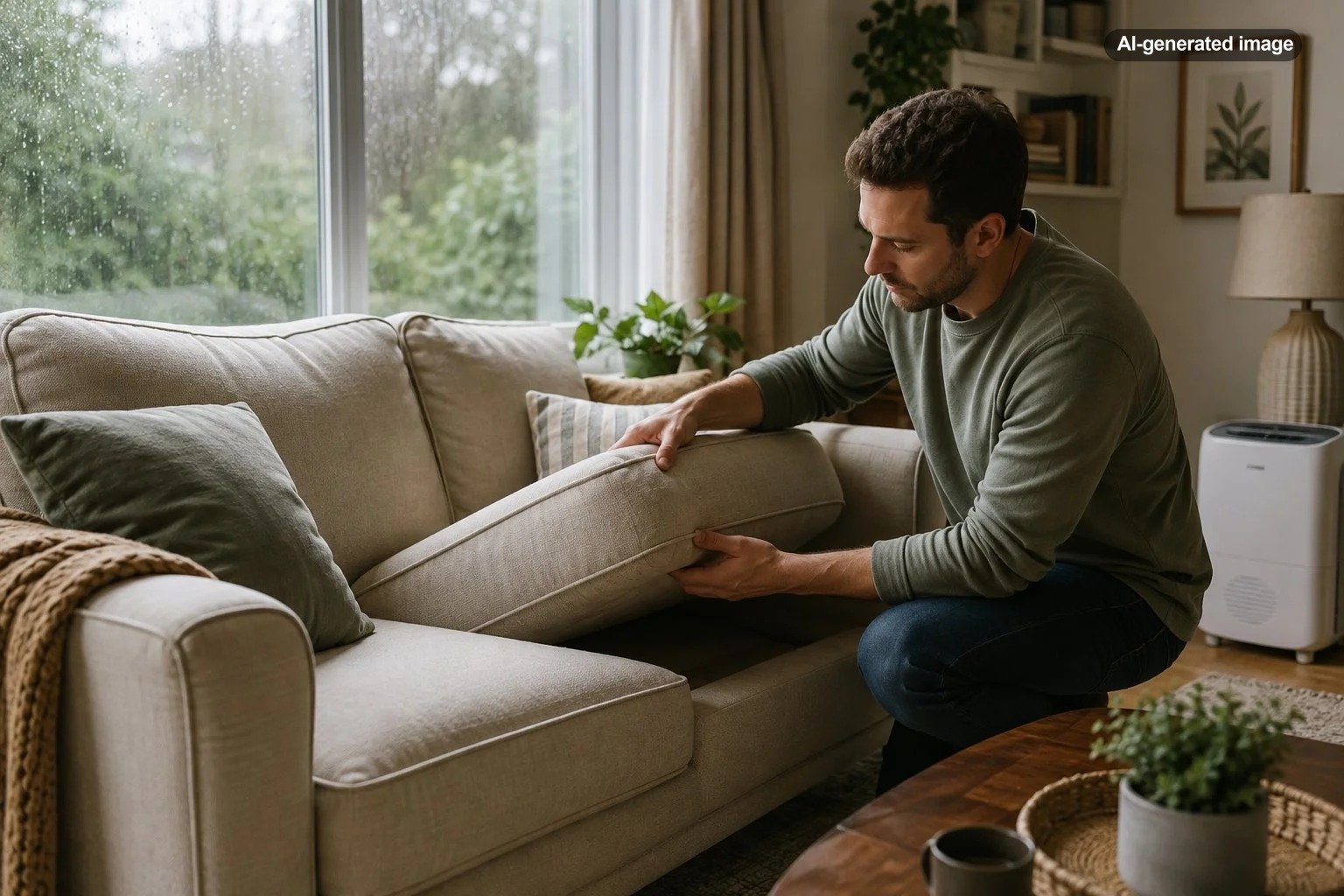
Remove loose cushions and smell them separately. Compare the cushion surface, zipper area, underside, seat deck, back of the sofa, and floor underneath. If one location is noticeably stronger, you have narrowed the problem considerably.
Dry the sofa before adding more moisture
If there is no obvious water intrusion or visible mold, focus first on getting the furniture and room thoroughly dry. Run the home’s air conditioning or a dehumidifier as appropriate, and use fans to improve circulation around the furniture. Separate removable cushions so air can reach more of their surface area. Avoid placing damp cushions back against one another.
Be cautious about responding to a musty smell with an aggressive wet-cleaning session. Upholstery cleaning methods vary by fabric, filling, construction, and manufacturer instructions. Adding a large amount of cleaning solution to already humid cushions can leave the interior wetter for longer, especially when airflow is poor.
Check the sofa’s care information before applying water, detergent, solvents, steam, baking soda mixtures, disinfectants, or homemade cleaners. When the material is unfamiliar or valuable, a professional upholstery cleaner may be a better choice than experimenting with a treatment that could discolor fabric, leave rings, damage texture, or soak the padding.
What to do
- Remove throws, pillows, and loose cushions and check each one separately for odor or dampness.
- Inspect behind and beneath the sofa, including the wall, floor, rug, baseboard, and upholstery underside.
- Reduce excess indoor humidity and improve airflow around all sides of the furniture.
- Let the sofa dry thoroughly before deciding whether an additional upholstery cleaning step is necessary.
- If the smell returns, look for the moisture source instead of repeatedly masking the odor.
Measure humidity instead of guessing
Humid weather outdoors does not tell you exactly what is happening next to your sofa. Indoor humidity changes with air-conditioning operation, ventilation, showers, cooking, weather, room location, and whether doors and windows are open. A room can therefore feel comfortable while still spending significant periods at a higher relative humidity than you expected.
Affiliate disclosure: CraneManor.com may earn a commission when you purchase through links on this page. This does not affect the price you pay. Learn more.
If you want an objective reading, a digital hygrometer can help you track the room’s relative humidity instead of relying on how the air feels. Check readings at different times of day, particularly during the humid conditions that seem to trigger the odor.
When a musty smell deserves closer attention
A brief odor that improves after a humid spell ends is different from furniture that remains damp, shows visible growth, or repeatedly develops the same smell. Pay particular attention after a roof leak, plumbing leak, window intrusion, overflowing appliance, flood, or any incident that actually soaked the sofa.
The Centers for Disease Control and Prevention advises removing or replacing carpets and upholstery that have been soaked and cannot be dried promptly. EPA guidance also explains that mold can penetrate porous materials, making complete removal difficult in some cases. Upholstered furniture is complex because what is happening at the visible fabric surface may not represent the condition of padding or other interior materials.
How to keep the smell from returning
Once the sofa is dry and the odor has cleared, prevention is mostly about moisture and airflow. Avoid pressing large upholstered pieces tightly against walls that tend to feel damp or collect condensation. Give the back and underside some breathing room, especially in rooms that stay closed for long periods.
Keep wet towels, damp pet blankets, swimsuits, and freshly cleaned textiles off upholstered furniture until they are dry. Address spills promptly according to the sofa manufacturer’s care guidance. If a rug underneath the sofa gets wet, dry the rug, pad, floor, and furniture rather than assuming the visible surface is the only area affected.
Homes in persistently humid climates may benefit from routinely checking indoor humidity during the muggiest months. The goal is not to make the house unnaturally dry; it is to prevent long stretches of excessive moisture that keep porous furnishings from drying normally.
A musty sofa is often less about finding a stronger deodorizer and more about finding where moisture is lingering.
Frequently asked questions
Does a musty sofa always mean mold?
No. Humidity can intensify odors already present in upholstery, dust, rugs, pet residue, and nearby materials. Persistent dampness, visible growth, water damage, or an odor that repeatedly returns deserves closer investigation.
Can I just spray fabric deodorizer on it?
A deodorizer may temporarily change the smell, but it does not correct excess humidity, a leak, damp padding, or another moisture source. Dry and inspect the sofa first, then follow its care instructions if cleaning is still needed.
Should I steam-clean a sofa that smells musty?
Not automatically. Steam or wet extraction adds moisture, and upholstery materials have different cleaning requirements. Check the manufacturer’s care guidance or consult a qualified upholstery cleaner before using a wet method, especially if the sofa is already slow to dry.
What indoor humidity should I aim for?
EPA guidance recommends keeping indoor relative humidity below 60 percent and, when possible, ideally between 30 and 50 percent. Actual comfort and moisture-control needs can vary by home, climate, and season.