
Can Outdoor Rugs Stay Outside in the Rain?
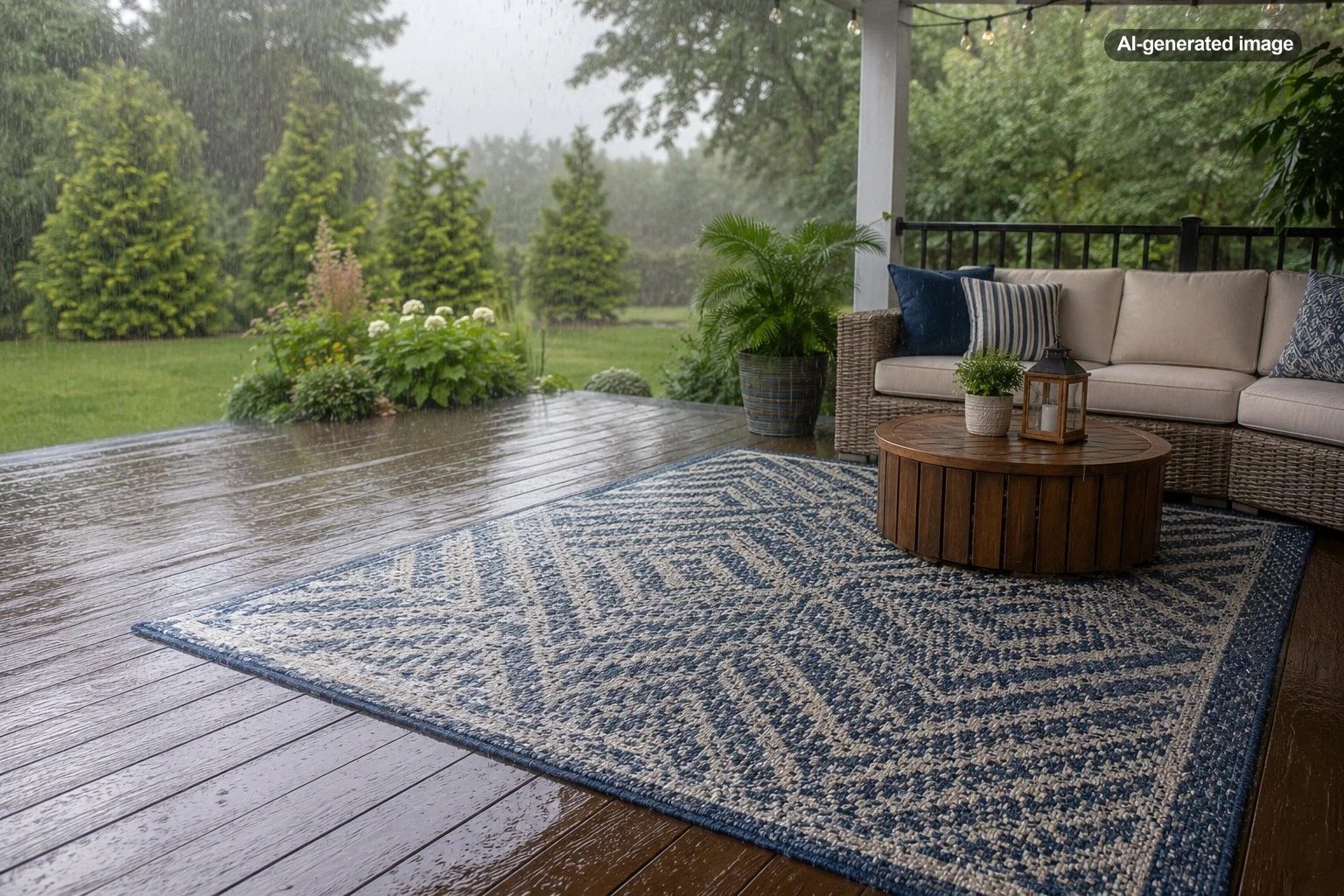
Yes, a true outdoor rug can usually stay outside in the rain. The important distinction is that outdoor-rated does not mean completely maintenance-free or permanently waterproof. A rug made from moisture-resistant synthetic fibers can tolerate repeated wetting, but it still needs drainage and enough airflow to dry thoroughly.
The bigger problem is often not the rain falling on the rug. It is moisture remaining trapped underneath for days, particularly on shaded patios, balconies, concrete slabs, or decks covered with leaves and debris. Choosing the right rug material and paying attention to what happens after a storm can make the difference between an easy-care outdoor space and a rug that develops odors, staining, or mildew.
The Material Matters More Than the Word Outdoor
Outdoor rugs are not all constructed the same way. A thin, flatwoven polypropylene rug on a sunny patio behaves very differently after a thunderstorm than a thick rug with an absorbent backing in a shaded corner.
Polypropylene, also called olefin, is particularly common in outdoor rugs because the fiber resists absorbing water. Many polyester and recycled-PET outdoor rugs are also designed for wet conditions, although drying performance varies with the weave, pile, backing, and overall construction.
Natural fibers deserve more caution. Jute, sisal, cotton, and many other plant- or animal-based fibers can absorb considerably more moisture. They may be attractive in a covered porch or protected sunroom, but repeated direct rain is generally harder on them. A rug that merely has an outdoor-inspired look should not be assumed to tolerate outdoor weather.
| Rug type | Rain exposure | Best placement |
|---|---|---|
| Polypropylene or olefin | Generally well suited when outdoor-rated | Open patios, decks, balconies |
| Outdoor polyester or PET | Often suitable, depending on construction | Patios and covered or partially exposed areas |
| Natural-fiber rug | Usually less suitable for repeated soaking | Protected, covered spaces |
| Indoor area rug | Not intended for routine rain exposure | Indoors |
What Actually Happens When an Outdoor Rug Gets Rained On?
With a suitable synthetic outdoor rug, rain normally passes through, runs off, or remains briefly on and between the fibers before evaporating. A relatively thin rug with open construction can dry much faster than a plush rug that holds more water.
The underside deserves just as much attention as the top. An outdoor rug may feel dry when you touch the exposed surface while moisture remains trapped between the rug and the patio underneath. That damp pocket is where problems are more likely to begin.
An outdoor rug handles rain best when water has somewhere to go and air has somewhere to circulate.
Your Patio Surface Changes the Equation
Placement can be as important as fiber choice. A rug on a well-draining deck may receive excellent airflow around its edges and through gaps in the decking. A rug lying flat on dense concrete or tile can stay damp underneath for longer, especially if the space is shaded.
Balconies deserve particular attention because drainage patterns vary. Water should never be allowed to collect because a rug is covering or obstructing a drain. On any surface, periodically lift a corner after rain and check whether the underside and floor are actually drying.
Wood decking introduces another consideration: keeping the deck itself dry. Even if the rug tolerates moisture beautifully, persistent dampness underneath is not something to ignore. Dirt, pollen, leaves, and other debris can also collect beneath the rug and hold additional moisture against the surface.
What to Do After Heavy or Repeated Rain
You do not necessarily need to rush outside and rescue the rug whenever the forecast shows showers. Ordinary rain is part of the job description for an appropriately rated outdoor rug. After prolonged rain, however, a simple check can prevent moisture from lingering unnoticed.
What to do
- Wait until conditions are safe and the rain has passed.
- Lift a corner and check the underside of the rug and the surface below it.
- Remove leaves, soil, or other debris that may be trapping moisture.
- If the underside remains very wet, lift, drape, or reposition the rug so air can reach both sides.
- Let the rug dry fully before rolling it up, storing it, or placing it back over a persistently damp surface.
Always follow the care instructions supplied with the particular rug. Outdoor materials vary, and a cleaning method that works for one construction may damage another. Aggressive scrubbing, high-pressure washing, harsh cleaners, and putting a damp rug into storage are especially poor assumptions to make without checking the label.
How to Keep an Outdoor Rug From Getting Musty
Moisture alone is only part of the issue. Extended dampness combined with limited airflow and accumulated organic debris creates much less favorable conditions than a clean rug that gets wet and then dries promptly.
Shake or sweep the rug periodically, and clean underneath it rather than treating the floor beneath as invisible space. If patio furniture makes the rug difficult to lift, checking several accessible corners can still reveal whether water is lingering. In humid or rainy periods, giving the rug occasional time to dry with both sides exposed is sensible maintenance.
If you notice a persistent musty odor, recurring dark or discolored patches, or a floor that never seems to dry beneath the rug, do not simply keep putting it back in the same position. Clean the rug according to its care directions, clean and dry the surface underneath, and reconsider the location if drainage or airflow is consistently poor.
Should You Bring an Outdoor Rug Inside Before a Storm?
For an ordinary rainstorm, a suitable outdoor rug generally does not need to come inside. More severe weather is different. High winds can move lightweight rugs, while flooding, windblown debris, prolonged saturation, and storm-related contamination are beyond the conditions implied by normal everyday rain exposure.
If severe weather is expected, follow local weather and emergency guidance and secure or store outdoor furnishings when appropriate. When storing a rug, make sure it is clean and completely dry first. Rolling up a damp rug simply relocates the moisture problem to a darker, less ventilated place.
When a Covered Porch Is the Better Location
Some rugs marketed for indoor-outdoor use are better suited to a covered porch than a fully exposed patio. A covered setting can be particularly useful for thicker constructions, rugs with slower-drying backings, and materials that tolerate occasional moisture but are not ideal for repeated soaking.
How to Decide Whether Your Rug Can Stay Out
Before you decide
- Confirm that the rug is specifically rated for outdoor use.
- Check the fiber, backing, and manufacturer’s care instructions.
- Consider whether the location receives direct rain or is covered.
- Make sure water drains away rather than pooling underneath.
- Check whether sun and airflow can reach the rug after storms.
- Plan to remove debris and occasionally inspect underneath it.
A genuinely outdoor-rated synthetic rug on a well-draining patio can usually remain in place through routine rainfall with remarkably little fuss. A thick, absorbent rug in a shaded, poorly drained location deserves far more attention.
Frequently Asked Questions
Can outdoor rugs get completely soaked?
Many outdoor-rated synthetic rugs are designed to tolerate getting thoroughly wet. The key is allowing the rug and the surface underneath to drain and dry afterward. Always check the manufacturer’s care information for your particular rug.
Will an outdoor rug grow mold or mildew?
Outdoor materials can reduce moisture-related problems, but no rug should be treated as immune to poor drying conditions. Persistent dampness, trapped dirt, shade, and limited airflow can contribute to unwanted growth or odors on the rug or the surface beneath it.
Should I roll up my outdoor rug when it rains?
Usually not for ordinary rain if the rug is made for exposed outdoor use. In fact, rolling up a wet rug can trap moisture. If you remove it, let it dry completely before storing or rolling it tightly.
Can I leave an outdoor rug out all summer?
Often, yes, provided its outdoor rating matches the exposure and you maintain it. Periodically clean beneath it, check drainage, and let both sides dry after prolonged wet weather.
Is a waterproof rug necessary for an uncovered patio?
Not necessarily. Good outdoor performance is more about a moisture-resistant material, appropriate construction, drainage, and reliable drying than finding a rug that never gets wet. For a fully exposed patio, prioritize a rug specifically designed for that level of weather exposure.