Can High Indoor Humidity Damage Window Frames?
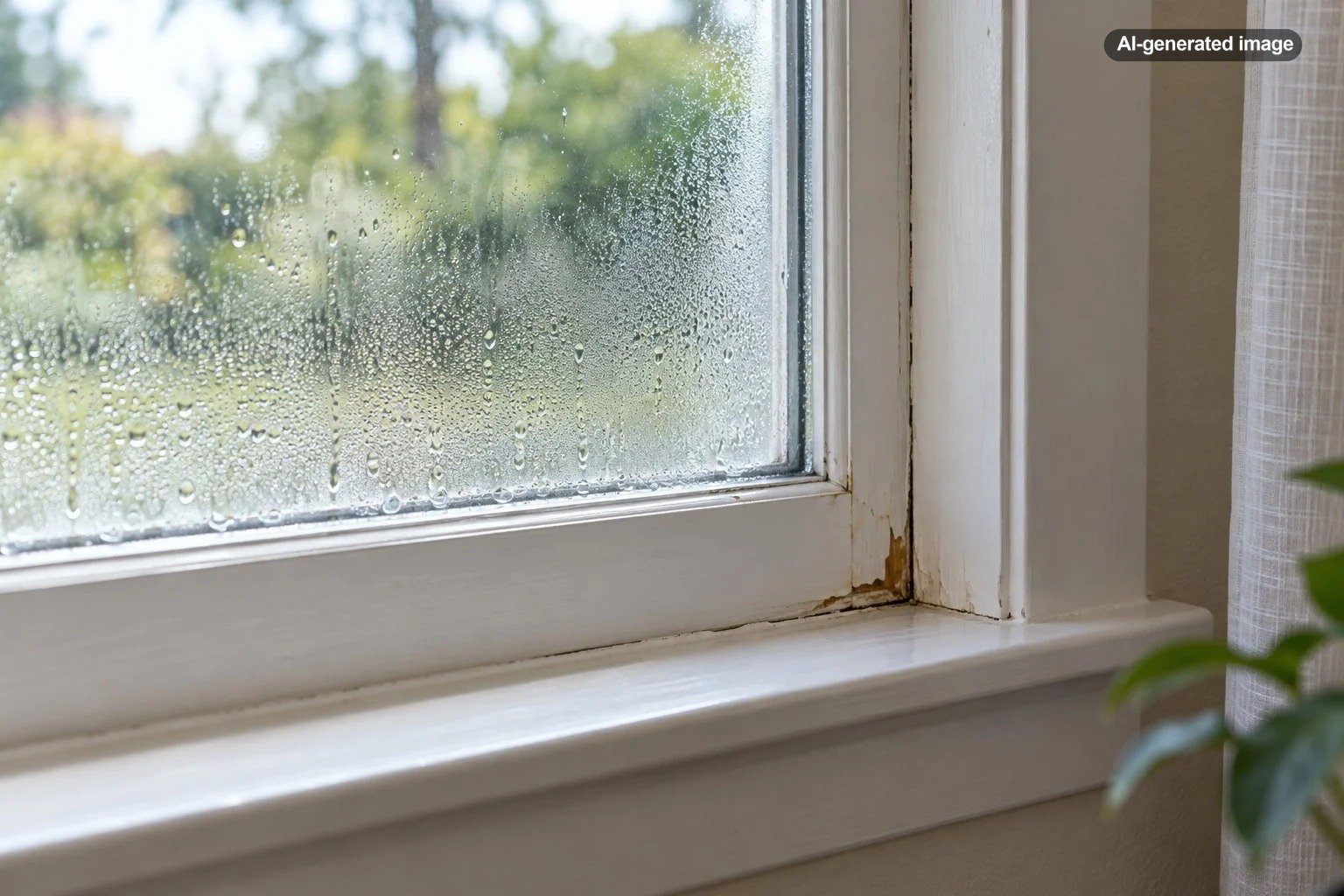
Yes, high indoor humidity can damage window frames, sometimes long before the damage becomes obvious. When moisture-laden indoor air touches a sufficiently cold window or frame, water vapor condenses into liquid. If that moisture repeatedly collects along the glass, sash, or sill, it can damage paint, weaken wood, encourage mold growth, and affect nearby drywall or trim.
The important distinction is that humidity does not automatically destroy a window. The real trouble begins when excess moisture repeatedly turns into condensation or keeps materials damp. A little temporary fogging is different from water pooling on a windowsill every morning.
Fortunately, noticing the pattern early can help you protect your windows without immediately replacing them.
How High Humidity Damages Window Frames
Indoor air contains water vapor. The warmer the air, the more moisture it can potentially hold. When humid air encounters a cold enough surface, the air immediately next to that surface cools below its dew point, allowing moisture to collect as droplets.
Window glass and frames are common condensation locations because their interior surfaces can be colder than surrounding walls, particularly during winter. Older single-pane windows, poorly insulated frames, thermal bridges, and air leaks can make the problem more noticeable.
Condensation commonly appears near the bottom of the glass, where droplets may run down and collect along the sash or sill. Repeated wetting can gradually create several problems:
- Peeling or blistering paint: Moisture can weaken the bond between a coating and the underlying material.
- Swollen wood: Repeated moisture absorption can cause wooden components to expand, making windows difficult to open or close.
- Wood decay: Long-term dampness creates conditions in which decay fungi may damage susceptible wood.
- Mold growth: Moisture can support mold on dust, paint, wood, caulk, and adjacent building materials.
- Damage to surrounding finishes: Water may soak into interior trim, drywall, or painted surfaces around the opening.
The U.S. Department of Energy identifies persistent window condensation as a potential cause of damage to window components and surrounding wall surfaces. The problem becomes more serious when moisture remains trapped or repeatedly returns.
Which Window Frame Materials Are Most Vulnerable?
Not all frames react to moisture in the same way. The material, finish, installation quality, and condition of the surrounding wall all influence how much damage may occur.
| Frame material | Potential moisture effects | What to inspect |
|---|---|---|
| Wood | Swelling, peeling finishes, discoloration, and eventual decay | Soft spots, open joints, damaged paint, and persistent dampness |
| Vinyl | Frame material generally resists rot, but water can affect nearby materials | Drainage openings, joints, seals, and surrounding trim |
| Aluminum | Conductive frames can develop surface condensation; some finishes or components may corrode | Repeated wetness, corrosion, and moisture at adjacent finishes |
| Fiberglass | Generally moisture-resistant, although installation joints and nearby materials remain vulnerable | Sealant joints, adjacent wood, and water accumulation |
| Composite | Performance varies according to composition and construction | Manufacturer guidance, joints, coatings, and signs of retained moisture |
Why wood frames deserve extra attention
Wood is particularly sensitive to prolonged moisture exposure. A properly maintained wooden window can perform well for many years, but damaged finishes and recurring condensation may allow water to penetrate exposed surfaces or end grain.
Early damage may look like a rough patch of paint or a slight discoloration near a lower corner. More advanced deterioration can produce soft wood, separated joints, or a sash that no longer fits correctly.
Do not assume every dark mark means rot. Some discoloration is cosmetic, while other marks indicate active moisture damage. The condition of the underlying wood matters more than appearance alone.
Why moisture-resistant frames are not completely protected
Vinyl and fiberglass do not decay in the same way as ordinary wood, but a moisture-resistant frame does not make the entire window opening waterproof.
Condensation can still collect on glass, hardware, or adjacent surfaces. Water may reach wooden framing concealed behind interior trim, especially when drainage or installation details are defective.
For this reason, selecting a moisture-resistant frame material does not eliminate the need to control indoor humidity and investigate leaks.
How Much Indoor Humidity Is Too Much for Windows?
The Environmental Protection Agency generally recommends keeping indoor relative humidity below 60%, ideally between 30% and 50%, to help manage moisture and mold risk.
However, there is no single indoor humidity percentage that guarantees condensation-free windows. Window surface temperature matters just as much as the moisture content of the air.
During cold weather, condensation can appear at relatively moderate indoor humidity levels if the glass or frame becomes sufficiently cold. In particularly cold climates, maintaining humidity near the lower end of the usual comfort range may be necessary to limit window moisture.
Conversely, a well-insulated window with warmer interior surfaces may resist condensation under conditions that cause an older window to become wet.
Signs That Humidity Is Already Affecting Your Window Frames
It helps to distinguish ordinary temporary moisture from evidence of continuing deterioration.
Early warning signs
- Condensation regularly forms on the room-facing glass.
- Water collects along the lower sash or sill.
- Paint becomes dull, blistered, or slightly discolored near frame joints.
- Caulked joints remain damp after surrounding surfaces dry.
- Musty odors develop around a window recess.
These symptoms deserve attention, but they do not necessarily mean the window needs replacement. Identifying the moisture source and drying the area may prevent further deterioration.
More concerning signs
- Wood feels soft, spongy, or crumbly.
- The frame or sash visibly warps or separates at joints.
- A window becomes increasingly difficult to operate.
- Dark staining or suspected mold repeatedly returns after cleaning and drying.
- Drywall or trim surrounding the opening becomes swollen, stained, or damaged.
- Water appears inside the wall or below the window after rain.
How to Tell Humidity Damage From a Window Leak
Water near a window does not always come from humid indoor air. Rain penetration, failed flashing, damaged sealant, and drainage problems can create similar-looking stains.
The location and timing of the moisture provide useful clues.
Condensation is more likely when:
- Water appears on the room-facing surface of the glass.
- Moisture is worst on cold mornings or during chilly weather.
- Several windows develop similar symptoms.
- Condensation increases after showers, cooking, or indoor laundry drying.
- The glass and sill become dry after indoor humidity drops.
Water intrusion is more likely when:
- Wetness appears during or shortly after rainfall.
- Water emerges from a wall joint, trim seam, or upper corner.
- Staining spreads through drywall beyond the window opening.
- Moisture repeatedly affects one window regardless of indoor humidity.
- Visible exterior seals, drainage details, or surrounding materials appear damaged.
These are clues rather than a definitive diagnosis. A window can also experience both condensation and rain leakage.
What if the moisture is between the panes?
Fogging or droplets trapped between the panes of an insulating glass unit are different from condensation that can be wiped from the room-facing glass.
Persistent moisture inside the sealed space may indicate a failed insulating-glass seal. Lowering indoor humidity will not normally remove moisture trapped inside that unit. A window professional can determine whether the glass unit or another component needs replacement.
How to Prevent Humidity Damage Around Windows
The most effective approach is to control moisture at its source while keeping vulnerable surfaces dry.
What to do
- Measure indoor humidity. Check relative humidity in rooms where condensation appears, including bedrooms and rooms with limited ventilation.
- Dry existing condensation. Wipe moisture from glass, frames, and sills, paying attention to lower corners and joints.
- Reduce moisture production. Use properly vented kitchen and bathroom exhaust fans and make sure clothes dryers vent as intended.
- Improve appropriate ventilation. Introduce outdoor air when conditions allow, but avoid opening windows as a humidity-control strategy when the outdoor air is very humid.
- Use mechanical humidity control when needed. Air conditioning or dehumidification may help manage persistently humid indoor conditions.
- Inspect the window assembly. Look for damaged weatherstripping, deteriorated finishes, drainage problems, and moisture entering from outdoors.
- Recheck the problem. Monitor whether condensation returns under similar weather conditions and whether the surrounding materials remain dry.
Measure humidity instead of guessing
A small hygrometer can help you determine whether indoor humidity rises overnight, after cooking, or during periods when the air conditioner runs less frequently.
A room that feels comfortable may still have an elevated humidity reading, so relying entirely on how the air feels can be misleading.
Affiliate disclosure: CraneManor.com may earn a commission when you purchase through links on this page. This does not affect the price you pay. Learn more.
For simple monitoring, a digital hygrometer such as the TempPro TP49 can display indoor temperature and relative humidity. Check readings in the same location at different times of day to identify patterns. A hygrometer measures conditions in the room; it does not diagnose mold, concealed moisture, or window defects.
Consider how curtains and blinds affect airflow
Heavy curtains and tightly closed blinds can reduce the circulation of room air near a cold window. This may create a pocket of cooler air where condensation is more likely.
If moisture frequently collects behind window treatments, open them periodically to improve airflow and inspect the sill. Avoid leaving damp fabric pressed against the glass or frame.
In winter, maintaining appropriate room temperatures and avoiding blocked heating outlets can also help. Never cover or obstruct equipment in ways that conflict with its operating instructions.
Address persistent humidity instead of repeatedly wiping windows
Wiping the sill is useful immediate maintenance, but it does not solve a recurring moisture problem.
If humidity stays elevated, investigate bathroom ventilation, kitchen exhaust, dryer venting, plumbing leaks, damp basements, and whether the heating and cooling system is controlling humidity effectively.
In humid coastal climates, opening windows may introduce more moisture rather than remove it. Air conditioning and properly selected dehumidification can be more effective when outdoor conditions are damp.
Should You Repair or Replace a Moisture-Damaged Window Frame?
Not every moisture-damaged window needs to be replaced. The appropriate response depends on the severity of deterioration and whether the moisture source has been identified.
When a limited repair may be reasonable
If the wood remains sound and the problem is confined to peeling paint or minor surface deterioration, a localized repair may be possible after the underlying moisture problem has been corrected.
Depending on the material and condition, this could involve cleaning, thorough drying, proper surface preparation, and refinishing with compatible products. Damaged sealants or weatherstripping may also require attention.
Painting over wet wood or sealing a visibly damp assembly can trap moisture and allow deterioration to continue. Do not cover suspected mold or decay without addressing its cause.
When professional repair or replacement makes more sense
Seek a professional assessment when there is substantial wood decay, a badly warped sash, compromised hardware, extensive damage around the window opening, or repeated water intrusion that cannot be explained.
Older windows may sometimes be repaired or rehabilitated rather than replaced. Preservation goals, frame condition, availability of suitable components, energy performance, and the condition of surrounding construction all influence the choice.
Replacement alone is not a cure for excessive indoor humidity. Without correcting the moisture problem, condensation may simply migrate to another cold surface.
What About Window Condensation in Florida and Other Humid Climates?
Warm, humid climates create a different set of challenges from cold northern winters. Outdoor humidity may remain elevated for long periods, and indoor moisture problems can become more noticeable when cooling equipment runs less frequently.
For homes in Florida or other coastal areas, the priority is often managing moisture loads with properly functioning cooling equipment, appropriate ventilation, and dehumidification where needed.
Condensation on the outside of a cool window can also occur during humid mornings. This is not the same as persistent indoor condensation. Exterior moisture alone does not prove that the window is defective.
Frequently Asked Questions
Can 60% indoor humidity damage window frames?
Yes. Condensation can occur at 60% relative humidity, especially on cold windows. The EPA recommends keeping indoor humidity below 60%, ideally between 30% and 50%. Even a lower reading may produce condensation when window surfaces are sufficiently cold.
How long does condensation take to damage wood windows?
There is no universal timeline. Brief condensation that dries promptly is less concerning than repeated wetting that leaves wood damp for extended periods. Damage depends on the finish, wood condition, moisture exposure, temperature, and drying opportunities.
Can mold around a window come from indoor humidity?
Yes. Repeated condensation can provide the moisture needed for mold growth on susceptible surfaces. However, mold or staining around a window can also indicate a leak. Correcting the moisture source is essential. Extensive or recurring mold warrants appropriate professional evaluation.
Will a dehumidifier prevent window frame damage?
A dehumidifier can reduce excess indoor moisture and may lower condensation risk. It cannot repair existing decay, correct a leaking window, or guarantee that condensation will never occur on very cold surfaces.
Does condensation mean I need new windows?
Not necessarily. Condensation may reflect high humidity, cold surfaces, insufficient airflow, or a combination of these factors. Evaluate indoor conditions and the window’s condition before deciding whether repair or replacement is justified.
The Bottom Line
High indoor humidity can damage window frames when it creates persistent condensation or prevents materials from drying. Wood frames are especially vulnerable to repeated moisture exposure, but even moisture-resistant windows can develop problems in surrounding trim, joints, and wall materials.
The best defense is straightforward: monitor humidity, dry condensation promptly, control moisture sources, and investigate recurring dampness before cosmetic damage becomes a larger repair. A dry window is not simply a cleaner window. It is one less place for a manageable household moisture problem to become an expensive one.
Sources & Further Reading
- U.S. Environmental Protection Agency: A Brief Guide to Mold, Moisture and Your Home
- U.S. Environmental Protection Agency: What Are the Main Ways to Control Moisture in Your Home?
- U.S. Department of Energy: Purchasing Energy-Efficient Residential Windows, Doors, and Skylights
- Building America Solution Center: Managing Indoor Humidity and Ventilation in Cold Weather
- Fenestration and Glazing Industry Alliance: Caring for Your Windows, Doors and Skylights