Why Do Towels Stop Absorbing Water?
Towels usually stop absorbing water because their fibers have become coated, compressed, or damaged. Fabric softener and dryer-sheet residue are common causes, but excess detergent, body oils, hard-water minerals, overcrowded wash loads, and years of wear can all interfere with the tiny spaces that normally draw water into the fabric.
The good news is that a towel that pushes water around instead of soaking it up is not necessarily ready for retirement. A few carefully chosen washes and a simpler laundry routine can often restore much of its performance.
What makes a towel absorbent in the first place?
Most bath towels rely on thousands of raised loops to create surface area and hold water between their fibers. Cotton is naturally well suited to the job, while towel construction, yarn type, density, and finishing determine how quickly a particular towel drinks in moisture.
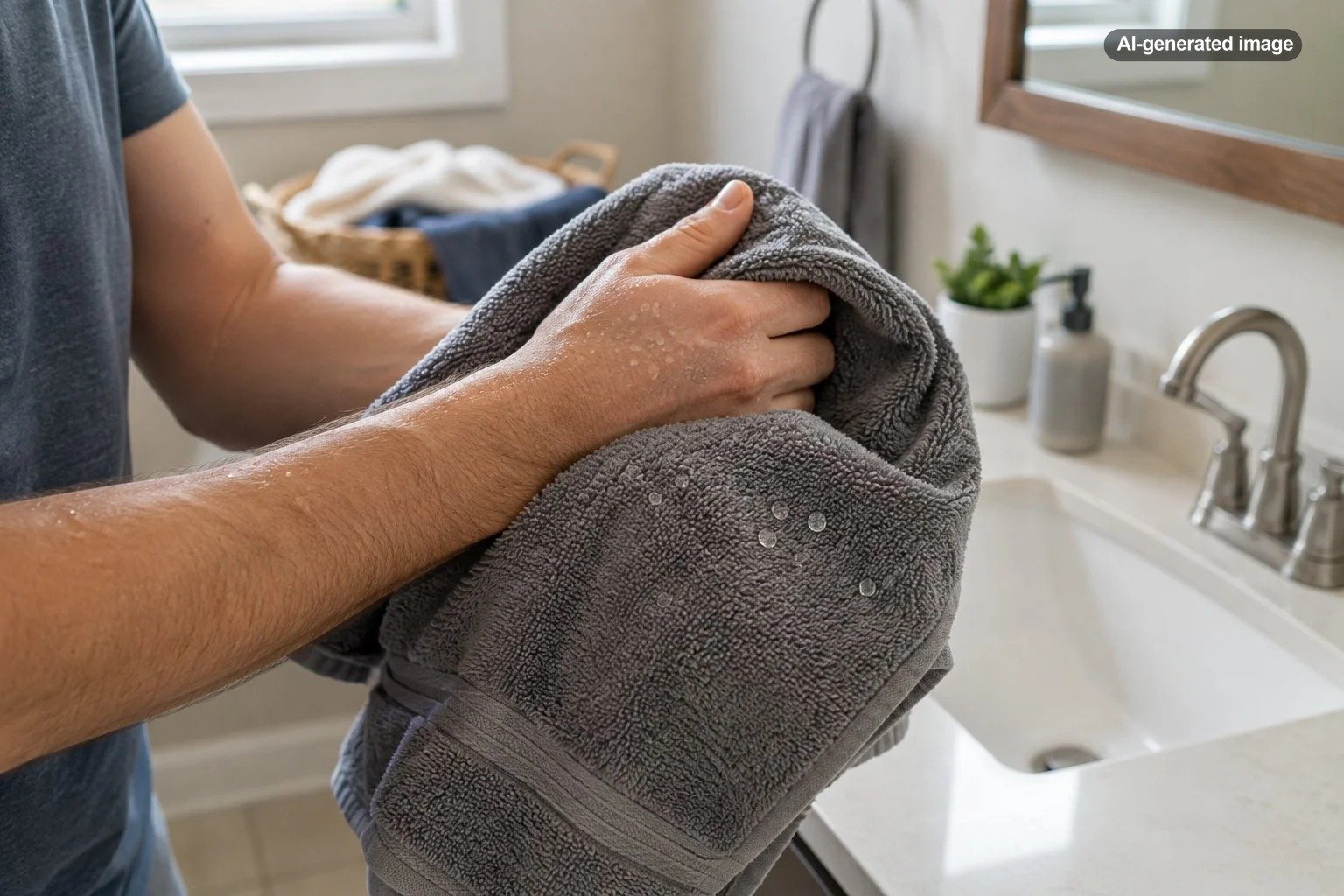
Those loops need to remain open and reasonably clean. When they are covered by a slick residue or packed tightly together, water has fewer places to go. The towel may still feel soft in the hand, yet leave skin damp because softness and absorbency are not the same quality.
The softest-feeling towel is not always the towel that dries best.
The most common reasons towels lose absorbency
Fabric softener and dryer-sheet coatings
Liquid fabric softeners and dryer sheets work partly by leaving conditioning ingredients on textile fibers. That coating can reduce static and create a smoother feel, but repeated use may also make towels less willing to take up water. It is a particularly likely culprit when towels feel silky, waxy, or oddly slippery while performing poorly.
Skipping softener for one load may not remove years of accumulation. The better test is to leave it out for several washes and observe whether absorbency gradually returns.
Too much laundry detergent
More detergent does not automatically produce cleaner towels. When a washer cannot rinse all of it away, residue collects in the loops and attracts additional soil. Towels may become stiff, heavy, dull, or slow to absorb, especially when a concentrated detergent is dosed as though it were a conventional formula.
Measure according to the detergent label and adjust for the load size, soil level, washer type, and water conditions. If the washer has a high-efficiency designation, use a compatible detergent and follow the appliance instructions rather than relying on a generous freehand pour.
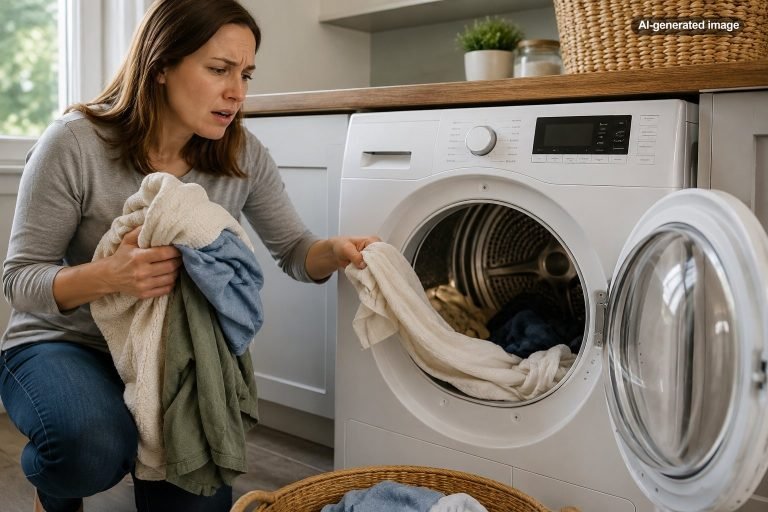
An overloaded washer
Towels become extremely heavy when wet. Packing the drum tightly restricts movement and leaves less water available to carry detergent and soil away. The load may complete its cycle without receiving an effective wash or rinse.
Wash a manageable number of towels together and leave enough room for them to circulate. A second, properly sized load is less glamorous than stuffing the machine to the brim, but considerably more useful.
Body oils and product residue
Body oil, lotion, hair conditioner, makeup, and skin-care products can transfer to bath towels and washcloths. Kitchen towels face their own mix of cooking oils, cleaning residue, and food soil. If towels used for different jobs all share one load, oily residue can spread rather than disappear.
Separate heavily soiled utility or kitchen towels from bath linens. Prompt washing also helps prevent oily soil from settling into the fibers over many damp days in a hamper.
Hard-water minerals
Water containing a high level of dissolved minerals can contribute to stiff fabric and make detergent less effective. The practical clue is usually broader than one disappointing towel: laundry may feel generally rough, mineral scale may appear around faucets, and soap may lather poorly.
If hard water seems likely, follow the detergent and washer manufacturers’ guidance for local water conditions. A home water test can help distinguish a genuine mineral issue from simple product buildup before you add another treatment to the laundry shelf.
Heat, overdrying, and ordinary wear
High heat and prolonged drying can stress fibers and flatten the loops that give a towel its useful surface area. Normal use also causes gradual thinning, broken loops, and reduced loft. Once the fabric has become noticeably sparse or smooth, laundering cannot rebuild missing cotton.
| What you notice | Likely explanation | Best first move |
|---|---|---|
| Soft or slick, but water beads on top | Softener or dryer-sheet coating | Stop conditioning products and wash again |
| Stiff, heavy, or soapy after washing | Excess detergent or poor rinsing | Use less detergent and add a rinse |
| Rough laundry and visible faucet scale | Possible hard-water minerals | Confirm water conditions and follow product guidance |
| Flat loops, thin patches, or frayed edges | Fiber wear or heat damage | Use for lighter duties or replace |
| New towel repels water | Manufacturing finish or dense construction | Wash before use as directed on the label |
How to make towels absorbent again
Begin with the least complicated correction. Combining several laundry additives at once makes it difficult to identify the cause and can create unsafe chemical combinations. The towel’s care label and the washer manual should take priority over general advice.
What to do
- Read the care label. Check the permitted water temperature, drying setting, and bleach instructions. Decorative borders, dyes, bamboo blends, and microfiber may require different care from plain cotton terry.
- Wash towels separately. Use a loosely filled load so the items can move and rinse properly.
- Skip softener and dryer sheets. Do not add another coating while trying to remove the old one.
- Use a carefully measured amount of detergent. For towels that appear clean but feel coated, a smaller appropriate dose may be more effective than an aggressive pour.
- Select the warmest water allowed by the label. Warmer water may help release oils and residue, but color, trim, and fiber content still matter.
- Add an extra rinse. This is especially useful when towels feel soapy or stiff after the normal cycle.
- Dry without baking the fabric. Shake towels before loading the dryer, use a suitable low or medium setting, and remove them when dry rather than running a long timed cycle by habit.
Test one ordinary wash before reaching for specialty stripping recipes. Some popular online methods use multiple chemicals, extremely hot water, or soaking procedures that may fade color, weaken fibers, affect finishes, or conflict with appliance guidance. Never mix chlorine bleach with vinegar, ammonia, or other household cleaners.
Why new towels sometimes repel water
A new towel can feel impressive in the store yet perform poorly during its first use. Manufacturing finishes intended to improve appearance or hand feel may remain on the fibers until the towel is washed. Washing new towels before use also removes loose lint and gives the loops a chance to open.
Follow the label and judge performance after a few normal washes without fabric softener. Dense towels can take longer to rinse and dry, while lighter towels may absorb quickly and return to the linen closet sooner. Thickness alone is not a reliable measure of drying performance.
How to keep towels working well
- Measure detergent for the actual load rather than filling the cap automatically.
- Leave enough room in the washer for wet towels to move.
- Avoid routine use of liquid softener and dryer sheets on absorbent linens.
- Hang towels open after use instead of leaving them in a heap.
- Wash oily kitchen and cleaning towels separately from bath towels.
- Clean and maintain the washer according to its manual if residue or odors affect multiple loads.
- Use dryer balls, when suitable, to help separate towels without coating the fibers.
- Stop the drying cycle when towels are fully dry instead of repeatedly overdrying them.
A towel also needs to dry between uses. Persistent dampness can cause a musty odor even when absorbency remains acceptable. A wider hook, towel bar, or better airflow may solve that separate problem more effectively than adding fragrance to the wash.
When the towel is simply worn out
Restoration has limits. A towel with large thin areas, many broken loops, hard permanent patches, or poor performance after several residue-free washes has probably lost useful fiber structure. At that point, more detergent and hotter drying are likely to shorten its remaining life rather than rescue it.
Retire worn bath towels gradually. They can still serve as cleaning cloths, pet towels, packing protection, or spill towels if they remain clean and reasonably absorbent. This keeps a tired textile useful without asking it to perform the morning miracle it managed years ago.
Frequently asked questions
Can fabric softener permanently ruin towels?
Not always. Absorbency often improves after several properly rinsed washes without softener or dryer sheets. A towel may not fully recover if the fibers are also worn, damaged by heat, or heavily coated after prolonged use.
Should towels be washed in hot water?
Use the warmest water permitted by the care label. Plain white cotton towels may tolerate different settings from dark towels, decorative trims, or blended fibers. The care instructions are more reliable than one universal temperature rule.
Why do my towels feel stiff after air-drying?
Air-dried loops can settle into a rigid position, particularly when mineral or detergent residue is present. Shaking the towel before hanging and again when dry can loosen the loops. Brief tumbling on an allowed low setting may also soften the texture without adding a coating.
Does a heavier towel absorb more water?
A heavier towel may hold more water, but construction and care matter just as much. A dense towel coated with softener can perform worse than a lighter, clean towel with open loops. Heavier towels also need more time and airflow to dry completely.
How can I tell whether detergent is the problem?
Look for stiffness, a slick or soapy feel, dullness, or suds remaining late in the cycle. Then try a smaller, properly measured detergent dose and an extra rinse. Noticeable improvement over the next few washes points toward buildup rather than permanent fiber damage.