
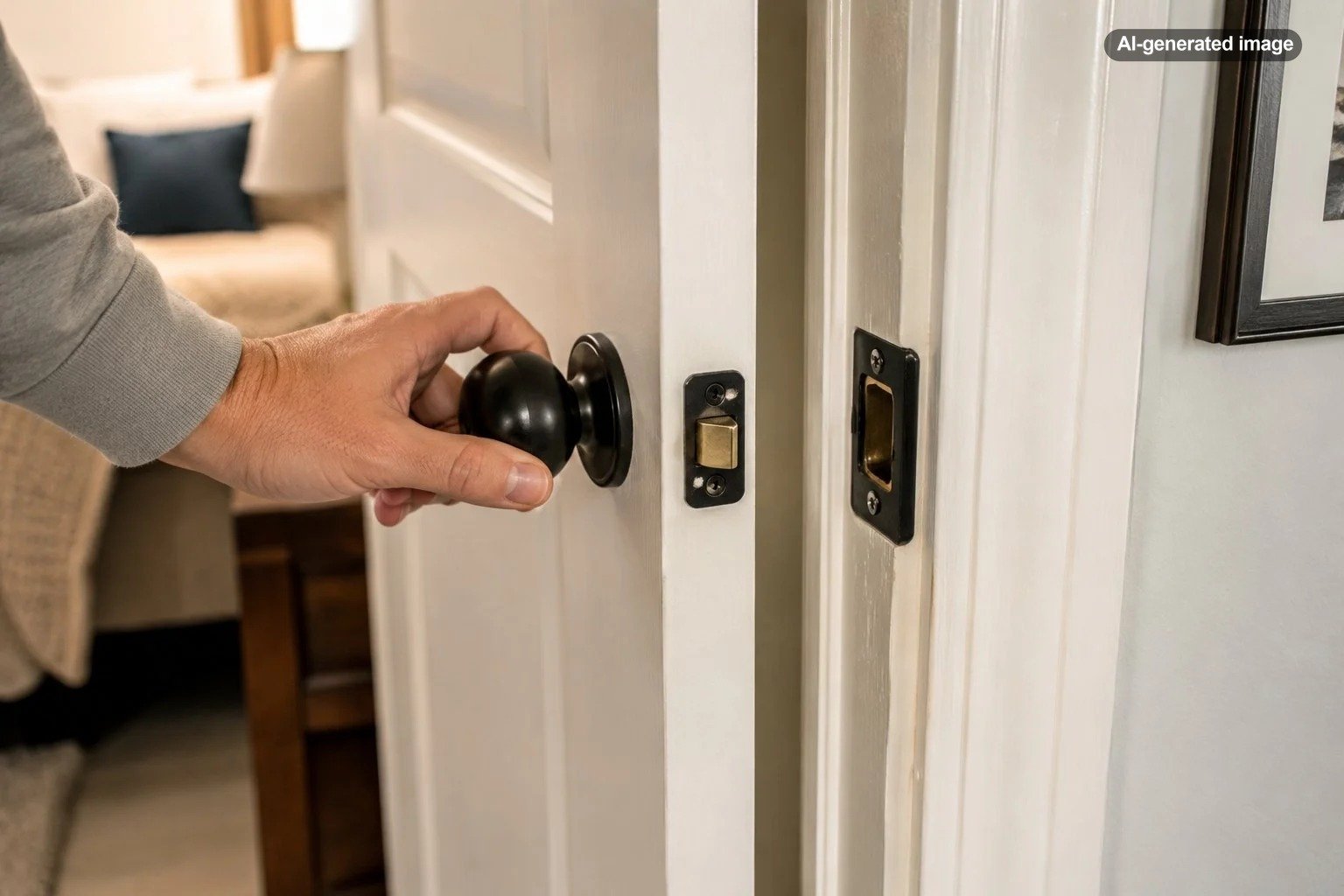
Why Does My Door Latch Stop Lining Up?
A door latch that used to close neatly and now bumps, scrapes, or misses the strike plate usually means something has shifted slightly. The most common culprits are loose or worn hinges, seasonal swelling or shrinking of the door and frame, movement in the jamb, weatherstripping that changes how the door sits, or a strike plate that was only marginally aligned to begin with.
The useful clue is how the latch misses. If it hits the bottom of the strike opening, the door may be sagging. If it hits the top, side, or seems to change with the weather, the cause may be different. Before moving the strike plate, it is worth checking the door itself so you do not adjust the hardware around a problem that can be corrected more cleanly.
Why a door latch can move out of alignment
A latch does not generally wander around on its own. Instead, the relationship between the door and the frame changes. Because the latch and strike opening have relatively little room for error, even a small shift can turn an easy-closing door into one that needs a shoulder bump, an upward lift, or an extra tug.
Loose hinges can let the door sag
One of the first things to inspect is the hinge side of the door. Screws can loosen over time, hinge leaves can wear, and a heavier door can gradually settle. When the latch side drops, the latch commonly begins contacting the lower part of the strike plate instead of entering the opening cleanly.
Look at the spacing between the top of the door and the frame. If the gap appears tighter near the latch side than it does near the hinge side, or if the door seems visibly lower at the handle edge, hinge movement is a reasonable suspect.
Wood doors and frames can change with humidity
Wood responds to changes in moisture. A door may fit differently during a humid summer than it does during a dry heating season, particularly if the clearance was already tight. Paint buildup along an edge can make the effect more noticeable because there is less room for ordinary seasonal movement.
A latch problem that appears and disappears at roughly the same time each year deserves a different response from one that suddenly develops after years of trouble-free operation. Instead of immediately relocating hardware, check whether the door is also rubbing elsewhere along the frame.
Weatherstripping can change where the door rests
Fresh, thick, folded, or displaced weatherstripping can hold an exterior door slightly farther away from its normal closed position. That may be enough to put the latch at the edge of the strike opening. If you have to press firmly on the door before the latch catches, inspect the seals before assuming the latch hardware is defective.
The strike plate itself may have moved
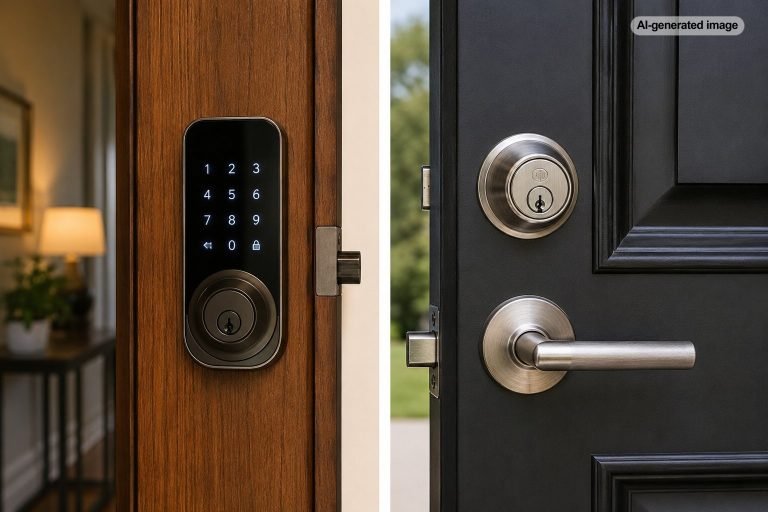
Strike plate screws can loosen, especially when the plate has been repeatedly struck by a poorly aligned latch. The plate may shift slightly, or damaged screw holes may stop holding it firmly. An older installation can also reveal that the strike was never centered particularly well; it simply worked until another small change pushed the alignment past its tolerance.
How to tell where the alignment problem is
Close the door slowly while watching the latch approach the strike plate. Do not slam it. You are trying to identify whether the latch is too high, too low, too far inward, or too far outward.
If the contact point is difficult to see, a removable mark on the latch can help reveal where it touches the strike. Whatever marking method you use, choose something appropriate for the hardware finish and clean it off afterward.
What to do
- Open the door and operate the handle several times. Confirm that the latch extends and retracts freely.
- Check the hinge screws and look for obvious looseness, movement, or a hinge leaf that is no longer sitting flat.
- Inspect the reveal, or gap, around the door. Look for uneven spacing or a point where the door rubs the frame.
- Close the door slowly and note exactly where the latch contacts the strike plate.
- Check weatherstripping or door sweeps for anything that is pushing the door out of its natural closed position.
- Only after those checks should you decide whether the strike plate itself needs adjustment.
What the contact point can tell you
| What you notice | What it may suggest | What to inspect first |
|---|---|---|
| Latch hits low on the strike | Door may be sagging | Upper hinges, loose screws, door gap |
| Latch hits high | Door or frame position may have shifted | Hinges, jamb, seasonal movement |
| Door must be pushed inward | Door is resting too far from the strike opening | Weatherstripping, stops, strike position |
| Door must be pulled toward you | Door may be closing too deeply | Door stop, strike position, seals |
| Problem comes and goes seasonally | Moisture-related movement may be contributing | Rubbing edges, frame clearance, finish buildup |
| Latch binds even with door open | Hardware itself may need attention | Latch, handle operation, mounting screws |
Should you move the strike plate?
Sometimes, yes. If the door sits squarely, the hinges are secure, the gaps look sensible, and the latch is consistently missing the strike by a small amount, adjusting the strike can be the practical fix.
Small corrections may involve loosening and repositioning the plate. A larger correction can require altering the recessed area in the jamb or repairing old screw holes before relocating the plate. The important point is to avoid moving the strike simply because it is easier to reach than the underlying cause.
Fix the position of the door before you redesign the position of the latch.
Repeatedly enlarging the strike opening can also create a sloppy result. The door may latch, but the hardware can look rough, the door may rattle, and a locking exterior door may no longer close the way its hardware was intended to operate.
When tightening hinge screws helps – and when it does not
If a hinge screw is visibly loose, snugging it may bring the door back into alignment. Stop if the screw simply spins without tightening; that suggests the hole may no longer be holding the screw properly. Continuing to turn it will not restore the connection.
Be cautious about aggressive hinge bending or improvised structural corrections. A door that is badly out of square can reflect problems beyond ordinary hardware adjustment, especially if the frame itself appears distorted or the condition is changing quickly.
What not to do
Avoid immediately filing, grinding, or cutting away large portions of the strike plate. Removing material may disguise the symptom while leaving a loose hinge or shifting door untouched.
Also avoid forcing a stubborn door closed over and over. Repeated impact can loosen hardware further and damage the edge of the door or jamb. If the latch belongs to an exterior locking door, make sure any repair leaves the lock operating smoothly rather than requiring pressure, lifting, or pulling to engage.
How to keep the latch aligned longer
Door alignment is easier to maintain when small changes are addressed early. Periodically check that hinge and strike screws remain secure, especially on frequently used or heavy doors. Pay attention when a door begins rubbing before the latch stops working altogether.
On exterior doors, keep an eye on weatherstripping as it ages or after it is replaced. A seal should control drafts without forcing the door into an unnatural position. Fresh paint can also reduce edge clearance, so a newly painted door that suddenly sticks may need careful inspection before any lock hardware is moved.
The goal is not simply to make the latch enter the hole somehow. A properly behaving door should swing freely, settle naturally against the stop, and latch without needing to be lifted, shoved, or pulled into submission.
Frequently asked questions
Why do I have to lift my door to make it latch?
That often indicates that the latch is sitting too low relative to the strike opening, which can happen when a door sags at the hinges. Inspect the hinges and the gap around the door before moving the strike plate.
Why does my door latch in winter but not summer?
Seasonal moisture changes can alter the fit of wood doors and frames. If the problem follows a seasonal pattern, look for rubbing edges and tight clearances before making a permanent hardware adjustment.
Can weatherstripping cause a door not to latch?
Yes. Weatherstripping that is unusually thick, folded, displaced, or newly installed can change the position where an exterior door naturally rests when closed.
Is the latch broken if it works when the door is open?
Not necessarily. If the latch moves freely with the door open but catches when the door closes, alignment between the door and strike is a more likely place to investigate first.
When should I call a professional?
Professional help is sensible when the frame appears to be moving or distorted, several nearby doors develop problems at once, the door is unusually heavy or difficult to control, repairs would require substantial alteration to the jamb, or you cannot restore smooth and reliable operation with basic hardware checks.