
How Tall Should End Tables Be Next to a Sofa?
An end table should generally be about the same height as the sofa arm beside it. A table that sits level with the arm, or no more than about 2 inches lower, usually offers the easiest reach and the most balanced proportions. Slightly taller can work in certain rooms, but a table that rises several inches above the arm often looks bulky and may be awkward to use.
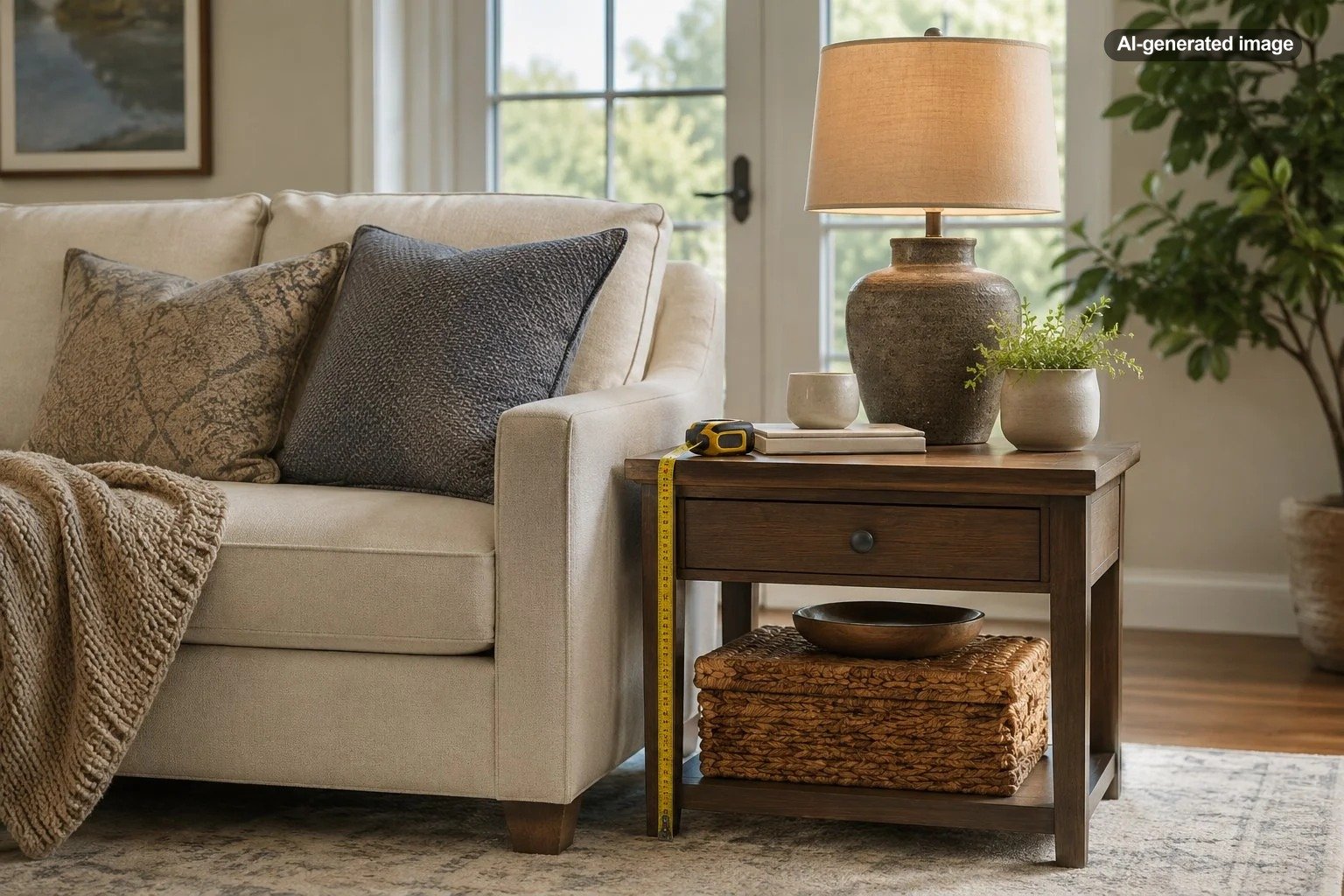
The important measurement is not the sofa’s seat height or overall back height. It is the distance from the floor to the top of the arm where the table will stand. Measuring that point before shopping is far more reliable than choosing a table based on a standard furniture dimension.
Why sofa-arm height is the best reference point
End tables are working furniture. They hold drinks, remotes, reading glasses, phones, books, and lamps, so their height should make those objects comfortable to reach while someone is seated. A tabletop close to arm height lets the hand move sideways with minimal bending or lifting.
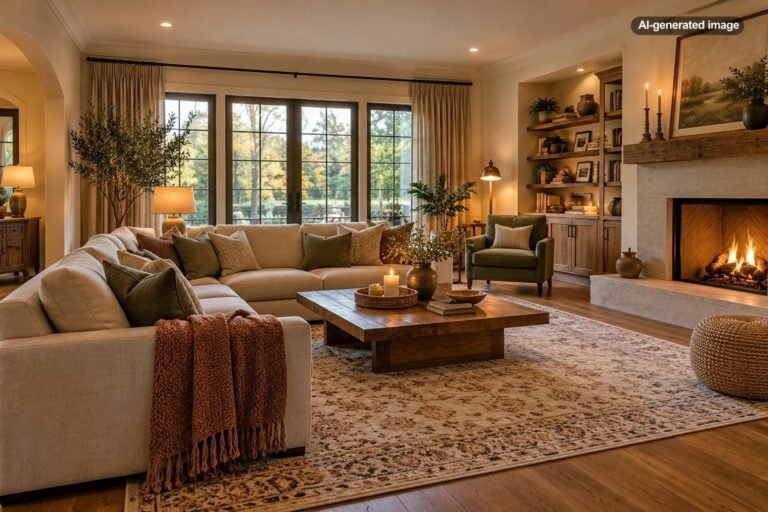
Proportion matters as well. When the tabletop and sofa arm share a similar horizontal line, the pieces appear connected rather than randomly placed next to each other. This alignment is especially useful beside a traditional rolled-arm sofa, a tailored track-arm sofa, or a sectional with substantial arms.
A lower table can feel visually lighter, which may suit a compact room or a sofa with slim legs. The tradeoff is convenience: the farther the tabletop drops below the arm, the more the user must reach downward. A taller table is easier to notice and may accommodate a lamp well, but it can crowd the sofa or feel like a small pedestal looming beside the seat.
| Table position | How it tends to feel | Best use |
|---|---|---|
| Level with the sofa arm | Balanced and easy to reach | Everyday drinks, remotes, books, and lamps |
| Up to 2 inches below the arm | Relaxed and visually lighter | Small rooms, modern sofas, and occasional use |
| More than 2 inches below the arm | May require an awkward downward reach | Mostly decorative tables or unusually low seating |
| Above the sofa arm | More prominent and potentially bulky | Low-arm sofas or carefully planned lamp placement |
How to measure for the right end table
Measure the actual sofa rather than relying on an online listing, especially if the sofa has removable feet, thick cushions, or rounded arms. Product dimensions can describe the highest part of a curved arm rather than the point beside which a table will sit.
What to do
- Place the sofa in its intended position, including any rug beneath it.
- Measure vertically from the floor to the top of the arm on the side where the table will stand.
- Write down that measurement and subtract 2 inches to establish a useful lower boundary.
- Check the table’s listed overall height rather than its clearance, shelf height, or packaged dimensions.
- Mark the proposed tabletop height with removable painter’s tape on a nearby wall or use a box of similar height for a seated reach test.
The seated test catches issues that measurements alone can miss. A deep sofa encourages people to recline farther from the table, while a shallow upright sofa keeps them closer. Someone who frequently uses the table may prefer it exactly level with the arm, even if a slightly lower option looks more delicate.
Adjust the rule for different sofa styles
Low-arm and armless sofas
A very low arm can make a perfectly matched table impractical. If the sofa arm sits only a little above the seat cushion, matching it exactly may leave too little height for comfortable use or for a useful table lamp. In that case, a table a few inches above the arm can be the more functional choice, provided it does not interfere with reclining or visually overwhelm the sofa.
For an armless sofa, use the seated elbow as a guide. Sit naturally, let the forearm rest comfortably, and note where a tabletop would allow an easy sideways reach. Seat-cushion height can provide a starting point, but the user’s reach and the table’s purpose should settle the decision.
Rolled arms and sloped arms
Measure a rolled arm near the point closest to the table, not necessarily at its decorative crest. With a sloped arm, compare the table to the portion beside the seated user. A tabletop that aligns with the arm’s tallest rear corner may be unnecessarily high at the front, where most reaching occurs.
Sectionals and deep sofas
Deep sectionals often benefit from tables that stay close to arm height because users sit farther from the edge. Table width and placement become especially important: a tiny table may be technically reachable but still feel remote beside a broad arm. If the sectional has no arm at one end, a compact C-table, sofa table, or nearby coffee table may serve that seat more effectively than a conventional end table.
Reclining sofas
Check the furniture’s complete range of motion before deciding on a table. A recliner may need side clearance for controls, moving arms, or an extended footrest. The ideal height is irrelevant if the table must be pushed so far away that it cannot be reached comfortably.
Consider the lamp before choosing the table
If the end table will hold a lamp, judge the table and lamp as one composition. A tall table paired with a tall lamp can place the shade conspicuously high, while a very low table may position the light poorly for reading. The shade should not obstruct conversation or dominate the sofa when viewed across the room.
Set a lamp of similar size on the temporary box used for the reach test, then sit in the adjacent seat. Check whether the switch is easy to reach, whether the shade blocks the view, and whether the light falls where it is needed. Also confirm that the tabletop provides a stable footprint for the lamp while leaving usable space for everyday objects.
Cord placement deserves attention in open layouts. A table may be the right height but the wrong choice if its lamp cord must cross a walking path. A floor outlet, carefully positioned furniture, or a floor lamp may offer a cleaner arrangement.
Balance height with width, depth, and visual weight
Height is only one part of a successful pairing. A broad sofa arm can make a narrow pedestal table look undersized, while a heavy cabinet-style end table may overpower a compact loveseat. Compare the table’s overall mass with the sofa rather than focusing only on the top measurement.
In a small living room, a round table can soften tight circulation and eliminate sharp projecting corners. A nesting table adds temporary surface area without demanding it every day. Tables with shelves or drawers provide storage, although a solid base appears heavier than an open metal frame at the same height.
Leave enough breathing room that the table does not rub against upholstery, yet keep it close enough to reach without leaning. The exact gap depends on the sofa arm, tabletop shape, and room layout. A practical seated test is more useful than enforcing a fixed spacing rule.
Before you decide
- Measure the sofa arm at the table’s actual placement point.
- Test the reach from a normal seated or reclining position.
- Confirm the table will not obstruct a recliner or walking path.
- Check the combined scale of the table, lamp, and sofa.
- Allow enough tabletop area for the objects used every day.
- Consider rounded edges where circulation is tight.
Common end-table sizing mistakes
The most common mistake is buying by appearance before checking height. A sculptural table may look perfect in isolation but become inconvenient when its top lands well below a thick sofa arm. Another frequent error is measuring the seat cushion instead of the arm, producing a table that is usually too low.
Do not assume that two sofas require the same table height simply because their seats are similar. One may have a low modern arm while the other has a tall rolled arm. Likewise, avoid choosing an oversized table solely to fill an empty corner. A table should support the seat first; a floor lamp, plant, or separate decorative piece can address unused space without compromising reach.
Finally, remember that styled photographs often prioritize composition over daily use. A dramatically low table can look elegant in an image while proving tiresome for someone who reaches for it repeatedly. The best choice respects both the room’s lines and the household’s habits.
Frequently asked questions
Can an end table be higher than a sofa arm?
Yes, particularly beside a low-arm sofa or when a lamp needs additional height. Keep the difference deliberate and test the seated reach. A table that is much taller than the arm can feel intrusive and may make drinks less comfortable to set down.
Should both end tables be the same height?
No. They should relate well to the seating and objects around them, but they do not have to match each other. Similar materials, colors, or silhouettes can make different tables feel coordinated.
What if the sofa has no arms?
Use seated comfort as the guide. Test a temporary surface near elbow level and adjust until items can be reached without leaning or lifting the shoulder. The table should also remain proportional to the sofa’s low, open profile.
Is a lower end table acceptable in a modern living room?
A slightly lower table often complements modern, low-profile furniture. It works best when the table is used lightly or remains within easy reach. If it will hold drinks, remotes, or reading materials every day, function should take priority over an exaggerated low silhouette.
The safest starting point is simple: match the end table to the sofa arm or place it slightly below. From there, adjust for the sofa’s shape, the user’s reach, the lamp, and the room’s available space. When those practical details agree, the pairing will look intentional because it genuinely works.