
Why Does My Laundry Room Smell Sour?
A sour smell in the laundry room usually means moisture and organic residue are lingering somewhere they should not. Common sources include damp towels or clothing, residue inside the washing machine, a dirty detergent dispenser, standing moisture around a gasket, or a plumbing or drainage issue. The useful first step is not to cover the odor with fragrance, but to figure out exactly where it is strongest.
Most sour laundry-room odors are ordinary maintenance problems rather than mysteries. Start with wet textiles and the washer itself, then check the floor, walls, utility sink, drain, and plumbing connections if the smell persists.
Start with damp laundry and towels
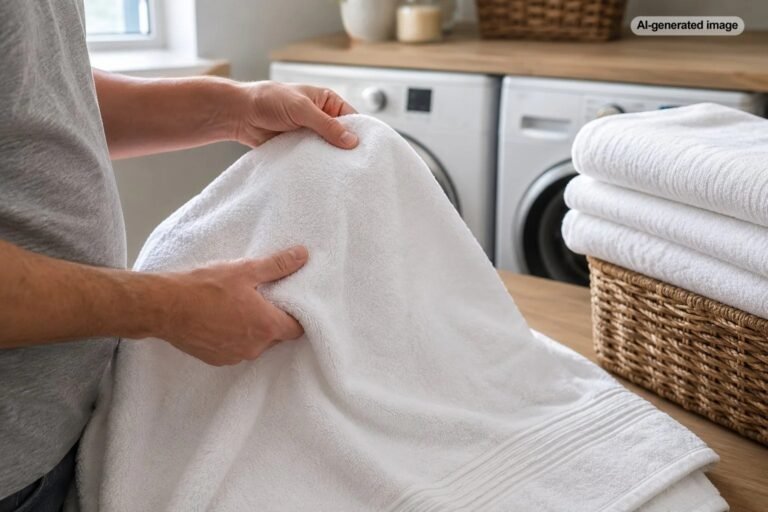
A forgotten washcloth, damp bath towel, sweaty clothing, cleaning rag, or wet mop head can sour surprisingly quickly in a closed laundry room. Check hampers, baskets, shelves, behind appliances, under utility sinks, and anywhere a small textile might have fallen unnoticed.
Pay particular attention to items that are repeatedly placed in a hamper before they are fully dry. A basket may look perfectly tidy while holding enough moisture to keep an unpleasant odor going. If you find damp textiles, wash them according to their care labels and let the hamper itself dry before filling it again.
Affiliate disclosure: CraneManor.com may earn a commission when you purchase through links on this page. This does not affect the price you pay. Learn more.
If piles of clothing, towels, or linens tend to accumulate on the floor, a large rolling laundry hamper can make it easier to keep washable items contained and move them to the machine. The StorageWorks 160L Rolling Laundry Hamper is a substantial option, so it makes the most sense where there is enough floor space and a clear route to the washer; measure the room and wheel clearance before choosing an oversized hamper.
Check whether the washing machine is the source
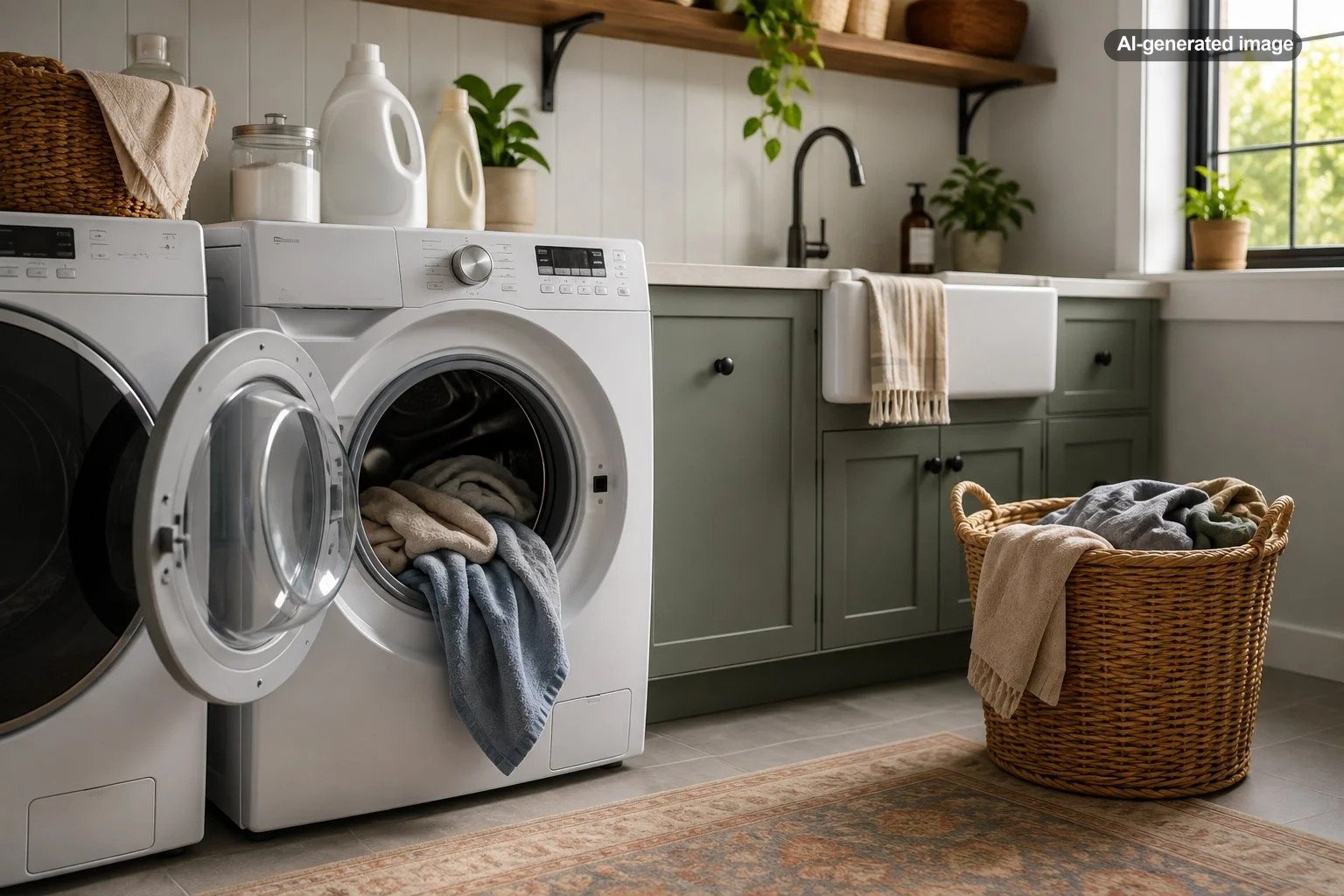
If the odor becomes noticeably stronger when you open the washer door or lid, the machine deserves attention. Detergent, fabric-care products, soil, lint, and moisture can leave residue in areas that stay damp between loads. Whirlpool notes that detergent residue can contribute to washer odors and advises using the detergent type and amount appropriate for the machine.
Inspect the drum, detergent and softener dispensers, and accessible seals or gaskets. On a front-loading machine, look carefully around the folds of the door gasket, where moisture and small debris can hide. Follow the cleaning procedure in the owner’s manual for your specific washer rather than improvising with combinations of household chemicals.
What to do
- Empty the washer completely.
- Smell near the drum, dispenser, gasket, and drain area to identify where the odor is strongest.
- Remove visible lint or debris from accessible areas.
- Clean the washer using the procedure and cleaning products approved in its owner’s manual.
- Clean removable detergent dispensers as directed by the manufacturer.
- After cleaning, allow accessible damp surfaces to dry and see whether the odor returns.
Do not assume that adding extra detergent will solve the problem. More soap can mean more residue, especially when the amount exceeds what the detergent or appliance manufacturer recommends.
Look for moisture around, behind, and beneath the appliances
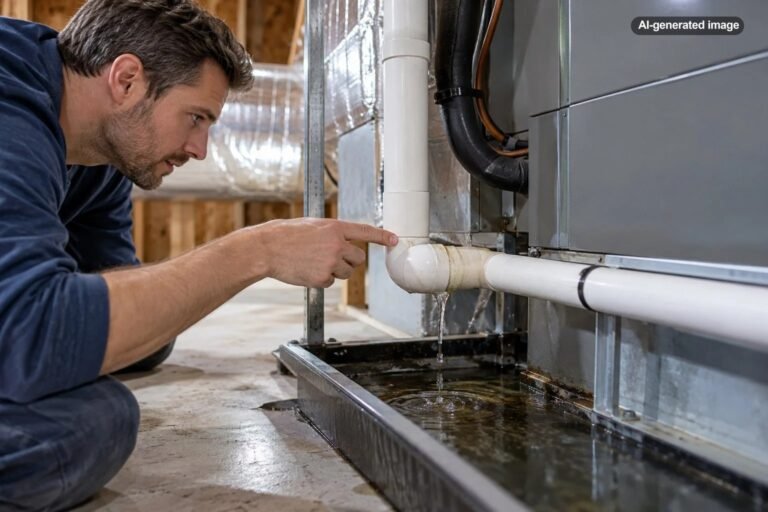
If the washer smells fine but the room does not, widen the search. Examine the floor around the machine, the wall behind it, the utility sink cabinet, nearby baseboards, supply connections, and any accessible drain area. A slow drip can be easy to miss when it disappears behind an appliance or cabinet.
The U.S. Environmental Protection Agency emphasizes moisture control as the central part of preventing indoor mold growth. That makes recurring dampness more important than the odor alone. If a wall, floor, cabinet, or other material repeatedly becomes wet, find and correct the moisture source rather than repeatedly deodorizing the surface.
Do not overlook drains and plumbing
A smell that seems sharper near a standpipe, utility sink, or floor drain may have a different cause from a washer that simply needs cleaning. Check whether the odor is localized to a drain opening or becomes more noticeable when the washer drains.
Plumbing odors can arise for several reasons, and the correct fix depends on the installation. Avoid taking apart concealed plumbing or changing drain connections based solely on an odor. If the smell appears to originate inside a wall, repeatedly returns after ordinary cleaning, or is accompanied by leaking or poor drainage, a qualified plumber can evaluate the setup.
Check the room itself for trapped humidity
Laundry rooms naturally handle wet fabrics and appliances that use water, so poor drying conditions can magnify a minor odor problem. A closed room with limited air movement may keep damp surfaces and textiles wet longer than expected.
After checking for leaks, look at everyday habits. Are wet towels waiting overnight? Is a utility-sink sponge permanently damp? Does the washer remain wet between loads? Is the room noticeably humid even when no laundry is running? Addressing those small moisture sources often does more than adding another scented product.
The goal is not to make the sour smell harder to notice; it is to remove the moisture or residue that keeps producing it.
When a sour smell deserves more investigation
A simple odor that disappears after wet laundry is removed or the washer is properly cleaned is reassuring. A persistent smell paired with visible water damage, recurring dampness, discoloration, deteriorating materials, or moisture that you cannot trace deserves a more careful look.
The EPA advises correcting the water problem when mold is present because cleanup without moisture control allows the conditions that supported growth to continue. Avoid treating fragrance, paint, or repeated surface wiping as a substitute for locating an active leak or persistent dampness.
How to keep the smell from returning
Once the room smells normal again, prevention is mostly a matter of moisture management and routine appliance care. Move washed clothes promptly instead of leaving them wet in the machine for long periods. Let damp towels and cleaning cloths dry rather than burying them under dry laundry. Clean the washer according to its manufacturer instructions and use the appropriate amount and type of detergent.
Before you decide the problem is solved
- Confirm that the empty washer no longer smells sour.
- Check hampers and stored textiles for lingering dampness.
- Look beneath and around the washer for moisture.
- Check the utility sink, standpipe, and nearby drains for localized odor.
- Make sure any leak or recurring wet spot has an identified cause.
- Recheck the room after the next few loads of laundry.
If the odor returns only after using the washer, focus on the appliance and drainage path. If it returns even when the washer has not been used, broaden the search to stored textiles, room humidity, plumbing, and hidden moisture. That distinction can save a great deal of aimless scrubbing.
FAQ
Why does my laundry room smell sour even when there is no dirty laundry?
The washer, a damp hamper, a utility sink, a drain, or moisture behind an appliance may still be producing the odor. Empty the room of obvious textile sources and check each area separately to narrow it down.
Can too much detergent make a washing machine smell?
It can contribute to residue inside some washers. Follow the detergent and appliance manufacturer’s directions for the correct detergent type and amount rather than assuming more detergent produces a cleaner machine.
Does a sour smell automatically mean mold?
No. Damp textiles, washer residue, stagnant moisture, and drainage problems can also create unpleasant odors. Visible mold or persistent moisture should be addressed, but odor alone is not enough to identify the cause.
Should I use air freshener to fix a sour laundry room?
Fragrance may temporarily mask the smell, but it will not correct damp laundry, washer buildup, a leak, or a drainage problem. Locate the source first, then clean, dry, maintain, or repair it as appropriate.