How Do You Keep Outdoor Cushions From Mildewing?
The simplest way to keep outdoor cushions from mildewing is to keep them clean, help them dry quickly after they get wet, and never put them into storage while they are even slightly damp. Mildew problems are fundamentally moisture problems: cushions that stay wet, collect organic debris, or sit in stagnant humid air have a much harder time drying completely.
You do not necessarily need to carry every cushion indoors whenever clouds appear. A better routine is to pay attention to how quickly the fabric and cushion core dry, give air access to both sides, and protect cushions during periods when rain or humidity will keep them damp for days rather than hours.
Why outdoor cushions develop mildew
Mold and mildew need moisture, so the most important preventive step is reducing the amount of time cushions remain damp. The U.S. Environmental Protection Agency emphasizes moisture control as the key to controlling mold and recommends drying wet materials and furnishings as quickly as possible, ideally within 24 to 48 hours. EPA mold and moisture guidance provides broader information about that principle.
Outdoor cushions have an additional complication: water may disappear from the surface while remaining trapped inside foam, batting, seams, piping, or the underside resting against a chair frame. A cushion that feels dry across the top can therefore still contain enough moisture to create trouble once it is stacked or placed in a storage box.
Dirt matters, too. Pollen, soil, food residue, sunscreen, leaves, and other debris can accumulate on outdoor upholstery. Sunbrella, for example, notes that while its fabrics resist mold and mildew, growth can occur on dirt and foreign substances left on the fabric. The lesson applies more broadly as a maintenance principle: clean cushions generally give mildew fewer opportunities than neglected ones. Sunbrella upholstery care instructions explain the manufacturer’s cleaning guidance for its own fabrics.
Dry cushions from more than one side
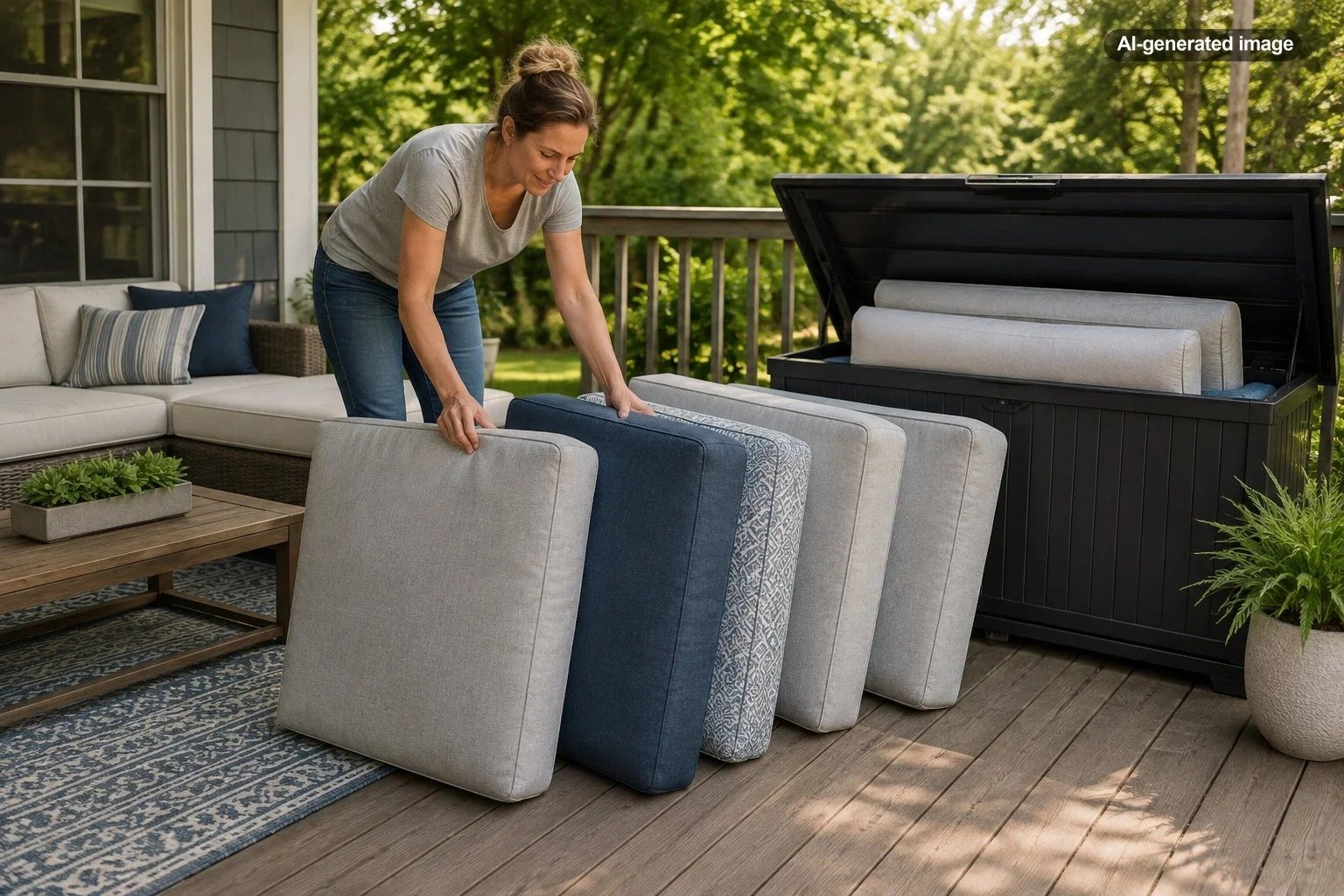
After rain, morning dew, pool splashes, or cleaning, resist the temptation to leave cushions lying flat in their usual positions. Stand them upright or on an edge where air can circulate around the front, back, and sides. If possible, separate cushions from one another rather than leaning several wet pieces tightly together.
Sunlight can help, but airflow is just as important. A bright cushion sitting flat against a wet chair seat may dry unevenly. In a shaded or humid outdoor area, moving the cushion to an airy covered location can sometimes be more useful than leaving it exactly where the rain fell.
A cushion is ready for storage when the hidden layers are dry, not merely when the visible fabric looks dry.
If the cushion has a removable cover, check the care instructions before unzipping, washing, machine drying, or separating the cover from the insert. Cushion construction varies, and a removable-looking cover is not automatically intended for routine machine washing.
Keep dirt from becoming part of the moisture problem
A light maintenance routine is far easier than dealing with established staining. Brush or vacuum loose debris before it becomes embedded, address spills reasonably promptly, and follow the fabric or furniture manufacturer’s instructions when deeper cleaning is needed.
Avoid assuming that bleach, vinegar, pressure washing, or a favorite household cleaner is appropriate for every outdoor textile. Performance fabrics differ in fiber, coating, dye method, backing, and recommended care. Sunbrella publishes a bleach-based procedure for mold and mildew on Sunbrella upholstery, for example, but that is guidance for its own material and should not be treated as a universal recipe for every cushion on the patio.
Do not cover wet cushions
Furniture covers are useful when they keep rain and debris away, but covering already-wet cushions can work against you. A cover that restricts airflow may slow evaporation and hold moisture close to the upholstery. Dry the cushions first, then cover the furniture according to the cover and furniture manufacturers’ instructions.
The same logic applies to deck boxes and storage benches. They are convenient places for dry cushions, but they should not become emergency hiding places for cushions that were just caught in a storm. If rain arrives before you can dry everything, temporary shelter with airflow is preferable to packing wet cushions tightly together.
What to do after cushions get soaked
- Remove the cushions from the furniture and shake or drain away obvious surface water.
- Stand each cushion on an edge in a protected, well-ventilated location.
- Separate cushions so air can reach all sides, especially seams and undersides.
- Turn or reposition thick cushions as they dry so one edge does not remain damp.
- Check the interior and underside before returning cushions to storage or stacking them.
Store outdoor cushions completely dry
For overnight storage during a rainy stretch or longer seasonal storage, cleanliness and dryness matter more than elaborate organization. Clean off debris, allow the cushions to dry thoroughly, and store them where they are protected from direct water intrusion and excessive moisture.
A garage, basement, shed, storage room, or enclosed porch can work well when the space itself stays reasonably dry. In humid climates, however, an enclosed storage location can have its own moisture problem. If cushions spend weeks or months indoors, tracking the conditions in that room can be useful rather than assuming indoor air is automatically dry.
Affiliate disclosure: CraneManor.com may earn a commission when you purchase through links on this page. This does not affect the price you pay. Learn more.
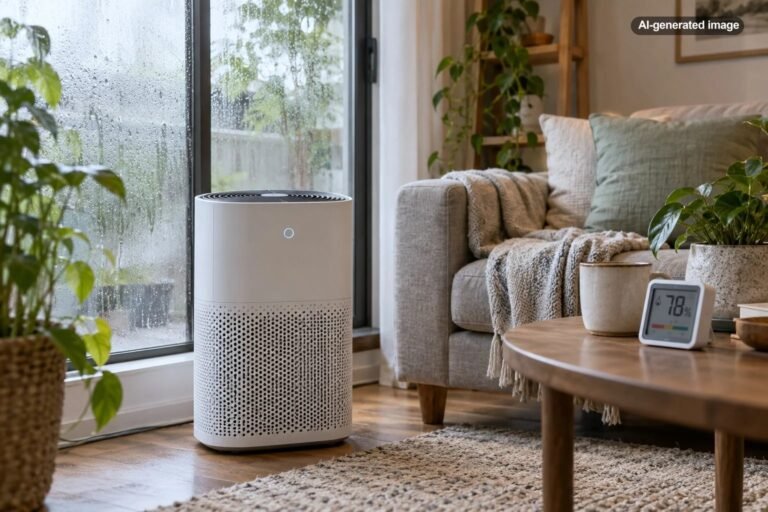
For an indoor cushion-storage room that tends to feel humid, a digital hygrometer can provide a simple temperature and relative-humidity reading. It does not detect mold and is not a substitute for checking the cushions themselves, but it can make an otherwise invisible indoor humidity problem easier to notice.
Choose a routine that fits your weather
Someone in a dry climate may be able to leave outdoor cushions in place through much of the season and simply stand them up after occasional rain. A homeowner dealing with frequent summer storms, heavy dew, a shaded patio, or coastal humidity may need a more active routine: bringing cushions under cover before extended wet weather and checking them carefully before storage.
Thick, plush cushions also deserve more drying time than thin seat pads because there is simply more material in which moisture can linger. Likewise, a cushion sitting on an open slatted chair has better access to air than one resting inside a deep frame with a nearly solid base.
There is no single storage schedule that fits every patio. The practical decision is whether your cushions routinely dry faster than the weather rewets them. If they remain damp from one wet day into the next, change the setup by increasing airflow, moving them under cover, or bringing them into a genuinely dry storage area.
What if mildew is already visible?
First, stop the moisture cycle. Move the cushion to a dry, ventilated location and consult the care label or furniture manufacturer’s cleaning instructions before applying a cleaner. Different fabrics tolerate different products, and treating a stain aggressively without checking the material can trade a mildew mark for discoloration or fabric damage.
If the manufacturer specifically provides mold or mildew cleaning instructions, follow its concentrations, contact times, rinsing directions, and drying method rather than improvising. For Sunbrella upholstery, for example, the manufacturer provides a specific procedure involving mild soap and bleach followed by thorough rinsing and air drying. That procedure should not automatically be transferred to fabrics from other manufacturers.
A simple prevention routine
The most effective mildew-prevention routine is pleasantly ordinary. Keep cushions reasonably clean. Let rainwater escape. Give wet cushions air on every side. Do not stack them damp. Do not trap them under covers while they are still wet. And before storing them for an extended period, check that the storage space is not introducing a new moisture problem of its own.
That routine matters more than chasing a single miracle spray. Outdoor cushions are designed to live through imperfect weather, but they last more gracefully when wet days are followed by deliberate drying rather than immediate stacking and forgetting.
Frequently asked questions
Should I bring outdoor cushions inside every night?
Not necessarily. If your cushions stay clean, remain protected from repeated soaking, and dry readily where they sit, nightly indoor storage may be unnecessary. Bringing them under cover becomes more useful during prolonged rain, heavy dew, very humid conditions, or periods when the furniture will not be used.
Can I store cushions in plastic bags?
Airtight plastic is a poor place for cushions that contain any residual moisture. If you use bags or containers for clean seasonal storage, make certain the cushions are completely dry first and follow any storage guidance supplied by the manufacturer.
Why do cushions mildew even under a furniture cover?
A cover can keep direct rain off while moisture still arrives through humidity, condensation, wet furniture, or cushions that were covered before drying. Limited airflow can then slow evaporation. Check both the cushions and the conditions underneath the cover rather than assuming the cover alone eliminates moisture.
Are mildew-resistant cushions mildew-proof?
No. A mildew-resistant textile can still collect dirt and remain damp under the wrong conditions. Manufacturer guidance from Sunbrella specifically notes that mildew can grow on dirt or foreign substances even though its fabric itself does not promote mildew growth.