Do Outdoor Furniture Covers Cause Mold?
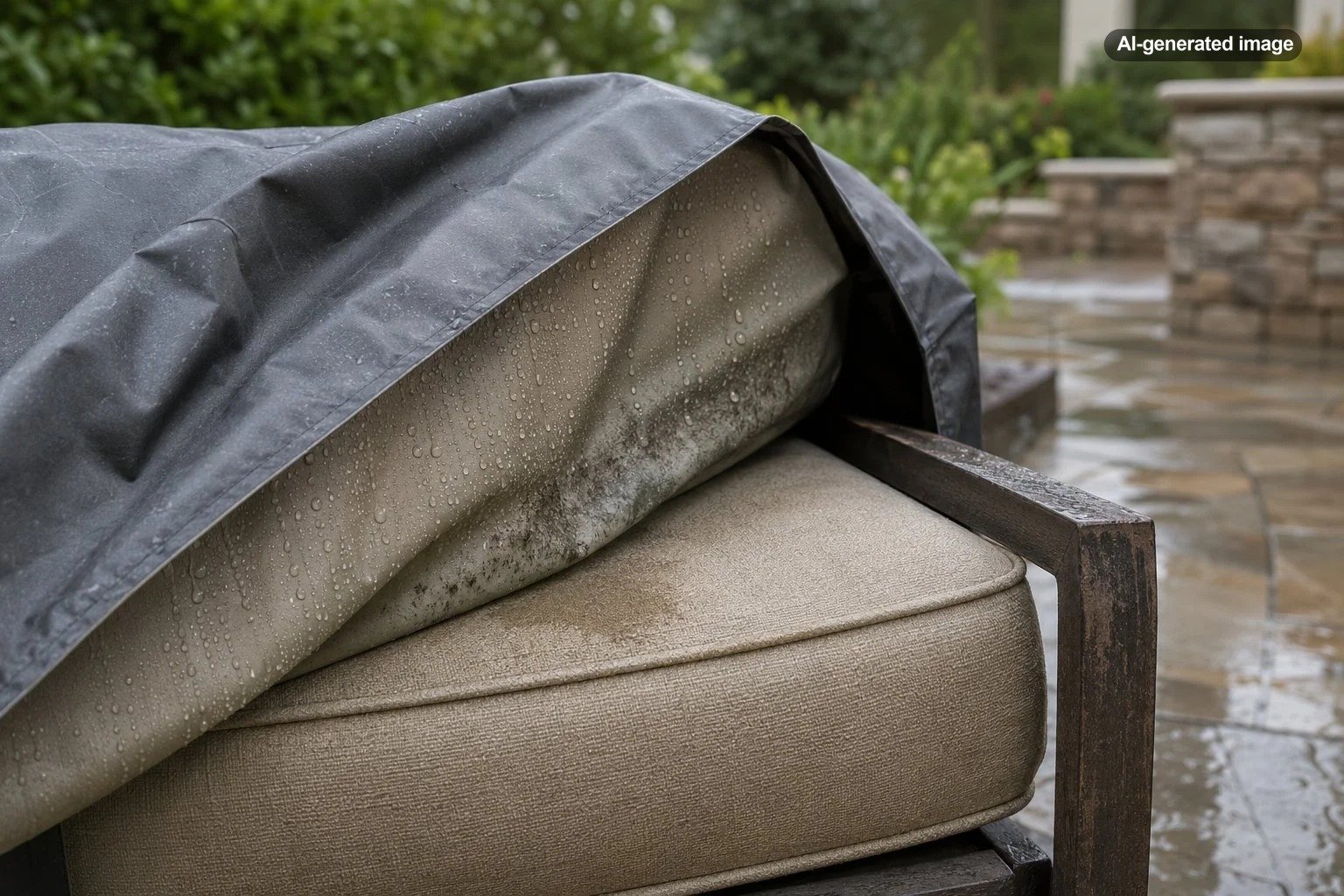
Outdoor furniture covers do not cause mold by themselves. Mold develops when a cover traps enough moisture against furniture, cushions, or accumulated debris for long enough. A well-fitted, ventilated cover placed over clean, dry furniture usually reduces weather exposure without creating a mold problem.
Trouble tends to begin when damp cushions are covered immediately after rain, condensation cannot escape, or a loose cover forms pockets that collect water. The practical goal is therefore not maximum sealing. It is protection from rain and dirt while still allowing moisture to drain, evaporate, and move out.
Why mold can appear beneath a furniture cover
Mold spores are naturally present outdoors, but growth requires moisture. The U.S. Environmental Protection Agency identifies moisture control as the key to mold control and advises drying damp materials promptly. A furniture cover becomes part of the problem only when it helps sustain the damp conditions mold needs.
Several ordinary situations can create those conditions:
- Furniture was wet when covered. Rain, morning dew, cleaning water, or moisture inside cushion foam may remain after the surface looks dry.
- Water pools on the cover. A sagging center can hold rainwater against the fabric and encourage leakage or condensation below.
- The cover has little ventilation. A tightly sealed cover can slow evaporation, particularly during warm, humid weather.
- Leaves and dirt remain underneath. Organic debris holds moisture and gives mold more material on which to grow.
- The furniture sits on a damp surface. Moisture can rise from wet decking, soil, or a patio that drains poorly.
The best furniture cover behaves more like a weather-resistant jacket than an airtight plastic bag.
Water-resistant, waterproof, and breathable are different qualities
A cover described as water-resistant is intended to shed routine moisture, but it may not stop water under every storm condition. A highly waterproof material can provide stronger rain protection, yet the complete cover still needs thoughtful construction. Seams, vents, fit, and the way it sits on the furniture all affect real-world performance.
Breathability does not mean leaving furniture exposed. It means providing a controlled route for humid air and condensation to escape. Covered vents, small openings near the lower edge, or a design that does not seal tightly against the floor can help. The openings should still be positioned so wind-driven rain is not invited directly inside.
| Cover condition | Likely result | Better approach |
|---|---|---|
| Tight cover over damp cushions | Moisture dries slowly | Remove cushions and dry them first |
| Loose cover with a sagging top | Rainwater may pool | Add support and secure the cover |
| Cover sealed to the ground | Air movement is restricted | Preserve lower-edge ventilation |
| Clean, dry furniture under a vented cover | Lower risk of persistent dampness | Inspect periodically after storms |
How to cover outdoor furniture without trapping moisture
Start with the furniture rather than the cover. Brush away leaves, pollen, food residue, and soil. If the furniture has been washed or rained on, allow frames, woven surfaces, seams, cushion covers, and inner cushion material to dry completely.
What to do
- Clean off debris and check hidden areas beneath seats, around ties, and along frame joints.
- Dry every component thoroughly. Stand cushions on edge so air can reach both sides.
- Remove cushions for indoor or dry ventilated storage when prolonged wet weather is expected.
- Place the cover so its top slopes rather than sags. A purpose-made support pole or another smooth, stable support can create a peak without stressing the fabric.
- Secure straps, buckles, or drawcords so wind cannot repeatedly lift the cover and admit rain.
- Keep vents open and avoid pinning the entire lower edge tightly against the ground.
- After heavy rain, lift the cover and check for pooled water, condensation, or damp fabric.
Fit matters here. An undersized cover may strain at seams and leave portions exposed, while an oversized one can drag, flap, and form water-catching folds. Measure the furniture configuration before choosing a cover, including its widest and tallest points.
Affiliate disclosure: CraneManor.com may earn a commission when you purchase through links on this page. This does not affect the price you pay. Learn more.
For a compatible lounge chair, a Classic Accessories Veranda cover is one available water-resistant option. As with any cover, measure first, secure it properly, maintain ventilation, and never use it to seal in wet cushions.
When cushions need separate treatment
Cushions are generally more vulnerable than metal, resin, teak, or other hard frames because water can travel through seams and remain inside foam. A cushion that feels dry on top may still be damp at its core. Covering the entire seating group does not guarantee that this internal moisture will escape.
During a rainy stretch, storing cushions in a dry deck box, shed, garage, or indoor utility area is often more reliable than leaving them beneath a furniture cover. Do not pack damp cushions tightly into storage, however. That simply moves the same moisture problem into a smaller enclosure.
What to do if you find mold or mildew
First determine whether you are seeing active growth, ordinary dirt, algae, or a stain left by previous growth. A musty odor, recurring spotting, or dampness under the cover suggests that the moisture source has not been corrected.
Follow the furniture manufacturer’s care instructions because cleaners that are suitable for one material may fade fabric, damage a protective finish, or corrode hardware on another. For many hard, washable surfaces, EPA guidance recommends cleaning mold with detergent and water and drying the surface completely. Porous cushions can be more difficult to restore if growth has penetrated deeply.
Do not mix bleach with ammonia or other household cleaners. Avoid aggressive pressure washing unless the furniture manufacturer permits it; concentrated water can damage wood fibers, force moisture into seams, or strip finishes.
A simple prevention routine
Furniture covers work best as part of a small maintenance habit rather than a set-it-and-forget-it solution. During the active season, look underneath every week or two and after severe weather. Remove debris, empty pooled water, and uncover the furniture during a dry period if condensation has collected.
Wash the cover according to its care label and let both sides dry before reinstalling it. Check seams, vents, fasteners, and worn areas that may admit water. Raise furniture slightly only with stable, material-appropriate feet or glides, and keep the surrounding patio drains clear.
In humid climates, even excellent covers cannot make moist air disappear. More frequent airing and separate cushion storage may be the sensible tradeoff. In dry climates or under a roof, the same furniture may need much less intervention.
Frequently asked questions
Should outdoor furniture be covered every night?
Not necessarily. Covering can protect furniture from dew, pollen, bird droppings, and weather, but the furniture and cover should be dry. Frequent covering is most useful when exposure is significant and the cover can be installed without sealing in moisture.
Can furniture be covered immediately after rain?
No. Wait until the frame, fabric, seams, and cushions are dry. If more rain is coming, move cushions to a sheltered, ventilated place rather than wrapping damp material tightly.
Should a patio furniture cover touch the ground?
A cover should protect the furniture’s lower portions, but an airtight seal at ground level can restrict airflow. Follow the cover manufacturer’s fitting instructions and preserve any designed ventilation openings.
Why is the underside of my cover wet?
The moisture may be condensation, water entering through seams or vents, or residual dampness evaporating from the furniture. Check for sagging, blocked vents, wet cushions, poor drainage, and an overly tight lower edge.