How Do You Remove Green Mildew From Patio Furniture?
Green mildew on patio furniture can usually be removed with a gentle cleaning solution, a soft brush or cloth, a thorough rinse, and complete drying. The important detail is that the correct method depends on whether you are cleaning plastic, metal, sealed wood, woven resin, or outdoor fabric.
Begin with the mildest method that is likely to work. Aggressive scrubbing, concentrated bleach, pressure washing, and untested stain removers can fade fabric, strip wood finishes, scratch plastic, or force water into furniture joints.
First, confirm what you are cleaning
The green coating may be mildew, algae, pollen mixed with grime, or a combination of organic growth and dirt. You do not need to identify the exact species before routine cleaning, but you should look closely at the affected material.
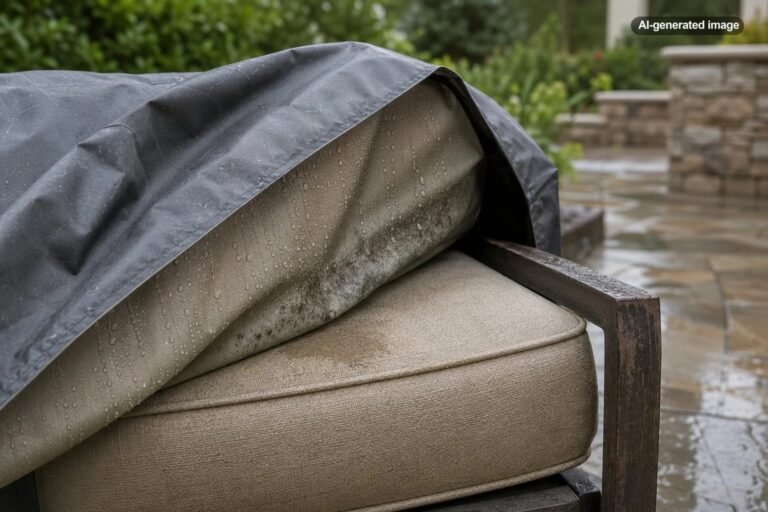
A slick green film on a hard chair frame is often easier to remove than dark staining that has penetrated an unfinished wood surface or cushion filling. If the growth returns quickly, appears inside thick cushions, or is accompanied by decayed wood, separating upholstery, or persistent odor, cleaning the surface alone may not solve the problem.
Check the furniture manufacturer’s care label or instructions before applying any cleaner. This is especially important for solution-dyed fabrics, coated metals, teak, painted wood, rope furniture, wicker, and cushions with removable covers.
Gather a simple cleaning kit
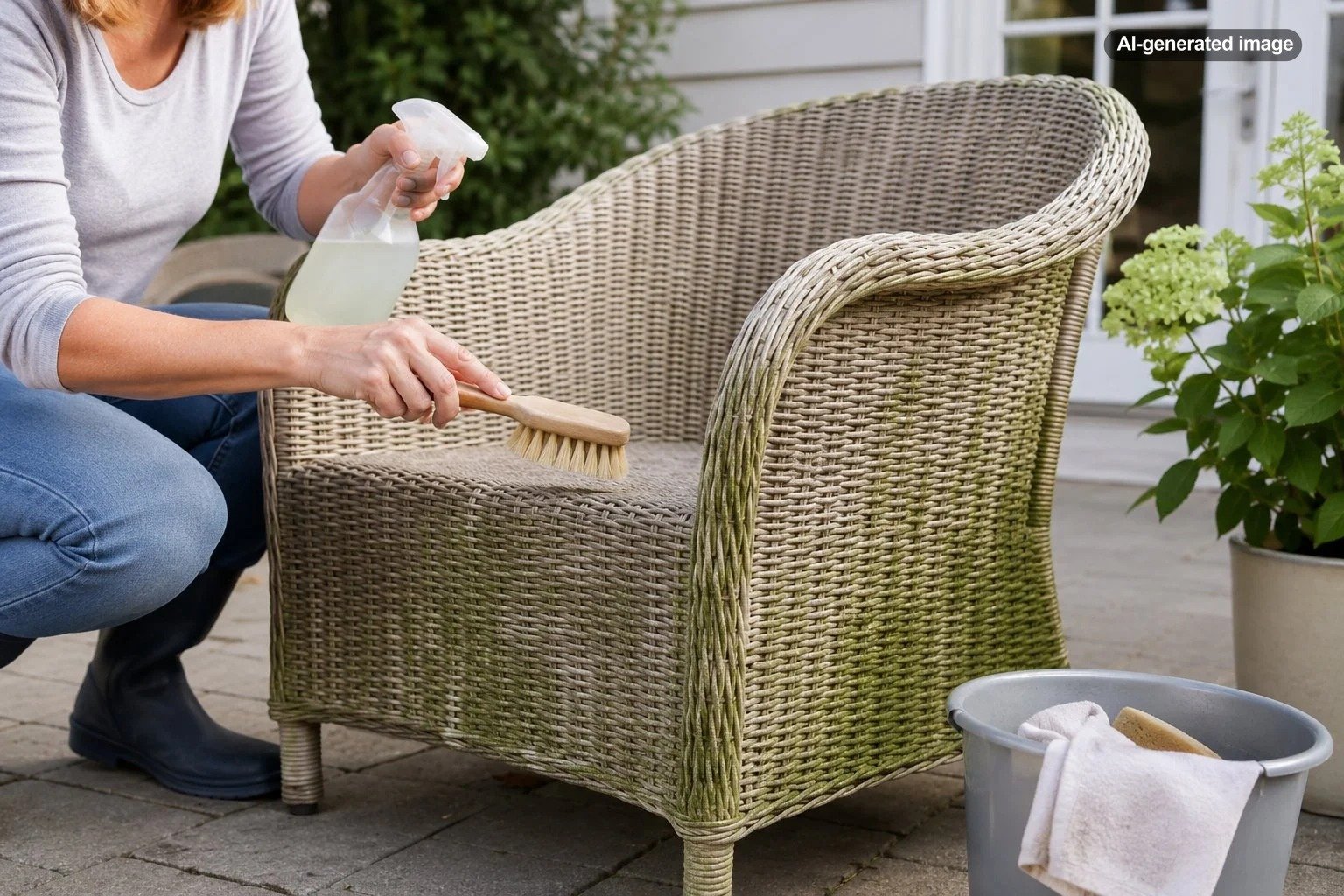
For most washable outdoor furniture, start with a bucket of lukewarm water, a small amount of mild dishwashing liquid, microfiber cloths, a soft nylon brush, a garden hose with gentle flow, and clean towels. Wear gloves, and consider eye protection when brushing overhead surfaces or using a labeled mildew-removal product.
Avoid mixing household cleaners. In particular, never combine bleach with ammonia, acids, vinegar, or other cleaning products. Work outdoors or in a well-ventilated space, keep children and pets away from the cleaning area, and follow the label when using a commercial product.
What to do
- Move the furniture away from walls, doors, pools, and delicate plants.
- Remove cushions and detachable covers when the care instructions allow it.
- Brush off leaves, soil, pollen, and loose surface growth.
- Test your cleaning solution on a concealed spot.
- Wash from the top downward using light pressure.
- Rinse away all cleaner residue.
- Dry the furniture completely before replacing cushions or covers.
How to clean plastic, resin, and metal frames
Mix mild dish soap with lukewarm water and apply it with a cloth or soft brush. Give the solution a few minutes to loosen the film, but do not allow it to dry on the surface. Scrub seams, undersides, feet, and decorative grooves where moisture and debris tend to collect.
Rinse with clean water and dry the furniture with towels before leaving it in a sunny, airy location. Drying the joints matters because water can remain trapped inside hollow frames or beneath caps long after the visible surfaces look dry.
If staining remains, use only a cleaner labeled as suitable for the specific material and finish. Powdered abrasives, stiff wire brushes, and rough scouring pads can permanently dull plastic and damage protective coatings on metal. Inspect chipped paint and rusting areas separately; cleaning mildew will not repair a failing finish.
How to clean wood patio furniture
Wood requires a lighter touch. Begin with mild soap, water, and a soft brush, working in the direction of the grain. Do not soak the wood, and rinse it promptly rather than leaving detergent on the surface.
Painted, stained, oiled, sealed, and naturally weathered wood can react differently to the same cleaner. Test first, particularly before using a commercial mildew remover. University of Georgia guidance notes that products used on painted or stained wood should be specifically labeled as safe for those surfaces.
Let the furniture dry fully before deciding whether a stain remains. Wet wood naturally looks darker, which can make the cleaning result difficult to judge. Once dry, check for soft areas, flaking coatings, open joints, splinters, or deep discoloration. Those conditions may call for refinishing, repair, or replacement rather than harder scrubbing.
How to clean outdoor cushions and fabric
Read the sewn-in care label before wetting a cushion. If the cover is removable and machine washable, follow its instructions for water temperature, detergent, and drying. Do not assume the inner cushion can be washed simply because the cover can.
For fixed upholstery, take the cushion outdoors and gently brush away loose surface material. University of Georgia Extension recommends doing this outside when possible so spores are not scattered indoors. Apply a mild fabric-safe cleaning solution to a small hidden area, blot or brush lightly, and avoid saturating the foam.
Rinse or extract the cleaner only as permitted by the care instructions. Stand cushions on edge in a sunny or well-ventilated area and rotate them so air reaches both sides. Do not place damp cushions back on chairs or into a storage box.
If mildew has spread through the filling, the cushion stays musty after complete drying, or the fabric has weakened, replacement may be more practical than repeated cleaning. Porous materials can be difficult to clean fully once growth has reached deep layers.
Should you use bleach or vinegar?
Neither should be treated as a universal patio-furniture cleaner. Bleach may discolor textiles, corrode some metals, damage finishes, and affect nearby plants. Vinegar is acidic and may be unsuitable for certain finishes, natural stone, metals, or manufacturer-treated fabrics.
If a care guide specifically permits diluted bleach, follow the stated concentration, contact time, rinsing instructions, and protective measures. Do not improvise a stronger mixture. If the manufacturer prohibits bleach, choose a compatible product or stay with mild detergent and repeated gentle cleaning.
The safest effective cleaner is the one that removes the growth without shortening the life of the furniture.
When to stop cleaning
Stop if the cleaner changes the color, softens a coating, leaves a chalky surface, weakens fibers, or produces unexpected fumes. Rinse the tested area thoroughly and consult the furniture manufacturer or an experienced furniture-restoration professional.
People with asthma, significant allergies, immune concerns, or sensitivity to mold may prefer to have another person handle the work. The U.S. Environmental Protection Agency advises considering the size of the affected area, the contaminated material, and health concerns when deciding how to approach mold cleanup.
How to keep green mildew from returning
Mildew prevention is primarily moisture management. The EPA emphasizes that controlling moisture is central to controlling mold. Patio furniture is more likely to remain damp when it sits in dense shade, beneath dripping roof edges, against walls, or directly on wet soil.
- Allow space between furniture and walls so air can circulate.
- Brush away leaves and pollen before they form a damp organic layer.
- Stand wet cushions on edge after rain.
- Clean spills promptly instead of letting residue feed surface growth.
- Check that storage boxes drain and ventilate properly.
- Use covers only on clean, dry furniture.
- Remove or loosen covers periodically so trapped condensation can escape.
Affiliate disclosure: CraneManor.com may earn a commission when you purchase through links on this page. This does not affect the price you pay. Learn more.
A fitted water-resistant patio chair cover can reduce routine exposure for a compatible chair, but it should not trap moisture underneath. Measure carefully, secure the cover, and allow ventilation. Water-resistant fabric is not guaranteed to keep furniture dry in every storm.
Frequently asked questions
Can green mildew permanently stain patio furniture?
Yes. Growth that remains for a long time can leave discoloration, especially on unfinished wood, light fabric, porous cushions, and weathered coatings. Clean the item before deciding whether refinishing or replacement is necessary.
Can patio cushions go in a washing machine?
Only when the care label says the removable cover or complete cushion is machine washable. Foam inserts and fixed upholstery often require a different method.
Does sunlight kill all mildew on outdoor furniture?
Sunlight and airflow help dry furniture and discourage regrowth, but they do not replace physical cleaning. Remove the surface growth and residue, rinse appropriately, and then dry the item thoroughly.
Why does the mildew keep coming back?
Recurring growth usually means the furniture remains damp or collects organic debris. Look for dense shade, poor drainage, wet cushion filling, condensation beneath covers, nearby irrigation, and insufficient airflow.