
Can a Smart Thermostat Work With Multiple HVAC Zones?
Yes, a smart thermostat can work with multiple HVAC zones, but it usually cannot control every zone by itself. A true zoned system normally uses a separate thermostat or temperature controller for each zone, along with a central zone control panel and motorized dampers, valves, or individual indoor units.
The important question is not simply whether a thermostat is smart. It is whether the thermostat can communicate correctly with the existing zone panel, HVAC equipment, wiring, and accessories. In many homes, upgrading a zoned system means replacing each conventional zone thermostat with a compatible smart model rather than installing one device for the entire house.
First, identify what kind of zoning you have
The phrase multiple HVAC zones can describe several very different arrangements. Knowing which one is in the house is the first step toward choosing compatible controls.
| System arrangement | How zones are created | Typical thermostat setup |
|---|---|---|
| One ducted system with zoning | Motorized dampers direct air to different areas | One thermostat per zone connected through a zone panel |
| Several separate HVAC systems | Each furnace, air conditioner, or heat pump serves its own area | One thermostat for each separate system |
| Ductless multi-zone heat pump | Several indoor units connect to an outdoor unit | Individual remotes, wall controls, or manufacturer-specific smart controls |
| Single-zone system with room sensors | Sensors influence one system’s temperature decisions | One thermostat with compatible sensors, but not independent airflow control |
A ducted multi-zone system generally has multiple thermostats, a zone control panel near the indoor HVAC equipment, and motorized dampers inside the ductwork. When one zone calls for heating or cooling, the panel coordinates the equipment and opens the appropriate damper. The U.S. Department of Energy similarly distinguishes single-zone ducted systems, which use one thermostat, from multi-zone ducted systems with multiple thermostats and motorized zone dampers.
A house with two entirely separate HVAC systems is simpler from a control standpoint. Each thermostat operates its own equipment, so compatible smart thermostats can usually be evaluated one system at a time.
Can one smart thermostat control several zones?
Usually, no. A standard thermostat sends commands for the zone or system to which it is wired. It does not normally have the individual outputs needed to open and close several unrelated zone dampers independently.
In a conventional three-zone ducted system, for example, the upstairs thermostat, downstairs thermostat, and bedroom-wing thermostat each report demand to the zone control panel. The panel decides which dampers to open and when to operate the heating or cooling equipment. Replacing all three controls with one ordinary smart thermostat would remove the system’s ability to receive separate calls from those areas.
Smart features do not create zoning; they add scheduling, remote access, and automation to zoning hardware that must already be designed to control separate areas.
Room sensors can make this distinction confusing. A thermostat with remote sensors may average temperatures, prioritize an occupied room, or choose which sensor guides the system at a particular time. That can improve comfort, but it does not automatically turn one duct system into independently controlled zones. Without a compatible zone panel and motorized dampers, the system still sends conditioned air according to its existing duct design.
When multiple smart thermostats can work well
Multiple smart thermostats can be a practical upgrade when each existing thermostat uses conventional low-voltage wiring and the zone panel accepts ordinary thermostat calls. Google states that Nest thermostats are usually compatible with zoned systems that use multiple thermostats, including many systems with dampers. However, Google also notes that some zoned systems require special damper control or proprietary wiring and may not be compatible.
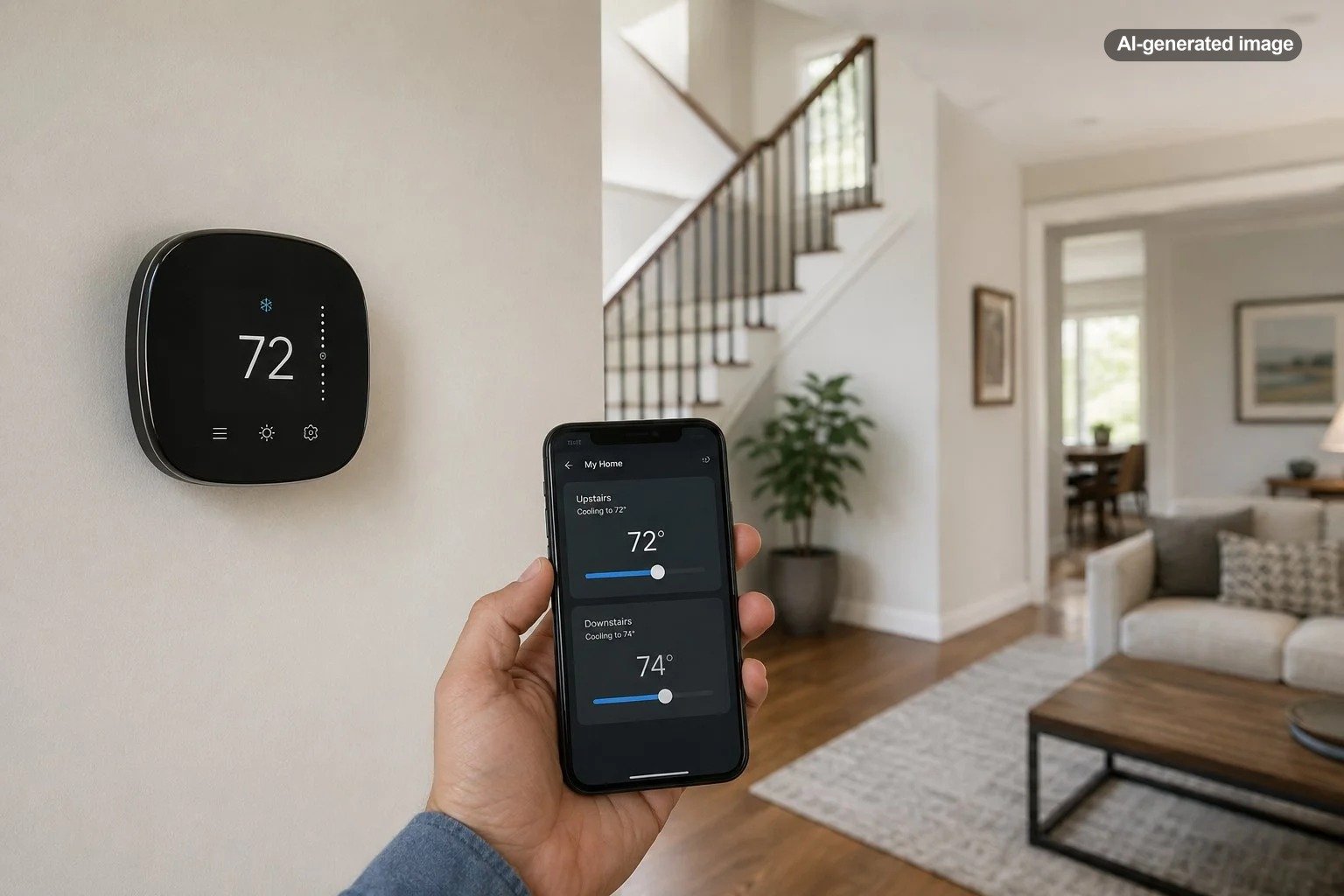
When compatibility is confirmed, each zone can generally have its own schedule and temperature setting. A homeowner might keep bedrooms cooler overnight, reduce conditioning in a little-used guest area, and bring the kitchen and living spaces to a comfortable setting before breakfast. The thermostats may appear together in one app, even though each device continues to manage its own zone.
Compatibility details that matter
The zone control panel
The panel is the traffic controller for a conventional zoned system. Some panels accept standard thermostat terminals such as R, C, W, Y, and G. Others are designed for proprietary thermostats or communicating equipment. A thermostat that works with an ordinary single-zone furnace is not necessarily compatible with every zoning panel.
Thermostat wiring
Smart thermostats need sufficient and correctly configured power. Some systems provide a C, or common, wire at every thermostat location; others do not. A zoned installation can also behave differently from a basic single-thermostat setup because power is routed through the zone panel. Manufacturer guidance should be checked for the exact thermostat model, panel, HVAC equipment, and wiring configuration.
Proprietary or communicating equipment
High-performance furnaces, variable-speed heat pumps, modulating equipment, and manufacturer-specific zoning systems may use digital communication rather than ordinary on-and-off thermostat calls. Replacing the original controller with a generic smart thermostat can disable equipment functions or may not work at all. ENERGY STAR advises buyers to verify compatibility and notes that some advanced HVAC equipment may be best paired with a controller from the same manufacturer.
Heating system type
Hydronic systems can also be zoned, but they may use valves, pumps, relays, radiators, or in-floor loops instead of air dampers. Ductless multi-zone systems often rely on manufacturer-specific wall controllers or remotes. The phrase works with HVAC is too broad to establish compatibility across these arrangements.
Using a Nest thermostat in a zoned home
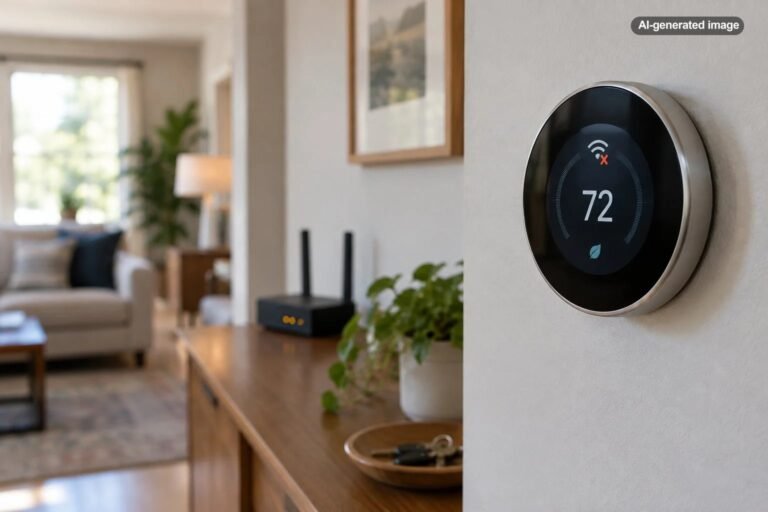
Google’s compatibility guidance says Nest thermostats are usually compatible with zoned systems that use multiple thermostats, but there are exceptions. Systems that require the thermostat itself to control dampers, use proprietary connections, or have unusual wire labels may need a different control strategy. Some installations may also require a C wire or Nest Power Connector.
Affiliate disclosure: CraneManor.com may earn a commission when you purchase through links on this page. This does not affect the price you pay. Learn more.
Homeowners considering a compatible smart thermostat such as the Google Nest Thermostat should use the manufacturer’s compatibility checker and verify every zone separately before purchasing. Compatibility should not be inferred from the presence of another Nest thermostat elsewhere in the house, because different zones can have different wiring or control requirements.
Multiple Nest thermostats in the same home can maintain separate schedules for their respective zones. They do not merge several independently controlled zones into one thermostat, and the underlying zoning hardware still determines how equipment and airflow are coordinated.
What to check before replacing any thermostat
Before you decide
- Count the existing thermostats and identify which rooms or areas each one controls.
- Determine whether the home has one zoned HVAC system, several separate systems, or ductless indoor units.
- Locate the zone control panel and record its manufacturer and model number.
- Photograph the existing thermostat terminals before disconnecting wires.
- Check whether each thermostat location has a C wire or another approved power solution.
- Confirm compatibility with heat-pump stages, auxiliary heat, humidifiers, dehumidifiers, ventilators, and other accessories.
- Find out whether the equipment uses standard low-voltage controls or a proprietary communicating controller.
- Review the thermostat manufacturer’s zoning guidance rather than relying only on a general compatibility list.
An HVAC technician is especially useful when the panel is difficult to identify, wires have been spliced or relabeled, multiple stages are involved, or the system uses variable-speed or communicating equipment. A technician can also verify that the zoning design includes appropriate airflow and pressure management when only one small zone is calling.
Common mistakes to avoid
Buying one thermostat for a multi-thermostat system
Unless the zoning system was specifically designed around one central controller, independent zones generally need independent inputs. Replacing three thermostats with one does not preserve three-zone control.
Confusing remote sensors with zoning
A remote sensor can help a thermostat make a better temperature decision. It does not necessarily control a separate damper, valve, indoor unit, or equipment system.
Replacing a communicating control without checking
A wall control that looks like a thermostat may also manage blower speed, compressor stages, humidity, diagnostics, and zoning communication. A generic replacement may sacrifice those functions even when basic heating and cooling can be made to operate.
Assuming every zone is wired the same way
One thermostat may have a common wire while another does not. One zone may control auxiliary heat or a separate piece of equipment. Inspect and document each location individually.
Is a smart zoning upgrade worth considering?
It can be worthwhile for households that want easier scheduling, remote adjustments, occupancy-based features, or a clearer view of separate zone settings. The strongest candidates already have a properly operating zoned system with compatible conventional controls.
A thermostat upgrade is less likely to solve complaints caused by undersized ducts, poorly placed thermostats, failed dampers, air leakage, inadequate returns, equipment sizing, or an improperly configured zone panel. If one floor is consistently uncomfortable, confirm that the mechanical zoning system works correctly before expecting software and scheduling features to correct it.
The practical conclusion is straightforward: a smart thermostat can work with multiple HVAC zones, but the usual design is one compatible thermostat per zone. The smartest next step is to identify the zoning architecture, verify the panel and wiring, and check the exact thermostat model against the entire system rather than the HVAC equipment alone.
Frequently asked questions
Do I need one smart thermostat for each zone?
In most conventional zoned systems, yes. Each independently controlled zone normally needs its own compatible thermostat or zone sensor designed for that specific control system.
Can several smart thermostats appear in one app?
Many smart-home platforms allow multiple thermostats in one home account. Each thermostat still controls its assigned zone or HVAC system and may retain a separate schedule.
Can smart sensors replace zone thermostats?
Only when the HVAC control system was designed to use those sensors for zoning. Ordinary remote room sensors generally influence one thermostat rather than independently controlling airflow to several zones.
Will a smart thermostat fix uneven temperatures?
It may improve scheduling and temperature sensing, but it will not repair failed dampers, duct problems, poor airflow, equipment faults, or an unsuitable zoning design.
Should a zoned thermostat installation be done professionally?
Professional evaluation is sensible when the system uses a zone panel, heat-pump staging, proprietary controls, multiple accessories, unusual wiring, or communicating equipment. It reduces the risk of losing important functions or configuring the system incorrectly.