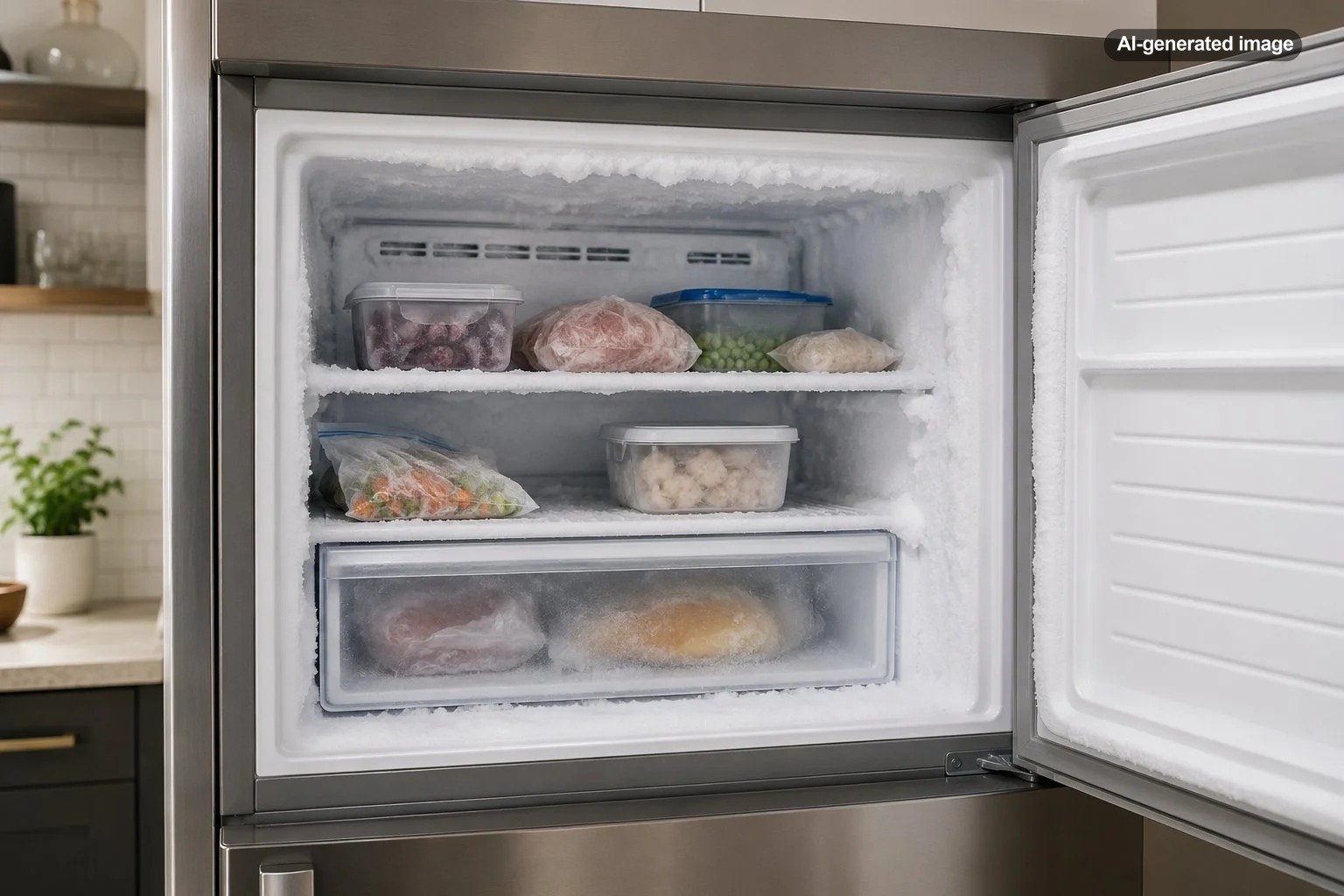
Why Does My Freezer Have Snow Inside It?
Snow inside a freezer is usually frost: moisture entered the compartment, touched a freezing surface, and turned into ice crystals. A light dusting after the door was left open is often temporary. Thick, recurring frost can point to a door that is not closing tightly, blocked airflow, warm food being added too soon, or a problem with the appliance’s automatic defrost system.
The location and texture of the frost offer useful clues. Soft crystals around the door suggest incoming humid air, while a dense sheet of ice across an interior rear panel may indicate a defrost or airflow problem.
How snow forms inside a freezer
Cold air itself does not create snow. The frost begins with water vapor. Each time the freezer opens, some warm household air enters. That air can hold more moisture than the freezer’s cold air, so its moisture condenses and freezes when it meets cold walls, shelves, packages, or evaporator surfaces.
Small amounts can appear after loading groceries, searching through an overfilled drawer, or opening the door repeatedly during meal preparation. Humid weather can make the effect more noticeable. A properly operating frost-free freezer should eventually manage ordinary moisture through its defrost cycle, but it cannot compensate indefinitely for a door that remains partly open.
The most likely causes, in practical order
1. The door was left open or did not close completely
A slightly open door is the most common place to begin. A pizza box, storage bin, ice tray, or loosely packed bag can project just far enough to prevent a complete seal. The interior light may turn off even though a narrow gap remains.
Look for frost concentrated near the opening or on packages closest to the door. Rearrange protruding items and close the door slowly while watching for resistance. On a chest freezer, verify that baskets and packages sit below the lid line.
2. The gasket is dirty, folded, cracked, or loose
The flexible gasket around the door should make even contact with the cabinet. Crumbs, sticky residue, torn material, or a warped section can create a path for humid air.
Clean the gasket and the surface it touches with warm water and mild dish soap, then dry both areas. Inspect the entire perimeter rather than checking only the most visible edge. You can also close the door on a strip of paper and gently pull. Some resistance should be present. Repeat the check in several locations, understanding that the appliance manual should remain the authority for model-specific testing and adjustment.
3. The freezer is packed in a way that blocks airflow
A full freezer can operate efficiently, but an overstuffed or poorly arranged one may block vents and prevent cold air from circulating. This can produce uneven temperatures, localized frost, and soft food in other areas.
Find the vents identified in the owner’s manual and leave space around them. Avoid pressing flexible bags directly against the rear interior wall. Bins can make food easier to retrieve, reducing the time the door stays open, but they should not obstruct air passages.
4. The freezer temperature is fluctuating
Frequent openings, a recent power interruption, a large load of unfrozen food, or a setting that was accidentally changed can cause temperature swings. Check the control setting and use an appliance thermometer if the displayed temperature seems questionable. FoodSafety.gov identifies 0 F or below as the standard freezer temperature for long-term frozen storage.
Do not immediately turn the control to its coldest setting merely because frost is present. Frost usually indicates moisture entry or a defrost issue, not simply that the setting is too warm. An extreme setting may make the compressor run longer without correcting the underlying cause.
5. The automatic defrost system may not be working correctly
Frost-free freezers periodically warm the evaporator area enough to melt routine frost. Depending on the model, this process involves components such as a heater, sensor, thermostat, timer, control board, and drain system. A failure can allow ice to accumulate behind or across an interior panel, eventually restricting airflow.
Clues include a solid layer of frost returning soon after a thorough defrost, cooling that becomes uneven, a fan that sounds as though it is striking ice, or a compressor that runs unusually often. These symptoms justify professional diagnosis. Internal electrical and refrigeration components are not sensible trial-and-error DIY projects.
What to do
- Check for packages, drawers, shelves, or baskets interfering with the door.
- Inspect and clean the entire gasket and its contact surface.
- Clear the air vents and create modest space between tightly packed items.
- Confirm the temperature with an appliance thermometer if necessary.
- Photograph the frost pattern before removing it; the location may help a technician identify the cause.
- Follow the owner’s manual for defrosting, cleaning, restarting, and food-handling instructions.
- Request service if heavy frost returns quickly or cooling remains inconsistent.
How to remove the frost without damaging the freezer
Consult the manual before beginning because procedures differ among upright, chest, and refrigerator-freezer models. Move food to another working freezer or an insulated cooler with an appropriate cold source. Unplug the appliance when the manufacturer directs you to do so, protect the surrounding floor, and allow the ice to soften naturally.
Never attack the frost with a knife, screwdriver, ice pick, or other sharp object. A punctured liner, refrigerant component, or concealed wire can turn a manageable frost problem into a costly and potentially hazardous failure. Avoid pouring boiling water onto cold plastic or glass, and do not use a heat gun or unattended hair dryer inside the compartment.
Once the ice has melted, wipe the interior dry, clean any accessible drain area according to the manual, restore power, and allow the freezer to return to its proper temperature before reloading food.
How to keep the snow from coming back
- Keep frequently used food near the front so the door can close sooner.
- Use containers that fit without pressing against the door or rear wall.
- Wipe gasket spills promptly and inspect the seal periodically.
- Close packages tightly to limit moisture loss and freezer burn.
- Cool prepared food appropriately before placing it in the freezer.
- Make sure the appliance is stable and installed according to its manual.
- After a power interruption or large grocery load, check that the door is fully closed.
The most useful question is not simply how to remove the snow, but how moisture keeps getting into the freezer.
Frequently asked questions
Is a little snow in the freezer normal?
A small amount after frequent opening, humid weather, or loading unfrozen food can be normal. It should not continually build into a thick layer in a frost-free appliance.
Does freezer snow mean my food is unsafe?
Not by itself. Frost affects food quality and may signal temperature fluctuation, but safety depends on how cold the food remained and for how long. Verify the temperature and use official food-safety guidance when food has partially or completely thawed.
Why is the snow mostly around the door?
That pattern commonly suggests warm, moist air entering near the opening. Check for an obstructing package, dirty gasket, damaged seal, door alignment issue, or an appliance that is not installed as directed.
Why is there a solid sheet of frost on the back wall?
A solid recurring sheet can be associated with restricted airflow or an automatic defrost problem. Clear any accessible vents, complete a manual-approved defrost, and seek service if the ice quickly returns.
Should I replace the freezer?
Not based on frost alone. A blocked door or dirty gasket may be easy to correct. Replacement becomes a broader decision when the appliance has recurring sealed-system or control failures, cannot hold temperature, needs an uneconomical repair, or no longer suits the household.