How Do You Clean Sliding Door Tracks Without Making Them Sticky?
Sliding door tracks collect an impressive amount of dirt in a remarkably small space. Dust, sand, pet hair, outdoor debris, and old cleaning residue can settle into the narrow channels until opening the door feels like dragging furniture across a gravel driveway. The good news is that cleaning the tracks does not require heavy-duty chemicals or a complicated collection of tools.
The best way to clean sliding door tracks without making them sticky is to vacuum away loose debris, loosen remaining grime with a soft brush, wipe the channels using a small amount of mild soapy water, remove all soap residue with a separate damp cloth, and dry everything thoroughly. Avoid coating the track with oil, grease, or household sprays. These can leave a film that attracts more dirt and may interfere with the door’s operation.
The important distinction is between cleaning a track and lubricating a door’s moving components. A clean track is often all that is needed. When lubrication is appropriate, the correct product and application point depend on the door manufacturer’s instructions.
Why Do Sliding Door Tracks Become Sticky?
Sliding glass doors operate close to the floor, where household dust and outdoor debris naturally accumulate. Their recessed tracks contain corners, channels, and narrow spaces that ordinary floor cleaning rarely reaches.
Each time the door opens, its movement can redistribute the debris. Small particles may collect along the rolling surface, while finer dirt becomes trapped in corners and around drainage openings.
Stickiness usually develops for one or more of the following reasons:
- Cleaning product residue: Soap, multipurpose cleaner, or other products can leave a tacky film when not thoroughly removed.
- Oil or grease: Some lubricants leave a coating that holds dust, pet hair, and grit.
- Spills: Sugary drinks, food residue, and tracked-in substances can create localized sticky patches.
- Moist dirt: Rainwater, condensation, and damp outdoor debris can combine with dust to form compacted grime.
- Worn components: A door that catches or drags may have roller or alignment problems that cleaning alone cannot correct.
A track can look dirty without actually being sticky. Conversely, a track that appears reasonably clean may contain a thin film of residue. That is why the cleaning process needs to address both visible debris and anything left behind on the surface.
What You Need to Clean Sliding Door Tracks
Most routine cleaning can be handled with familiar household supplies. Specialized cleaning equipment is rarely necessary.
- A vacuum with a crevice attachment
- A soft-bristled detailing brush or clean toothbrush
- Two or three microfiber cloths
- A small bowl of warm water
- A few drops of mild dish soap
- Cotton swabs for tight corners
- A soft plastic scraper for stubborn deposits, if compatible with the track finish
- A dry towel to protect the surrounding floor
Choose soft tools rather than abrasive pads or metal scraping implements. Painted aluminum, vinyl, and other finished surfaces may scratch or discolor when scrubbed aggressively.
Before using any cleaner, check the manufacturer’s care instructions if available. Different doors may have different track materials, coatings, drainage arrangements, and lubrication requirements.
How to Clean Sliding Door Tracks Step by Step
The order of cleaning matters. Removing loose material before introducing moisture prevents dust and sand from turning into a muddy paste that is harder to extract.
What to do
- Open the door and inspect the accessible track. Move the sliding panel only as far as needed to expose the area. Look for grit, hair, compacted dirt, damaged metal, and standing water. Avoid forcing a panel that is jammed.
- Vacuum thoroughly. Run a crevice attachment along the visible channels, corners, and edges. Move the door carefully to expose another section when needed. Keep the nozzle from striking delicate weatherstripping or drainage components.
- Brush away stubborn dry debris. Use a soft toothbrush or detailing brush to dislodge dirt from corners and around the raised rail. Vacuum again to collect loosened particles.
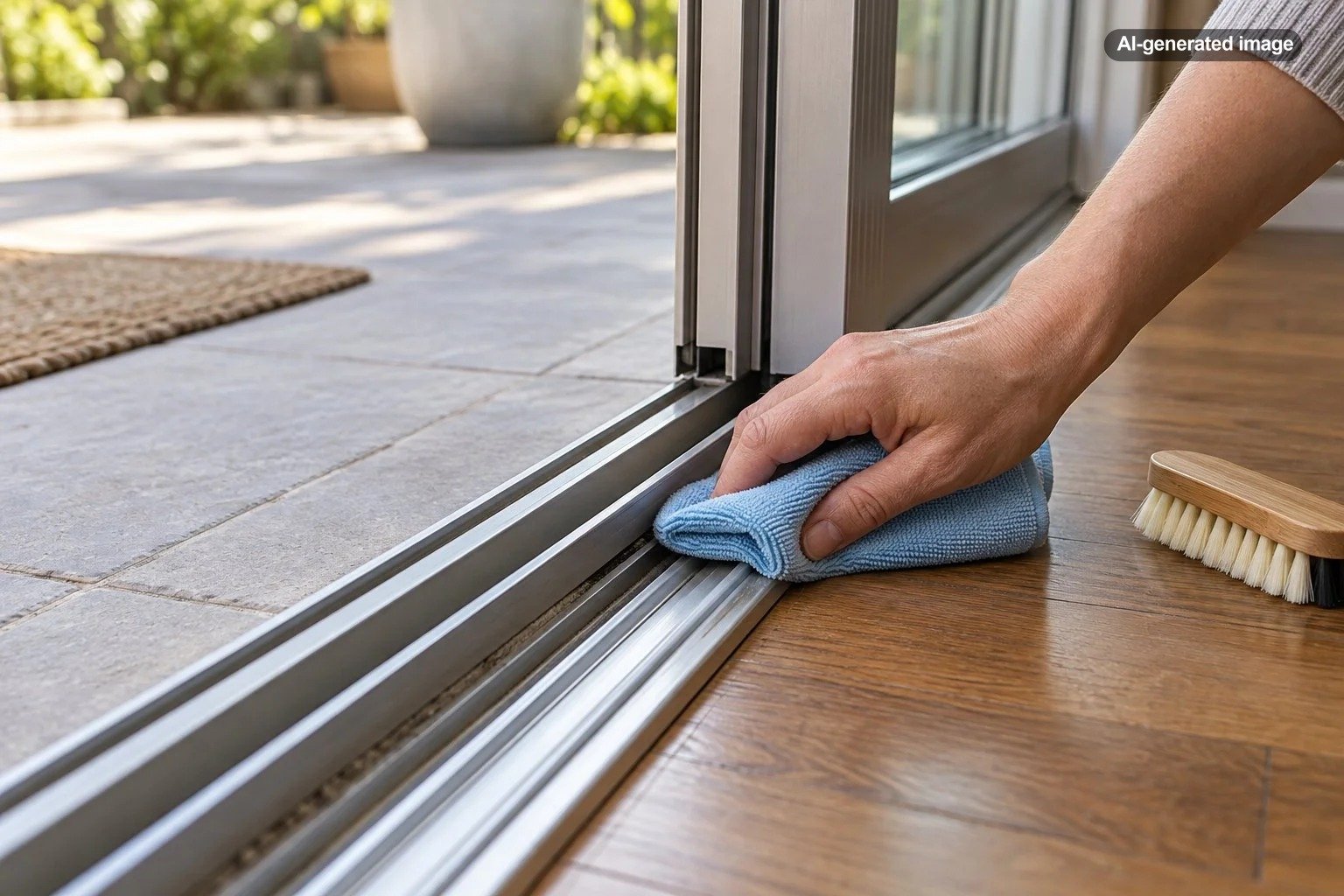
- Wipe with lightly soapy water. Add a few drops of mild dish soap to a small bowl of water. Dampen a microfiber cloth with the solution, wring it out, and wipe the dirty surfaces. Avoid pouring or spraying large amounts of liquid directly into the track.
- Lift compacted grime gently. For stubborn buildup, let a slightly damp cloth rest briefly against the deposit. Use the cloth, soft brush, or a suitable plastic tool to loosen it without gouging the surface.
- Remove the soap residue. Wipe the entire cleaned area with a different cloth dampened with plain water. Repeat with a freshly rinsed cloth if the surface still feels slippery or soapy.
- Dry the track completely. Use an absorbent microfiber cloth to remove moisture from rails, corners, and accessible recesses. Check that drainage openings remain unobstructed.
- Test the door. Slide the panel gently through its normal travel. If it moves smoothly, no additional treatment may be necessary. If it remains difficult to operate, investigate the rollers and hardware before applying lubricant.
A useful final check is to run a clean, dry cloth over the accessible track. It should not pick up obvious grime or encounter a tacky coating. A slight amount of remaining dirt is a reason to wipe again, not a reason to add more cleaner.
How to Remove Stubborn Sticky Residue
Some tracks need more attention than a routine wipe-down. The correct approach depends on what caused the residue and what material surrounds it.
Old soap or cleaning product buildup
Repeated applications of cleaning solution can create a film, particularly when the track is wiped without a final plain-water pass. Start by using a clean damp cloth rather than adding more soap. Change the cloth frequently so it does not simply spread the residue along the channel.
If a tacky film persists, repeat the damp wiping and drying process. Avoid layering additional products over the buildup.
Sticky food or drink spills
Use a cloth lightly dampened with warm water to soften the deposit. Work in small sections and lift the residue gradually. A little mild dish soap may help with greasy food residue, provided it is rinsed away afterward.
Do not flood the track, particularly near wooden trim, flooring transitions, or other moisture-sensitive materials.
Hardened dirt in the corners
For compacted material, alternate between gentle brushing and vacuuming. A damp cotton swab can reach areas that a full-size cloth misses. If using a plastic scraper, keep pressure light and avoid prying against track components.
Be especially careful around drainage slots and weatherstripping. These parts serve a functional purpose and should not be dislodged simply to make cleaning easier.
Should You Use Vinegar, Baking Soda, or Strong Cleaners?
Vinegar and baking soda appear frequently in household cleaning advice, but they are not essential for routine sliding door track maintenance.
Vinegar is acidic and may be unsuitable for certain metals, finishes, or neighboring materials. Baking soda can leave powdery residue in narrow channels, while its abrasive texture may be undesirable on some finished surfaces. Combining the two also produces bubbling that is not a substitute for removing dirt mechanically.
Bleach, concentrated degreasers, abrasive powders, steel wool, and harsh solvents introduce additional risks without offering a clear advantage for ordinary dust and grime.
For routine cleaning, mild soapy water followed by a thorough plain-water wipe is usually the simpler starting point. If a stubborn stain requires something stronger, consult the door manufacturer’s cleaning guidance and test an approved product in an inconspicuous area.
Should You Lubricate Sliding Door Tracks After Cleaning?
Not automatically. In fact, applying lubricant to the wrong surface can create the very problem the cleaning was supposed to solve.
A sliding patio door normally relies on rollers traveling along a track. Coating that rolling surface with oil or grease can attract debris and may change the intended relationship between the rollers and rail.
Manufacturers distinguish among the main patio door track, screen door tracks, rollers, locks, and other hardware. Some components may require a specified dry lubricant, while others should simply remain clean.
| Approach | When it may help | Important consideration |
|---|---|---|
| Clean, dry track | Routine dirt and most ordinary maintenance | Often sufficient without lubricant |
| Manufacturer-approved dry lubricant | Specified rollers or moving hardware | Apply only where the instructions direct |
| Oil or grease | Only where expressly required for a specific component | Can attract dirt and leave a sticky film |
| Household multipurpose spray | Not a default track treatment | Compatibility and residue depend on formulation |
For example, Andersen recommends dry lubricant for certain window and patio door hardware while cautioning against inappropriate oily products. Pella likewise emphasizes keeping sliding patio door tracks free from debris and following model-specific maintenance guidance.
Never assume that a lubricant advertised for sliding mechanisms is appropriate for every patio door. Check the exact model instructions before applying anything to rollers, rails, locks, or screen tracks.
Why Does the Door Still Stick After the Track Is Clean?
If the track is visibly clean and dry but the door remains difficult to move, the problem may be mechanical rather than cosmetic.
Dirty or worn rollers
Rollers support the weight of the moving panel. Dirt around their wheels, worn bearings, or damaged rollers can make a door feel rough even after the exposed track has been cleaned.
A grinding sound, uneven movement, or repeated resistance at the same point may suggest a roller problem. Cleaning the accessible track will not necessarily reach contamination hidden inside the roller assembly.
Incorrect roller adjustment
Some sliding patio doors have adjustable rollers that influence how the panel sits in its frame. If the adjustment is incorrect, the door may rub against the frame or drag along the bottom.
Adjustments should follow the specific manufacturer’s procedure. Randomly turning adjustment screws can make alignment worse.
Damaged or distorted rails
Inspect the track for visible dents, bends, raised edges, or areas of unusual wear. A damaged running surface may catch a roller regardless of how clean it becomes.
Weatherstripping or frame interference
Worn weatherstripping, misalignment, and frame movement can also increase friction. Pay attention to whether the door rubs in one location, becomes difficult to latch, or has uneven gaps around the panel.
How Often Should You Clean Sliding Door Tracks?
There is no single cleaning schedule that suits every home. A rarely used interior-facing sliding door may stay clean much longer than a patio entrance used repeatedly throughout the day.
Consider checking the tracks every few weeks in high-traffic areas. A quick vacuum during regular floor cleaning can prevent loose debris from building up. More thorough cleaning is appropriate whenever visible dirt accumulates or the door begins to feel gritty.
Households with pets may find that hair gathers quickly in recessed channels. Doors opening onto gardens, sandy yards, balconies, or coastal patios may collect more outdoor particles and require attention more frequently.
How to Keep Sliding Door Tracks Cleaner for Longer
Keeping dirt out of the track is easier than removing a heavily compacted buildup. The most effective preventive habits are simple.
- Vacuum before mopping: Remove loose particles near the threshold so a wet mop does not push dirty water into the door channel.
- Use doormats strategically: Mats on either side of a frequently used patio entrance can help reduce tracked-in grit, provided they do not obstruct the door.
- Keep nearby flooring clean: Dust and pet hair along the threshold can migrate into the track as people walk through.
- Address spills promptly: Clean small sticky deposits before they collect surrounding dirt.
- Check accessible drainage openings: Remove visible debris without damaging drainage components or pushing dirt into hidden passages.
- Avoid unnecessary sprays: Do not routinely coat the track with polish, oil, fragranced cleaner, or lubricant.
- Inspect movement occasionally: A change in how the door rolls can signal developing debris or hardware wear.
In humid or coastal environments, watch for repeated moisture accumulation and corrosion. Salt-bearing air and windblown sand can increase maintenance needs, but avoid using aggressive cleaning chemicals as a shortcut.
Common Sliding Door Track Cleaning Mistakes
Several well-intentioned habits can make the problem worse.
Spraying cleaner directly into the track
Flooding the channel with liquid may move dirt into inaccessible areas. It can also leave moisture around nearby trim or flooring. Apply cleaning solution to a cloth or brush instead whenever practical.
Using too much dish soap
Dish soap helps loosen grime, but a concentrated mixture is harder to remove. Begin with a few drops diluted in water and use a separate clean cloth to take away the remaining solution.
Scrubbing with metal tools
Steel brushes, utility blades, and metal screwdrivers can damage the surface of the rail or surrounding finishes. A scratch or raised edge may create a new point of friction.
Applying lubricant before removing debris
Adding lubricant over accumulated grit can create a dirty film rather than improve movement. Clean and inspect first, then follow model-specific lubrication instructions only if needed.
Forgetting to dry the corners
Water can linger in recessed areas even when the raised rail looks dry. Use a fresh absorbent cloth and inspect the low spots before finishing.
Frequently Asked Questions
Can you clean sliding door tracks with just water?
Yes. For light dust and minor residue, vacuuming followed by wiping with a slightly damp microfiber cloth may be enough. Mild soap is most useful when the dirt contains grease or another stubborn film.
What is the best way to clean narrow sliding door grooves?
Use a vacuum crevice attachment first, followed by a soft toothbrush or detailing brush. Cotton swabs and a microfiber cloth wrapped around a suitable blunt plastic tool can help reach corners. Avoid sharp metal implements.
Can you use WD-40 on a sliding patio door track?
Do not apply a general-purpose spray to the track simply because the door is hard to move. The exact product formulation matters, and many tracks should remain clean rather than coated. Consult the door manufacturer’s recommendations for the appropriate lubricant and application point.
Why does my sliding door track feel sticky after cleaning?
The most likely explanation is remaining soap, cleaner, or oily residue. Wipe the area with a clean cloth lightly dampened with plain water, then dry it thoroughly. If the track feels clean but the panel still catches, inspect for mechanical problems rather than repeatedly adding cleaning products.
Do you need to remove the sliding glass door to clean the tracks?
Usually not for routine cleaning. Moving the door along its normal path exposes much of the accessible track. Removing the glass panel can be hazardous because of its weight and hardware arrangement. Deep internal cleaning or repairs that require panel removal should follow the manufacturer’s instructions and may warrant professional assistance.
The Bottom Line
Cleaning sliding door tracks is less about finding a powerful cleaner and more about removing dirt without leaving anything behind. Vacuum first, brush out compacted debris, use a small amount of mild soapy water when necessary, wipe away the solution thoroughly, and finish with a dry cloth.
Resist the temptation to solve every stubborn sliding door with a generous spray of lubricant. A clean track, functioning rollers, and proper alignment matter far more than a freshly coated rail. When the door continues to drag after cleaning, it is time to investigate the mechanism rather than keep scrubbing.
The simplest routine is also the most sustainable: remove loose dirt regularly, clean residue only when it appears, and let the manufacturer’s maintenance guidance determine whether any component needs lubrication.