Why Do My Towels Feel Rough After Washing?
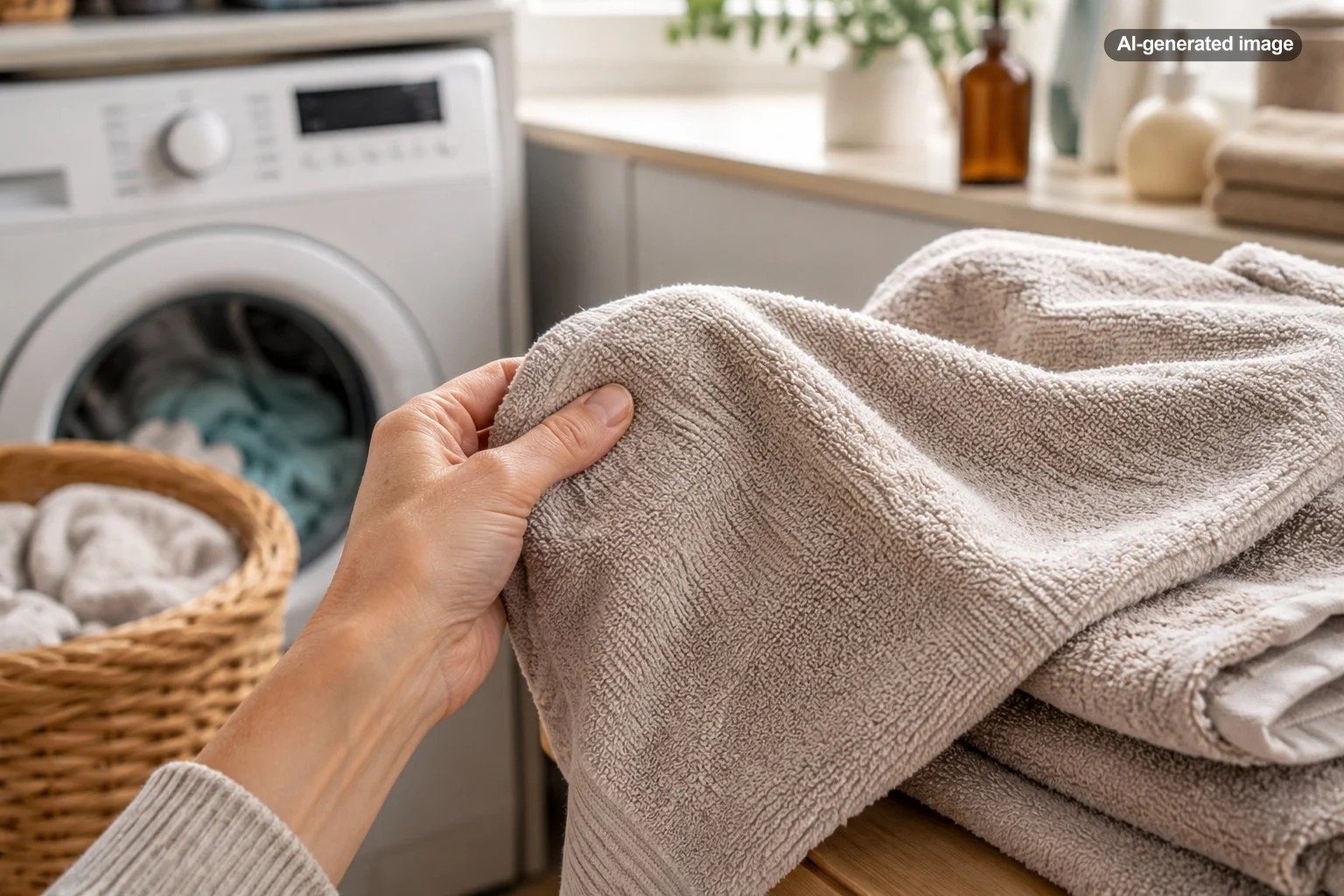
Your towels probably feel rough after washing because detergent, minerals, or laundry additives have collected around the fibers, or because heat and over-drying have made the loops stiff. The good news is that scratchy towels are usually a laundry-routine problem rather than a sign that the towels are ruined.
Cotton towels feel soft when their tiny loops can move freely and hold a little air between them. Too much product, crowded wash loads, hard water, and aggressive drying can flatten or coat those loops. Fixing the cause is usually more effective than adding another strongly scented product to the next load.
The most common reason: too much detergent
It is easy to assume that bulky, absorbent towels need an extra-generous dose of detergent. In practice, more detergent does not automatically produce cleaner towels. A concentrated formula can leave residue when the dose is too large for the load size, washer type, soil level, or water conditions.
Towels are especially good at holding onto suds. When the rinse cycle cannot remove everything, detergent dries around the cotton fibers. The towel may then feel rigid, waxy, crunchy, or less absorbent. You might also notice that it takes longer to rinse clean when wet.
Measure detergent according to the product label and your washer instructions rather than filling the cap by eye. For lightly soiled towels, the appropriate amount may be smaller than expected. High-efficiency machines require detergent formulated for low-water washing, and using a conventional formula can create excessive suds.
Fabric softener can create its own kind of buildup
Fabric softener is designed to reduce friction and make fibers feel smoother, but repeated heavy use can leave a coating behind. Dryer sheets can also transfer conditioning agents to fabric during drying. Used as directed, these products may be compatible with many towels, but more is not better.
If your towels feel slick when wet, seem less absorbent, or have developed a heavy fragrance that survives several washes, temporarily skip softener and dryer sheets. Wash the towels with a carefully measured dose of detergent and select an extra rinse if your machine offers one.
Hard water may be leaving minerals in the fabric
Hard water contains dissolved minerals, commonly including calcium and magnesium. These minerals can interfere with laundry products and contribute to residue on fabric. Towels washed repeatedly in hard water may feel stiff even when you are not obviously overusing detergent.
Clues include white deposits around faucets, cloudy marks on glassware, mineral scale on shower fixtures, or a generally chalky feel across several types of laundry. Your local water utility may publish information about water hardness, and home test strips can provide a basic indication.
Do not respond automatically by pouring in far more detergent. Follow the detergent maker’s hard-water guidance and your appliance manual. Depending on your water and washer, a compatible laundry water-softening product or a whole-home treatment system may be worth considering. Avoid combining unfamiliar additives without checking their labels.
An overloaded washer cannot rinse towels properly
A drum packed tightly with bath sheets may technically complete a cycle, but the towels need room to lift, tumble, and release soil. When they are compressed into a dense bundle, water and detergent cannot circulate evenly. Rinsing also becomes less effective.
Wash towels in a load size that allows movement. Large bath sheets may require a smaller batch than hand towels or washcloths. Mixing towels with lightweight clothing can also produce uneven washing and drying because the items hold very different amounts of water.
A separate towel load is often the simplest approach. It also reduces the transfer of lint onto garments that readily attract it.
Your wash temperature or cycle may not suit the towels
Water that is too cool for the detergent and soil conditions can make residue harder to remove. However, the hottest possible setting is not automatically correct either. Excess heat may fade colors, stress decorative trim, or conflict with the care instructions.
Check the label and select the warmest suitable temperature. A normal or towel-specific cycle generally provides more useful agitation and rinsing than a delicate cycle. If the towels are only mildly used, there is rarely a need to combine every available heavy-duty option.
New towels deserve special attention. Some arrive with manufacturing finishes that affect absorbency and texture. Washing them before use according to the label helps remove loose fibers and surface finishes.
Over-drying can make fibers feel brittle
A dryer can create the fluffy texture many people expect from bath towels because tumbling separates the loops. Yet leaving towels in high heat long after their moisture is gone can make the fibers feel parched and harsh. Repeated over-drying may also increase wear along hems and edges.
Choose a medium or label-approved setting and remove the load when it is dry rather than continuing the cycle for insurance. Sensor drying can help, provided the sensor is clean and functioning properly. Shake each towel before placing it in the dryer and again when folding to loosen compressed loops.
Line-dried towels often feel firmer because they dry without tumbling. That does not necessarily mean they are dirty or damaged. A brief, label-approved tumble before or after line drying can soften the texture.
Soft towels come from clean, flexible fibers, not from the largest possible dose of laundry products.
How to reset towels that already feel rough
A simple corrective wash can remove mild buildup. Always read the towel label, detergent instructions, washer manual, and additive labels before changing your routine.
What to do
- Wash the towels separately in a comfortably sized load.
- Use a modest, correctly measured amount of detergent.
- Skip fabric softener, scent beads, and dryer sheets for this load.
- Select the warmest water and normal cycle permitted by the care label.
- Add an extra rinse if the towels have been heavily treated with laundry products.
- Dry on an appropriate setting and remove the towels promptly when dry.
If one wash does not solve the problem, repeat the simplified routine rather than creating a chemistry experiment in the drum. Popular household advice sometimes recommends combining vinegar, baking soda, bleach, detergent, and other products. Do not mix cleaning agents casually. Certain combinations can be ineffective, damage materials, or create hazardous fumes.
When the towel itself is the limiting factor
Laundry changes cannot fully reverse ordinary wear. Over time, cotton loops can break, flatten, or become permanently compacted. Towels that have been washed for years may feel thinner and less plush because some of the pile is simply gone.
Construction matters too. A dense hotel-style towel, a lightweight quick-drying towel, and a decorative towel with blended fibers will not feel identical. Some become softer with several washes, while others prioritize fast drying, low bulk, or durability over a cloudlike hand.
Inspect the surface in good light. If the loops are still abundant but feel coated, laundering changes may help considerably. If much of the pile is worn flat and the edges are fraying, replacement may be more realistic.
A simpler routine for consistently softer towels
Before your next towel load
- Read the care labels and separate incompatible colors or materials.
- Leave enough drum space for the towels to move.
- Measure concentrated detergent precisely.
- Use softener only as directed rather than in every load by habit.
- Choose a suitable cycle and consider an extra rinse for persistent residue.
- Clean washer dispensers and maintain the dryer according to the appliance manuals.
- Avoid prolonged high-heat drying.
Once the towels feel normal again, keep the routine restrained. A reasonable load size, the correct amount of detergent, effective rinsing, and timely drying will do more for long-term softness than a crowded shelf of laundry boosters.
Frequently asked questions
Does using more detergent make towels softer?
No. Excess detergent is one of the most common reasons towels feel stiff because residue can remain around the fibers. Use the dose recommended for your load, washer, and water conditions.
Why are my towels soft before washing but rough afterward?
The wash may be depositing residue, failing to rinse completely, or compressing the fibers in an overloaded drum. Over-drying can then make the effect more noticeable.
Are air-dried towels supposed to feel stiff?
They often feel firmer because they have not been tumbled. Shaking them before hanging and briefly tumbling them on a care-label-approved setting can improve the texture.
Should I replace rough towels?
Try a simplified wash and rinse routine first. Replace them when the pile is permanently flattened, the fabric has become thin, or the hems and loops are extensively worn.