Can You Use Indoor Furniture on a Covered Patio?
Yes, you can use some indoor furniture on a covered patio, but a roof alone does not make the space equivalent to an indoor room. Humidity, wind-driven rain, condensation, sunlight, insects, and temperature changes can still damage upholstery, wood, adhesives, metal hardware, and finishes.
The safest candidates are sturdy pieces made from solid wood, metal, woven materials, or easily replaceable textiles. Delicate antiques, particleboard furniture, down-filled upholstery, fine veneers, and pieces with sentimental value are usually better kept inside.
A Covered Patio Is Still an Outdoor Environment
A covered patio may block direct rain and reduce intense midday sun, but it does not control the surrounding air. Outdoor humidity can move into cushions and wood even when the floor appears dry. Morning condensation may form on cool surfaces, while wind can carry mist and rain beneath roof overhangs.
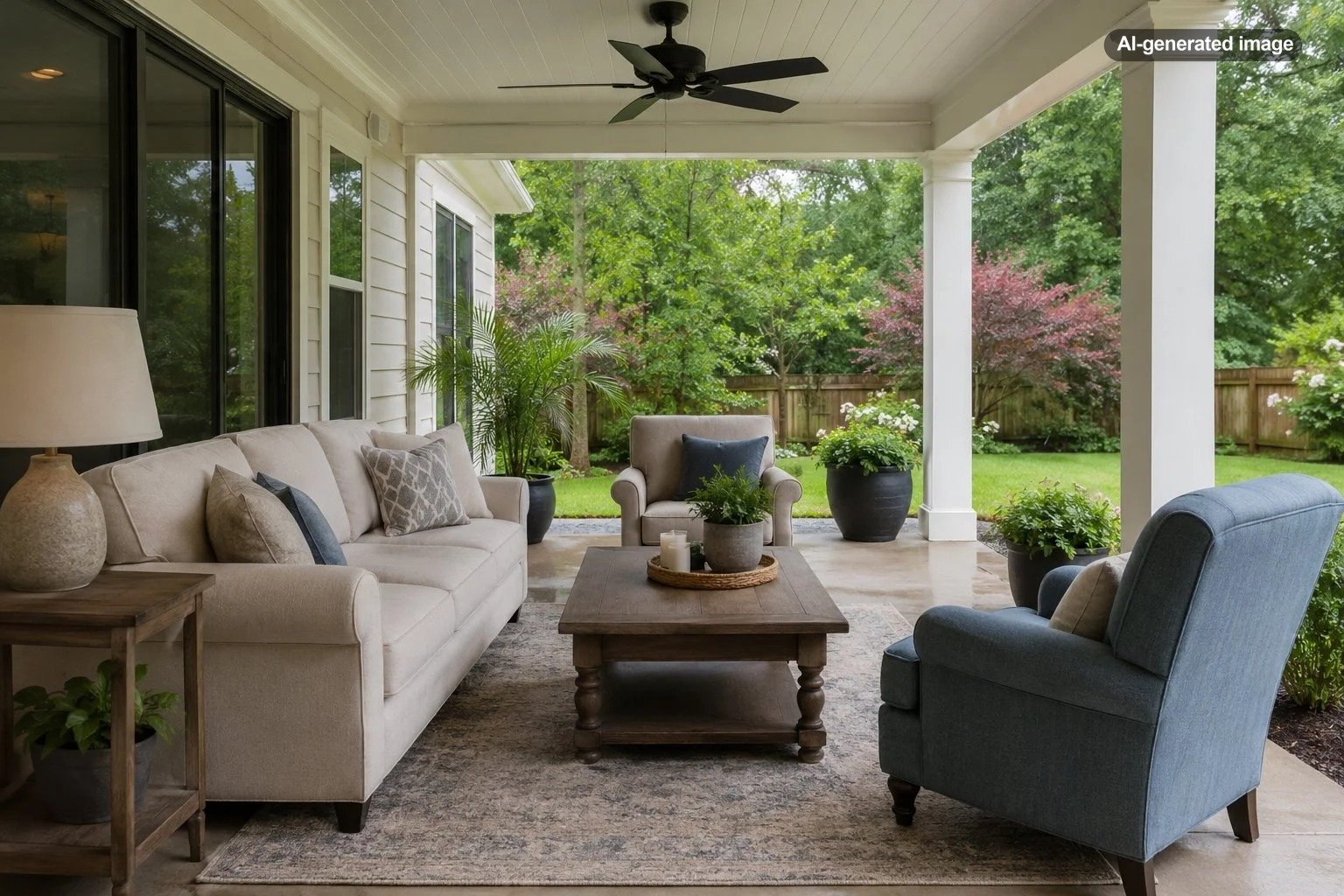
The amount of protection varies significantly. A deep porch with three enclosed sides behaves differently from a shallow roof over an open slab. Screened patios reduce debris and insects but do not stop moisture. Retractable curtains or shutters may improve protection during storms, although they still do not create climate-controlled conditions.
A patio roof protects furniture from some weather, not from the outdoor environment itself.
Which Indoor Furniture Materials Hold Up Best?
The material matters more than the label. Some furniture sold for indoor use is physically robust enough for a sheltered outdoor area, while other pieces can swell, fade, rust, or mildew after a short period of exposure.
| Material | Patio suitability | Main concern |
|---|---|---|
| Solid hardwood | Possible in a dry, protected area | Movement, fading, finish failure, and water staining |
| Painted metal | Often workable if the coating is intact | Rust at scratches, joints, and fasteners |
| Natural wicker or rattan | Best on very sheltered porches | Moisture, brittleness, mildew, and fading |
| Upholstered seating | High maintenance | Moisture inside foam, fabric fading, odors, and mildew |
| Veneer or particleboard | Poor choice | Swelling, delamination, and crumbling edges |
| Leather | Poor choice | Drying, fading, staining, and moisture damage |
Solid wood can work, with limits
A solid wood table, bench, or chair may perform reasonably well on a deeply covered patio, especially when it has a durable finish and does not sit where rain can reach it. However, wood expands and contracts as humidity changes. Joints may loosen, drawers may stick, and the finish can become cloudy, cracked, or uneven.
Inspect the underside, legs, joints, and any unfinished edges. Those areas often absorb moisture before the visible top shows damage. Elevating furniture slightly above a damp slab can also reduce prolonged contact with moisture.
Upholstery is the riskiest category
An indoor sofa or cushioned chair may look inviting outdoors, but its internal construction is usually the problem. Indoor foam and batting can hold moisture for a long time, particularly in humid climates. A cushion that feels dry on the surface may still be damp inside.
Removable cushions are easier to manage because they can be stored indoors when the patio is not in use. Loose, washable covers are also more practical than fixed upholstery. Even then, indoor fabric may fade rapidly when exposed to reflected or indirect sunlight.
Engineered wood is rarely worth the gamble
Particleboard, fiberboard, and thin veneer furniture can be damaged by surprisingly small amounts of moisture. Once edges swell or layers separate, repair is difficult and usually visible. These materials may survive temporarily in an exceptionally dry enclosed porch, but they are poor choices for a typical open patio.
How Protected Is Your Patio?
Before moving furniture outside, evaluate the patio during ordinary rain, a windy storm, a humid morning, and the sunniest part of the day. A space can seem protected during calm weather yet become wet several feet inside the roofline when wind changes direction.
Before you decide
- Check whether the floor becomes damp after rain.
- Notice how far wind-driven rain reaches under the roof.
- Track direct and reflected sunlight throughout the day.
- Look for condensation on tables, railings, or windows.
- Consider whether cushions can be carried inside easily.
- Check for roof leaks, clogged gutters, and splashback near the furniture area.
- Decide whether the piece can be replaced without regret.
Climate also changes the equation. In a dry region, a covered patio may be relatively forgiving. In Florida, along the coast, or anywhere with long humid seasons, moisture exposure is more persistent. Salt air can also accelerate corrosion on metal fasteners, springs, staples, and decorative hardware.
How to Protect Indoor Furniture Outdoors
If you decide to use an indoor piece, protection should focus on keeping moisture out, allowing trapped moisture to escape, and limiting unnecessary sun exposure. Simply wrapping furniture in plastic can make matters worse if condensation becomes trapped underneath.
What to do
- Clean the furniture first. Dust, food residue, and body oils can attract pests and encourage staining or odors.
- Repair damaged finishes. Touch up chipped paint, exposed wood, and rust spots before outdoor exposure.
- Protect vulnerable surfaces. Use an appropriate finish or coating only after confirming that it is compatible with the existing material and finish.
- Keep pieces away from the patio edge. More distance from open sides generally means less rain and direct sunlight.
- Create airflow. Avoid pressing furniture tightly against exterior walls, and do not trap damp cushions inside airtight storage.
- Store soft items indoors. Bring cushions, throws, and pillows inside during storms, extended absences, and humid off-seasons.
- Inspect regularly. Look beneath cushions and furniture for dampness, mildew, rust, insects, loose joints, and swelling.
Furniture covers can reduce routine dirt, sunlight, and incidental moisture, but they must fit properly and allow ventilation. Remove a cover periodically so the furniture and the area beneath it can dry. Covers should not be treated as permission to leave delicate furniture exposed through severe weather.
Common Mistakes That Shorten Furniture Life
One common mistake is assuming that no visible rain means no moisture exposure. Humid air, condensation, wet footwear, splashing, and damp concrete can all affect furniture over time.
Another is placing indoor furniture directly against a stucco wall, railing, planter, or screen where moisture and debris collect. Leaving a small air gap makes inspection and cleaning easier. It also reduces the chance that a hidden damp area will remain unnoticed.
Indoor rugs can create similar trouble. A rug that retains water may keep furniture legs damp and stain the patio surface. If a rug is used beneath repurposed furniture, choose one designed for outdoor conditions and lift it occasionally to check whether the floor is drying.
When Indoor Furniture Makes Sense on a Patio
Using indoor furniture outdoors can be sensible when you already own a sturdy, low-value piece and want to extend its useful life. A painted side table, simple wood bench, metal cabinet, or older dining set may be a reasonable experiment in a well-sheltered location.
It also works well for short-term entertaining. Indoor chairs can be brought onto a patio for dinner and returned inside afterward. That provides the look and comfort you want without committing the furniture to permanent outdoor exposure.
Repurposed indoor furniture is less suitable when you need low-maintenance seating that can remain outside year-round. In that case, furniture made with outdoor-rated frames, fabrics, cushion materials, and finishes is generally the more practical choice.
Furniture That Should Usually Stay Indoors
Some pieces are simply too vulnerable or valuable to justify the risk. Keep antiques, heirlooms, fine veneers, leather seating, musical instruments, upholstered beds, delicate decorative screens, and furniture with complex glued joints inside.
Furniture with electrical components should also remain in an appropriate dry indoor setting unless the entire product is specifically designed and listed for its intended outdoor use. A covered roof does not automatically make indoor electrical furniture or accessories suitable for a patio.
Frequently Asked Questions
Will indoor furniture last on a screened porch?
It may last longer than it would on an open patio, but screens do not block humidity, condensation, or all wind-driven rain. Solid wood and metal pieces usually have better odds than upholstered or engineered-wood furniture.
Can I waterproof an indoor sofa for outdoor use?
A surface treatment may improve resistance to small spills or light moisture, but it does not convert indoor foam, batting, fabric, adhesives, springs, or framing into outdoor-rated components. An indoor sofa remains a high-maintenance choice.
Should patio furniture covers touch the ground?
A cover should shield the furniture without creating a sealed pocket that traps moisture. Follow the cover manufacturer’s fit and ventilation guidance, secure it against wind, and inspect beneath it regularly.
Can I leave indoor furniture outside all winter?
That is usually unwise. Repeated moisture exposure, freezing and thawing, temperature swings, and long periods without inspection can cause damage. Store vulnerable furniture in a dry indoor location when the patio is not being used.
Is outdoor furniture always waterproof?
No. Outdoor furniture is generally designed to tolerate exposure better than indoor furniture, but many materials still require drainage, cleaning, covers, cushion storage, or seasonal maintenance. Weather-resistant does not mean maintenance-free.
The Bottom Line
Indoor furniture can be used on a covered patio when the patio is genuinely sheltered and the piece is sturdy, replaceable, and easy to monitor. Solid wood, painted metal, and simple woven furniture are usually better candidates than upholstered seating, leather, veneer, or particleboard.
Think of the arrangement as a calculated tradeoff rather than a permanent conversion. The furniture may look better and feel more comfortable than typical patio pieces, but it will probably require more attention and may have a shorter life. For valuable furniture or year-round convenience, outdoor-rated construction is the safer long-term choice.