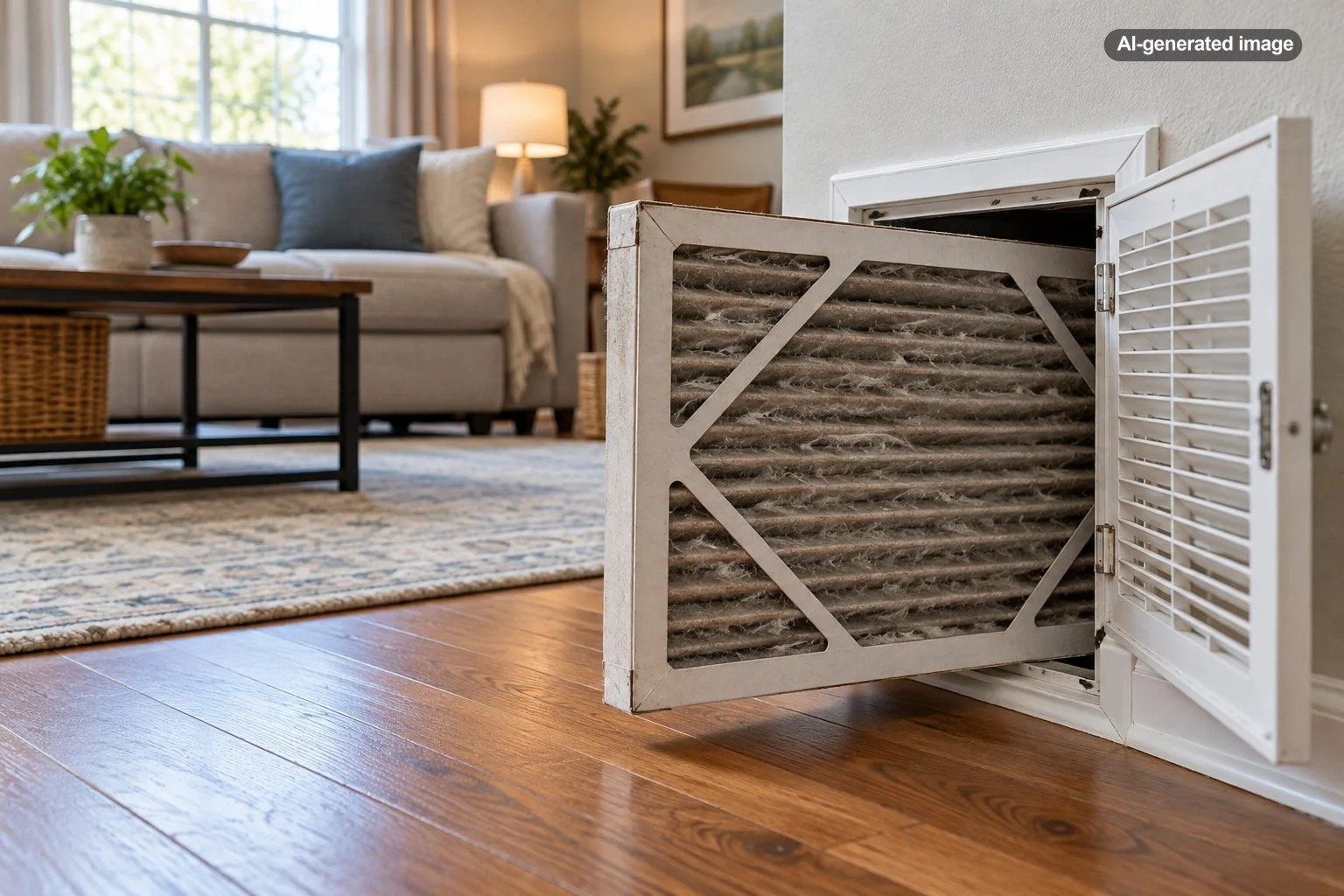
Can a Dirty Air Filter Make a Room Smell Stale?
Yes, a dirty air filter can contribute to a room smelling stale, although the filter itself is not always the source of the odor. A clogged HVAC filter can restrict airflow, reduce the system’s ability to circulate air effectively, and allow ordinary household odors to become more noticeable. If the filter or nearby equipment has been exposed to moisture, there may also be a more direct odor problem.
The important distinction is that a dirty filter and a stale-smelling room can be related without having the same underlying cause. Replacing a neglected filter is a sensible first step, but it will not necessarily remove odors coming from damp carpeting, upholstery, cooking, pets, or hidden moisture.
Why a Dirty Air Filter Can Make a Room Feel Stale
Most residential heating and cooling systems circulate indoor air through a return, pass it through a filter, condition it, and distribute it through supply vents. The filter’s primary job is to capture airborne particles and help protect the equipment. Depending on its efficiency, it may also remove some particles that would otherwise continue circulating through the house.
As dust and debris accumulate, the filter becomes more resistant to airflow. The U.S. Department of Energy explains that a clogged filter can significantly reduce airflow and place additional demands on HVAC equipment.
That restriction can change how effectively conditioned air reaches different rooms. A bedroom with limited airflow may feel stuffier than the hallway, particularly when the door is closed and the room already has limited ventilation.
However, air circulation and fresh-air ventilation are not the same thing. Many residential HVAC systems primarily recirculate indoor air. Even with a perfectly clean filter, a home can develop lingering odors if insufficient outdoor air enters or an odor source remains untreated.
Dust and accumulated household debris
A heavily loaded filter may contain household dust, lint, pollen, pet dander, and other captured particles. These materials do not automatically create a noticeable smell, but a neglected filter can be a clue that other parts of the system need attention.
If the filter has an unusual odor when removed, that observation is worth investigating. A dry, dusty smell is different from a distinctly damp or musty smell, which may suggest moisture in the filter area or surrounding equipment.
Reduced circulation and lingering odors
Imagine a small bedroom where the door stays closed, laundry occasionally sits in a hamper, and the supply airflow is weak. A dirty filter could worsen circulation, but the room’s odor may still originate from textiles, furniture, or inadequate ventilation.
This is why changing the filter sometimes makes the room feel fresher without entirely solving the smell. The maintenance issue improves, while the original source may remain.
What Different Room Odors May Be Telling You
Before assuming the HVAC filter is responsible, identify what the room actually smells like. Different odors suggest different places to investigate.
| Odor | Possible explanation | Where to check first |
|---|---|---|
| Stuffy or stale | Limited ventilation, weak airflow, or lingering household odors | Filter, supply vents, return airflow, and room ventilation |
| Dry and dusty | Accumulated household dust or disturbed debris | Filter, accessible vent surfaces, and room cleaning |
| Damp or musty | Moisture in materials or possible microbial growth | Leaks, condensation, carpeting, and HVAC moisture areas |
| Sour or unpleasant | Trash, damp textiles, spills, or other localized sources | Hamper, upholstery, rugs, and waste containers |
| Burning or electrical | Possible overheating or equipment malfunction | Stop using affected equipment and seek professional evaluation |
These descriptions are clues, not a definitive diagnosis. Odors can overlap, and a home’s airflow patterns may carry a smell far from its actual source.
How to Check Whether the Air Filter Is Contributing
You can perform several basic checks without opening sealed HVAC compartments or attempting mechanical repairs.
A practical troubleshooting sequence
- Notice when the smell appears. Is it strongest when the heating or cooling system starts, after the room has been closed, or throughout the day? Record whether the odor occurs in one room or several.
- Locate the filter. Follow your system’s instructions to find the accessible filter at the return grille or air handler. Some homes have more than one filter location.
- Turn the system off before handling the filter. Follow the manufacturer’s replacement procedure and avoid disturbing electrical components or accessing restricted equipment areas.
- Inspect the filter. Look for heavy dust accumulation, damage, dampness, or unusual discoloration. Visible debris is a reason to check replacement guidance, but appearance alone does not measure filtration performance.
- Install the correct replacement. Match the specified dimensions and compatible filter type. Follow the airflow-direction marking and ensure the filter fits properly.
- Observe the room afterward. Once the system is operating normally, notice whether airflow and odor improve. If the smell persists, expand the investigation rather than repeatedly changing filters.
If the filter is washable, follow its specific cleaning and drying instructions. Never wash a disposable filter unless its manufacturer explicitly allows it. A reusable filter must be fully dry before reinstallation.
Do not operate the system without its required filter as an ongoing workaround. If airflow remains unusually weak after replacing the filter, a qualified HVAC technician can evaluate the system.
Why a New Air Filter May Not Remove the Smell
One common misconception is that a fresh HVAC filter should eliminate unpleasant household odors. Most standard particle filters are not designed to remove gaseous odor compounds effectively.
The Environmental Protection Agency distinguishes particle filtration from technologies intended to capture certain gases. Some air-cleaning products contain activated carbon or other specialized media, but their effectiveness depends on the pollutant, design, quantity of media, and maintenance.
A clean filter can therefore improve particulate filtration and system airflow without neutralizing odors from cooking, fragrances, cleaning products, or damp materials.
When the smell comes from the room itself
Soft furnishings can absorb and retain odors. Curtains, rugs, upholstered furniture, bedding, and even decorative pillows may hold onto cooking smells, pet odors, or the scent of dampness long after the original exposure.
Trash containers, laundry hampers, neglected spills, and poorly ventilated closets are other possible sources. A room can smell stale even when every HVAC component is working correctly.
Begin with basic cleaning: remove waste, wash appropriate textiles, vacuum accessible surfaces, and check for hidden dampness. Avoid soaking upholstered furniture or carpets without considering drying time and care instructions.
When moisture is the real problem
A persistent musty smell deserves more attention than an ordinary closed-room odor. Moisture may collect around leaks, condensation-prone surfaces, damp flooring, or HVAC components such as cooling coils and condensate pans.
EPA guidance emphasizes that mold problems cannot be solved through filtration alone. Moisture sources must be corrected, and affected materials must be evaluated and cleaned or replaced as appropriate.
Check for water stains, condensation, soft or damp materials, and recurring wet spots. Where moisture is concealed or the problem is extensive, professional assessment is more appropriate than attempting to mask the odor.
How Often Should You Replace an HVAC Filter?
There is no single replacement schedule that suits every home and every filter. The proper interval depends on the manufacturer’s instructions, filter design, system usage, indoor dust conditions, and other household factors.
Many disposable filters require regular inspection and replacement, while thicker media filters and washable designs may have different maintenance requirements. The schedule printed on your particular filter or specified in the HVAC equipment documentation is the appropriate starting point.
Consider checking more frequently when the system operates heavily, the home is undergoing dusty renovations, or pets and other activities increase airborne debris.
A calendar reminder is useful, but inspection and manufacturer guidance should determine whether a filter actually needs replacement.
It is also worth keeping the filter access area unobstructed. A filter that is difficult to reach is more likely to be overlooked during ordinary maintenance.
How to Keep a Room Smelling Fresh Without Masking Problems
The most reliable strategy combines filter maintenance, source control, appropriate ventilation, and moisture management. Air fresheners may temporarily change how a room smells, but they cannot correct restricted airflow or hidden water damage.
A simple freshness checklist
- Inspect and maintain HVAC filters according to manufacturer instructions.
- Keep supply and return grilles unobstructed by furniture, rugs, and stored items.
- Ventilate with outdoor air when weather and outdoor air quality permit.
- Use bathroom and kitchen exhaust fans that vent outdoors when needed.
- Wash bedding and other odor-holding textiles regularly.
- Remove trash and damp laundry before odors accumulate.
- Investigate condensation, leaks, and persistent mustiness promptly.
- Arrange HVAC maintenance when airflow or equipment performance remains abnormal.
For humidity management, the EPA generally recommends keeping indoor relative humidity below 60%, ideally between 30% and 50%. A basic hygrometer can help identify whether a room is consistently too humid, although humidity readings alone cannot reveal the source of an odor.
In humid climates, including many Florida homes, moisture control may be especially important. Opening windows during very humid weather is not always helpful; appropriate air conditioning, dehumidification, and exhaust ventilation may be better choices depending on outdoor conditions.
Does the Type of Air Filter Matter?
Yes, but primarily for particle removal and airflow compatibility rather than ordinary smell control.
Fiberglass, pleated, high-efficiency media, and specialty filters differ in construction and performance. Higher-efficiency filters can capture a greater range of airborne particles, but they must be suitable for the system’s design.
If you are considering upgrading filter efficiency, consult the equipment documentation or an HVAC professional. A filter that creates excessive airflow resistance can cause operating problems, even if its advertised particle-capture capability is impressive.
Portable air cleaners can supplement HVAC filtration in individual rooms. Look for equipment appropriately sized for the space and the pollutants of concern. Avoid products that intentionally generate ozone, which the EPA identifies as a lung irritant.
For ordinary stale smells, however, an expensive filtration upgrade should not be the first response. A clean compatible filter, adequate ventilation, and removal of the odor source are more sensible starting points.
Frequently Asked Questions
Can a dirty air filter smell musty?
It can, particularly if the filter or surrounding equipment has been exposed to moisture. A musty odor does not prove the filter is responsible, though. Check for damp materials and possible moisture problems elsewhere in the room or HVAC system.
Will changing my air filter immediately freshen the room?
Sometimes, especially when the old filter was restricting airflow. However, replacing it does not introduce fresh outdoor air or eliminate odors from furnishings, trash, cooking, or moisture. Results depend on the actual cause.
Why does my bedroom smell stale but other rooms do not?
The room may have weaker airflow, a closed door that limits air exchange, more odor-absorbing textiles, or a localized moisture problem. Check the room itself as well as its supply and return airflow.
Can a clogged filter make air conditioning less effective?
Yes. Restricted airflow can interfere with normal heating and cooling performance. If changing the filter does not resolve weak airflow or poor cooling, have the equipment inspected rather than attempting internal repairs.
Should I spray fragrance onto my HVAC filter?
No. Unless the equipment and filter manufacturers expressly permit a particular treatment, avoid applying fragrances, oils, or cleaning chemicals to the filter. These substances may affect filter materials or introduce unwanted compounds into circulating air.
The Bottom Line on Dirty Filters and Stale Rooms
A dirty air filter is a reasonable place to begin when a room feels stuffy or smells stale. It is relatively easy to inspect, replacement is ordinary household maintenance, and a heavily clogged filter can interfere with airflow.
But the filter should be treated as one possible contributor, not an automatic explanation. The lasting fix depends on identifying what is producing the odor and whether the room has adequate ventilation and moisture control.
Start with the filter, check the room’s common odor sources, and pay attention to signs of dampness or abnormal HVAC operation. Often, a few straightforward observations can tell you whether this is routine maintenance or a problem that deserves professional attention.
Sources & Further Reading
- U.S. Department of Energy: HVAC Proper Installation of Filters – Filter installation, airflow restriction, and maintenance considerations.
- U.S. Environmental Protection Agency: Air Cleaners and Air Filters in the Home – The role and limitations of residential filtration.
- U.S. Environmental Protection Agency: Guide to Air Cleaners in the Home – Particle filtration, odor removal, and moisture-related limitations.
- U.S. Environmental Protection Agency: What Can I Do to Improve Indoor Air Quality in My Home? – Source control, ventilation, humidity management, and filtration.