Why Does Powder-Coated Patio Furniture Bubble or Peel?
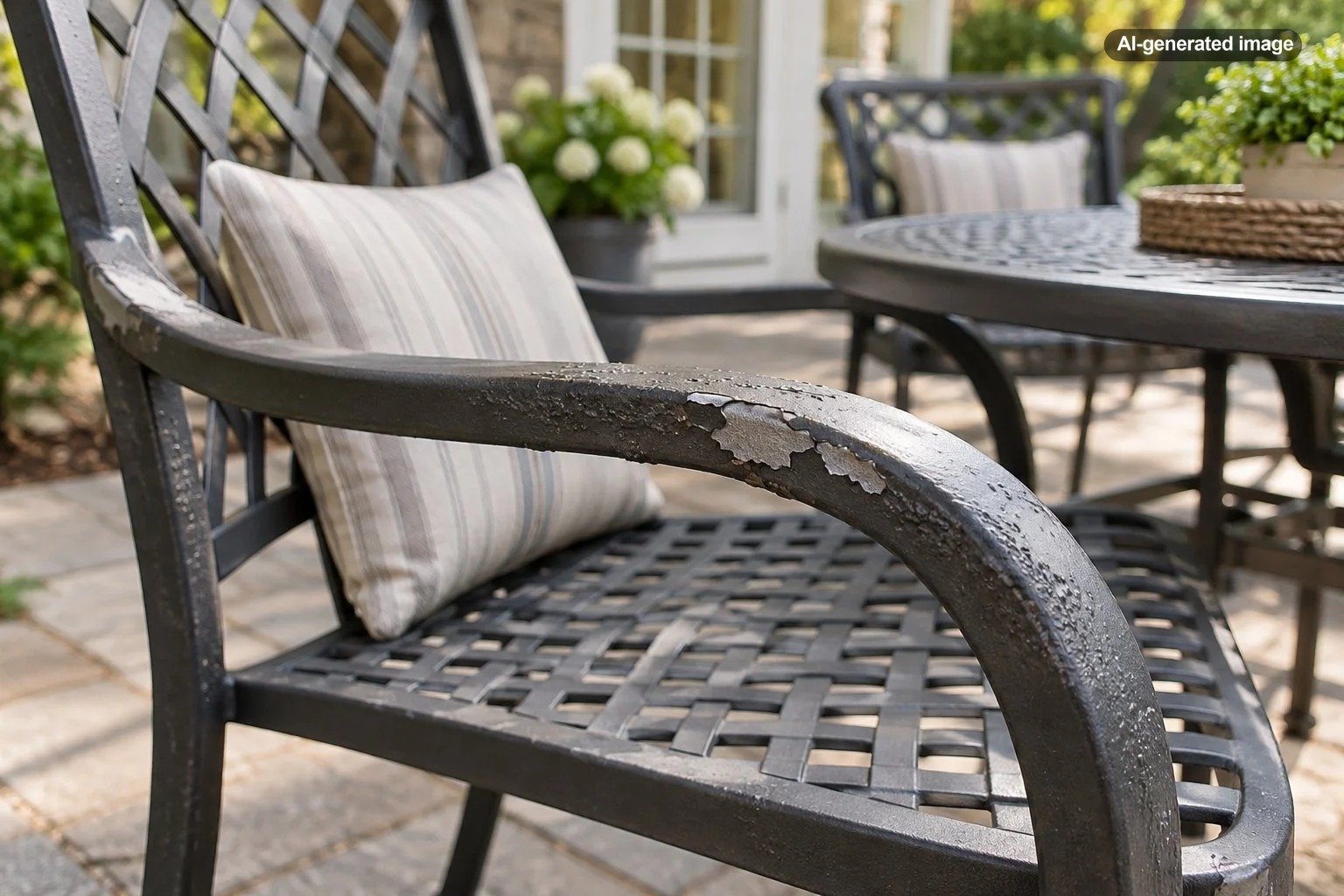
Powder-coated patio furniture can bubble or peel when moisture gets beneath the finish, corrosion develops on the underlying metal, or the coating loses its grip on the surface. A scratch, poorly protected weld, manufacturing defect, or exposure to harsh outdoor conditions can start the process. Although powder coating is designed to be durable, it is not an indestructible barrier against weather and wear.
The location and appearance of the damage offer important clues. A few small chips along the edge of a chair may need only localized attention, while spreading bubbles around multiple joints can indicate a more substantial coating or corrosion problem. Understanding the difference helps you decide whether to clean, touch up, professionally refinish, or replace the furniture.
What Is Happening Beneath the Powder Coating?
Powder coating is a protective finish made by applying finely divided coating material to a prepared surface and curing it with heat. The cured coating forms a continuous film that provides color, texture, and protection against normal wear and weather exposure.
Its performance depends on two things working together: the integrity of the coating itself and its adhesion to the underlying metal. When either fails, moisture and contaminants may reach vulnerable areas.
Once corrosion begins beneath a coating, the corrosion products can occupy space and push against the finish. The resulting pressure may create raised bubbles, cracks, or lifting edges. Eventually, sections of coating can break away.
Not every bubble indicates corrosion, however. Trapped air, moisture, or other volatile materials during the original manufacturing process can also produce blisters. The timing and distribution of the problem help distinguish these possibilities.
The Most Common Reasons Patio Furniture Bubbles or Peels
1. Moisture enters through scratches or damaged edges
A powder-coated finish protects the metal most effectively when the film remains intact. Scrapes caused by stacking chairs, dragging furniture, or contact with rough surfaces can interrupt that protection.
Rainwater or condensation may then reach the exposed substrate. On steel, corrosion can gradually spread beneath adjacent coating, causing the finish to lift beyond the original scratch.
Damage often begins at corners, armrest edges, chair feet, and places where metal components repeatedly rub together.
2. Corrosion develops beneath an apparently intact finish
Sometimes furniture begins bubbling even though there is no obvious scratch. Tiny pores, imperfect coating coverage, damaged seams, or insufficient protection around joints can provide entry points for moisture.
On steel furniture, reddish-brown staining beneath a lifted coating strongly suggests rust. Aluminum does not develop the same red rust, but it can corrode and produce pale, powdery deposits beneath damaged finishes.
This distinction matters because the appropriate surface preparation and repair products depend on the metal.
3. The metal was not prepared correctly before coating
Powder coating must adhere to a properly cleaned and prepared substrate. Residual oil, oxidation, moisture, salts, or other contamination can interfere with bonding.
Surface pretreatment helps establish the conditions needed for adhesion and corrosion resistance. If that process is inadequate, the coating may initially look attractive but begin separating as the furniture experiences outdoor exposure.
Large sheets of coating lifting away from otherwise relatively clean metal can point toward an adhesion problem, although visual inspection alone cannot establish the manufacturing cause.
4. Trapped gases created blisters during manufacturing
Some coating defects originate during the curing process rather than after the furniture reaches a patio.
Air, moisture, or other substances trapped in or on a metal surface can expand when heated. This process, known as outgassing, may leave bubbles, pinholes, or small craters in the coating.
Such defects can occur around certain cast components, porous surfaces, and galvanized materials when preparation and processing are not suited to the substrate.
If the furniture already had small raised defects when it was new, manufacturing-related blistering is worth considering. New bubbles that appear much later, particularly near damaged edges, may have a different cause.
5. Sunlight and weather gradually weaken the finish
Outdoor coatings must tolerate ultraviolet exposure, temperature changes, rainfall, and routine cleaning. Their ability to do so varies by coating formulation and manufacturing quality.
Long-term sunlight exposure can contribute to fading, gloss loss, or chalking. These changes do not automatically mean the finish will peel, but a deteriorated coating may offer less satisfactory protection over time.
Temperature changes can also place stress on an already compromised coating, especially where adhesion is weak or corrosion has begun.
6. Salt and persistent dampness accelerate deterioration
Coastal environments present additional challenges for outdoor metal furniture. Salt deposits and humid conditions can encourage corrosion where protective coatings are damaged or discontinuous.
Poolside furniture can face similar issues when chemical residues or frequent splashing remain on surfaces and joints.
Furniture positioned beneath sprinklers, exposed to regular runoff, or stored in a poorly ventilated damp area may experience more frequent moisture exposure than pieces that dry promptly.
How to Tell What Is Causing the Damage
Before reaching for sandpaper or touch-up paint, inspect the furniture carefully in good daylight.
What to check first
- Find the starting point. Look for scratches, chipped corners, fasteners, welded connections, and furniture feet where water or abrasion may have compromised the coating.
- Examine the exposed metal. Reddish-brown deposits suggest steel corrosion. White or gray powdery deposits may indicate aluminum or zinc corrosion products.
- Observe the pattern. One isolated chip suggests localized damage, while widespread lifting across otherwise undamaged surfaces raises questions about adhesion or coating condition.
- Check the timing. Defects present when furniture was new may have originated during production. Damage developing after years outdoors may involve weathering, wear, or corrosion.
- Inspect the structure. Look for deep pitting, weakened joints, cracking metal, or excessive movement before deciding the problem is merely cosmetic.
Do not deliberately puncture intact bubbles or peel away large sections simply to investigate. Opening additional coating can expose more metal to moisture and make the repair area larger.
Is Bubbling Powder Coating Just Cosmetic?
Sometimes the problem is primarily visual. A small blister on a decorative component may have little immediate effect on how the furniture functions.
However, a raised coating usually indicates a loss of proper attachment in that area. Even if the surface has not opened yet, the compromised film may not provide the protection originally intended.
The underlying metal makes a difference. Surface corrosion on a steel chair can progress if moisture continues reaching the exposed area. Aluminum furniture may remain structurally sound despite localized coating failure, but that cannot be assumed without inspecting the affected components.
Can You Repair Peeling Powder-Coated Patio Furniture?
Yes, some localized damage can be repaired, although a home touch-up is not the same as restoring the original factory powder coating.
The appropriate method depends on the extent of peeling, whether corrosion has developed, and the type of metal beneath the finish.
For a small chip or isolated peeling area
A limited repair may help protect exposed metal and improve appearance. First, consult the furniture manufacturer’s care instructions and determine whether a matching repair product is available.
Clean the area with a mild cleaner appropriate for the finish, rinse thoroughly, and allow it to dry. Remove only loose material and address visible corrosion using preparation methods suitable for the substrate and repair coating.
Some repairs require feathering the edges of the remaining finish and applying a compatible primer before the final color coat. Follow the repair product’s instructions for cleaning, preparation, application, ventilation, and curing.
A conventional touch-up paint may differ from the original coating in sheen, texture, hardness, and long-term durability. On a prominent tabletop or armrest, that difference can be noticeable even when the color is close.
For broad peeling or repeated blistering
When substantial areas are lifting, covering the damaged finish with paint rarely solves the underlying problem. The new coating may only be attached to material that is already separating.
Professional refinishing generally involves removing the failed finish, preparing the exposed metal, treating corrosion where necessary, and applying a suitable replacement coating system.
For valuable or well-built furniture, a professional powder-coating shop can assess whether stripping and recoating is practical. The process may require removing cushions, plastic components, hardware, or other materials that cannot tolerate the preparation and curing methods.
Not every piece is a good refinishing candidate. Thin metal, extensive corrosion, inaccessible joints, mixed materials, and difficult disassembly can make the project impractical.
Should You Touch Up, Recoat, or Replace the Furniture?
| Condition | Possible approach | Main consideration |
|---|---|---|
| Small chip with sound surrounding coating | Compatible localized touch-up | Protect exposed metal and accept a possible visible repair |
| Several peeling areas on a sturdy frame | Professional assessment for recoating | Preparation may require removing the existing finish |
| Widespread bubbling on relatively new furniture | Contact manufacturer or seller | Document the issue before attempting repairs |
| Deep corrosion or weakened structural components | Professional structural evaluation or replacement | Appearance is secondary to safe use |
| Low-value furniture with extensive finish failure | Compare refinishing with replacement | Refinishing effort may exceed the practical benefit |
Sentimental value, design quality, and the availability of replacement pieces also matter. A matching vintage patio set may justify professional refinishing, while a heavily corroded lightweight chair may not.
What Not to Do When Powder Coating Starts Peeling
Several common shortcuts can make the finish look better temporarily while leaving the actual problem unresolved.
- Do not paint directly over loose coating. A new layer cannot compensate for poor adhesion underneath.
- Do not use aggressive scraping on sound areas. Damaging intact coating unnecessarily can expose more metal.
- Do not assume one primer works on every metal. Aluminum, bare steel, and galvanized surfaces may require different preparation systems.
- Do not use harsh cleaning chemicals without checking compatibility. Strong cleaners and unsuitable solvents may harm nearby coatings or components.
- Do not ignore active corrosion beneath a cosmetic repair. Rust or oxidation left under the finish can compromise the new coating.
- Do not place complete furniture assemblies in an improvised heating setup. Powder coating involves controlled industrial application and curing conditions, which may be unsuitable for assembled household furniture.
If the furniture is still relatively new, photograph the condition and review available manufacturer guidance before altering the finish. Repair work can complicate an evaluation of an original product defect.
How to Prevent Powder-Coated Patio Furniture From Peeling
Good maintenance cannot correct an underlying manufacturing defect, but it can reduce the environmental and mechanical stresses that contribute to finish damage.
Wash away dirt and environmental deposits
Use a soft cloth or sponge with mild soap and water when permitted by the furniture manufacturer. Rinse away cleaning residue and allow the furniture to dry.
In coastal locations, periodic removal of salt deposits is particularly useful. Furniture near pools or landscape irrigation may also benefit from attention to areas that receive frequent splashes.
Avoid abrasive pads and unnecessarily aggressive pressure washing, especially around chipped coating or delicate joints.
Protect edges and contact points
Lift chairs rather than dragging them across abrasive surfaces. When stacking furniture, use protective separators if the manufacturer recommends them.
Inspect chair feet and protective glides. Missing or worn glides can expose vulnerable metal edges to repeated contact with concrete, stone, or decking.
Limit unnecessary moisture exposure
Do not leave furniture standing in pooled water if it can be avoided. Adjust sprinklers that repeatedly soak metal furniture, and pay attention to joints or enclosed areas where moisture dries slowly.
For extended periods of nonuse, a suitable furniture cover can help reduce exposure to dirt and weather. Fit and ventilation are important: a cover that traps condensation against the furniture may create its own problems.
Affiliate disclosure: CraneManor.com may earn a commission when you purchase through links on this page. This does not affect the price you pay. Learn more.
For a compatible outdoor lounge chair, a Classic Accessories Veranda cover is one example of a water-resistant protective cover. Check the furniture dimensions before choosing a size, secure the cover against wind, and allow airflow so moisture does not remain trapped beneath it. Water-resistant materials should not be assumed to keep furniture completely dry during every storm.
Address small damage before it spreads
Examine metal frames periodically, particularly after moving furniture or following prolonged exposure to harsh conditions. A small scratch is easier to address while the surrounding coating remains firmly attached.
Use only appropriate touch-up methods rather than applying an incompatible product simply because the color matches.
Does Aluminum Patio Furniture Peel Less Than Steel?
Both aluminum and steel patio furniture can suffer coating failure, but their corrosion behavior differs.
Steel can develop reddish rust when moisture and oxygen reach unprotected metal. If corrosion continues beneath a coating, it may cause significant lifting and eventually weaken the underlying structure.
Aluminum forms a naturally occurring oxide layer and does not develop conventional red rust. However, corrosion can still occur beneath a compromised finish, especially when environmental conditions and coating adhesion are unfavorable.
Neither material is immune to bubbling or peeling caused by poor cleaning, preparation, or coating application during manufacturing.
If you are choosing new furniture for a humid or coastal patio, assess the overall construction, outdoor suitability of the finish, joint details, and manufacturer’s care information rather than relying on the metal type alone.
Frequently Asked Questions
Can powder coating start bubbling even without a visible scratch?
Yes. Tiny coating defects, poorly protected joints, inadequate adhesion, or trapped material from the manufacturing process can cause bubbling without an obvious surface scratch. The pattern and timing of the damage help narrow down the likely explanation.
Will peeling powder coating keep spreading?
It can. If water continues reaching the metal or corrosion is advancing under the finish, neighboring coating may lose adhesion. A small, isolated chip with sound surrounding material may remain more manageable when properly repaired.
Can you spray paint over powder-coated patio furniture?
Some compatible paint systems can be applied to appropriately prepared powder-coated surfaces. However, coating directly over peeling material or active corrosion is unlikely to produce a durable result. Preparation, primer selection, and paint compatibility matter more than simply applying another layer.
Does faded powder coating mean it is about to peel?
Not necessarily. Fading, chalking, and gloss loss can occur from sunlight exposure without immediate adhesion failure. Bubbling, lifting edges, and flaking are more direct signs that the coating is separating from the substrate.
Can outdoor furniture be powder-coated again?
Many metal furniture components can be professionally recoated if their condition, construction, and materials are suitable. A refinishing shop can determine whether the original finish can be removed and whether the components can withstand the required preparation and curing process.
The Bottom Line
Powder-coated patio furniture usually bubbles or peels because the protective finish has lost adhesion or something beneath it is pushing against the coating. Outdoor moisture, corrosion, scratches, inadequate metal preparation, and manufacturing-related blistering are among the most important possibilities.
Start by identifying where the damage began and whether the underlying metal remains sound. Localized defects may justify careful touch-up work, while widespread peeling often requires professional refinishing or replacement.
The best long-term approach is straightforward: keep the furniture reasonably clean, minimize abrasive contact, prevent unnecessary moisture accumulation, and address coating damage while it is still small. A durable outdoor finish performs best when the metal beneath it remains protected.
Sources & Further Reading
- Powder Coating Institute: Frequently Asked Questions – Surface preparation, coating adhesion, and outdoor weatherability.
- Powder Coating Institute: Glossary of Terms – Technical definitions of blistering and other powder-coating defects.
- ASTM D7803: Preparation of Galvanized Steel Surfaces for Powder Coating – Surface preparation, coating defects, and outgassing considerations.
- American Galvanizers Association: Powder Coating Adhesion and Outgassing – How trapped gases and surface conditions can affect coating quality.