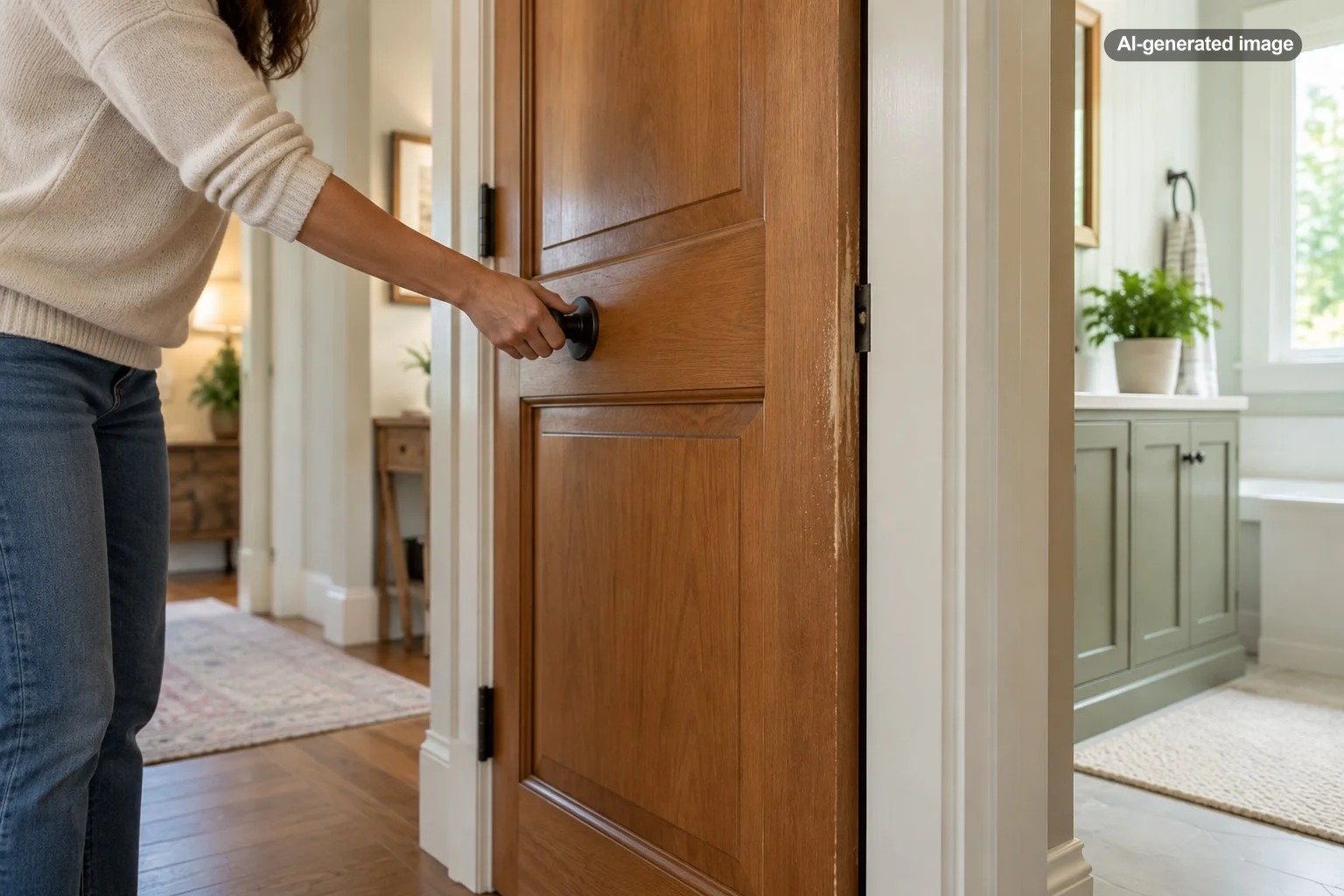
Can High Humidity Make Interior Doors Swell?
Yes. High indoor humidity can make some interior doors swell enough to rub, drag, or become difficult to close. Wood naturally exchanges moisture with the surrounding air, and as its moisture content rises, its dimensions can change slightly. The effect may be most noticeable during humid weather, in bathrooms and laundry areas, or in homes where indoor moisture remains elevated for long periods.
A door that suddenly sticks during a humid spell does not automatically mean the door is ruined or the frame has shifted. Often, the change is modest and seasonal. The useful question is whether humidity is the main cause, whether another problem is contributing, and whether the door actually needs to be altered.
Why humidity can change the fit of a wood door
Wood is hygroscopic, meaning it takes on and releases moisture in response to its environment. The U.S. Forest Service Forest Products Laboratory explains that the moisture remaining in wood tends toward equilibrium with the relative humidity of the surrounding air. As moisture content changes, wood can also change dimension.
That movement is not necessarily dramatic. In a properly fitted doorway, however, the clearance between the door and frame may already be fairly small. A slight increase in the width or thickness of a wood component can be enough to turn a formerly smooth-closing door into one that lightly scrapes the jamb.
Solid wood components are particularly associated with moisture-related movement, but door construction varies considerably. Engineered cores, veneers, edge materials, finishes, and the door frame itself can all influence how a particular opening behaves. That is why two doors in the same house can respond differently to the same humid weather.
How to tell whether humidity is really the cause
Start with the pattern rather than immediately reaching for sandpaper. A moisture-related problem often has a seasonal or room-specific character. The door may operate normally during cooler or drier periods, then begin rubbing when the house becomes humid.
What to check
- Open and close the door slowly. Identify exactly where it contacts the frame, floor, or stop.
- Check the hinges. Loose hinge screws can let a door sag and create rubbing that looks like swelling.
- Look for moisture clues. Check for condensation, plumbing leaks, staining, damp trim, or an unusually humid bathroom or laundry area.
- Measure indoor humidity. A hygrometer can show whether the room is consistently humid rather than relying on how the air feels.
- Watch the pattern over time. If the problem eases as indoor humidity falls, that strongly supports moisture-related movement as a contributor.
The U.S. Environmental Protection Agency generally recommends keeping indoor relative humidity below 60 percent and ideally within roughly 30 to 50 percent for moisture control. Those figures are useful household guidelines rather than a diagnosis for a particular door or building.
Affiliate disclosure: CraneManor.com may earn a commission when you purchase through links on this page. This does not affect the price you pay. Learn more.
If you want a simple way to see what is happening in a troublesome room, an indoor humidity monitor can help you compare relative humidity when the door sticks with conditions when it operates normally. It is a measurement tool, not a mold detector or a diagnosis of the building.
Try controlling moisture before removing wood
If the door only binds during humid conditions, reducing the moisture load may solve or lessen the problem without permanently changing the door. That matters because sanding a door while it is temporarily swollen can leave an unnecessarily large gap after the wood dries again.
Use kitchen and bathroom exhaust fans that vent outdoors when those rooms generate moisture. Address plumbing leaks and unwanted water promptly. Air conditioning can also remove moisture while cooling, although a system that is oversized, malfunctioning, poorly controlled, or otherwise unsuitable for the house may not manage humidity as expected.
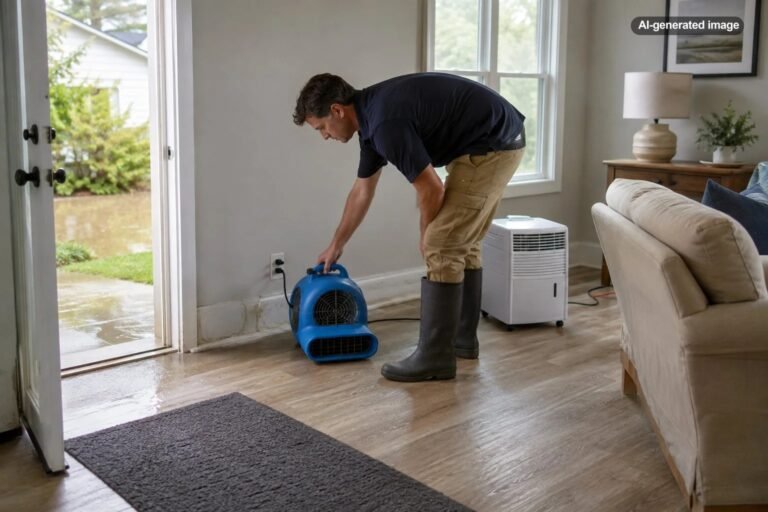
For a room that remains persistently humid, a portable dehumidifier may be useful when appropriate for the space. A unit with a continuous-drain option still needs suitable hose routing and a proper drain; no portable unit should be assumed to solve an underlying leak or building-envelope problem.
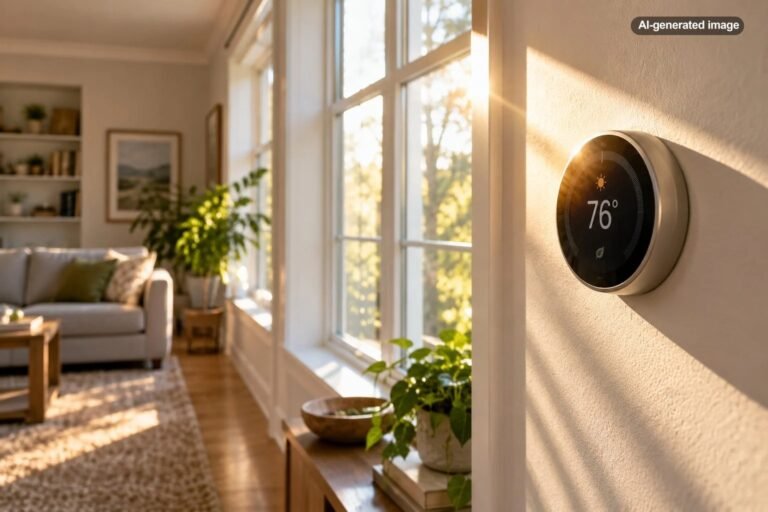
Some homeowners also use a compatible smart thermostat to review and adjust HVAC settings remotely. Compatibility depends on the HVAC system and wiring, and a thermostat by itself cannot correct every indoor-humidity problem.
A seasonal door problem is usually worth observing before it becomes a permanent carpentry project.
When adjusting the door makes sense
If indoor humidity is reasonable, the hinges are secure, there is no sign of a leak, and the same spot continues to bind through different seasons, a small physical adjustment may be appropriate. The right fix depends on where the contact occurs.
A door rubbing near the latch-side top corner may be sagging rather than swelling uniformly. A door rubbing along much of the latch edge may have inadequate clearance. A bottom edge dragging on flooring can involve hinge alignment, flooring changes, or door height. These distinctions matter because simply removing material from the first place that rubs can conceal rather than solve the underlying issue.
If trimming or sanding is appropriate, remove as little material as practical and refinish any exposed wood according to the door manufacturer’s recommendations. Excessive material removal can create noticeable gaps, weaken an edge, expose unfinished material, or create a new fit problem during the dry season.
Do not assume every swollen-looking door is just humidity
A sticking door can have several causes. Loose hinges, settling, an out-of-square frame, new flooring, thick paint buildup, damaged trim, or physical changes to the door can all reduce clearance. Moisture can also come from a localized leak rather than humid air.
A door or jamb that is visibly wet, stained, soft, deteriorating, or accompanied by recurring condensation deserves closer attention. The EPA emphasizes that moisture problems should be addressed promptly and that controlling moisture is central to preventing unwanted mold growth.
How to reduce future sticking
The most useful prevention strategy is consistency. Large swings in indoor moisture encourage more dimensional movement than relatively stable conditions. Monitor rooms that tend to run humid, use ventilation appropriately, maintain the HVAC system, and correct water leaks rather than treating a sticking door as an isolated cosmetic annoyance.
When installing or refinishing a wood door, also pay attention to manufacturer instructions for acclimation, finishing, edge sealing, clearances, and installation. Requirements vary by product, so generalized advice should not replace the instructions for the actual door.
Before you decide
- Confirm exactly where the door rubs.
- Tighten or inspect hinges before removing material.
- Measure indoor humidity instead of guessing.
- Look for leaks, staining, condensation, or damp trim.
- See whether the problem changes with the weather.
- Control excess indoor moisture when possible.
- Trim or sand only when the fit problem is persistent and properly identified.
Frequently asked questions
Will a swollen door shrink again when humidity drops?
It can. Because wood exchanges moisture with the surrounding air, some moisture-related dimensional change can reverse as conditions become drier. How much a particular door changes depends on its materials, construction, finish, exposure, and the cause of the sticking.
Should I sand a door as soon as it starts sticking?
Not necessarily. First check the hinges, moisture conditions, and contact point. If the issue appears only during a temporary humid period, sanding immediately could create a larger gap later.
What indoor humidity is considered reasonable?
The EPA advises keeping indoor relative humidity below 60 percent and ideally around 30 to 50 percent for general moisture control. Actual comfort and building conditions vary, and persistent moisture or condensation deserves investigation.
Can air conditioning help a swollen interior door?
Air conditioning can reduce indoor moisture while cooling and may indirectly reduce moisture-related door movement. If indoor humidity remains high despite normal operation, the cause may require broader HVAC or moisture evaluation rather than simply lowering the thermostat.