Why Does My Pocket Door Rattle Inside the Wall?
A pocket door that rattles inside the wall is usually moving against something it should not, or one of its hidden moving parts has developed enough play to make noise. Common suspects include loose or worn rollers, a slightly loose track or hanger, excessive side-to-side movement, a misaligned floor guide, or the door itself touching framing or trim inside the pocket.
The sound does not automatically mean the wall needs to be opened. In many cases, you can narrow down the source by paying attention to exactly when the rattle happens and checking the hardware that remains accessible from the doorway.
Why pocket doors can sound noisier than ordinary doors
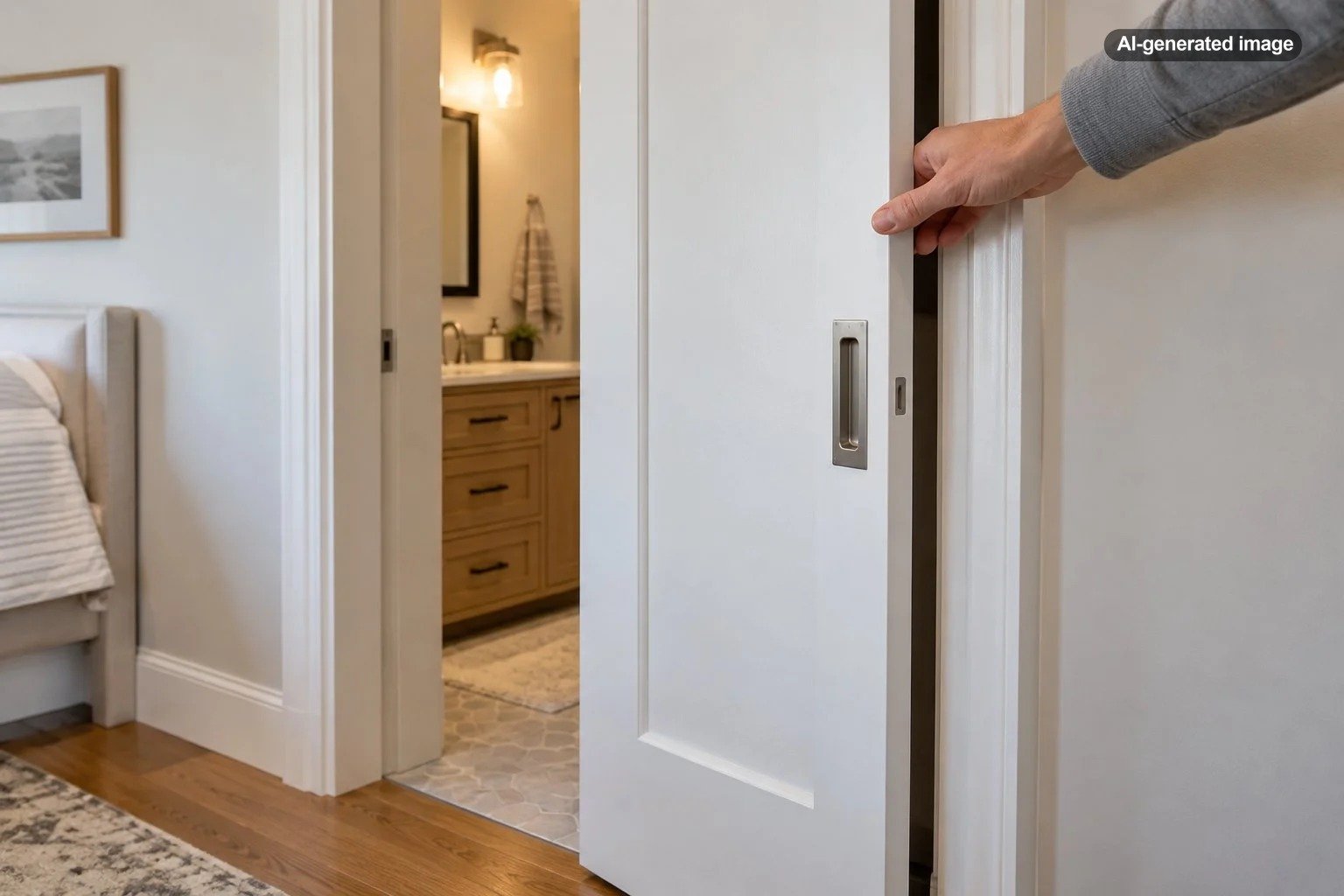
A typical swinging door leaves most of its hardware in plain sight. A pocket door is different. The door hangs from carriers or rollers traveling along an overhead track, while the slab disappears between layers of wall when opened. A bottom guide near the doorway generally helps control side-to-side movement.
That hidden cavity can make a small mechanical noise sound surprisingly dramatic. A light tap between the door and an internal surface may echo through the wall, so the location of the sound can seem more mysterious than the actual problem.
A useful first distinction is whether you hear a rattle, a scrape, a click, or a grinding sound. A loose component tends to rattle or click. Contact between the door and another surface often produces scraping. Rough or failing roller movement can sound harsher and may also make the door feel uneven.
1. The door may have too much side-to-side movement
Pocket doors need enough clearance to move freely into the wall, but excessive lateral movement can allow the slab to tap against the sides of the pocket. This may be especially noticeable as the last portion of the door disappears into the wall.
With the door partly open, gently move the exposed edge from side to side. A little movement is not necessarily unusual, but obvious wobbling combined with the same rattling sound can point toward a guide or alignment issue.
Inspect the accessible bottom guide near the opening. If it is loose, damaged, missing, or poorly positioned, the door may swing more than intended as it travels.
2. A roller or hanger may be loose or worn
The overhead carriers support the weight of the door and allow it to slide along the track. Wear, looseness, or misalignment in these moving parts can create clicking, rattling, uneven movement, or a door that appears slightly lower on one side.
Move the door slowly through its full travel and watch the exposed edge. If the slab rises, drops, tilts, or changes its clearance noticeably while moving, the hanger or roller system deserves closer inspection.
Also notice whether the noise repeats at the same points along the track. A rhythmic sound associated with wheel rotation suggests a different issue from a single knock that occurs only when the door enters the pocket.
3. The overhead track or its hardware may be moving
The track carries the door above the opening and continues into the pocket. If accessible mounting hardware has loosened, movement of the door can produce a metallic or mechanical rattle.
Do not assume every sound means the entire track has failed. Start by inspecting whatever portion of the assembly can be seen from the opening. Look for obvious looseness, damaged hardware, misalignment, or components that move when the door changes direction.
4. The door may be touching something inside the pocket
If the rattle happens primarily as the door moves into the wall, the slab may be contacting part of the pocket assembly. A door that has shifted slightly on its hangers can sit closer to one side than it once did.
Other clues include fresh rub marks on the edge or face of the door, resistance during part of its travel, or a change in sound when you gently guide the exposed edge toward one side while sliding it.
A warped or bowed door can also create clearance problems. In that case, adjusting hardware may improve alignment without eliminating every point of contact because the slab itself is no longer perfectly flat.
5. Loose trim or jamb components can imitate an internal rattle
Do not overlook the parts surrounding the doorway. Stop molding, split jamb components, trim, or other finish pieces can develop enough movement to chatter as the door passes.
While someone slowly operates the door, lightly place a hand on different accessible trim pieces. If the sound changes when a particular piece is stabilized, you may have found a much easier problem than hidden track failure.
Be cautious about fastening anything near the pocket itself. Driving an ordinary long nail or screw into the wall where the door travels can damage the door or interfere with its movement.
What to do
- Open and close the door slowly and identify exactly where in its travel the noise begins.
- Decide whether the sound is a rattle, scrape, click, or grinding noise.
- Check whether the door wobbles excessively from side to side.
- Inspect the accessible floor guide, trim, jamb pieces, hangers, and track area for visible looseness or damage.
- Watch for tilting, dropping, rubbing, or a changing gap around the door as it moves.
- If adjustment or repair requires concealed hardware you cannot safely access, stop before opening the wall unnecessarily and have the system evaluated.
What the timing of the rattle can tell you
| When you hear it | What to investigate first |
|---|---|
| Throughout the full slide | Rollers, hangers, track movement, and guides |
| Only as the door enters the wall | Contact inside the pocket or excessive side movement |
| At one repeatable location | Track irregularity, local contact, or a hardware issue at that point |
| When the door reverses direction | Play in hangers, rollers, or mounting hardware |
| While the door is stationary | Loose trim, excessive clearance, or vibration-sensitive hardware |
This kind of observation is often more useful than immediately removing trim. A five-minute slow-motion inspection can separate an alignment problem from a loose component and can help you explain the symptom accurately if professional repair becomes necessary.
What not to do to a rattling pocket door
Avoid randomly adding screws through the wall in an attempt to tighten the pocket assembly. The door occupies the cavity behind that wall surface, and an improperly placed fastener can scratch the slab or prevent it from opening completely.
Also avoid assuming that more lubricant is automatically the answer. The correct treatment depends on the roller and track system, and excess lubricant can collect dirt on some assemblies. If lubrication is appropriate, follow the hardware manufacturer’s instructions rather than applying a heavy coating by default.
Do not force a door that has started binding severely. If a roller or hanger has partially failed, forcing the slab can make the problem harder to correct.
Does fixing a pocket door require opening the wall?
Not necessarily. Many pocket-door systems provide at least some access to rollers, hanger adjustments, or track components from the doorway after appropriate trim is removed. The exact service method depends on the hardware and how the door was installed.
Wall access becomes more plausible when the problem involves a concealed section of track, inaccessible mounting hardware, damaged internal framing, or an obstruction that cannot be reached from the opening. That should generally be a conclusion reached after simpler causes have been eliminated, not the first repair step.
When professional repair makes sense
Consider calling a door carpenter, finish carpenter, or contractor familiar with pocket-door systems when the door has fallen noticeably out of alignment, the track appears loose inside the inaccessible portion of the pocket, the door cannot be removed or adjusted using the available service points, or you are unsure how the concealed frame was assembled.
Professional help also makes sense when correcting the problem would require removing finished wall material. At that point, identifying the actual failure before cutting into the wall can prevent a small hardware problem from becoming an unnecessarily large repair.
How to keep the rattle from returning
Once the cause is corrected, pay attention to how the door feels rather than waiting for another loud noise. A smooth pocket door should travel consistently without developing a new tilt, scrape, wobble, or sudden change in resistance.
Periodically check accessible guides and trim for looseness, and address a changing door position before it begins repeatedly striking the pocket. If rollers or carriers ultimately need replacement, use hardware compatible with the existing track and suitable for the door rather than choosing a component solely because it looks similar.
The reassuring part of a pocket-door rattle is that the wall itself is not automatically the problem. Start with the moving hardware, alignment, guide, and accessible trim. The pattern of the noise will usually tell you where to look next.