Can a Smart Thermostat Cause Short Cycling?
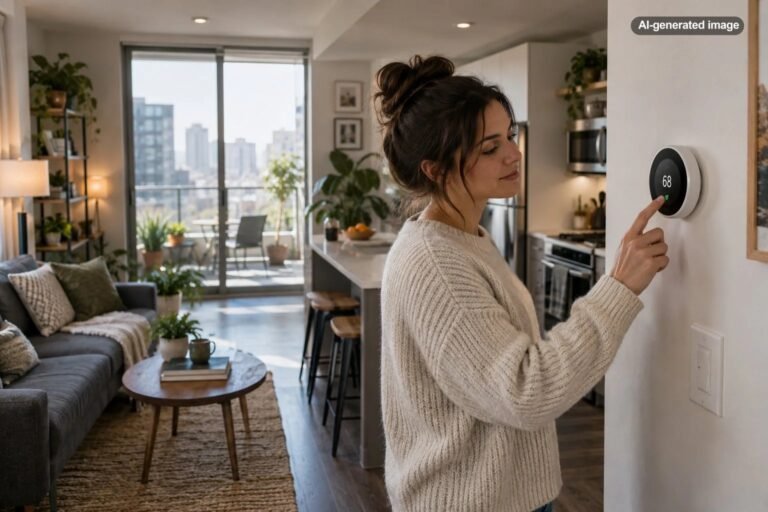
Yes, a smart thermostat can contribute to short cycling, but the thermostat itself is only one possible cause. Incorrect wiring, inadequate thermostat power, poor thermostat placement, incompatible equipment, or an incorrect installation can all interfere with normal heating and cooling operation. Short cycling can also originate entirely within the HVAC equipment, so replacing or resetting the thermostat should not automatically be treated as the cure.
The useful question is not simply whether the thermostat is smart. It is whether the thermostat is correctly matched to the HVAC system, receiving reliable power, sensing a representative room temperature, and sending the correct calls for heating or cooling.
What short cycling actually looks like
Heating and cooling equipment is supposed to cycle. A thermostat calls for heating or cooling, the equipment operates, and the call ends when the control conditions are satisfied. Runtime can vary substantially with weather, equipment type, system capacity, thermostat configuration, and the heating or cooling load on the house.
Short cycling is different from ordinary cycling. It describes repeated operation in which equipment starts and stops abnormally quickly instead of completing appropriate operating cycles. Manufacturers including Trane identify thermostat problems as one possible cause, while also noting that equipment sizing and other HVAC conditions can be responsible.
Do not diagnose short cycling from a single brief cycle. Mild weather can create short heating or cooling demands, and modern staged or variable equipment does not necessarily behave like an older single-stage furnace or air conditioner. Look for a repeated pattern, especially if it is accompanied by poor temperature control, inadequate humidity removal, unusual equipment behavior, or frequent restarts.
How a smart thermostat can contribute to the problem
Incorrect or loose wiring
A smart thermostat still relies on physical control wiring to communicate with most conventional residential HVAC systems. A wire inserted into the wrong terminal, a loose conductor, an incorrectly identified wire, or an installation configuration that does not match the actual equipment can cause improper operation.
This possibility deserves particular attention when short cycling starts immediately after a thermostat installation, replacement, rewiring, or HVAC service. If everything worked normally with the previous thermostat and rapid cycling appeared as soon as the new control was installed, the timing makes thermostat installation and configuration sensible places to investigate.
Insufficient or inconsistent thermostat power
Smart thermostats generally need a reliable source of electrical power for their electronics and connectivity. ENERGY STAR advises homeowners to check HVAC compatibility before purchasing a smart thermostat and notes that many smart thermostats use a common, or C, wire for continuous power. The exact requirements depend on the thermostat and HVAC system.
Google likewise explains that some Nest installations require a C wire or compatible power accessory, including certain heating-only, cooling-only, heat-pump, and zone-controlled systems. Its troubleshooting documentation identifies insufficient power and wiring problems as conditions that may require correction.
Incorrect equipment configuration
During setup, many smart thermostats ask what type of heating and cooling equipment is installed. Those choices matter. A thermostat needs to control the system it actually has, not merely a generic furnace-and-air-conditioner combination selected because it sounded close enough.
If the home has a heat pump, auxiliary heat, multiple stages, zoning, or specialized controls, incorrect setup can produce behavior that is difficult to diagnose from the thermostat screen alone. ENERGY STAR specifically recommends checking compatibility and notes that more complex systems may benefit from professional installation.
A thermostat in a poor location
The smartest thermostat in the world can make questionable decisions if the temperature around it does not represent the rest of the home. Direct sunlight, a nearby supply register, a draft, an exterior door, or a heat-producing appliance can distort what its sensor experiences.
Trane identifies thermostat location as one potential contributor to short cycling and recommends a central location away from registers, heat-producing appliances, and direct sunlight. A thermostat warmed by afternoon sun, for example, can experience conditions very different from a shaded living room across the house.
Before blaming the thermostat’s intelligence, make sure it is receiving good information and controlling equipment it actually understands.
When the thermostat probably is not the main problem
A smart thermostat can expose an HVAC problem without causing it. That distinction matters because repeatedly changing thermostat settings will not repair an airflow restriction, equipment fault, or incorrectly sized system.
Short cycling can be associated with restricted airflow, equipment sizing problems, refrigerant-related faults in cooling systems, electrical or control problems, and other mechanical conditions. Furnace short cycling can likewise involve airflow restrictions or safety controls. Diagnosing those conditions goes beyond normal thermostat troubleshooting.
A useful clue is whether the thermostat continues to call for heating or cooling while the equipment itself stops. If the thermostat appears to be requesting operation but the furnace, air conditioner, or heat pump shuts itself down, a system control or safety condition may be involved rather than the thermostat simply deciding that the room has reached its target.
What to check first
- Notice when the problem began. If it started immediately after thermostat installation or configuration changes, begin there.
- Check ordinary thermostat settings. Confirm the correct heating or cooling mode and review any unusual schedules or recent configuration changes.
- Check the air filter. A severely restricted filter can interfere with HVAC airflow and should not be mistaken for a thermostat problem.
- Consider thermostat location. Look for direct sun, drafts, nearby registers, exterior doors, or heat-producing appliances that could distort the temperature reading.
- Review compatibility and installation instructions. Use the thermostat manufacturer’s documentation for the exact model and your type of HVAC equipment.
- Stop if troubleshooting requires opening HVAC equipment or working around unfamiliar electrical components. A qualified HVAC professional can evaluate thermostat signals and equipment operation together.
Could replacing the smart thermostat solve it?
Sometimes, but replacement should follow diagnosis rather than precede it. A defective thermostat can cause erratic control, but a perfectly functional thermostat that is incorrectly wired, underpowered, poorly located, or incompatible with the HVAC system can create similar symptoms.
Affiliate disclosure: CraneManor.com may earn a commission when you purchase through links on this page. This does not affect the price you pay. Learn more.
If you are replacing an incompatible or malfunctioning control, a compatible smart thermostat may be appropriate, provided you verify the HVAC system and wiring requirements before purchase or installation.
That compatibility check becomes more important with systems that use multiple stages, heat pumps, zoning, or manufacturer-specific communicating controls. In some higher-efficiency systems, the original equipment manufacturer’s controller may provide functions that a generic replacement thermostat cannot duplicate.
Do smart schedules cause short cycling?
A schedule that changes the target temperature several times per day is not, by itself, the same thing as short cycling. The thermostat is supposed to start and stop the HVAC system as household needs change. Likewise, occupancy features, remote adjustments, and automatic setbacks can legitimately change when the system operates.
The concern is repeated abnormal starts and stops rather than normal responses to intentional temperature changes. Before disabling every smart feature, look at the pattern. If the system consistently starts and stops rapidly regardless of schedule, occupancy, or setpoint, the cause deserves broader investigation.
When to call an HVAC professional
Professional evaluation is appropriate when short cycling persists after basic, noninvasive checks, when the thermostat reports wiring or power faults, or when determining the cause requires access to HVAC electrical components, refrigerant systems, burners, safety controls, or internal equipment.
It is also sensible to get help when the thermostat and HVAC system appear incompatible or when you have complex equipment and are uncertain how it should be configured. A technician can determine whether the thermostat is ending the call for heating or cooling or whether the equipment is shutting itself down independently. That distinction can dramatically narrow the diagnosis.
How to reduce the chance of thermostat-related cycling trouble
Start with compatibility rather than features. Confirm that a thermostat supports the actual HVAC equipment, including its stages and heat-pump or zoning requirements where applicable. Follow the manufacturer’s wiring and power instructions instead of assuming that wire colors alone identify every circuit.
Keep the thermostat in a location that reflects the home’s occupied temperature reasonably well. Avoid placing temperature-sensitive controls where sunlight, supply air, drafts, or nearby heat sources dominate the reading.
Finally, treat a new cycling pattern as information. Note whether it began after a thermostat change, an HVAC repair, a filter change, a power interruption, or the first use of heating or cooling for the season. A clear timeline can be more useful for diagnosis than repeatedly changing the setpoint and hoping the behavior disappears.
FAQ
Can bad thermostat wiring cause an HVAC system to turn on and off?
Yes. Incorrect, loose, or improperly configured thermostat wiring can interfere with HVAC control. Follow the thermostat manufacturer’s instructions, and turn off appropriate system power before exposing or adjusting wiring.
Can a missing C wire cause problems with a smart thermostat?
It can, depending on the thermostat and HVAC system. ENERGY STAR notes that many smart thermostats use a C wire for continuous power, while manufacturers may offer other approved power arrangements for particular models. Check the exact thermostat’s documentation rather than assuming every smart thermostat has identical requirements.
Does frequent HVAC cycling always mean something is broken?
No. Cycle behavior changes with outdoor conditions, system design, capacity, and demand. The concern is a repeated pattern of abnormally brief operation or rapid restarting, particularly when comfort suffers or the equipment fails to complete normal heating or cooling operation.
Should I reset my smart thermostat if the HVAC system short cycles?
Reviewing settings and manufacturer troubleshooting guidance can be reasonable, but a factory reset is not a universal repair. It can erase configuration information without addressing incorrect wiring, inadequate power, poor thermostat placement, or an HVAC equipment fault.
What if short cycling began immediately after installing a smart thermostat?
That timing makes thermostat compatibility, wiring, power, equipment configuration, and installation especially important to check. If those items cannot be confidently verified or the rapid cycling continues, have the thermostat and HVAC system evaluated together.