What Should You Do With a Generator After the Power Comes Back On?
When utility power comes back on, do not simply yank the cords, switch off a running generator, and roll it straight into the garage. The safer approach is to confirm that utility power is actually stable, remove the electrical load from the generator according to your setup, shut the generator down using its manufacturer’s procedure, let it cool outdoors, and then inspect and store it properly.
The details vary between portable generators, manual transfer-switch installations, and automatic standby systems, so the owner’s manual should always take precedence over a generic sequence. A few deliberate minutes at the end of an outage can also make the next startup considerably less troublesome.
First, make sure utility power is really back
A lamp flickering on for a moment does not necessarily mean an outage is completely over. Utility restoration can involve brief interruptions while crews complete switching or repairs. Before dismantling your temporary-power setup, look for a reasonable indication that normal service has returned and stabilized.
If your home uses a properly installed manual transfer switch or interlock system, follow the operating instructions for that equipment when transferring the selected circuits back to utility power. Do not improvise at the electrical panel. If you are uncertain how your transfer equipment is intended to operate, leave the electrical work alone and have a qualified electrician explain the correct sequence.
If appliances were connected directly to a portable generator with appropriate extension cords, remove the generator’s load in the manner specified by its manufacturer before shutting down the engine. Avoid abruptly stopping a heavily loaded generator unless an emergency requires it.
Unload and shut down a portable generator in the correct order
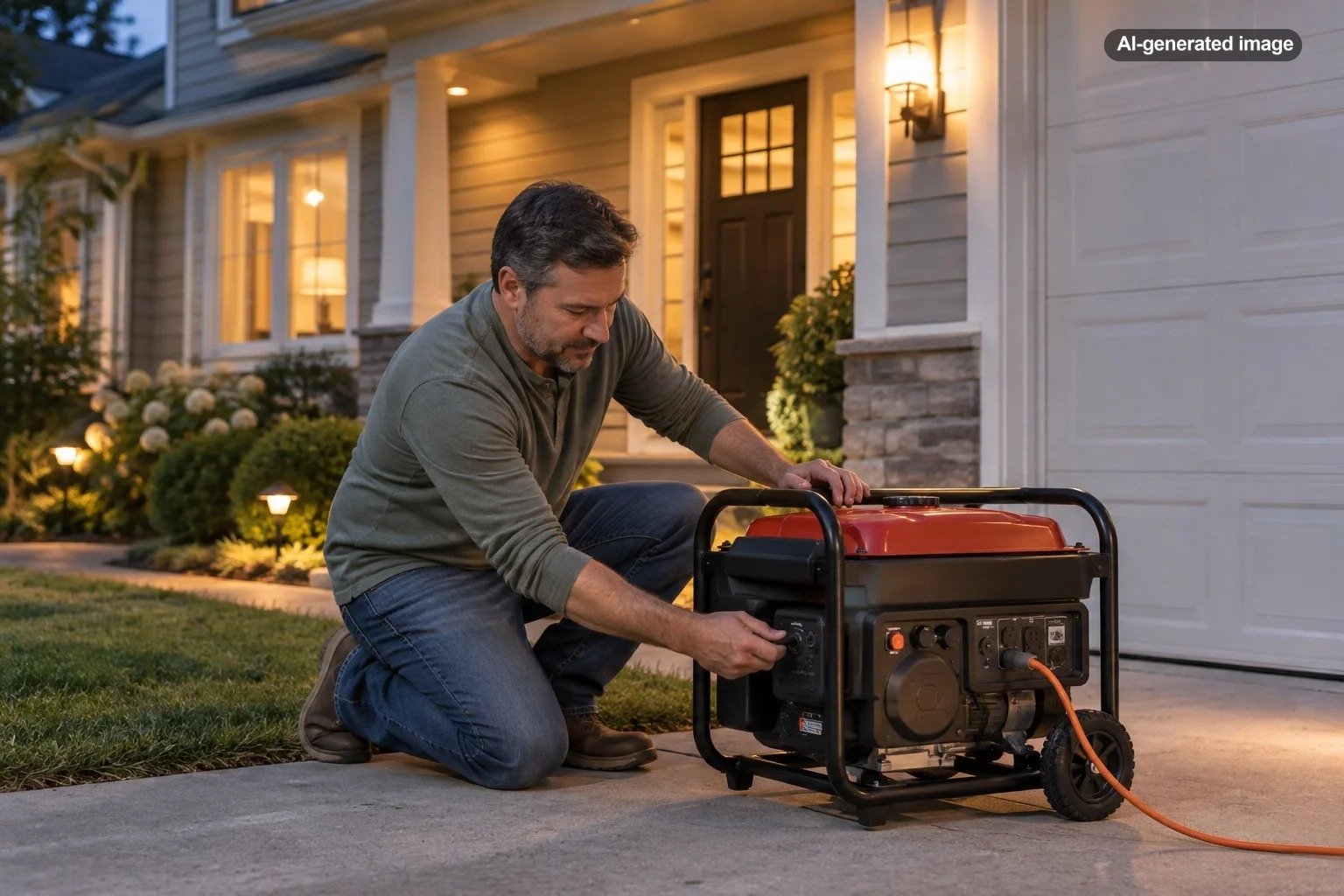
The exact controls differ by model, so use your generator’s owner’s manual rather than assuming every machine works the same way. As one example of a common shutdown sequence, Honda instructs users of its portable generators to turn the generator circuit breaker off, turn the engine switch off, and then turn the fuel valve off.
That example is useful because it illustrates an important principle: remove the electrical demand before shutting down the engine, and leave fuel controls in the position the manufacturer specifies for storage or transport. Other generators may have different switches, electronic controls, fuel systems, or shutdown procedures.
What to do
- Confirm that normal utility service has returned and appears stable.
- Transfer household circuits back to utility service using the approved transfer equipment, or disconnect generator-powered appliances as your setup requires.
- Remove the electrical load from the generator according to its manual.
- Use the manufacturer’s specified shutdown controls.
- Turn off the fuel supply when the manual calls for it.
- Leave the generator outdoors while it cools.
If the generator behaves abnormally during shutdown, such as leaking fuel, producing smoke from an unexpected location, sparking, or making a new mechanical noise, stop using it until the cause has been evaluated. Do not assume an outage ending means the generator itself needs no attention.
Let the generator cool before refueling, moving, or storing it
A generator that has been supporting a house for hours may remain hot well after its engine stops. The U.S. Consumer Product Safety Commission advises never to refuel a generator while it is running and to turn it off and allow it to cool before adding fuel. Gasoline contacting a hot engine or exhaust component creates a serious fire hazard.
Cooling matters before storage as well. Honda’s general generator guidance, for example, tells owners to allow a generator to cool before transporting or storing it. Follow the interval in the manual for your specific machine rather than assuming a universal waiting period.
Keep the generator outdoors during this cooling period. Portable generators produce carbon monoxide while running, and enclosed or partly enclosed areas such as garages, sheds, basements, and crawl spaces are unsafe operating locations. The CPSC recommends operating portable generators outdoors at least 20 feet from the home, with exhaust directed away from buildings. U.S. Fire Administration guidance similarly emphasizes outdoor, well-ventilated generator use away from doors, windows, and vents.
The end of the outage is still part of generator operation, not the moment to stop thinking about generator safety.
Inspect the generator after a long outage
Once the unit has cooled, give it a basic visual inspection before putting it away. You are not trying to perform a repair diagnosis; you are looking for obvious conditions that deserve attention before the next emergency.
Check around the generator for visible fuel or oil leakage, damaged cords or plugs, loose hardware, blocked ventilation openings, and obvious physical damage. Look at extension cords used during the outage as well. A cord that was driven over, pinched in a doorway, overheated, or damaged by weather should not automatically go back into the emergency kit.
Then consult the maintenance schedule in the owner’s manual. A prolonged outage can accumulate many operating hours in a short period, potentially moving the generator closer to an oil-change, air-filter, spark-plug, battery, or other scheduled service interval. Maintenance requirements are model-specific, so operating hours are more useful than guesses based on how many calendar days the outage lasted.
Decide whether the generator is going back into short-term or long-term storage
Your next step depends partly on whether another outage is plausible in the near future or the generator may sit unused for months. Fuel-storage instructions vary significantly among models and fuel types, so this is one area where the manual matters particularly strongly.
For a gasoline portable generator, do not assume that leaving old fuel in the carburetor indefinitely is harmless. Some manufacturers specify draining portions of the fuel system for longer storage, while others provide particular instructions involving treated fuel. Use only the procedure and fuel-treatment recommendations appropriate to your model.
Close the fuel valve when the manufacturer requires it. Honda, for example, advises turning the fuel valve off for transporting and storing its portable generators and provides additional model-specific procedures for extended storage.
Before you put it away
- Confirm that the generator is fully shut down and cooled.
- Check the owner’s manual for fuel-storage instructions.
- Inspect cords, plugs, and the generator for visible damage.
- Record operating hours and maintenance performed.
- Store fuel only in approved containers and in accordance with local fire-safety requirements.
- Keep the generator upright if its manufacturer requires upright storage.
- Choose a storage location that complies with the manufacturer’s ventilation and fuel-storage guidance.
Automatic standby generators are different
A permanently installed standby generator generally should not be treated like a portable unit. Many standby systems automatically detect the return of utility power, transfer the home’s load back to the utility source, run through a programmed cooldown period, and then shut down without the homeowner manually intervening.
If you have an automatic system, allow its controller and transfer equipment to operate as designed unless the owner’s manual or installer has provided different instructions. Do not start flipping disconnects or opening electrical equipment simply because utility power has returned.
After an extended run, review any alerts or service indicators displayed by the system and check its maintenance requirements. If the generator reports a fault, fails to transfer back normally, continues running unexpectedly, or shows signs of a fuel or electrical problem, contact the appropriate generator service professional rather than attempting unfamiliar electrical or fuel-system work.
Do not forget the house after the generator is off
Restoring utility power can reveal problems unrelated to the generator itself. Check that critical household equipment has resumed normal operation, especially refrigerators, freezers, sump pumps, HVAC equipment, well systems, security equipment, and other systems that may have been switched, unplugged, or intentionally left off during the outage.
If the outage involved flooding or water near electrical equipment, treat that as a separate electrical-safety issue. FEMA advises that electrical equipment exposed to water should not simply be re-energized without appropriate evaluation. A qualified electrician should assess questionable equipment and wiring.
It is also sensible to test the home’s carbon monoxide alarms and smoke alarms according to their manufacturers’ instructions after an emergency, particularly if the outage involved extensive generator or other fuel-burning equipment use.
Prepare now for the next outage
The easiest time to improve a generator routine is immediately after using it, while the awkward parts are still memorable. Replace a damaged extension cord, restock approved fuel containers, schedule maintenance that became due, and put the generator’s manual where it can be found without an internet connection.
If the previous outage required a tangle of cords through doors or windows, or if repeatedly moving loads became difficult, that is a reasonable prompt to discuss a properly designed transfer setup with a qualified electrician. The answer is not an improvised connection to the home’s wiring.
Likewise, reconsider generator placement if exhaust, weather protection, cord routing, or distance from the house was difficult to manage. CPSC guidance calls for portable generators to be used outdoors at least 20 feet from the home with exhaust directed away from nearby buildings. A setup that cannot meet basic operating guidance deserves attention before the next storm.
Frequently asked questions
Should I turn off the generator as soon as the lights come back?
Not necessarily the instant you see a light. Confirm that utility service has returned, then remove or transfer the generator’s load correctly and follow its shutdown procedure. Homes with transfer equipment should follow the instructions for that equipment.
Can I put a generator in the garage after shutting it off?
Do not move a recently operated generator immediately into storage. Let it cool outdoors first and follow the manufacturer’s storage and ventilation instructions, particularly for gasoline-powered equipment and fuel.
Should I refill the fuel tank before storing the generator?
There is no universal answer. Fuel-storage procedures differ by model and by expected storage duration. Follow the generator manufacturer’s instructions rather than adopting a generic fill-it or drain-it rule.
Should I service a generator after every outage?
Check its operating hours against the manufacturer’s maintenance schedule. A long outage may accumulate enough hours to trigger maintenance even if the generator was serviced recently by calendar date.
What if my standby generator keeps running after utility power returns?
Some systems intentionally run for a cooldown period. If operation continues beyond what the manual describes, a fault appears, or the system does not transfer normally, consult the manufacturer’s instructions and a qualified generator service professional.