What Should You Put in a Guest Room Closet?
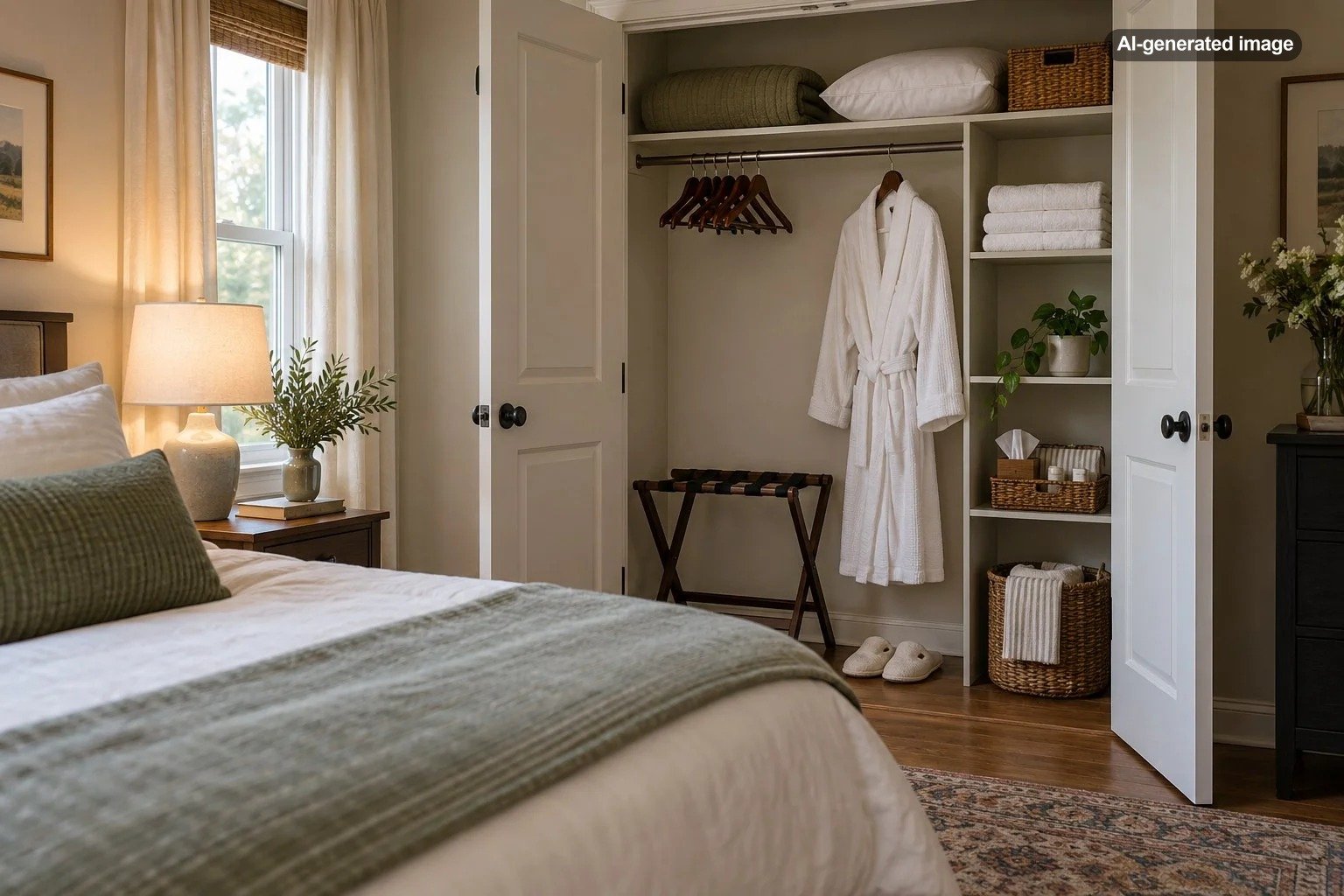
A useful guest room closet should do something surprisingly simple: give visitors enough empty space to unpack. Start with accessible hanging room, a modest supply of matching hangers, somewhere for a suitcase, and a small collection of practical extras such as spare bedding. The goal is not to fill every shelf. It is to make the closet feel intentionally available.
That distinction matters because guest closets have a habit of becoming household overflow zones. Seasonal clothes, gift wrap, old bedding, vacuum attachments, mystery boxes, and the suitcase nobody has used since 2019 can quietly consume the room. Storage is valuable, but guests should not have to negotiate with your belongings before hanging a shirt.
Give guests genuinely empty hanging space
The most important thing to put in a guest room closet is actually nothing. Empty space is what turns a closet from household storage into guest storage.
A short-stay visitor may need only enough room for a jacket and a few shirts, while someone attending a wedding, business event, or longer family visit may arrive with dresses, suits, or clothes they would rather not leave folded in a suitcase. Keep a section of the hanging rod unobstructed from end to end so longer garments are not resting on boxes or storage bins below.
If you routinely use the closet for your own off-season clothing, group those items together rather than distributing them across the entire rod. A visual boundary between household storage and guest space makes the available section immediately understandable.
Provide enough hangers without overcrowding the rod
Ten or so versatile hangers are more useful than a rod packed with dozens. Choose hangers that are sturdy enough for jackets as well as everyday clothing, and include a couple with clips or a crossbar if guests may want to hang skirts or trousers.
Matching or coordinated hangers are not essential, but they make a closet look calmer and help guests distinguish usable hangers from clothing that belongs to the household. Avoid filling the entire rod with empty hangers. They quickly become an obstacle rather than an amenity.
Make room for a suitcase or travel bag
Guests need somewhere to put luggage after unpacking. A clear lower shelf, closet floor area, folding luggage rack, or designated corner can all work. What matters is that the suitcase does not have to remain open in the middle of the bedroom.
If the closet floor is your only practical location, keep it relatively clear. A neat row of bins across every inch of floor space may look organized but still prevents a visitor from using the closet for its intended purpose.
| Closet zone | Good guest-room use | Better household-storage use |
|---|---|---|
| Hanging rod | Guest clothes and a small group of hangers | Limited off-season clothing at one end |
| Eye-level shelf | Folded clothing, handbag, or packing cubes | Usually best left open |
| Upper shelf | Extra blanket or pillow | Labeled seasonal storage |
| Closet floor | Suitcase or shoes | A small number of contained bins |
Keep spare bedding accessible
A guest closet is a sensible home for one extra blanket and, if space allows, a spare pillow or set of bed linens. These are especially useful when guests have different temperature preferences or when a stay lasts long enough to require a linen change.
Do not turn the guest closet into the entire household linen closet unless it is exceptionally large. Bulky comforters and towers of sheets can quickly consume the space visitors actually need. Keep the guest-specific extras together and easy to identify.
Add a small basket of practical extras
A contained basket or tray can hold a few items that are useful but easy for travelers to forget. Think of this as backup convenience rather than a miniature hotel supply room.
- A lint roller
- A small sewing kit
- An extra laundry bag
- A shoe-cleaning cloth
- A few spare hooks or garment clips
Keep the assortment limited and visible. Guests are unlikely to discover thoughtfully stocked supplies if they are buried behind unrelated household storage.
Consider a hamper for longer visits
If friends or family commonly stay for several days, a small hamper or laundry basket can be helpful. It gives worn clothes a destination other than the floor, a suitcase, or the back of a chair.
For occasional overnight guests, however, a permanent hamper may simply occupy valuable closet space. A collapsible laundry bag can serve the same purpose while taking up very little room between visits.
Use labeled bins for household items you must keep there
Few homes can afford to reserve every guest-room shelf exclusively for visitors. If the closet must perform double duty, upper shelves are generally the least intrusive place for household storage because guests are more likely to need the rod, lower shelves, and floor.
Use closed, clearly labeled bins for seasonal decorations, sentimental items, extra linens, or other belongings that legitimately need the space. Consistent containers can reduce visual clutter, but do not mistake containers for additional capacity. A closet packed with beautifully matched bins is still a packed closet.
Leave room for shoes and smaller belongings
A low shelf or modest open section near the floor gives guests somewhere to place shoes without scattering them around the bedroom. Avoid elaborate shoe organizers unless the room regularly hosts long-term visitors; most guests need only a little open space.
A shelf at approximately waist or chest height can also act as a convenient landing spot for handbags, folded clothes, hats, or packing cubes. Keeping at least one easily reached shelf empty often adds more practical value than stocking it with decorative objects.
Do not use the guest closet as a dumping ground
The least helpful guest-room closet contents are the things that ended up there simply because they had nowhere else to go. Unsorted paperwork, abandoned electronics, cleaning chemicals, broken household items, loose tools, and overflowing donation bags make guests feel as though they are borrowing a storage room.
Some household storage is perfectly reasonable. The difference is whether it looks deliberate and leaves functional room for another person.
Before guests arrive
- Remove anything waiting to be donated, repaired, or relocated.
- Check that several hangers are easy to reach.
- Clear an uninterrupted section of hanging rod.
- Leave at least one accessible shelf or flat storage area open.
- Make sure a suitcase can fit somewhere without blocking the closet door.
- Fold and refresh any guest blanket or spare linens stored there.
- Move private, fragile, valuable, or potentially hazardous items elsewhere.
Think about the guest before adding more stuff
The ideal setup depends on who commonly stays in your home. Weekend visitors need less storage than relatives who visit for a week. Older guests may appreciate essentials positioned on accessible shelves rather than overhead. Families with children may require low areas to remain free of items that are fragile or unsuitable for children to handle.
Likewise, a guest room used only a few times a year can reasonably provide more household storage between visits. The practical solution is not to keep it permanently empty, but to organize it so creating usable guest space takes minutes rather than an afternoon.
How much of a guest closet should be empty?
There is no universal percentage, but the most accessible portion should favor the guest. In a standard reach-in closet, reserving roughly half or more of the useful hanging area plus a shelf and some floor space is a sensible target when your storage needs allow it.
If that is impossible, prioritize quality of space over quantity. One uncluttered three-foot section of rod and one empty shelf are more useful than small gaps scattered among your belongings.
Should you put toiletries in a guest room closet?
You can, but toiletries are usually easier to find in the bathroom or on a clearly designated tray in the bedroom. If bathroom storage is limited, keep backup toiletries together in one basket rather than spreading them throughout the closet.
What should go on the top shelf?
The top shelf is best for lightweight, infrequently needed items. That might include an extra guest blanket or neatly contained household storage. Avoid placing anything heavy, unstable, or awkward overhead where someone may struggle to retrieve it.
Should a guest closet be completely empty?
No. A completely empty closet is pleasant but unnecessary in most homes. A successful guest closet simply makes its available space obvious, accessible, and sufficient for the length and type of visits you typically host.
The best test is straightforward: imagine arriving with a suitcase and several garments on hangers. If you can immediately see where the clothes, shoes, bag, and suitcase belong without moving the homeowner’s possessions first, the closet is doing its job.