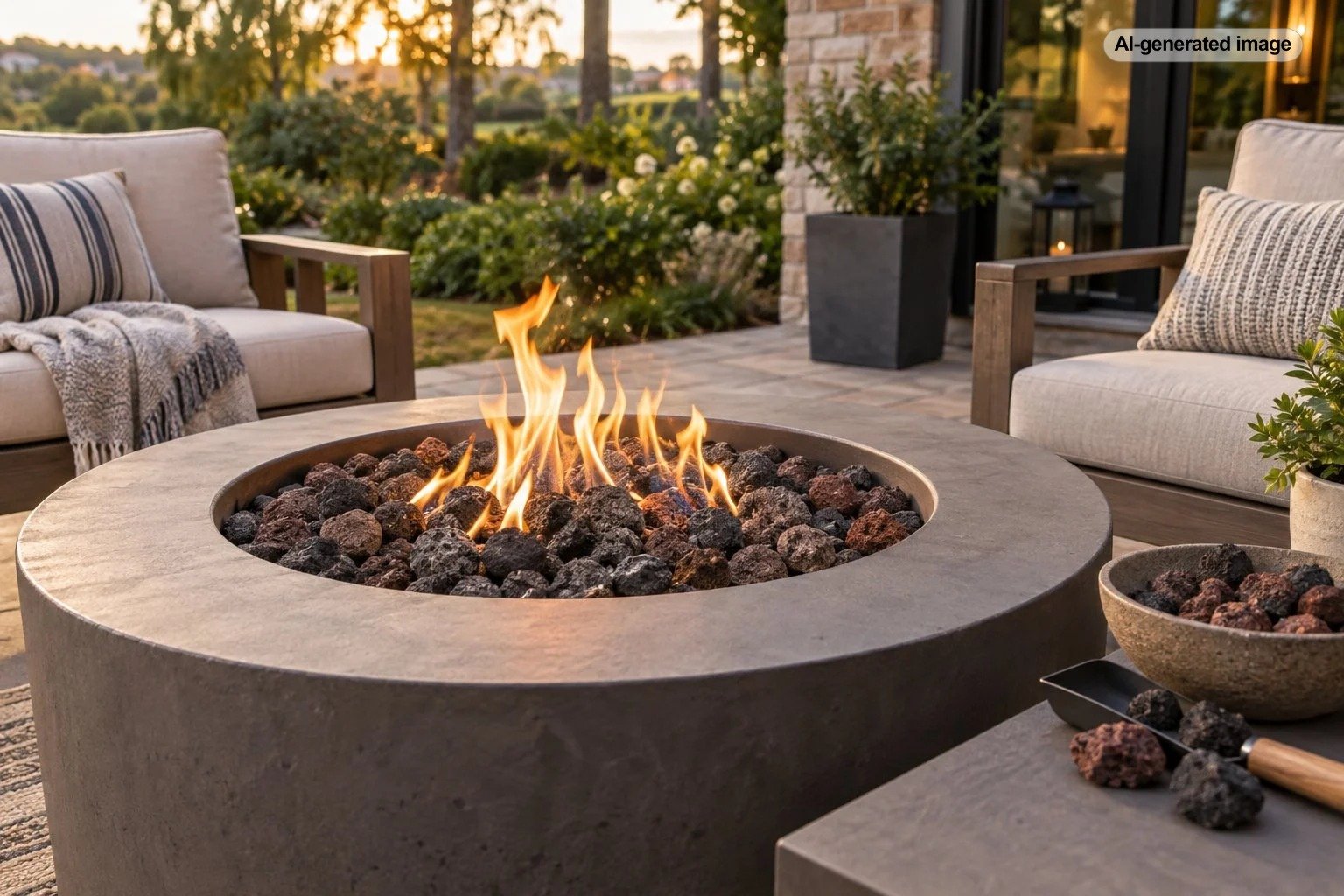
How Often Should You Replace Lava Rocks in a Fire Pit?
Fire pit lava rocks generally do not need replacement on a rigid annual schedule. Replace them when they are crumbling, repeatedly popping, holding stubborn debris or moisture, interfering with the flame, or no longer providing the coverage specified by the fire pit manufacturer. In a well-maintained gas fire pit that stays covered and dry, the original media may remain serviceable for several seasons.
Condition matters more than age. A heavily used, uncovered fire pit in a wet climate may need attention sooner than one used occasionally beneath a fitted cover. The owner’s manual should take precedence over general advice because burner layouts, media depths, and approved replacement materials vary by model.
There is no universal replacement interval
Lava rock is naturally porous and heat resistant, so ordinary heating does not automatically make it expire. What shortens its useful life is repeated wetting, freeze-and-thaw exposure, grease or soot contamination, impact, and improper placement over the burner.
Usage also makes a difference. A fire pit lit a few times each month and protected from rain experiences a gentler cycle than one used nightly or left exposed year-round. Rather than replacing good material simply because another year has passed, make inspection part of seasonal maintenance.
| What you find | Likely next step |
|---|---|
| Rocks remain firm, dry, and correctly positioned | Keep them and continue routine inspections |
| A few pieces are cracked or crumbling | Remove those pieces and add compatible approved media if needed |
| Much of the bed is powdery or breaking apart | Replace the full bed and clean the burner area as directed |
| Grease, melted material, or persistent residue is present | Replace contaminated media and determine the source |
| Flames are uneven or burner ports are obstructed | Turn off the unit and inspect it according to the manual before reuse |
Signs that lava rocks should be replaced
They crumble when handled
Some surface dust is not the same as extensive deterioration. Replacement becomes sensible when numerous pieces split easily, shed substantial grit, or collapse into fragments that can settle around the burner. Loose material can make cleaning harder and may obstruct air or flame openings.
The flame pattern has changed
A gas flame should not have to fight through a densely packed or deteriorating layer of media. If flames appear uneven, unusually weak, or concentrated in one area, shut the fire pit off and let it cool completely. Check the owner’s manual before moving media because the permitted placement around the burner and ignition components is model-specific.
A changed flame does not prove that the rocks are the only problem. Debris, insects, damaged components, low fuel, or a gas-flow issue may also be involved. If the cause is not visible and readily addressed through the manufacturer’s instructions, have the appliance evaluated by a qualified service professional.
The media has become contaminated
Food drippings, candle wax, melted plastic, chemicals, and heavy organic debris do not belong in a gas fire pit. Contaminated rocks may smoke, smell, or leave residue when heated. Replacement is usually more practical than trying to restore deeply porous pieces, but the source of the contamination should also be corrected.
The rocks keep popping or spalling
Porous rock can retain water. Heating damp media may turn trapped moisture into steam, which can cause pieces to crack or pop. Stop using the fire pit if this occurs. Allow the unit to cool, turn off its fuel supply as directed, and inspect the media and burner before the next use.
How to inspect the lava rock bed
Inspect only when the fire pit is fully extinguished, disconnected or shut off as its manual directs, and completely cool. Gloves can help protect against rough edges, but they do not make a warm appliance safe to handle.
What to do
- Read the owner’s manual for approved media, required depth, burner clearance, and shutdown instructions.
- Remove the cover and look for standing water, leaves, nests, soot, foreign objects, and displaced rocks.
- Lift several pieces by hand rather than dumping or raking the entire bed across the burner.
- Set aside rocks that are crumbling, contaminated, unusually soft, or broken into small fragments.
- Inspect visible burner ports, the ignition area, and air passages without enlarging openings or altering components.
- Return sound rocks to the arrangement shown in the manual, keeping required openings clear.
- If replacement media is needed, use the approved type, size, quantity, and placement for that appliance.
Some manuals call for more frequent burner inspection than homeowners expect. One gas fire bowl manual, for example, instructs users to inspect the appliance before operation and keep burner ports free of lava rock. That does not establish a universal procedure for every model, but it illustrates why the appliance-specific instructions matter.
Should you replace individual rocks or the entire bed?
Spot replacement is reasonable when damage is limited and compatible media is available. Remove the failed pieces, clear loose grit without pushing it into the burner, and restore the specified coverage. Do not mix in decorative gravel, river stones, landscaping rock, or unknown stone simply because the pieces look similar.
Replace the entire bed when deterioration is widespread, contamination has spread through the porous material, the existing media cannot be identified, or the manufacturer calls for a different approved material. A full refresh can also make sense after a qualified technician services the burner and recommends replacing the media.
More is not better. Adding extra lava rock can bury ignition components or restrict the intended flame pattern. Likewise, too little media may expose parts that the design expects to be covered. Follow the specified quantity or fill depth rather than judging solely by appearance.
How to help lava rocks last longer
- Keep the fire pit dry. Use the manufacturer’s lid or an appropriate weather cover after the unit has cooled.
- Do not cook over a decorative fire pit unless its manufacturer explicitly says the appliance is designed for cooking.
- Remove leaves and debris before lighting. Do not burn debris off as a cleaning method.
- Avoid harsh cleaning products. Residue may remain in porous rock or damage fire pit finishes and components.
- Do not rearrange hot media. Wait until the appliance is fully cool.
- Protect the unit during long periods of disuse. Follow the manual’s instructions for fuel shutoff, storage, and seasonal care.
Frequently asked questions
Can you wash fire pit lava rocks?
Follow the appliance and media manufacturer’s directions. Loose dry debris may sometimes be brushed or vacuumed away from a cold, disconnected appliance using a method approved in the manual. Soaking porous rocks can leave moisture inside them, so they should never be returned wet and then heated.
Why did my lava rocks turn black?
Darkening can be ordinary soot or evidence that the flame is not burning cleanly. Check for blocked burner ports, incorrect media placement, and other causes listed in the manual. Persistent soot, unusual odors, or an abnormal flame deserves professional evaluation rather than repeated surface cleaning.
Can lava rock be replaced with fire glass?
Only if the fire pit manufacturer permits that material and specifies how it must be installed. Fire glass and lava rock differ in size, weight, airflow behavior, and coverage. A visually appealing substitution is not automatically compatible with the burner.
What should you do with old lava rocks?
Cool, uncontaminated natural rock may be accepted with ordinary household waste in some communities, but disposal rules vary. Rocks contaminated with fuel, chemicals, or other substances may require different handling. Check local guidance rather than scattering used media in planting beds.
The practical replacement rule
Keep sound, clean, correctly placed lava rocks; replace pieces that fail inspection; and renew the whole bed when deterioration or contamination is extensive. Pair that condition-based approach with seasonal checks and a quick inspection before use. Most importantly, treat the fire pit manual as the final authority on approved media and arrangement.