
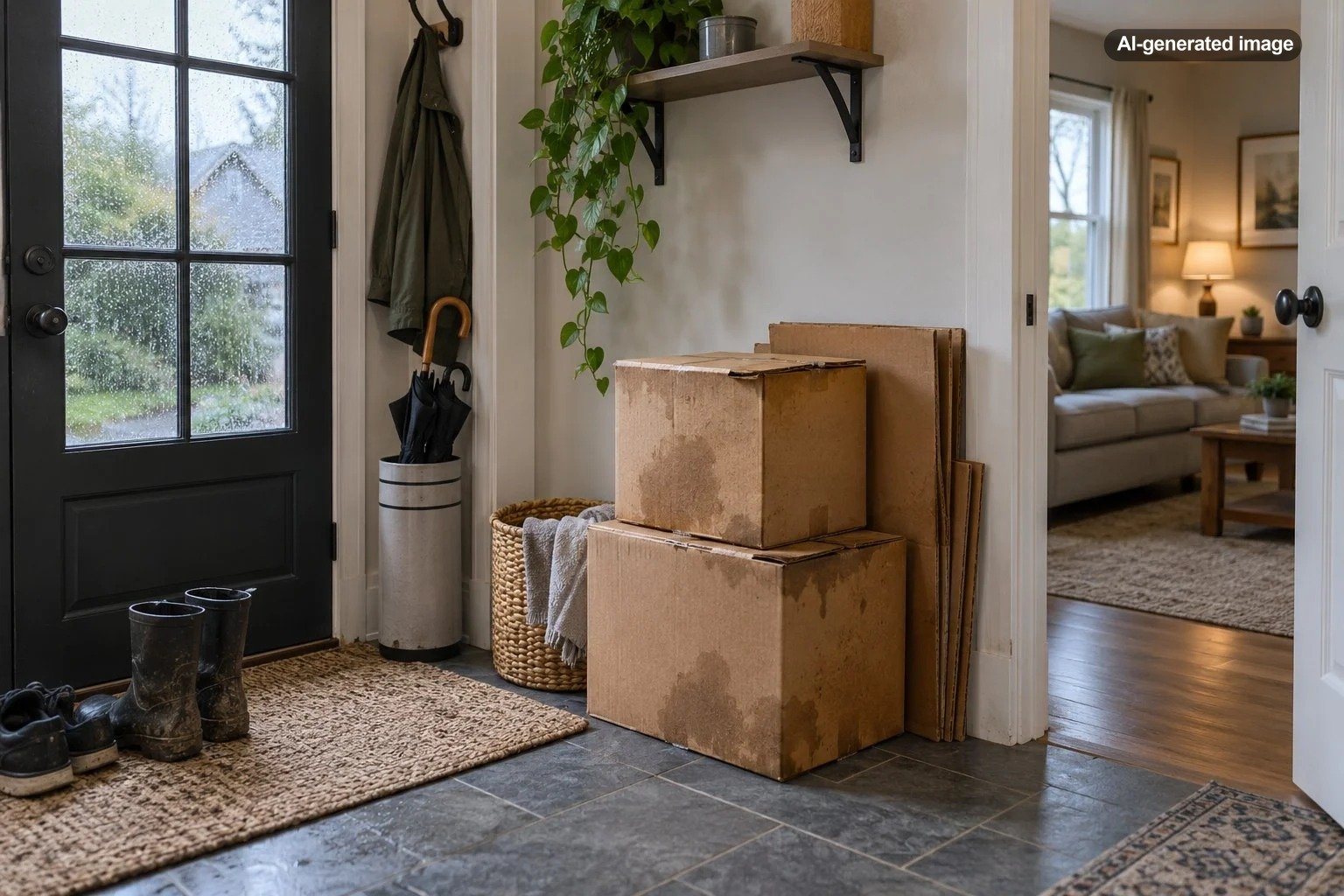
Why Does My House Smell Like Wet Cardboard?
If your house smells like wet cardboard, the most likely explanation is moisture affecting something porous: cardboard boxes, paper, drywall, carpet padding, wood, insulation, fabrics, or accumulated dust. A similar earthy or musty odor can also accompany mold growth, which means a persistent wet-cardboard smell deserves more attention than a quick blast of air freshener.
The useful question is not simply, How do I cover the smell? It is Where is moisture meeting an absorbent material? Start with the simplest possibilities, then work toward hidden leaks or damp building materials if the odor remains.
Why wet cardboard has such a recognizable smell
Cardboard, paper, drywall facing, wood, and many household fabrics are porous materials. When they absorb moisture, ordinary odors from the material, dust, adhesives, stored belongings, and microorganisms can become much more noticeable. That is why a room can smell vaguely like a soaked shipping box even when there is no cardboard in sight.
The U.S. Environmental Protection Agency notes that molds can grow on materials including wood, paper, and carpet when moisture is present. Mold can also release compounds associated with the familiar moldy or musty odor. Smell alone cannot tell you exactly what organism or material is responsible, but it can be a useful clue that something is damp.
Start with the obvious sources
Before assuming there is a leak inside a wall, inspect items that can genuinely smell like damp paper. Recycling bins are an excellent place to begin, especially when beverage cartons, paper bags, food packaging, newspapers, or delivery boxes have been stored while slightly wet.
Then check closets, garages, basements, utility rooms, pantries, and storage spaces. A cardboard box resting directly on a concrete floor can absorb moisture. So can books, paper files, reusable grocery bags, pet supplies, folded linens, and seasonal decorations stored in humid areas.
What to do
- Walk through the house and determine where the odor is strongest.
- Remove damp cardboard, paper, recycling, fabrics, and other obvious odor sources.
- Check nearby walls, baseboards, ceilings, floors, cabinets, and plumbing for moisture or staining.
- Notice whether the odor returns after rain, showering, laundry, cooking, or operation of the air conditioner.
- If the odor persists after obvious sources are removed, investigate for hidden moisture rather than continuing to deodorize the room.
Check for a plumbing leak
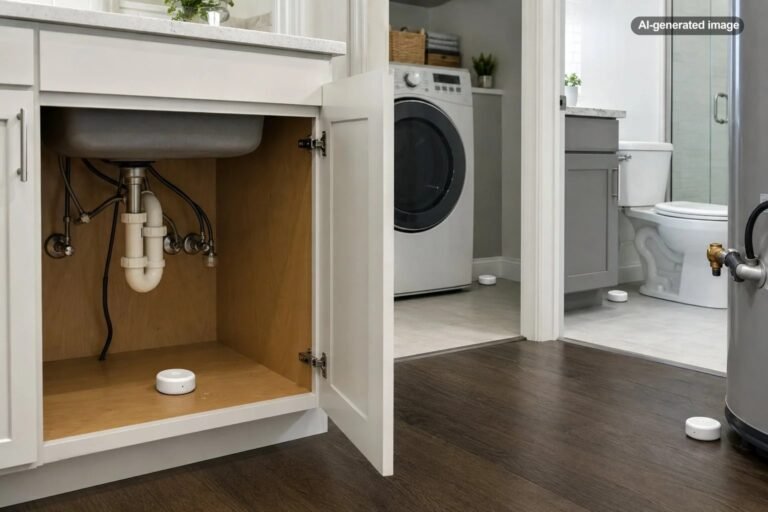
A slow leak beneath a sink, behind a toilet, around a tub, near a refrigerator water line, or inside a cabinet can wet wood products, drywall, insulation, or stored paper without producing a dramatic puddle. The resulting odor may be noticeable before the damage is obvious.
Look for swollen cabinet panels, peeling finishes, discolored drywall, softened baseboards, dampness beneath stored items, or recurring moisture. Pay attention to rooms located directly below bathrooms, kitchens, and laundry areas as well.
If water appears to be coming from inside a wall, ceiling, or inaccessible plumbing area, finding and repairing the leak matters more than treating the odor. Cosmetic cleaning will not solve a continuing moisture source.
Consider rainwater and exterior moisture
An odor that becomes more noticeable after rain can point toward water entering around a roof, window, exterior wall, door, foundation, or other part of the building envelope. The source is not always directly beside the place where you smell it because water can travel before it becomes visible.
Check for ceiling stains, bubbling paint, damp window trim, moisture around exterior doors, wet basement areas, and changes in flooring or baseboards. In lower levels, also consider seepage or persistent condensation rather than assuming every moisture problem comes from a broken pipe.
Look at carpets, rugs, and upholstered furniture
A rug or carpet may feel dry on top while retaining moisture underneath. Carpet padding is especially easy to overlook after a spill, plumbing problem, overflowing appliance, wet-cleaning mishap, or water intrusion near an exterior door.
Move lightweight rugs and inspect both sides. Check the floor beneath them as well. Around upholstered furniture, consider whether a spill, pet accident, or damp cleaning has reached interior padding. Porous materials that remain wet can be difficult to dry thoroughly, and mold-contaminated absorbent materials sometimes need to be discarded rather than surface-cleaned.
Inspect drywall, closets, and enclosed spaces
Drywall is particularly relevant because its paper facing can absorb water. A minor leak behind a wall may therefore create an odor that reminds you of damp paper before obvious damage develops.
Closets can create a similar effect without a plumbing failure. Limited air movement combined with humid air, tightly packed clothing, cardboard shoe boxes, and an exterior wall can create a noticeably stale or damp smell. Pull belongings away from walls and inspect corners, shelving, baseboards, and the backs of stored items.
Do not cut into walls simply because you notice an odor. If you suspect concealed water damage, especially near electrical wiring, plumbing, roofing, or structural components, a qualified professional can investigate without turning a reasonable suspicion into a larger repair.
Could it be mold?
Yes. A persistent wet-cardboard, earthy, or musty odor can be associated with mold, although smell by itself cannot confirm what is growing or where it is located. The EPA specifically advises investigating a moldy odor because it can suggest mold growth somewhere in the building.
The Centers for Disease Control and Prevention likewise notes that mold may smell musty and commonly grows where moisture is present, including around roof, window, and plumbing leaks. Materials that can support mold include paper, cardboard, ceiling tiles, wood, drywall, carpet, fabric, and upholstery.
If you can see mold, the CDC states that identifying its exact type is generally unnecessary before addressing the problem. The practical priorities are removing the mold appropriately and correcting the moisture condition that allowed it to grow.
Do not simply spray fragrance over the problem
Room sprays, candles, scented cleaners, and plug-in fragrances can change what you smell, but they cannot dry wet drywall or repair a plumbing leak. In fact, masking the odor may make it harder to notice whether the underlying condition is getting worse.
The same principle applies to painting over a suspicious area. EPA guidance advises against painting or caulking moldy surfaces before the mold has been cleaned and the material has been dried. Address the moisture first.
A strange household odor is often most useful as a clue, not as the problem itself.
How to prevent the smell from coming back
Once the immediate source is resolved, focus on moisture management. Repair leaks promptly, dry wet materials quickly, use bathroom and kitchen exhaust where appropriate, keep air moving in enclosed spaces, and avoid storing absorbent cardboard directly against potentially damp floors or walls.
Indoor humidity matters as well. EPA guidance recommends keeping relative humidity below 60 percent when possible, with roughly 30 to 50 percent described as an ideal range. A basic humidity meter can help identify rooms that remain consistently damp even when there is no visible leak.
For storage areas, plastic bins can be more moisture-resistant than cardboard where dampness is a recurring concern, but changing containers is not a substitute for correcting water intrusion or unusually high humidity.
When should you call a professional?
Professional evaluation makes sense when you cannot locate the moisture source, the odor keeps returning, water appears to be entering through the roof or building envelope, materials inside walls or ceilings may be wet, or the affected area appears too extensive or complicated for routine household cleanup.
A plumber may be appropriate for suspected supply or drain leaks, while roof, building-envelope, HVAC, or water-damage specialists may be more suitable depending on where the evidence leads. The important distinction is that a smell is not a diagnosis. Use it to narrow the search, then address the actual moisture source.
FAQ
Why does one room smell like wet cardboard?
A localized smell often means the source is nearby. Check stored cardboard and paper, rugs, upholstery, closets, plumbing fixtures, exterior walls, windows, ceilings, and adjacent rooms for damp materials or moisture.
Can drywall smell like wet cardboard when it gets damp?
Damp drywall and its paper facing can contribute to a papery, musty odor. If drywall has been exposed to water, the more important issue is determining why it became wet and whether it can be thoroughly dried or requires professional evaluation.
Does a musty smell always mean mold?
No. Damp belongings and building materials can create stale or earthy odors for several reasons. However, both EPA and CDC guidance recognize musty or moldy odors as a reason to investigate for mold and moisture rather than ignore the smell.
Why does the smell get worse when it rains?
That pattern can suggest rainwater intrusion or a humidity-related problem. Inspect roofing-adjacent ceilings, windows, exterior walls, doors, lower levels, and other areas where outside moisture might enter, and seek professional evaluation if the source is not apparent.
Will a dehumidifier fix the smell?
A dehumidifier can help manage elevated indoor humidity, but it will not repair an active leak or remove damaged material. If a specific water source is present, correct that source first.
Sources & further reading
- U.S. Environmental Protection Agency: A Brief Guide to Mold, Moisture and Your Home
- U.S. Environmental Protection Agency: What does mold smell like?
- U.S. Environmental Protection Agency: Mold Cleanup in Your Home
- Centers for Disease Control and Prevention: Mold
- Centers for Disease Control and Prevention: Mold Clean Up Guidelines and Recommendations