
Can a Coffee Table Be Higher Than a Sofa Seat?
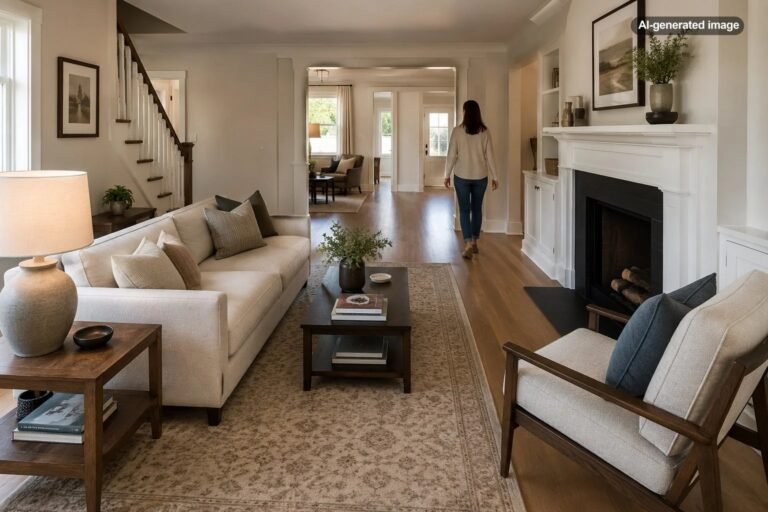
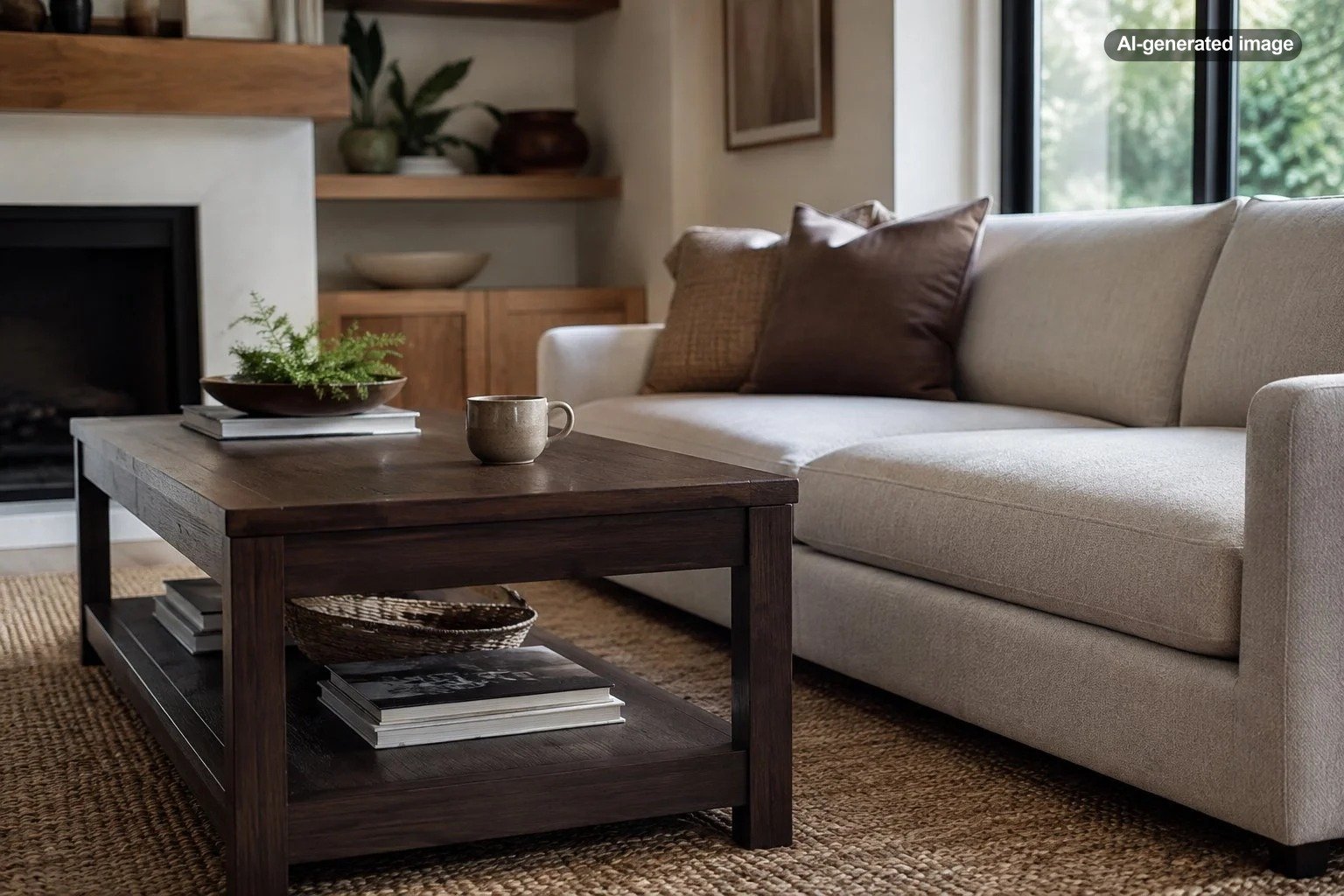
Yes, a coffee table can be higher than a sofa seat, but the difference should usually be modest and intentional. A tabletop that sits an inch or two above the cushion can work when it improves reach, supports dining or hobbies, or complements an unusually low sofa. A substantially taller table often feels more like a barrier than part of the seating arrangement.
The familiar recommendation that a coffee table should be level with the sofa seat or slightly lower remains useful because it tends to produce comfortable reach and balanced proportions. It is a guideline, however, not a law of furniture.
Why coffee tables are usually no higher than the seat
A low horizontal surface visually belongs with a seating group. Keeping it close to cushion height allows the eye to travel across the room without encountering a prominent block in front of the sofa. It also makes books, trays, and decorative objects feel connected to the arrangement rather than perched on a small dining table.
The traditional relationship is practical as well. From a seated position, a surface at or just below knee level is generally easy to reach without forcing the elbows upward. It also leaves the sofa occupants with an unobstructed view across the table.
Most people will find that a table near the actual compressed seat height works better than one chosen from a generic measurement. Sofa cushions sink under body weight, sometimes considerably. Measure from the floor to the top of the cushion while someone is sitting normally, then compare that number with the tabletop height.
When a higher coffee table can work
A slightly elevated table is often sensible when function matters more than strict convention. Someone who regularly works on a laptop, assembles puzzles, writes, or eats an occasional meal in the living room may find a higher surface less tiring to reach. People who have difficulty bending deeply may also prefer the reduced reach, provided the table does not interfere with standing or moving around the sofa.
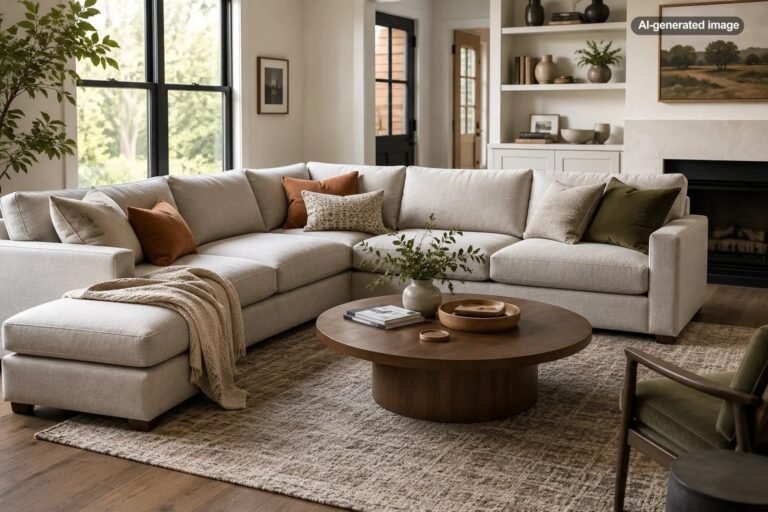
Low-profile sofas create another reasonable exception. A sofa with a very low seat can make a conventionally sized coffee table appear tall on paper, yet the combination may still look balanced if both pieces share an appropriate scale. In this case, the arms, back, table thickness, and surrounding furniture matter as much as the cushion measurement.
A higher table can also suit substantial furniture. A deep sofa with broad arms may visually support a heavier or marginally taller table better than a delicate, tight-backed sofa would. The goal is not to make every horizontal line identical. It is to keep one piece from visually overpowering the other.
How different height relationships behave
| Table relationship | How it tends to feel | Best fit |
|---|---|---|
| 1 to 2 inches below the seat | Relaxed, visually open, and easy to style | Most conventional living rooms |
| Level with the seat | Balanced and readily accessible | Everyday entertaining and family rooms |
| 1 to 2 inches above the seat | More functional but slightly more prominent | Low sofas, easier reach, hobbies, or casual meals |
| More than 2 inches above the seat | Can feel bulky or obstructive | Special-purpose layouts that have been tested in the room |
These ranges are starting points rather than guarantees. A thin glass top may appear lighter than a solid wood table of the same height. An oval top can feel less imposing than a square one because its edges recede from the seating. A pedestal base may also preserve more visible floor area than a closed box base.
Spacing matters as much as height
A table with acceptable height can still be uncomfortable when placed too close to the sofa. A useful starting range is approximately 14 to 18 inches between the front of the sofa and the nearest table edge. This usually leaves room for knees and makes it possible to sit down or stand while keeping the surface within reach.
A taller table often benefits from being placed toward the wider end of that range. The extra distance reduces the sense that the tabletop is pressing into the seating area. However, moving it too far away defeats its purpose, especially for anyone choosing the higher surface to make objects easier to reach.
Test the complete arrangement rather than measuring the sofa alone. Reclining seats require clearance for their extended footrests. A sectional needs usable access from more than one position. In a small apartment, the path between the table and nearby furniture may be more important than achieving a textbook proportion.
Check length, shape, and visual weight
Height is only one part of scale. A coffee table around one-half to two-thirds the visible length of the sofa often creates a convincing relationship while leaving space at either end. A very short table can look stranded, while one nearly as long as the sofa may make the arrangement feel crowded.
Shape changes how a tall table is perceived. Round and oval tables soften the transition into nearby walking paths and expose more floor around their edges. Rectangular tables reinforce the long line of a sofa, while square tables work especially well in the center of a compact sectional. When the table is slightly higher than the seat, curved edges and an open base can help reduce its visual mass.
Material matters too. Clear glass, pale wood, slender metal framing, and open bases tend to feel less imposing. Thick dark tops, solid plinth bases, storage trunks, and heavily detailed pieces appear larger. A visually heavy table generally needs more restraint in both height and footprint.
How to test the height before buying
What to do
- Measure the sofa seat from the floor to the top of the cushion, both unoccupied and while someone is seated.
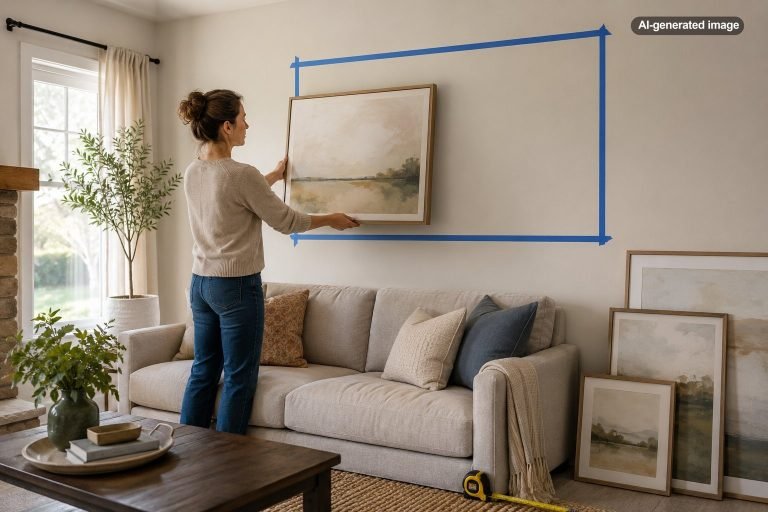
- Mark the proposed tabletop height using stacked boxes, a folding table, or removable painter’s tape on a nearby vertical surface.
- Outline the tabletop footprint on the floor with painter’s tape, leaving roughly 14 to 18 inches beside the sofa.
- Sit in several positions and reach for an empty cup, book, and remote. Check whether the motion feels natural.
- Walk through the room and test standing up from every frequently used seat.
- View the arrangement from the doorway and neighboring spaces to judge whether the table interrupts the room visually.
This temporary mockup is particularly valuable when considering a table more than 2 inches above the cushion. Live with the outline for a day if possible. Daily movement will reveal problems that a quick showroom impression may conceal.
Common mistakes to avoid
One mistake is measuring to the sofa frame rather than the usable cushion. Another is choosing height without considering a thick tabletop or bulky base. The listed height may sound reasonable, yet the piece can still look oversized because so much material occupies the space above and below that line.
Do not compensate for an excessively tall table by pushing it so far away that nobody can use it comfortably. Likewise, avoid choosing a tiny tabletop simply because its height happens to match. Height, length, depth, spacing, and visual weight must work together.
Decor can magnify the problem. Tall vases, lamps, and large stacks of books add another vertical layer to an already elevated surface. If the table sits above the sofa seat, keep the arrangement low enough to preserve comfortable sightlines and conversation.
Frequently asked questions
Is a coffee table 3 inches higher than the sofa too tall?
It may be. A 3-inch difference is noticeable and should be tested in the actual room. It is more likely to succeed with a low, substantial sofa and a visually light table than with compact seating and a solid table base.
Should an ottoman follow the same height rule?
An ottoman used for resting feet is generally most comfortable at or slightly below the seat. If it primarily serves as a table, a level or marginally higher surface may be practical, but softness and stability must also suit the objects placed on it.
What if the sofa cushions sink deeply?
Measure the occupied seat height and test the reach while seated. The unoccupied cushion height can make the table relationship look more balanced than it feels during actual use.
Can side tables be higher than the sofa seat?
Yes. Side tables are commonly judged against the sofa arm rather than the seat. A surface close to arm height is usually convenient for setting down a drink or operating a lamp.
The final decision
A coffee table does not have to sit below the sofa cushion. A modestly higher surface can be comfortable, attractive, and better suited to how the room is used. The safest design starting point remains level with the compressed seat or up to 2 inches lower, but a difference of 1 or 2 inches above the seat is often entirely workable.
If the table rises much beyond that, mock up both its height and footprint before committing. The right choice should be easy to reach, simple to walk around, proportional to the sofa, and quiet enough visually that the living room still feels like a place to sit rather than a place to negotiate furniture.