
Can a Coffee Table Be Longer Than the Sofa?
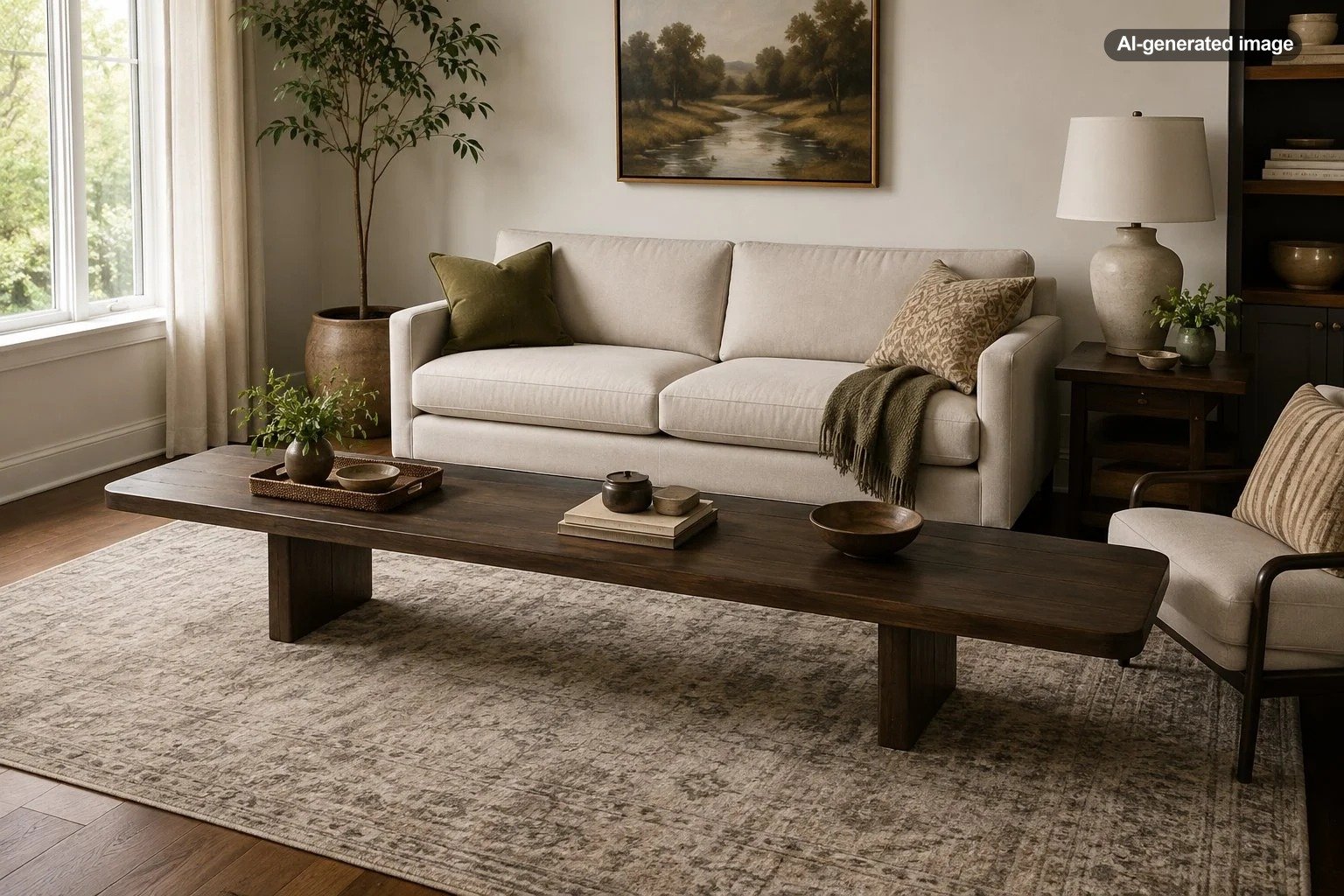
Yes, a coffee table can be longer than the sofa. There is no design rule that automatically makes an oversized coffee table wrong. What matters is whether the table fits the seating arrangement, leaves comfortable circulation space, and looks intentional rather than accidentally over-scaled.
The familiar advice that a coffee table should measure roughly two-thirds the length of a sofa is useful as a starting point, not a law. In some rooms, especially those with sectional seating, multiple chairs, or a broad conversational layout, a table that approaches or even exceeds the sofa’s length can create better balance and function.
Why the usual two-thirds guideline exists
The two-thirds guideline works because it tends to create an easy visual relationship between a standard sofa and a centered rectangular coffee table. The table feels substantial enough to serve people sitting across the sofa without competing with the sofa’s overall scale.
It also leaves visible space near the sofa arms, which often makes a room feel lighter. That breathing room can be especially helpful when end tables, floor lamps, side chairs, or other furnishings already occupy the area around the sofa.
But the guideline assumes the sofa is the main reference point. Many living rooms are more complicated. A sofa may face two lounge chairs, sit beside a chaise, or form only one side of a much larger seating group. In those situations, sizing the coffee table strictly to the sofa can produce a table that is actually too small for the room.
The best coffee table is proportioned to the conversation area, not automatically to the sofa alone.
When a longer coffee table can look right
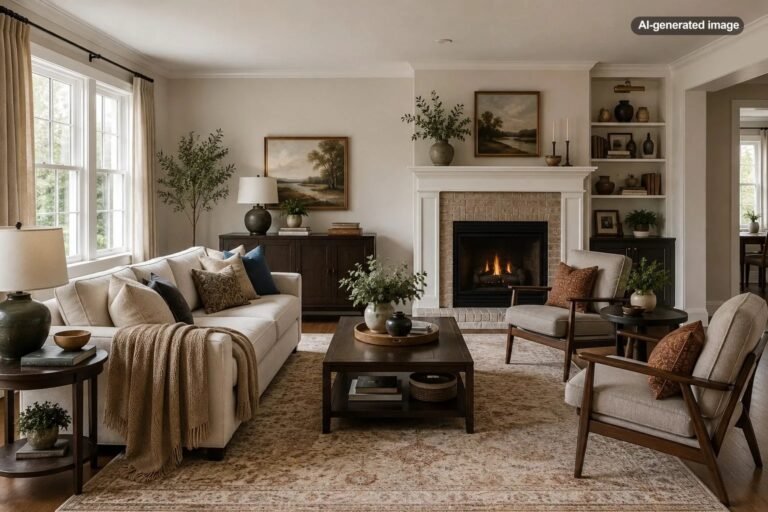
A table longer than the sofa is easiest to justify when other furniture visually expands the seating zone. Imagine a modest sofa flanked by two substantial armchairs. The combined seating arrangement may span much farther than the sofa itself, so a long table can help connect all three seats into one coherent group.
The same idea applies to sectionals. A sectional may have a relatively short straight sofa section but a long chaise or return. A narrow, elongated coffee table can serve more of the seating and may feel more appropriately scaled than a smaller table chosen only from the sofa measurement.
Large open-plan rooms can also support greater length. If the seating arrangement floats away from the walls and occupies a generous area, a longer coffee table may provide the visual weight needed to keep the furniture from looking scattered.
When the extra length starts to feel awkward
The biggest problem is usually circulation. A long table may technically fit in front of the sofa while creating a pinch point at one or both ends. If someone has to turn sideways, navigate around a sharp corner, or repeatedly detour around the table, the furniture is too large for the usable space regardless of how attractive it looks.
Visual imbalance is another concern. In a compact room with one sofa and little additional seating, a table that extends significantly beyond both sofa arms can appear disconnected from the rest of the furniture. Instead of anchoring the room, it may seem as though it belongs to a larger seating arrangement that is not actually there.
Depth matters as much as length. An unusually long table that is also very wide can dominate the center of the room. If you want extra length, a narrower profile often keeps the composition lighter and preserves easier movement.
Measure the room before judging the ratio
Start with the sofa, but do not stop there. Measure the full seating area, including chairs, chaise sections, side tables, and the pathways people use to enter and leave the room. Marking the proposed coffee table footprint on the floor with painter’s tape can make an oversized choice much easier to evaluate.
Many layouts feel comfortable when there is roughly 16 to 18 inches between the coffee table and the primary seating. That distance is close enough for someone to reach the table while still allowing reasonable legroom. Your room, furniture depth, and household needs may call for a little more or less.
Circulation around the outside of the seating group deserves more generous space. Doorways, hallways, fireplace approaches, patio doors, and routes between rooms should remain practical. A coffee table should not turn a normal walking path into an obstacle course.
What to do
- Measure the sofa and the entire seating arrangement.
- Mark the proposed table length and width on the floor.
- Check the reach from each frequently used seat.
- Walk every normal route through the room.
- Reduce the table size if its corners interfere with circulation.
Shape can make an oversized table easier to use
A rectangular coffee table makes its length obvious, which can be useful in a long seating arrangement. Rounded corners, however, can soften a table that extends beyond the sofa and make nearby pathways feel less abrupt.
Oval tables are particularly forgiving because they provide length without projecting hard corners into circulation zones. A long, narrow oval may work beautifully where an equally long rectangular table feels too severe.
You can also create length with multiple smaller pieces. Two matching tables, nesting tables, or a pair of compact tables placed together can fill a broad seating area while providing more flexibility. They can be separated when the room needs extra floor space or rearranged for different seating situations.
Height and visual weight still matter
Length is only one dimension of proportion. A coffee table that is longer than the sofa can still feel graceful if it has a slim frame, open base, glass top, or visually light construction. A long table made from thick, solid materials will command much more attention.
Height should also relate comfortably to the seating. Coffee tables are commonly chosen near the height of the sofa seat, sometimes slightly lower. A noticeably tall, long, and bulky table can begin to feel more like a dining surface than a relaxed living-room centerpiece.
Consider how the table will actually be used
A longer table can be genuinely useful in a household where several people regularly sit around the seating group. It can provide more accessible surface area for drinks, books, remotes, games, or serving pieces without concentrating everything in one small spot.
On the other hand, a large tabletop can become an invitation to permanent clutter. If your living room needs flexible open floor space for children, pets, exercise, entertaining, or frequent furniture rearrangement, two movable tables may be more practical than one oversized piece.
Also consider storage. A long table with drawers or a lower shelf adds substantial visual mass, even when its outer dimensions seem reasonable. If the room already contains large storage furniture, a simpler coffee table can prevent the center of the space from feeling crowded.
How to make the final decision
Do not reject a coffee table simply because its listed length exceeds the sofa. Instead, ask whether the table serves the whole seating group, maintains comfortable clearances, and looks balanced from several viewpoints in the room.
Before you decide
- Compare the table with the full seating arrangement, not only the sofa.
- Confirm that people can comfortably reach the surface.
- Check walking paths at both ends of the table.
- Consider whether the width and visual weight amplify the extra length.
- Use floor tape or cardboard to test the footprint before buying.
- Choose multiple smaller tables if flexibility matters more than one continuous surface.
A coffee table that is longer than the sofa can look polished and purposeful when the room supports it. The key is to treat furniture proportions as relationships rather than rigid formulas. If the table connects the seating, respects the pathways, and suits the way the room is used, exceeding the sofa’s length is perfectly workable.