
Why Does My Bathroom Smell Like Sewer Gas Only at Night?
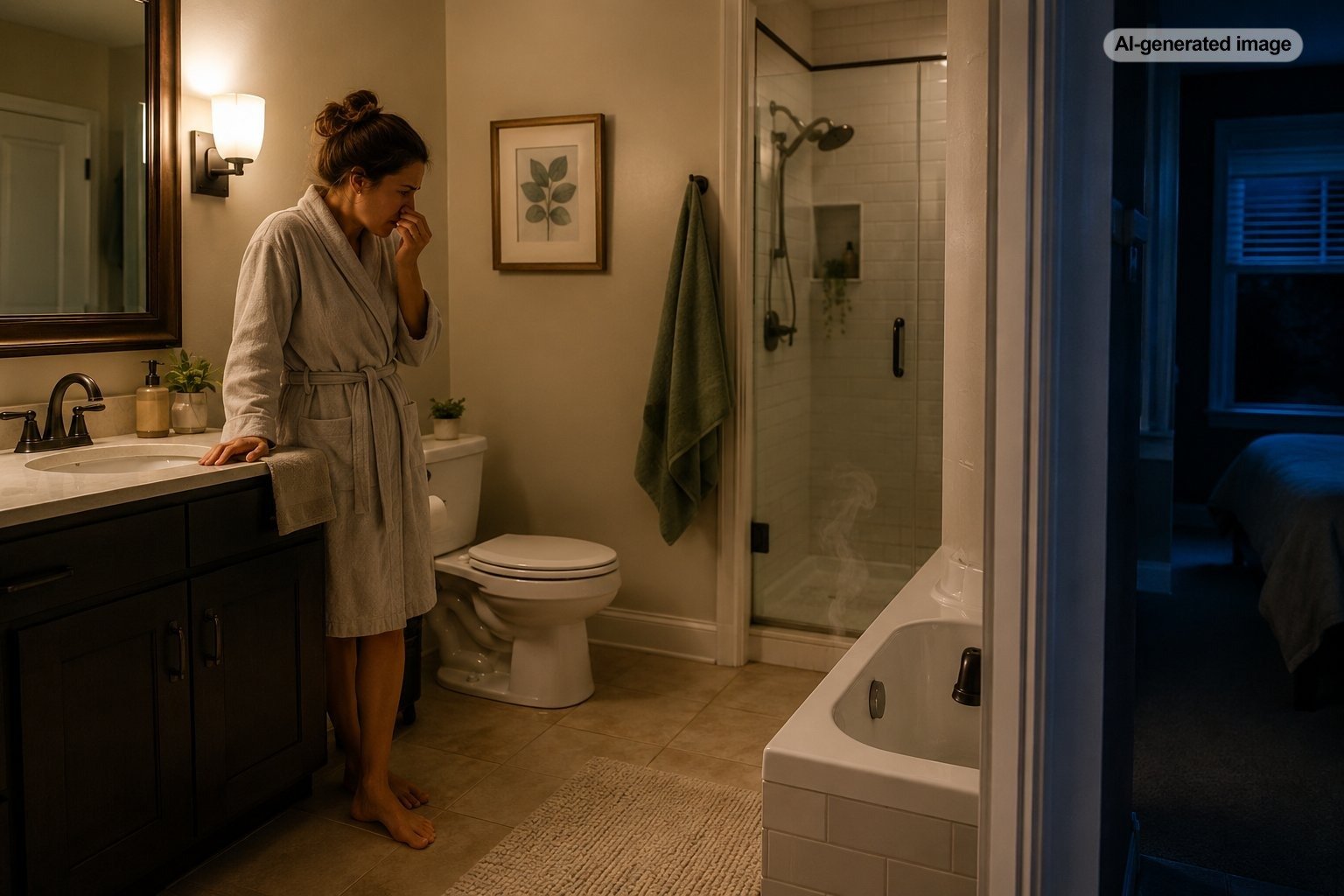
A bathroom that smells like sewer gas only at night usually has a plumbing seal or airflow problem that becomes noticeable when the room is quiet, closed, cooler, or affected by nighttime pressure changes. Common causes include a dry drain trap, buildup inside a drain, a loose toilet seal, a damaged drain or vent connection, or a plumbing vent that is not working correctly.
The timing is useful evidence, but it does not necessarily mean the sewer system behaves differently after sunset. Evening routines, closed windows, exhaust fans, air-conditioning cycles, lower water use, and changing outdoor air movement can make an existing odor easier to detect.
Why the smell may appear only at night
Sewer odors enter a bathroom through an opening or failed seal. What changes at night is often the way air moves through the room rather than the underlying defect.
The bathroom is closed for longer periods
A faint odor can accumulate when the door and windows remain closed. During the day, foot traffic and general ventilation may disperse it before anyone notices. Overnight, even a small leak around a trap, toilet, or pipe connection may become obvious.
Exhaust fans and HVAC equipment change air pressure
A bathroom fan, clothes dryer, range hood, or central air system can create slight negative pressure indoors. That pressure may pull air through a weak plumbing seal or an opening around a drain connection. The effect may be strongest when several fans or appliances operate at once.
Try noting whether the odor begins after the bathroom fan, dryer, or air conditioner starts. This does not confirm the source, but it gives a plumber useful diagnostic information.
Outdoor air movement changes
Wind and temperature influence how odors disperse around roof vents and open windows. Under certain conditions, air leaving a plumbing vent can drift toward a nearby window, soffit, balcony, or outdoor-air intake. A sound plumbing system should still contain sewer gas indoors, but changing airflow can expose an incorrectly placed, damaged, or poorly performing vent arrangement.
Water use drops overnight
Water held inside a P-trap forms a barrier between the room and the drainage system. A seldom-used shower, guest sink, floor drain, or tub may have a shallow or evaporated trap seal. Regular daytime water use can temporarily replenish or mask the issue, while the odor becomes noticeable after several quiet hours.
Check the simplest cause first: a dry trap
Every functioning drain trap should retain water. This includes fixtures that may be easy to overlook, such as a floor drain behind a toilet, a guest-bath shower, a freestanding tub, or a drain beneath a utility fixture.
What to do
- Run water for 30 to 60 seconds in every sink, shower, and tub in or near the affected bathroom.
- Pour water slowly into any visible floor drain.
- Wait several hours with the bathroom door closed.
- Check whether the odor disappears, then monitor whether it returns over the following days.
If adding water solves the problem but the smell repeatedly returns, the fixture may simply be used too infrequently, or the trap could be losing water through evaporation, siphoning, or a leak. A plumber can determine whether the drain needs a trap-seal maintenance solution or whether a venting defect is drawing water out of the trap.
Clean the drain without damaging the plumbing
Bathroom drains collect soap residue, hair, skin oils, toothpaste, and other organic material. Bacteria living in that buildup can create a sour, musty, or sulfur-like odor. Sink overflow channels are especially easy to miss.
Remove accessible hair and debris, wash the stopper, and clean the visible drain opening with a suitable nonabrasive cleaner. Follow the fixture manufacturer’s care guidance when working around specialty finishes. Avoid repeatedly combining drain chemicals, and never mix household cleaners. Chemical reactions can release hazardous fumes or damage plumbing components.
If the odor is isolated to one sink and becomes stronger when water runs, inspect and clean the overflow opening as well as the drain. If several fixtures smell at once, a shared vent or drainage problem becomes more likely.
Inspect the toilet area
A toilet has an internal trap, but its connection to the drain also relies on a sealed joint. A failed seal beneath the toilet can release odor without producing an obvious puddle. The smell may be most noticeable near the toilet base or after flushing.
Look for a toilet that rocks, shifts, gurgles, leaks at the base, or has staining around the floor connection. Do not keep tightening the toilet bolts in an attempt to stop movement; excessive force can damage the fixture. A loose or leaking toilet should be evaluated and reset correctly.
Listen for signs of a venting or drainage problem
The drain-waste-vent system uses vents to balance pressure and direct plumbing gases outdoors. When airflow is restricted or a vent connection is damaged, draining water may pull on nearby trap seals or push odors toward fixtures.
Clues include:
- Gurgling from a sink, shower, or toilet
- Water levels changing inside a toilet bowl
- Several drains running slowly at the same time
- Odor appearing when another fixture drains
- A trap that repeatedly loses water
- Odor that worsens when an exhaust fan operates
Roof vent inspection is generally not a casual bathroom repair. Roof access involves fall hazards, and venting defects may be hidden inside walls or ceilings. A qualified plumber can inspect accessible connections and use diagnostic methods such as controlled smoke testing when appropriate.
Rule out other sulfur-like odors
Not every rotten-egg odor comes from a drain. If the smell appears only when hot water runs, the water heater or water supply may be involved. If it is strongest inside a vanity, damp materials, a leaking pipe, or stored cleaning products may be responsible. A dead pest in a wall or ceiling can also create a temporary odor that changes over time.
Natural gas is intentionally odorized and may also be described as sulfurous or rotten-egg-like. If you cannot confidently identify the odor as plumbing-related, especially when it is strong or present near gas equipment, leave the area and contact the gas utility or emergency services from a safe location. Do not operate switches, flames, or appliances while investigating a suspected fuel-gas leak.
When to call a plumber
Professional evaluation is sensible when adding water to the traps and cleaning the drains do not resolve the odor. Call sooner if the bathroom has slow drains, backups, recurring gurgling, a rocking toilet, visible leakage, damp walls, or odor from multiple fixtures.
Tell the plumber exactly when the smell occurs and what equipment is running at the time. Mention recent remodeling, toilet replacement, extended vacancy, drain cleaning, storms, or changes to HVAC and exhaust systems. A pattern that seems oddly specific may help narrow the investigation.
Before you decide
- Check every fixture, not only the drain nearest the smell.
- Record whether fans, HVAC equipment, or other drains affect the odor.
- Note gurgling, slow drainage, changing toilet water levels, or leaks.
- Avoid opening walls, climbing onto the roof, or dismantling plumbing without the appropriate experience.
- Do not use fragrance to cover a recurring sewer odor; find the entry point.
How to help prevent the smell from returning
Run water periodically in guest bathrooms and other seldom-used fixtures. Keep drain openings and sink overflow passages clean, address a moving toilet promptly, and investigate recurring drainage noises rather than treating them as harmless quirks.
For a home that is vacant seasonally, include plumbing traps in the departure and return checklist. Long periods without water use can allow trap seals to evaporate, particularly in warm rooms. A plumber can recommend an appropriate longer-term approach for drains that routinely dry out.
Frequently asked questions
Can cold nighttime temperatures cause sewer gas indoors?
Temperature changes can affect airflow and odor dispersion, but they do not create an indoor entry point by themselves. A working trap and properly connected plumbing should still separate the bathroom from the drainage system.
Why does the smell disappear after I run the shower?
Running the shower may refill a dry or shallow trap. It may also rinse odor-producing residue temporarily. If the smell returns quickly, have the trap, drain, and venting checked.
Can an exhaust fan pull sewer gas into a bathroom?
An exhaust fan can create negative pressure that reveals an already weak seal or plumbing opening. The fan is usually not the root defect, but the timing can help identify it.
Will drain cleaner fix a sewer gas smell?
Drain cleaner will not repair a dry trap, failed toilet seal, damaged pipe, or venting problem. It may also be unnecessary when the issue is simple debris that can be removed mechanically. Never combine drain-cleaning products.