
How to Make a Rental Bathroom Look Better Without Renovating
A rental bathroom can look considerably better without replacing tile, moving plumbing, or making changes that follow you into a security-deposit dispute. The most effective approach is to improve what the eye notices first: visual clutter, lighting, textiles, color consistency, and the condition of small removable details.
Begin with cleaning and editing rather than shopping. Once the room is clear, choose a simple visual direction and add only the pieces that support it. A coordinated shower curtain, flattering light, tidy counter, and thoughtful storage can do more for a dated bathroom than a collection of clever temporary fixes.
Start With the Parts That Look Permanently Tired
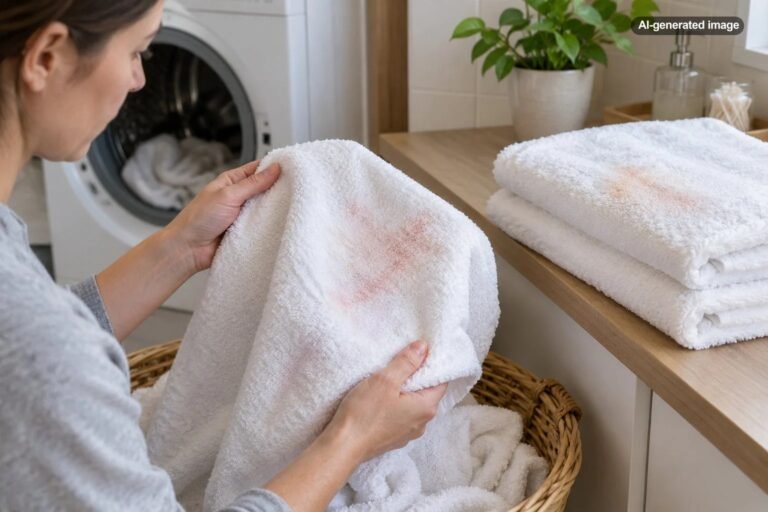
Before deciding that the tile or vanity is the problem, look for smaller details making the entire bathroom feel neglected. Dingy grout, mineral deposits, a discolored shower-curtain liner, dusty bulbs, mismatched containers, and a crowded vanity can make otherwise serviceable finishes appear much worse.
Clean the mirror, faucet, baseboards, cabinet fronts, vent cover, and the narrow spaces around fixtures. Wash or replace the shower liner, launder bath mats, and remove bottles that are empty or rarely used. Do not try to disguise damaged caulk, active leaks, loose fixtures, or persistent moisture. Those are maintenance concerns to report rather than decorate around.
What to do first
- Photograph the room so you can see the overall balance rather than focusing on one disliked feature.
- Remove everything that is not used regularly.
- Clean every visible surface and textile.
- Identify the two or three elements that still dominate the room.
- Choose upgrades that redirect attention without interfering with fixtures or ventilation.
Choose a Small, Cohesive Color Palette
Rental bathrooms often feel disjointed because several fixed finishes compete with one another. A beige floor, cool white wall, warm wood vanity, and chrome faucet may not be ideal together, but adding more unrelated colors usually makes the conflict more noticeable.
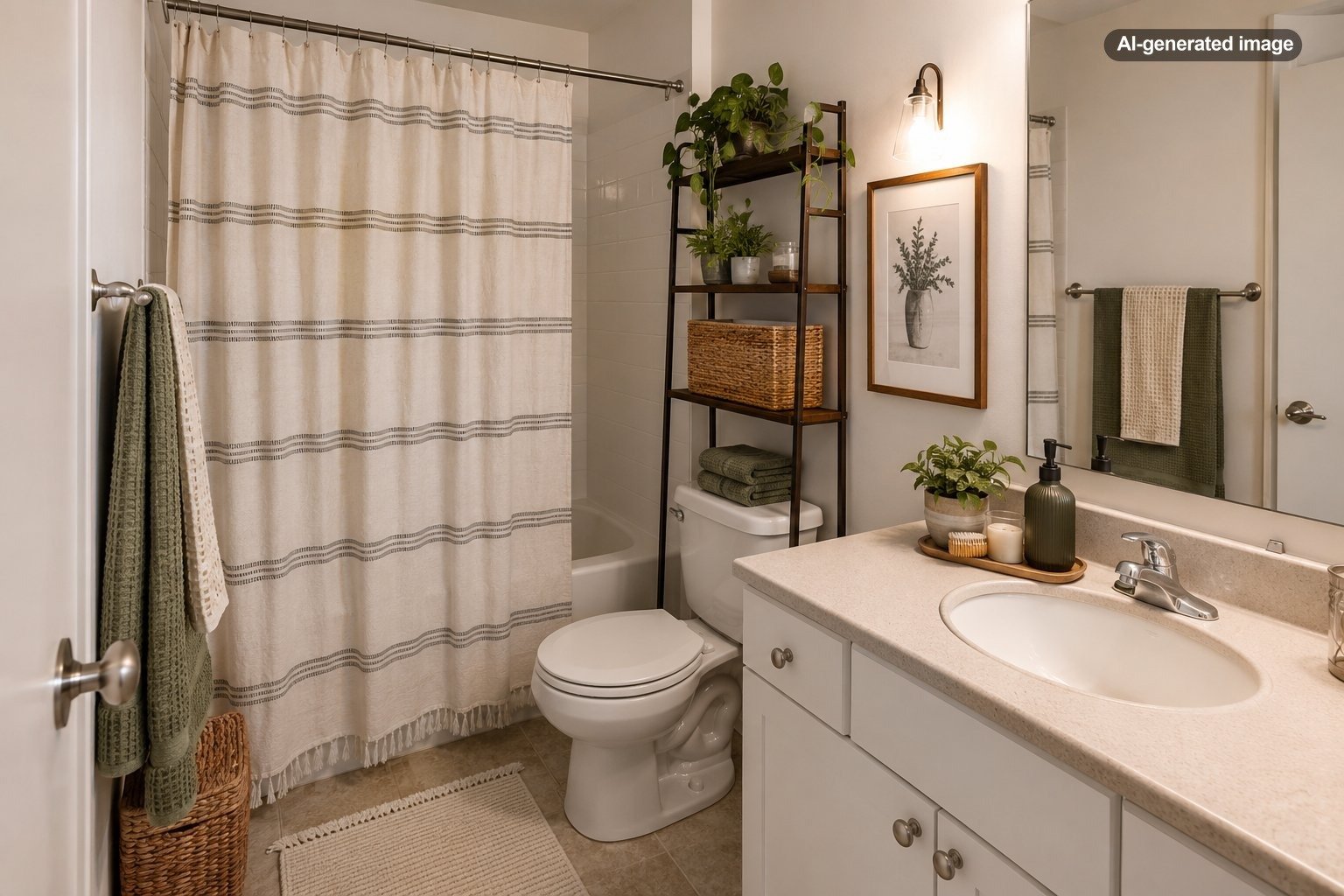
Instead, work with the fixed finish that covers the largest area. If the tile is warm, consider cream, olive, rust, muted blue, or natural wood accents. If the room is dominated by cool gray or white, try navy, charcoal, dusty green, or crisp black details. Repeat the chosen palette in the shower curtain, towels, bath mat, and one or two accessories.
A rental bathroom feels intentional when the removable pieces appear to belong to the same room.
This does not mean buying a matching bathroom set. Exact matching can look flat, while controlled variation feels more collected. For example, pair a striped shower curtain with solid towels and a subtly textured bath mat, keeping all three within the same family of colors.
Use the Shower Curtain as the Main Design Element
In many rental bathrooms, the shower curtain is the largest uninterrupted surface. It can soften unattractive tile, introduce pattern, and establish the room’s palette without touching the walls.
Hang the rod as high as the existing setup safely allows, provided the curtain and liner still overlap the tub or shower correctly. A curtain that nearly reaches the floor can make the room look taller, while one that stops awkwardly above the tub often makes the space feel unfinished. Measure before buying because standard lengths do not suit every installation.
Choose a washable fabric curtain or another bathroom-appropriate material, and use a separate liner when needed. In a narrow room, a lighter curtain can preserve brightness. A bold pattern can work well when the rest of the space is restrained, but several small patterns competing across towels, rugs, and storage bins may make a compact bathroom feel busy.
Improve the Lighting Without Rewiring
Unflattering light can make paint, tile, skin tones, and even clean surfaces look dull. Renters may not be able to replace a fixture, but they can often improve the quality of the light by cleaning the shade and using compatible bulbs with a consistent color appearance.
Check the fixture’s labeling and use only bulbs of an appropriate type and wattage. Avoid covering ventilation openings or adding lamps where cords, water, or limited counter space create a hazard. Plug-in lighting should be used only where it can remain safely away from wet areas and comply with the room’s existing outlet arrangement.
Make Everyday Products Look Organized, Not Staged
A bathroom still needs to function. The goal is not to hide every toothbrush and bottle but to give frequently used items defined places. Keep the counter limited to daily essentials, then group them on a washable tray or in a shallow container that is easy to lift for cleaning.
Use drawers and cabinets for backups, medications, cleaning supplies, and less attractive packaging when storage conditions are appropriate. A small freestanding drawer unit, narrow rolling cart, over-the-toilet shelf, or cabinet organizer can add capacity without attaching anything permanently. Always measure the room, including door swings, toilet clearance, and access to shutoff valves, before adding furniture.
Open baskets are useful for towels and toilet paper, but they are less practical for items that collect dust or need protection from bathroom humidity. Clear containers make supplies easy to find, while opaque containers create a calmer appearance. The better choice depends on whether visibility or visual quiet matters more to you.
Before you add storage
- Confirm that it will not block a vent, outlet, valve, or access panel.
- Choose materials that tolerate occasional moisture and are easy to wipe clean.
- Leave enough room to clean the floor and nearby fixtures.
- Avoid storing more simply because a new container creates space.
- Use stable freestanding pieces rather than top-heavy units that can tip.
Bring In Texture Through Towels and a Bath Mat
Fresh textiles provide an immediate improvement because they cover several common problem areas at once. Towels introduce color and softness, while a well-sized bath mat can reduce the visual impact of a dated floor.
Select towels based on how they feel, wash, and dry in your household rather than appearance alone. Thick towels may feel plush but can dry slowly in a humid or poorly ventilated bathroom. Lighter towels may be easier to launder and rotate. A bath mat should fit the available floor area without bunching against the toilet, vanity, or door.
Avoid layering several small rugs in a compact bathroom. One appropriately sized, washable mat generally looks cleaner and is easier to maintain. For safety, make sure it lies flat and has a backing or pad suited to the floor beneath it.
Add Art and Decor Selectively
Bathrooms benefit from the same finishing touches as other rooms, but moisture changes what is practical. Framed prints, small objects, and plants can make the space feel personal, provided they do not crowd the counter or sit where they will be repeatedly splashed.
Use inexpensive or replaceable art rather than irreplaceable photographs, valuable works, or moisture-sensitive materials. A single larger piece often looks more deliberate than several tiny decorations. A small plant may work when the room provides suitable light and ventilation; otherwise, a convincing artificial stem can add color without becoming another maintenance project.
Mirrors can make a strong visual difference, but replacing a mounted rental mirror is not always simple or permitted. A smaller decorative mirror may be leaned safely on a deep shelf or vanity only when it is stable and cannot fall. Do not hang heavy objects with an adhesive system unless the product is suitable for the surface, weight, and humid location.
Be Cautious With Peel-and-Stick Products
Temporary wallpaper, floor coverings, decals, and adhesive tiles can conceal an unattractive finish, but temporary does not always mean damage-free. Adhesive performance varies with humidity, heat, surface texture, paint condition, cleaning products, and the length of time the material remains installed.
Read the lease before covering walls, floors, counters, or tile. Test the material in an inconspicuous area and follow its removal instructions. Avoid placing adhesive products over peeling paint, loose tile, failing grout, damaged finishes, or surfaces that are frequently soaked. Keep samples and installation information so you know what was used when it is time to remove it.
Make Reversible Fixture Changes Only With Permission
Some renters consider changing cabinet pulls, a showerhead, a toilet seat, or other small components. These swaps can improve appearance or comfort, but they are not purely decorative when plumbing, electrical components, waterproofing, or secure mounting is involved.
Ask for written permission when the lease or the nature of the change requires it. Store every original part, fastener, and instruction together in a labeled container. Do not alter plumbing connections, drill tile, remove hardwired lighting, or disturb sealed surfaces unless the work has been approved and handled appropriately.
Often, repeating the existing finish is simpler than replacing it. If the faucet and towel bar are chrome, use chrome-toned hooks, frames, or accessories rather than introducing several competing metallic finishes. A room can look more coherent without changing a single installed fixture.
Know Which Changes Deliver the Most Visual Impact
| Upgrade | Visual impact | Commitment | Main consideration |
|---|---|---|---|
| Deep cleaning and decluttering | High | Very low | Address maintenance problems instead of concealing them |
| Shower curtain and towels | High | Low | Measure carefully and choose washable materials |
| Coordinated storage | Medium to high | Low | Preserve access and floor clearance |
| Bulb changes | Medium | Low | Use compatible bulbs within fixture limits |
| Art and decorative objects | Medium | Low | Account for moisture and secure placement |
| Peel-and-stick coverings | Potentially high | Medium | Test adhesion and removal on the actual surface |
| Temporary fixture swaps | Medium | Medium | Obtain permission and retain original parts |
When the budget is limited, spend first on the elements that occupy the most visual space or improve daily use. A good shower curtain, clean coordinated towels, a practical storage solution, and better light will usually be more effective than many small decorative purchases.
Frequently Asked Questions
How can I hide ugly bathroom tile in a rental?
Redirect attention with a coordinated shower curtain, bath mat, towels, art, and organized storage before covering the tile. Removable coverings may be an option with permission, but test them first because adhesive can react differently to grout, texture, moisture, and aging finishes.
Can I use removable wallpaper in a rental bathroom?
Possibly, but check the lease and the product’s instructions. Bathroom humidity, textured walls, weak paint, and frequent condensation can reduce adhesion or complicate removal. A small accent area away from direct water may be more practical than covering every wall.
How do I make a small rental bathroom feel less cluttered?
Limit the counter to items used every day, store backups out of sight, use vertical storage carefully, and reduce the number of colors and containers on display. One larger storage piece is often calmer than several small organizers.
Should bathroom accessories all match?
They do not need to be identical. Aim for repetition rather than a complete matching set: one main metal finish, a restrained color palette, and compatible shapes or materials will create cohesion without looking overly coordinated.
What should I keep when making temporary changes?
Retain original hardware, fixtures, fasteners, packaging, and installation instructions. Label everything clearly and store it somewhere dry so the bathroom can be returned to its required condition when you move.