Can Teak Furniture Stay Outside in the Rain?
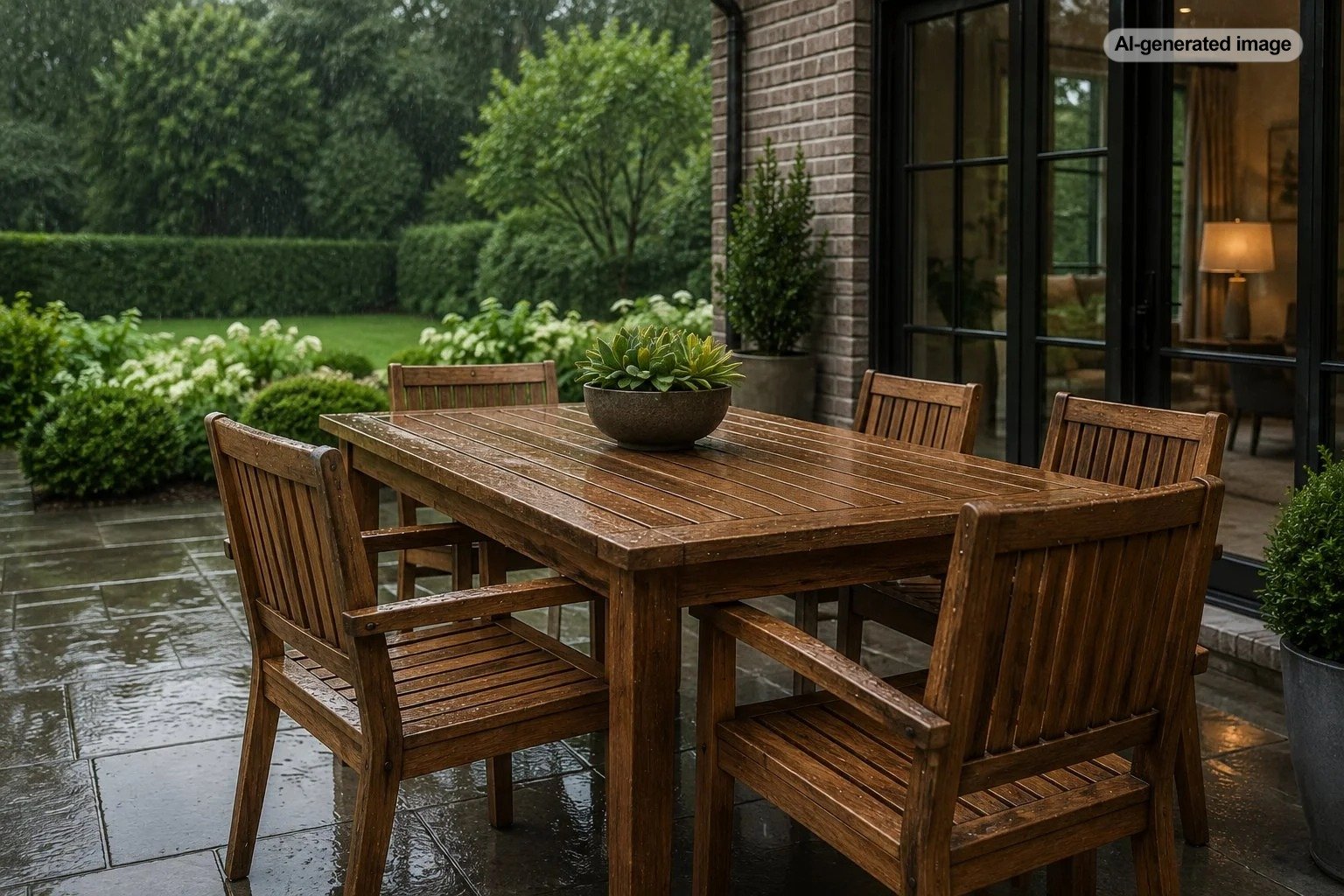
Yes, good-quality teak furniture can generally stay outside in the rain. Teak is widely used for outdoor furniture because its dense wood and naturally occurring oils help it tolerate moisture and changing weather better than many other woods. A rainy afternoon, a wet week, or regular exposure to seasonal showers does not automatically mean your teak table or chairs need to be rushed under cover.
That does not mean rain leaves teak completely unchanged. Outdoor exposure affects its color, surface appearance, cleanliness, joints, cushions, and finishes over time. The important distinction is between normal weathering and actual deterioration.
Why teak handles rain better than many woods
Teak has a long reputation as an outdoor material for a practical reason: it contains natural oils and has a dense structure that help it resist moisture and ordinary outdoor weathering. Those characteristics make properly made teak furniture well suited to patios, decks, balconies, gardens, and pool areas.
Rain will still wet the surface. Water may temporarily darken areas of the wood, create visible spots, or make the grain look more pronounced. New teak can also release some of its natural surface oils during damp or humid conditions. These effects are not necessarily signs that the furniture is being ruined.
The bigger question is what happens after the rain. Teak furniture should have an opportunity to drain and air-dry rather than sitting indefinitely in trapped water, wet leaves, saturated fabric, or constantly damp debris. Good outdoor furniture design matters here: water should not collect unnecessarily in crevices or remain trapped against the wood.
Rain will change the color of untreated teak
One of the most noticeable changes is also one of the most misunderstood. New teak commonly starts with a warm honey or golden-brown appearance. When unfinished teak remains outdoors, exposure to rain, sunlight, humidity, and air gradually changes the surface to a softer silver-gray color.
That gray patina is a normal weathering effect. It does not automatically mean the wood is rotten, dried out, or neglected. Some homeowners specifically choose teak because they like the relaxed gray appearance it develops outdoors.
With outdoor teak, a change in color is not the same thing as a loss of strength.
If you prefer the original golden tone, the maintenance question changes. You may need a teak-specific protector or sealer appropriate for your particular furniture, along with periodic cleaning and reapplication according to the product or furniture manufacturer’s directions. Avoid assuming that ordinary furniture polish, interior wood oil, stain, or varnish is appropriate for an outdoor teak piece.
Do you need to cover teak furniture every time it rains?
Usually, no. Properly constructed outdoor teak furniture is intended to encounter weather, so covering it before every ordinary rain shower can defeat some of the convenience of owning it.
A cover can still be useful when you want to reduce dirt, bird droppings, pollen, leaf stains, repeated cleaning, or exposure during long periods when the furniture is not being used. The key is to use an outdoor cover that fits appropriately and does not trap persistent moisture against the furniture.
Leaving teak uncovered
- Allows natural weathering and air circulation.
- Avoids the chore of covering furniture before routine showers.
- Works well for owners who are comfortable with a silver-gray patina.
Using a cover
- Can reduce dirt and environmental debris.
- May reduce the frequency of cleaning.
- Can be helpful during long periods of disuse or messy seasonal conditions.
There is also a practical middle ground: leave teak frames outside while storing removable cushions when extended wet weather is expected. Cushions, inserts, zippers, and fabric construction have their own drying requirements, even when the furniture frame itself tolerates rain well.
What should you do after teak furniture gets wet?
Most of the time, very little is required. Let the furniture drain and dry naturally. If water has pooled on a tabletop or seat because of the furniture’s shape, brushing away the excess can speed drying. Remove wet leaves, blossoms, soil, and other organic material rather than allowing them to remain stuck to the surface.
What to do
- Remove cushions or accessories that should not remain saturated.
- Clear away leaves, dirt, and debris that could hold moisture against the wood.
- Allow the teak to air-dry with good circulation around it.
- Clean the furniture periodically with a method approved for the finish and manufacturer.
- Inspect joints and fasteners occasionally, especially after long periods of outdoor exposure.
Avoid attacking ordinary rain marks with aggressive cleaning methods. Freshly weathering teak may show uneven coloration or temporary water spotting before the appearance becomes more uniform. Over-cleaning can create its own patchiness, particularly when one section is scrubbed much more aggressively than another.
What about prolonged rain and humid climates?
A durable outdoor material can still benefit from sensible placement. In a climate with frequent rain or high humidity, pay particular attention to airflow and drainage around the furniture. A table sitting in an open patio location may dry readily, while the same table squeezed against a wall beneath dense foliage may remain damp much longer.
Also look below the furniture. Persistent standing water around the feet is different from rain simply falling on the surface and draining away. Improve drainage where practical and avoid arrangements that repeatedly leave the same parts of the furniture sitting in puddles.
Small cracks are not always a reason to panic
Wood naturally responds to changes in moisture and temperature. Outdoor teak can develop small surface checks, particularly around end grain or heavier components, as conditions change. Minor checking can be cosmetic rather than evidence that the furniture is failing.
There is an important limit to that reassurance. A large or expanding crack, a visibly loose structural joint, badly corroded hardware, a wobbling chair, or any change that makes the furniture feel unstable deserves closer attention. Stop using a piece if you are uncertain about its structural safety and consult the manufacturer or an experienced furniture repair professional.
Should you oil teak furniture after rain?
Not simply because it got wet. Teak does not need to be routinely oiled every time it encounters rain, and adding oil is not the same thing as maintaining the wood’s structural durability.
Before applying any treatment, decide what appearance you actually want. If you are happy with naturally weathered gray teak, keeping the furniture clean may be enough for your aesthetic goals. If you want to retain a warmer brown tone, use a treatment specifically suitable for your furniture and follow its directions rather than improvising with a general-purpose wood product.
Furniture that arrived with a factory finish deserves special caution. Its care requirements may differ from unfinished natural teak, so the manufacturer’s instructions should take priority over generic teak advice.
How to make outdoor teak easier to live with
Teak’s appeal is not that it remains visually frozen in its showroom condition. Its advantage is that it can live outdoors while aging in a way many people find attractive. The easiest ownership strategy is to decide early whether you want the natural gray patina or prefer to maintain a warmer color.
Before you decide
- Confirm that the furniture is actually intended for outdoor use.
- Determine whether the teak is unfinished or has a factory-applied finish.
- Decide whether you like golden teak or naturally weathered gray teak.
- Give the furniture good airflow and drainage after rain.
- Store or protect cushions according to their own care requirements.
- Use breathable, properly fitted covers when covering is useful.
- Check the manufacturer’s care instructions before applying cleaners, sealers, protectors, or oils.
FAQ
Can teak furniture be left outside all year?
Outdoor-rated teak furniture is commonly designed to remain outside through changing weather. Climate, furniture construction, finishes, cushions, covers, and seasonal conditions still affect the best care routine. Follow the manufacturer’s storage recommendations when they are available.
Will rain turn teak furniture gray?
Rain contributes to the natural weathering process, along with sunlight and general outdoor exposure. Untreated teak commonly develops a silver-gray patina over time.
Should I wipe teak furniture dry after every shower?
Ordinary rain generally does not require immediately towel-drying the wood. Good drainage and air circulation are more important. Remove debris and address areas where water remains trapped or pooled for extended periods.
Can teak cushions stay outside in the rain too?
Do not assume the cushions have the same weather tolerance as the teak frame. Outdoor fabrics vary substantially in water resistance, filling, construction, and drying requirements. Follow the cushion manufacturer’s instructions and give wet cushions enough airflow to dry thoroughly.
Is gray teak damaged teak?
No. A uniform silver-gray surface is a normal appearance for naturally weathered teak. Structural problems are more likely to show themselves through instability, significant cracking, failed joints, or other physical deterioration rather than color change alone.
So, can teak furniture stay outside in the rain? In most cases, yes, provided it is genuine outdoor teak furniture and is allowed to drain and dry normally. Rather than trying to shield teak from every drop of water, focus on sensible care: keep debris from sitting on it, manage cushions separately, maintain airflow, follow the furniture maker’s treatment instructions, and decide whether you want to embrace its natural gray patina or preserve a warmer teak color.